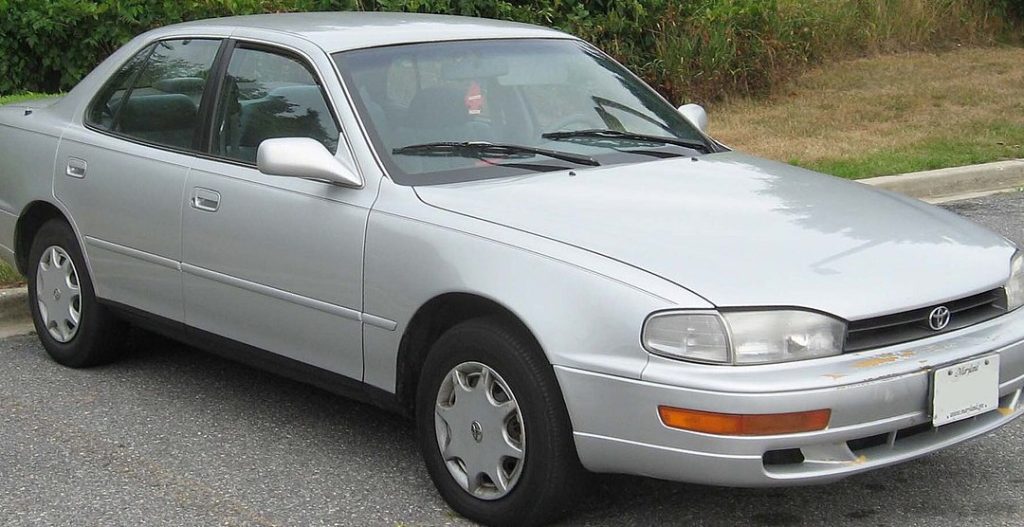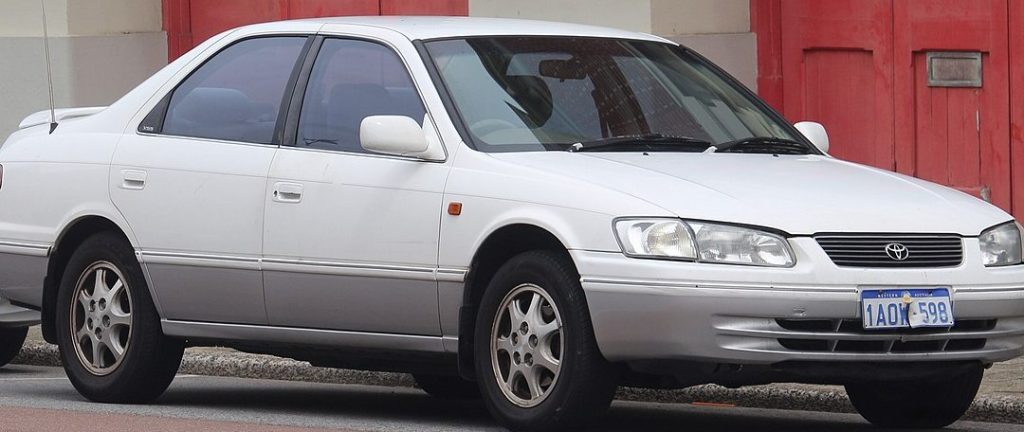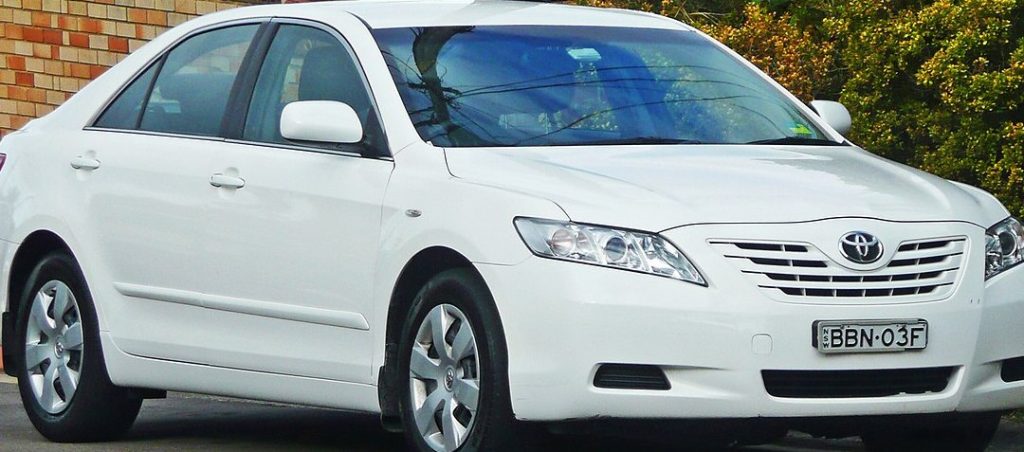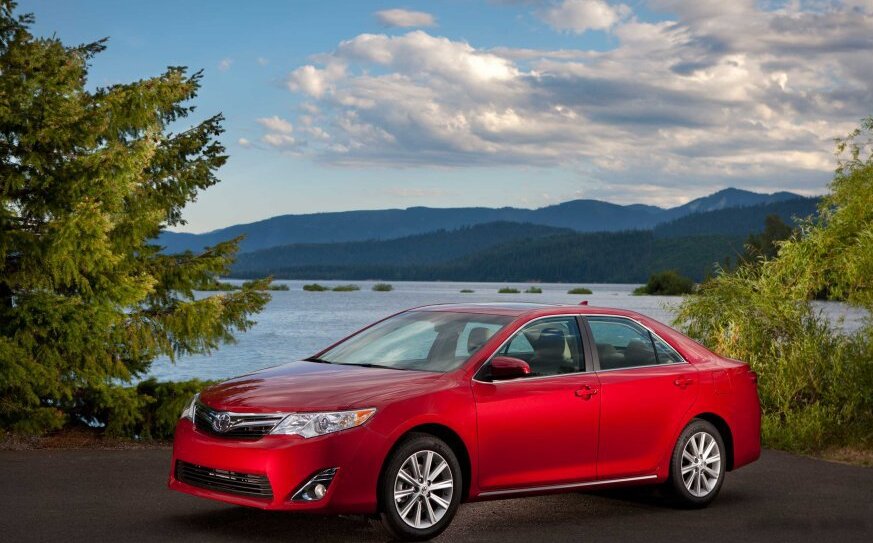
The Toyota Camry VII (XV50) 2.5 Hybrid, produced from 2011 to 2014, represented a significant step forward in mainstream hybrid technology for the American market. Positioned as a mid-to-upper trim level within the XV50 generation Camry lineup, it offered a compelling blend of fuel efficiency and respectable performance. This variant was crucial in broadening the appeal of hybrid vehicles beyond early adopters, demonstrating that a hybrid sedan could deliver a comfortable and practical driving experience without significant compromises. The XV50 Camry, as a whole, was designed to appeal to a wider demographic than its predecessors, focusing on interior refinement and a more modern aesthetic.
Technical Specifications
| Brand | Toyota |
| Model | Camry |
| Generation | Camry VII (XV50) |
| Type (Engine) | 2.5 (200 Hp) Hybrid e-CVT |
| Start of production | 2011 |
| End of production | 2014 |
| Powertrain Architecture | FHEV (Full Hybrid Electric Vehicle) |
| Body type | Sedan |
| Seats | 5 |
| Doors | 4 |
| Fuel consumption (economy) – urban | 5.4 l/100 km (43.6 US mpg, 52.3 UK mpg, 18.5 km/l) |
| Fuel consumption (economy) – extra urban | 6 l/100 km (39.2 US mpg, 47.1 UK mpg, 16.7 km/l) |
| Fuel consumption (economy) – combined | 5.7 l/100 km (41.3 US mpg, 49.6 UK mpg, 17.5 km/l) |
| Fuel Type | Petrol (Gasoline) |
| Weight-to-power ratio | 7.8 kg/Hp, 128.4 Hp/tonne |
| Weight-to-torque ratio | 7.3 kg/Nm, 136.1 Nm/tonne |
| Battery voltage | 244.8 V |
| Battery technology | Nickel-metal hydride (NiMH) |
| Battery location | Behind the back wall of the passenger cabin |
| Electric motor power | 143 Hp |
| Electric motor Torque | 270 Nm (199.14 lb.-ft.) |
| Electric motor location | Integrated into the transmission |
| Electric motor type | Synchronous |
| System power | 200 Hp |
| Internal combustion engine power | 156 Hp @ 5700 rpm |
| Power per litre | 62.6 Hp/l |
| Engine torque | 212 Nm @ 4500 rpm (156.36 lb.-ft. @ 4500 rpm) |
| Engine layout | Front, Transverse |
| Engine Model/Code | 2AR-FXE |
| Engine displacement | 2494 cm3 (152.19 cu. in.) |
| Number of cylinders | 4 |
| Engine configuration | Inline |
| Cylinder Bore | 90 mm (3.54 in.) |
| Piston Stroke | 98 mm (3.86 in.) |
| Compression ratio | 10.4:1 |
| Number of valves per cylinder | 4 |
| Fuel injection system | Multi-port manifold injection |
| Engine aspiration | Naturally aspirated engine |
| Valvetrain | DOHC, Dual VVT-i |
| Engine oil capacity | 4.4 l (4.65 US qt | 3.87 UK qt) |
| Coolant capacity | 7.2 l (7.61 US qt | 6.34 UK qt) |
| Kerb Weight | 1558 kg (3434.8 lbs.) |
| Trunk (boot) space – minimum | 371 l (13.1 cu. ft.) |
| Fuel tank capacity | 64 l (16.91 US gal | 14.08 UK gal) |
| Length | 4806 mm (189.21 in.) |
| Width | 1821 mm (71.69 in.) |
| Height | 1470 mm (57.87 in.) |
| Wheelbase | 2776 mm (109.29 in.) |
| Front track | 1585 mm (62.4 in.) |
| Rear (Back) track | 1575 mm (62.01 in.) |
| Ride height (ground clearance) | 155 mm (6.1 in.) |
| Drag coefficient (Cd) | 0.27 |
| Minimum turning circle (turning diameter) | 11.1 m (36.42 ft.) |
| Drivetrain Architecture | The Internal combustion engine (ICE) and electric motor drive the front wheels of the car with the ability to work in full electric or mixed mode. |
| Drive wheel | Front wheel drive |
| Number of gears and type of gearbox | automatic transmission e-CVT |
| Front suspension | Independent, type McPherson with coil spring and anti-roll bar |
| Rear suspension | Independent multi-link spring suspension with stabilizer |
| Front brakes | Ventilated discs |
| Rear brakes | Disc |
| Assisting systems | ABS (Anti-lock braking system) |
| Steering type | Steering rack and pinion |
| Power steering | Electric Steering |
| Tires size | 205/65 R16 |
| Wheel rims size | 6.5J x 16 |
Powertrain & Engine Architecture
The heart of the XV50 Camry Hybrid is the 2AR-FXE 2.5-liter inline-four engine. This engine utilizes a multi-port fuel injection system and Toyota’s Dual VVT-i (Variable Valve Timing-intelligence) technology to optimize both power and fuel efficiency. The 2AR-FXE produces 156 horsepower at 5700 rpm and 156 lb-ft of torque at 4500 rpm. However, the system’s total output is rated at 200 horsepower, thanks to the addition of a 143-horsepower electric motor. The electric motor draws power from a 244.8-volt nickel-metal hydride (NiMH) battery pack located behind the rear seats. The key to the hybrid system is Toyota’s Electronic Continuously Variable Transmission (e-CVT). Unlike traditional CVTs with belts and pulleys, the e-CVT uses a planetary gearset to seamlessly blend power from the gasoline engine and electric motor, providing a smooth and efficient driving experience. This system allows the car to operate in electric-only mode at low speeds and under light loads, maximizing fuel economy.
Driving Characteristics
The 2.5 Hybrid Camry offers a noticeably different driving experience compared to the standard 2.5-liter gasoline-only Camry. While not a performance-oriented vehicle, the combined output of the engine and electric motor provides adequate acceleration for everyday driving. The e-CVT contributes to a very smooth and linear power delivery, lacking the stepped gear changes of a conventional automatic transmission. The hybrid system prioritizes fuel efficiency, so aggressive acceleration will result in the gasoline engine engaging more frequently. Compared to the more powerful V6 Camry, the Hybrid model feels less responsive, but the fuel economy benefits are substantial. The e-CVT is programmed to prioritize efficiency, which can sometimes feel sluggish during quick overtaking maneuvers. However, the electric motor provides instant torque, which helps to mitigate this effect.
Equipment & Trim Levels
The 2.5 Hybrid Camry typically came well-equipped, often including features such as automatic climate control, a touchscreen infotainment system, Bluetooth connectivity, and a rearview camera. Higher trim levels added features like leather upholstery, a premium sound system, and advanced safety technologies such as lane departure alert and adaptive cruise control. The interior design focused on comfort and practicality, with a spacious cabin and user-friendly controls. Optional extras included a navigation system, a power moonroof, and heated front seats.
Chassis & Braking
The XV50 Camry Hybrid utilizes an independent McPherson strut front suspension and an independent multi-link rear suspension. This setup provides a comfortable ride quality and predictable handling. The hybrid model’s added weight due to the battery pack and electric motor does slightly impact handling compared to the lighter gasoline-only models. Braking duties are handled by ventilated discs at the front and solid discs at the rear. The hybrid system incorporates regenerative braking, which captures energy during deceleration and uses it to recharge the battery, further enhancing fuel efficiency. Anti-lock brakes (ABS) are standard.
Market Reception & Comparison
The Camry Hybrid was generally well-received by critics and consumers alike. It was praised for its exceptional fuel economy, comfortable ride, and quiet operation. Compared to other hybrid options available at the time, the Camry Hybrid offered a compelling combination of value, reliability, and practicality. While the Honda Accord Hybrid was a direct competitor, the Camry Hybrid often had a slight edge in terms of price and available features. The gasoline-only Camry models offered more power and a lower initial cost, but the Hybrid model’s long-term fuel savings made it an attractive option for many buyers.
Legacy
The Toyota Camry Hybrid (XV50) played a pivotal role in popularizing hybrid technology in the mainstream automotive market. The 2AR-FXE engine and e-CVT transmission proved to be remarkably reliable, with many examples still on the road today. The XV50 Camry Hybrid established Toyota as a leader in hybrid technology and paved the way for future generations of hybrid vehicles. On the used car market, these models continue to be sought after for their fuel efficiency and proven reliability, making them a sensible choice for budget-conscious buyers looking for a dependable and environmentally friendly vehicle.