
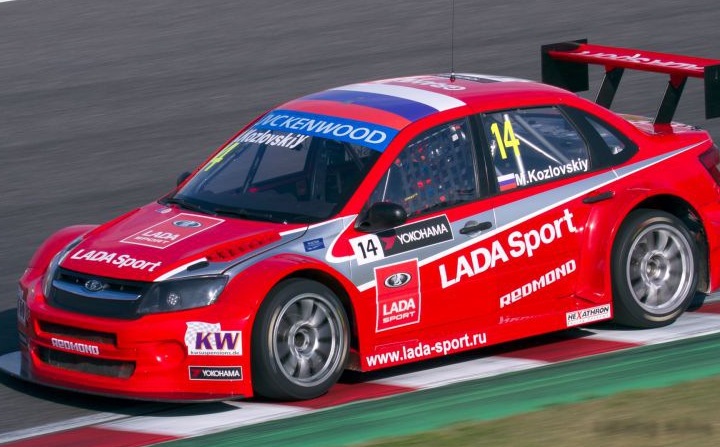
The Lada Granta I Sport 1.6 (118 hp) was a performance-oriented variant of the popular Lada Granta, produced between 2013 and 2018. Positioned as the sportiest iteration of the first-generation Granta (often referred to as the I), it aimed to offer a more engaging driving experience than the standard models. The Granta itself was a significant vehicle for AvtoVAZ, representing a modernization effort and a move towards more contemporary design and engineering within the Lada brand. The Sport trim, with its increased power output, was intended to appeal to a younger demographic and those seeking a budget-friendly performance car in the Russian market and export regions.
Technical Specifications
| Brand | Lada |
| Model | Granta |
| Generation | Granta I Sport |
| Type (Engine) | 1.6 (118 Hp) |
| Start of production | 2013 |
| End of production | 2018 |
| Powertrain Architecture | Internal Combustion engine |
| Body type | Sedan |
| Seats | 5 |
| Doors | 4 |
| Fuel consumption (combined) | 7.8 l/100 km (30.2 US mpg, 36.2 UK mpg, 12.8 km/l) |
| Fuel Type | Petrol (Gasoline) |
| Acceleration 0 – 100 km/h | 9.5 sec |
| Acceleration 0 – 62 mph | 9.5 sec |
| Acceleration 0 – 60 mph | 9 sec |
| Maximum speed | 198 km/h (123.03 mph) |
| Weight-to-power ratio | 9.7 kg/Hp, 103.5 Hp/tonne |
| Weight-to-torque ratio | 7.4 kg/Nm, 135.1 Nm/tonne |
| Power | 118 Hp @ 6750 rpm |
| Power per litre | 73.9 Hp/l |
| Torque | 154 Nm @ 4750 rpm (113.58 lb.-ft. @ 4750 rpm) |
| Engine layout | Front, Transverse |
| Engine Model/Code | 21127 |
| Engine displacement | 1596 cm3 (97.39 cu. in.) |
| Number of cylinders | 4 |
| Engine configuration | Inline |
| Number of valves per cylinder | 4 |
| Fuel injection system | Multi-port manifold injection |
| Engine aspiration | Naturally aspirated engine |
| Engine oil capacity | 3.2 l (3.38 US qt | 2.82 UK qt) |
| Coolant | 6.5 l (6.87 US qt | 5.72 UK qt) |
| Kerb Weight | 1140 kg (2513.27 lbs.) |
| Max. weight | 1540 kg (3395.12 lbs.) |
| Max load | 400 kg (881.85 lbs.) |
| Trunk (boot) space – minimum | 520 l (18.36 cu. ft.) |
| Fuel tank capacity | 50 l (13.21 US gal | 11 UK gal) |
| Permitted trailer load with brakes (12%) | 900 kg (1984.16 lbs.) |
| Permitted trailer load without brakes | 450 kg (992.08 lbs.) |
| Length | 4280 mm (168.5 in.) |
| Width | 1700 mm (66.93 in.) |
| Height | 1470 mm (57.87 in.) |
| Wheelbase | 2490 mm (98.03 in.) |
| Front track | 1430 mm (56.3 in.) |
| Rear (Back) track | 1420 mm (55.91 in.) |
| Ride height (ground clearance) | 120 mm (4.72 in.) |
| Drivetrain Architecture | The Internal combustion engine (ICE) drives the front wheels of the vehicle. |
| Drive wheel | Front wheel drive |
| Number of gears and type of gearbox | 5 gears, manual transmission |
| Front suspension | Independent, type McPherson with coil spring and anti-roll bar |
| Rear suspension | Semi-independent, coil spring |
| Assisting systems | ABS (Anti-lock braking system) |
| Steering type | Steering rack and pinion |
| Tires size | 195/50 R16 |
| Wheel rims size | 16 |
Powertrain & Engine Architecture
The Lada Granta I Sport 1.6 utilized the 21127 engine, a 1.6-liter inline-four cylinder gasoline engine. This engine was a development of the older Lada engine family, but with improvements aimed at increasing power and efficiency. The 118 horsepower output was achieved through a combination of optimized engine management, a slightly higher compression ratio, and revised intake and exhaust systems compared to the standard Granta 1.6. The engine employed a multi-port fuel injection system, which was a significant upgrade from the earlier carburetor-equipped Lada models. The 21127 engine featured a single overhead camshaft (SOHC) design with four valves per cylinder. The Sport variant was exclusively offered with a five-speed manual transmission, chosen to maximize performance and driver engagement. The transmission was a standard, cable-operated unit, providing a direct and relatively precise shift feel.
Driving Characteristics
The Granta I Sport 1.6, with its 118 hp and five-speed manual, offered a noticeable improvement in performance over the base Granta models. The 0-60 mph time of around 9 seconds, while not blistering, was respectable for a budget-oriented sedan. The engine delivered its peak torque at 4750 rpm, meaning that drivers needed to rev the engine to access its full potential. The gear ratios were tuned to provide reasonable acceleration in everyday driving conditions, but also allowed for comfortable cruising at highway speeds. Compared to the standard Granta, the Sport model felt more responsive and eager to accelerate. However, it wasn’t a particularly refined driving experience; engine noise and vibration were noticeable, and the suspension, while adequate, wasn’t designed for sporty handling. The manual transmission, while engaging, required a deliberate hand and wasn’t known for its short throws.
Equipment & Trim Levels
The Granta I Sport trim level included several features designed to enhance its sporty appeal. Standard equipment typically included power front windows, central locking, and an upgraded audio system. The interior featured sport seats with more aggressive bolstering, providing better lateral support during cornering. The dashboard and door panels were often trimmed with contrasting stitching or accents to differentiate it from the standard Granta. Optional extras included air conditioning, alloy wheels, and a more advanced audio system with Bluetooth connectivity. The overall interior quality was basic, reflecting the car’s affordable price point, but the Sport trim offered a slightly more visually appealing and comfortable environment.
Chassis & Braking
The Granta I Sport utilized a McPherson strut front suspension and a semi-independent coil spring rear suspension. The suspension was tuned to provide a balance between comfort and handling, but leaned more towards the comfort side. The front suspension featured an anti-roll bar to reduce body roll during cornering. Braking duties were handled by disc brakes on the front wheels and drum brakes on the rear wheels. ABS (Anti-lock Braking System) was standard equipment, enhancing safety and stability during emergency braking. The steering was a rack and pinion system, providing reasonable precision and feedback. The tires were typically 195/50 R16, offering a good compromise between grip and ride comfort.
Market Reception & Comparison
The Lada Granta I Sport 1.6 was generally well-received in its target market, particularly in Russia and other Eastern European countries. Critics praised its affordability and improved performance compared to the standard Granta. However, it was also noted that the car lacked the refinement and sophistication of more established competitors. Compared to other trims in the Granta lineup, the Sport model offered a more engaging driving experience but at the expense of some fuel economy. The manual transmission was a key differentiator, appealing to drivers who preferred a more involved driving experience. The Sport trim represented a good value proposition for those seeking a budget-friendly performance car.
Legacy
The Lada Granta I Sport 1.6, while not a groundbreaking vehicle, played an important role in modernizing the Lada brand and appealing to a wider range of customers. The 21127 engine proved to be relatively reliable, and parts availability remains good in regions where the Granta was widely sold. On the used car market, the Sport variant often commands a slightly higher price than the standard Granta models, reflecting its increased performance and sporty features. The Granta I Sport represents a significant step forward for Lada, demonstrating the brand’s commitment to improving its products and competing in the modern automotive landscape.

