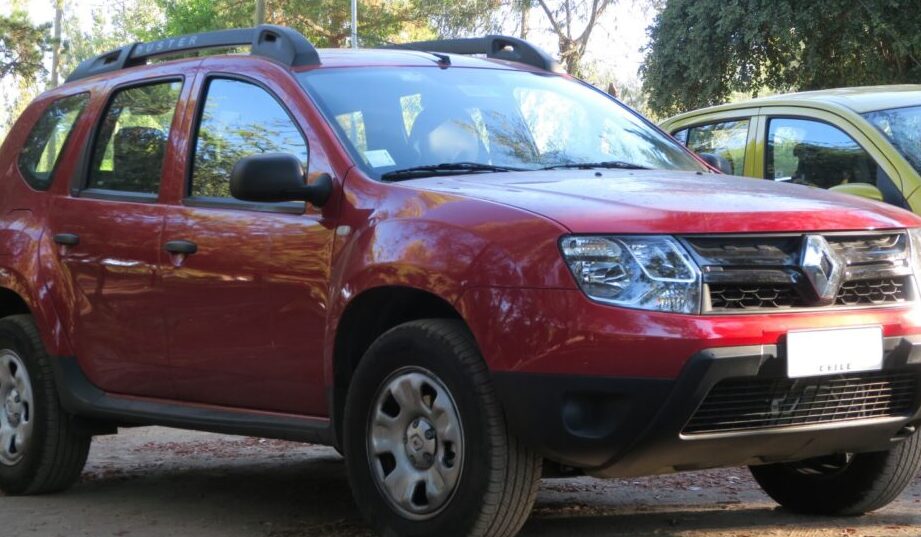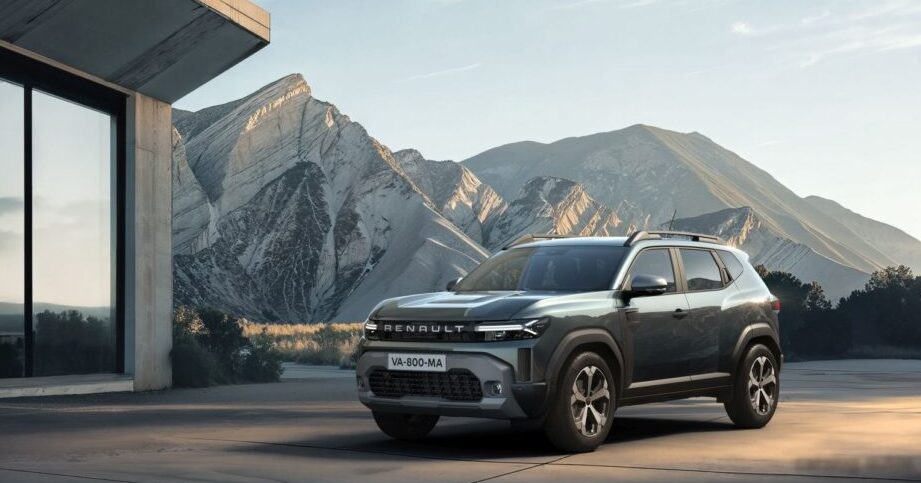
The Renault Duster III 1.3 TCe (150 hp) EDC represents a significant iteration in Renault’s popular compact SUV lineup, launched in 2025. Positioned as a mid-range offering within the third-generation Duster series, this variant balances fuel efficiency with respectable performance, targeting buyers seeking a practical and versatile vehicle. It builds upon the success of previous Duster models, known for their affordability and ruggedness, while incorporating updated technology and design elements. The Duster III utilizes Renault’s updated design language and benefits from advancements in powertrain technology, aiming to appeal to a broader customer base in the European and international markets.
Technical Specifications
| Brand | Renault |
| Model | Duster |
| Generation | Duster III |
| Type (Engine) | 1.3 TCe (150 Hp) EDC |
| Start of production | 2025 |
| Powertrain Architecture | Internal Combustion engine |
| Body type | SUV |
| Seats | 5 |
| Doors | 5 |
| Combined fuel consumption (WLTP) | 6.5-6.9 l/100 km (36.2 – 34.1 US mpg, 43.5 – 40.9 UK mpg, 15.4 – 14.5 km/l) |
| CO2 emissions (WLTP) | 147-155 g/km |
| Fuel Type | Petrol (Gasoline) |
| Power | 150 Hp @ 4800-5000 rpm |
| Power per litre | 112.6 Hp/l |
| Torque | 250 Nm @ 1700 rpm (184.39 lb.-ft. @ 1700 rpm) |
| Engine layout | Front, Transverse |
| Engine Model/Code | H5Ht |
| Engine displacement | 1332 cm3 (81.28 cu. in.) |
| Number of cylinders | 4 |
| Engine configuration | Inline |
| Cylinder Bore | 72.2 mm (2.84 in.) |
| Piston Stroke | 81.3 mm (3.2 in.) |
| Number of valves per cylinder | 4 |
| Fuel injection system | Direct injection |
| Engine aspiration | Turbocharger, Intercooler |
| Valvetrain | DOHC |
| Engine systems | Start & Stop System |
| Trunk (boot) space – minimum | 517 l (18.26 cu. ft.) |
| Fuel tank capacity | 50 l (13.21 US gal | 11 UK gal) |
| Max. roof load | 80 kg (176.37 lbs.) |
| Permitted trailer load with brakes (12%) | 1580 kg (3483.3 lbs.) |
| Permitted trailer load without brakes | 719 kg (1585.12 lbs.) |
| Permitted towbar download | 75 kg (165.35 lbs.) |
| Length | 4343 mm (170.98 in.) |
| Width | 1813 mm (71.38 in.) |
| Width with mirrors folded | 1921 mm (75.63 in.) |
| Width including mirrors | 2069 mm (81.46 in.) |
| Height | 1656 mm (65.2 in.) |
| Wheelbase | 2657 mm (104.61 in.) |
| Front track | 1574 mm (61.97 in.) |
| Rear (Back) track | 1556 mm (61.26 in.) |
| Front overhang | 857 mm (33.74 in.) |
| Rear overhang | 828 mm (32.6 in.) |
| Ride height (ground clearance) | 209 mm (8.23 in.) |
| Approach angle | 31° |
| Departure angle | 36° |
| Drivetrain Architecture | The Internal combustion engine (ICE) drives the front wheels of the vehicle. |
| Drive wheel | Front wheel drive |
| Number of gears and type of gearbox | 7 gears, automatic transmission EDC |
| Front suspension | Independent, type McPherson with coil spring and anti-roll bar |
| Rear suspension | Semi-independent, coil spring, Torsion |
| Front brakes | Ventilated discs |
| Assisting systems | ABS (Anti-lock braking system) |
| Steering type | Steering rack and pinion |
| Power steering | Electric Steering |
| Tires size | 215/65 R17; 215/60 R18 |
| Wheel rims size | 17; 18 |
Powertrain & Engine Architecture
At the heart of the Duster III 1.3 TCe EDC lies Renault’s H5Ht engine, a 1.3-liter turbocharged inline-four cylinder gasoline engine. This engine is part of the Alliance’s (Renault-Nissan-Mitsubishi) modular engine family, designed for efficiency and versatility. The engine utilizes direct fuel injection, optimizing combustion and contributing to improved fuel economy and reduced emissions. The turbocharger, coupled with an intercooler, provides a boost in power and torque, delivering 150 horsepower and 250 Nm (184 lb-ft) of torque. The EDC (Efficient Dual Clutch) transmission is a seven-speed automatic, offering smooth and quick gear changes. This transmission is a key component in maximizing fuel efficiency and providing a comfortable driving experience. The EDC transmission is known for its responsiveness and ability to adapt to various driving conditions.
Driving Characteristics
The 1.3 TCe EDC powertrain delivers a balanced driving experience. While not offering the outright acceleration of higher-powered Duster variants, it provides sufficient power for everyday driving and highway cruising. The EDC transmission contributes to a smooth and refined feel, with quick shifts and minimal hesitation. The gear ratios are tuned for a blend of fuel efficiency and responsiveness. Compared to a manual transmission version of the same engine, the EDC offers greater convenience, particularly in urban environments. However, some drivers may prefer the more direct feel and control of a manual gearbox. The 1.3 TCe engine provides adequate torque at low speeds, making it easy to navigate city streets, while the turbocharger provides a noticeable boost in power when accelerating onto highways.
Equipment & Trim Levels
The Duster III 1.3 TCe EDC typically comes equipped with a range of standard features, including air conditioning, power windows, central locking, and a basic infotainment system with Bluetooth connectivity. Higher trim levels offer additional features such as a touchscreen infotainment system with navigation, Apple CarPlay and Android Auto compatibility, rear parking sensors, and a rearview camera. Interior upholstery is typically cloth, with options for leather or partial leather upgrades. Optional extras may include alloy wheels, a panoramic sunroof, and advanced driver-assistance systems (ADAS) like automatic emergency braking and lane departure warning. The specific equipment levels can vary depending on the market and optional packages selected.
Chassis & Braking
The Duster III utilizes a McPherson strut front suspension and a semi-independent torsion beam rear suspension. This setup provides a good balance between ride comfort and handling. The front suspension incorporates a coil spring and anti-roll bar to reduce body roll during cornering. The braking system consists of ventilated discs on the front wheels and drums on the rear wheels in many configurations, although higher trim levels may feature rear disc brakes. ABS (Anti-lock Braking System) is standard, enhancing safety and control during emergency braking situations. The steering is electrically assisted, providing light and precise steering feel.
Market Reception & Comparison
The Renault Duster III 1.3 TCe EDC has been generally well-received by automotive critics, praised for its practicality, affordability, and fuel efficiency. Compared to other Duster variants, the 1.3 TCe EDC offers a good compromise between performance and economy. The 1.5 dCi diesel engine provides better fuel economy, but the 1.3 TCe offers a smoother and quieter driving experience. Higher-powered gasoline engines deliver more exhilarating performance, but at the expense of fuel efficiency. The EDC transmission has been noted for its smoothness and responsiveness, although some reviewers have pointed out that it can occasionally be hesitant at low speeds. Overall, the 1.3 TCe EDC is considered a well-rounded and versatile option within the Duster lineup.
Legacy
The Renault Duster III 1.3 TCe EDC powertrain is expected to offer good long-term reliability, benefiting from Renault’s experience in developing and refining this engine family. The EDC transmission, while more complex than a traditional manual gearbox, has proven to be durable in other Renault models. In the used car market, this variant is likely to be a popular choice due to its balance of fuel efficiency, performance, and practicality. Regular maintenance, including oil changes and transmission fluid checks, will be crucial to ensuring the longevity of this powertrain. As the Duster III is a relatively new model, long-term reliability data is still emerging, but initial reports suggest that it is a dependable and well-engineered vehicle.