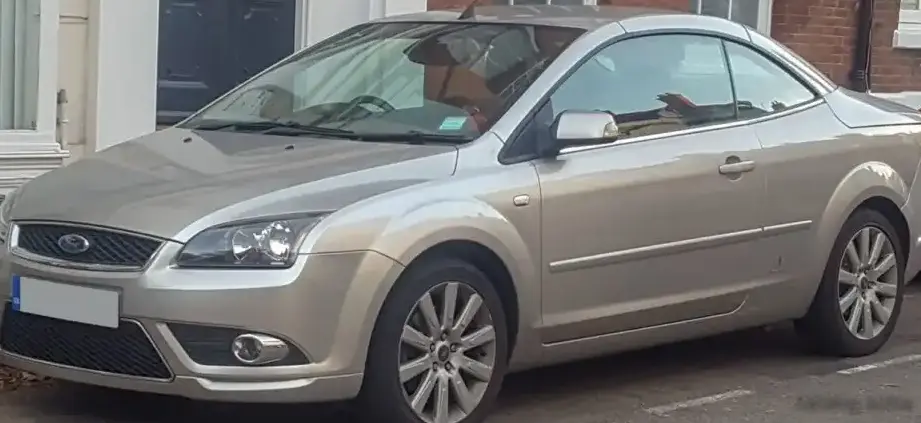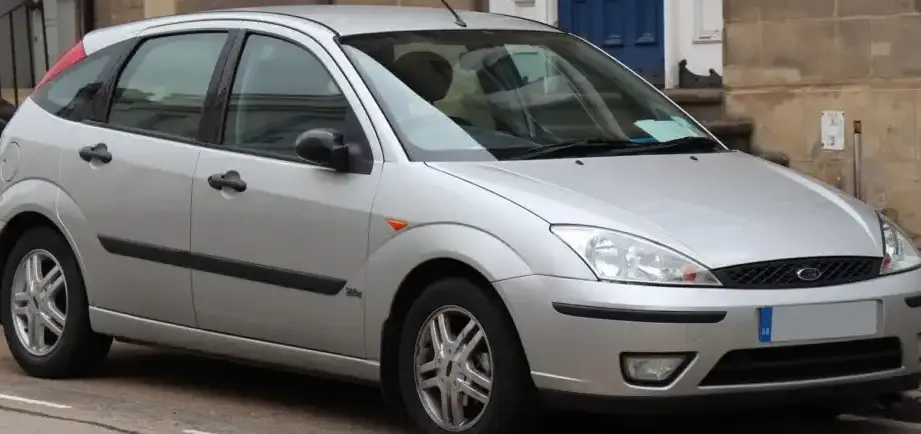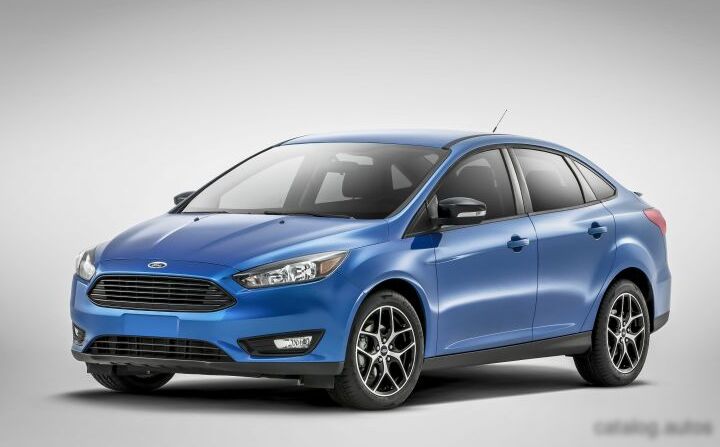
The Ford Focus III Sedan, specifically the facelifted version introduced in 2014, represented Ford’s continued effort to offer a globally competitive compact car. The 1.6 Ti-VCT (105 horsepower) variant, produced from 2014 to 2018, was positioned as an entry-level offering within the sedan range, aimed at buyers prioritizing fuel efficiency and affordability. This model played a significant role in markets where sedans remained popular, offering a practical and economical alternative to hatchback configurations. It was part of the larger Focus III generation (2011-2018), built on the C346 platform, and the facelift brought updated styling and minor mechanical refinements.
Technical Specifications
| Brand | Ford |
| Model | Focus |
| Generation | Focus III Sedan (facelift 2014) |
| Type (Engine) | 1.6 Ti-VCT (105 Hp) |
| Start of production | 2014 |
| End of production | 2018 |
| Powertrain Architecture | Internal Combustion engine |
| Body type | Sedan |
| Seats | 5 |
| Doors | 4 |
| Fuel consumption (urban) | 8.4 l/100 km (28 US mpg, 33.6 UK mpg, 11.9 km/l) |
| Fuel consumption (extra urban) | 4.7 l/100 km (50 US mpg, 60.1 UK mpg, 21.3 km/l) |
| Fuel consumption (combined) | 6 l/100 km (39.2 US mpg, 47.1 UK mpg, 16.7 km/l) |
| CO2 emissions | 139 g/km |
| Fuel Type | Petrol (Gasoline) |
| Acceleration 0 – 100 km/h | 12.4 sec |
| Acceleration 0 – 62 mph | 12.4 sec |
| Acceleration 0 – 60 mph | 11.8 sec |
| Maximum speed | 170 km/h (105.63 mph) |
| Emission standard | Euro 5 |
| Weight-to-power ratio | 12.2 kg/Hp, 81.8 Hp/tonne |
| Weight-to-torque ratio | 8.6 kg/Nm, 116.8 Nm/tonne |
| Power | 105 Hp @ 6000 rpm |
| Power per litre | 65.8 Hp/l |
| Torque | 150 Nm @ 4000-4500 rpm (110.63 lb.-ft. @ 4000-4500 rpm) |
| Engine layout | Front, Transverse |
| Engine Model/Code | IQDC |
| Engine displacement | 1596 cm3 (97.39 cu. in.) |
| Number of cylinders | 4 |
| Engine configuration | Inline |
| Cylinder Bore | 79 mm (3.11 in.) |
| Piston Stroke | 81.4 mm (3.2 in.) |
| Compression ratio | 11:1 |
| Number of valves per cylinder | 4 |
| Fuel injection system | Multi-port manifold injection |
| Engine aspiration | Naturally aspirated engine |
| Valvetrain | DOHC |
| Engine oil capacity | 4.1 l (4.33 US qt | 3.61 UK qt) |
| Coolant | 5.7 l (6.02 US qt | 5.02 UK qt) |
| Kerb Weight | 1284 kg (2830.74 lbs.) |
| Max. weight | 1825 kg (4023.44 lbs.) |
| Max load | 541 kg (1192.7 lbs.) |
| Trunk (boot) space – minimum | 372 l (13.14 cu. ft.) |
| Fuel tank capacity | 55 l (14.53 US gal | 12.1 UK gal) |
| Length | 4534 mm (178.5 in.) |
| Width | 1823 mm (71.77 in.) |
| Height | 1484 mm (58.43 in.) |
| Wheelbase | 2648 mm (104.25 in.) |
| Front track | 1544 mm (60.79 in.) |
| Rear (Back) track | 1559 mm (61.38 in.) |
| Minimum turning circle | 11 m (36.09 ft.) |
| Drivetrain Architecture | ICE, Front wheel drive |
| Drive wheel | Front wheel drive |
| Number of gears | 5 gears, manual transmission |
| Front suspension | Independent, type McPherson with coil spring and anti-roll bar |
| Rear suspension | Independent multi-link suspension |
| Front brakes | Disc |
| Rear brakes | Disc |
| Assisting systems | ABS (Anti-lock braking system) |
| Steering type | Steering rack and pinion |
| Tires size | 205/55 R16; 215/50 R17 |
| Wheel rims size | 6.5J x 16; 7.0J x 17 |
Powertrain & Engine Architecture
The heart of this Focus variant is the 1.6-liter Ti-VCT inline-four cylinder engine, designated with the IQDC engine code. “Ti-VCT” stands for Twin Independent Variable Camshaft Timing, a key feature of this engine. This system allows for independent control of intake and exhaust valve timing, optimizing engine performance and efficiency across a wider RPM range. The engine utilizes multi-port fuel injection, delivering fuel directly into the intake ports. The engine’s 11:1 compression ratio contributes to its efficiency, while the double overhead camshaft (DOHC) valvetrain ensures precise valve control. The 105 horsepower and 150 Nm (110.63 lb-ft) of torque are delivered between 4000 and 4500 rpm. The engine is transversely mounted, driving the front wheels. The standard transmission for this trim was a five-speed manual gearbox, chosen for its simplicity and cost-effectiveness.
Driving Characteristics
The 1.6 Ti-VCT engine, paired with the five-speed manual transmission, provided adequate, but not exhilarating, performance. Acceleration from 0-60 mph took around 11.8 seconds, and top speed was limited to 170 km/h (105.63 mph). The gear ratios were tuned for fuel economy rather than outright speed. The engine felt relatively responsive in the mid-range, making it suitable for everyday driving. Compared to the higher-output 1.6 EcoBoost or diesel variants, this engine lacked the punch for quick overtaking maneuvers or spirited driving. However, its lighter weight compared to the diesel models did contribute to a slightly more agile feel. The manual transmission offered a direct connection to the engine, allowing drivers to maximize the available power.
Equipment & Trim Levels
The 1.6 Ti-VCT variant typically represented the base trim level for the Focus Sedan. Standard equipment generally included air conditioning, power windows, power door locks, a basic audio system with USB connectivity, and steel wheels with wheel covers. Safety features such as ABS, electronic stability control, and multiple airbags were also standard. Optional extras included alloy wheels, upgraded audio systems, rear parking sensors, and cruise control. Interior upholstery was typically cloth, with a functional but basic dashboard layout. Higher trim levels, such as the Titanium, offered more luxurious features like leather upholstery, automatic climate control, and advanced infotainment systems.
Chassis & Braking
The Focus III Sedan utilized an independent McPherson strut suspension at the front and an independent multi-link suspension at the rear, providing a good balance of ride comfort and handling. The suspension was tuned to prioritize comfort over sporty handling. Brakes were disc brakes on all four wheels, providing adequate stopping power for the vehicle’s weight and performance. ABS (Anti-lock Braking System) was standard, enhancing safety during emergency braking situations. The steering system employed a rack and pinion setup, offering precise and responsive steering feel.
Market Reception & Comparison
The 1.6 Ti-VCT Focus Sedan was generally well-received as an affordable and fuel-efficient option. Critics praised its comfortable ride and practical interior space. However, some reviewers noted its lack of power compared to competitors and higher-trim Focus models. Fuel economy was a strong point, with combined figures around 6 l/100 km (39.2 US mpg). Compared to the 1.6 EcoBoost variant, the Ti-VCT offered lower performance but better fuel economy. The diesel variants provided superior torque and fuel efficiency but came with a higher purchase price and potentially higher maintenance costs.
Legacy
The 1.6 Ti-VCT engine proved to be a relatively reliable unit, with few major reported issues. The engine’s simplicity and robust design contributed to its longevity. In the used car market, these Focus Sedans are often sought after by buyers looking for an affordable and dependable compact car. Maintenance costs are generally reasonable, and parts availability is good. While not the most exciting variant in the Focus III lineup, the 1.6 Ti-VCT offered a practical and economical transportation solution for many buyers, and continues to represent a viable option in the used car market today.