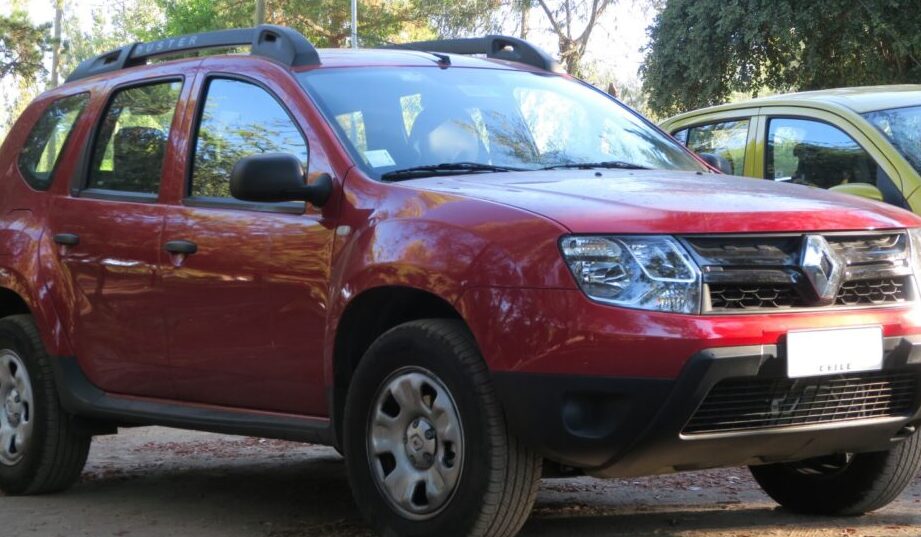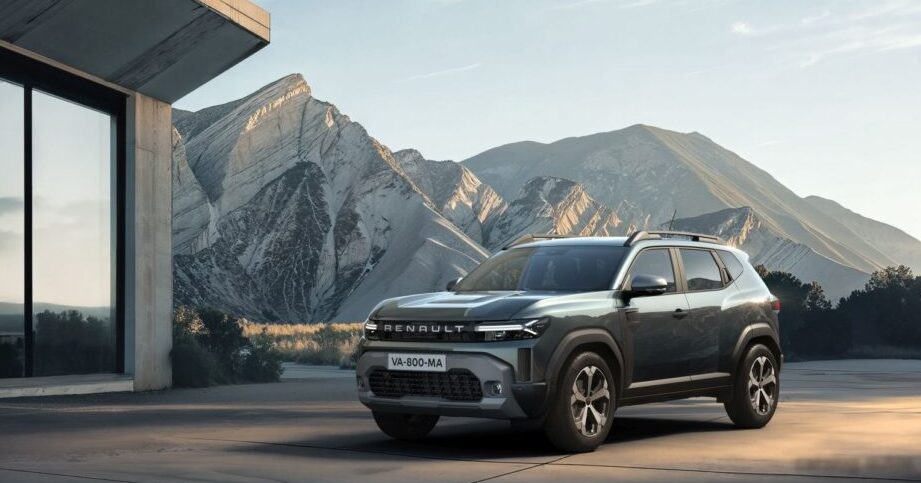
The Renault Duster III 1.6 E-Tech Full Hybrid Multi-Mode, launched in 2024, represents Renault’s entry into the increasingly competitive compact SUV segment with a focus on fuel efficiency and hybrid technology. This variant is positioned as a mid-range offering within the Duster III lineup, bridging the gap between base models and potentially more powerful, conventionally-powered options. It builds upon the foundation of the third-generation Duster (introduced as a completely redesigned model), utilizing the shared platform and body structure while incorporating Renault’s latest E-Tech full hybrid powertrain. The Duster has historically been a popular choice in Europe, particularly in markets where affordability and practicality are prioritized, and the introduction of a hybrid option aims to broaden its appeal to environmentally conscious buyers.
Technical Specifications
| Brand | Renault |
| Model | Duster |
| Generation | Duster III |
| Type (Engine) | 1.6 (145 Hp) E-Tech Full Hybrid Multi-Mode |
| Start of production | 2024 |
| Powertrain Architecture | FHEV (Full Hybrid Electric Vehicle) |
| Body type | SUV |
| Seats | 5 |
| Doors | 5 |
| Combined fuel consumption (WLTP) | 5-5.1 l/100 km (47 – 46.1 US mpg, 56.5 – 55.4 UK mpg, 20 – 19.6 km/l) |
| CO2 emissions (WLTP) | 111-115 g/km |
| Fuel Type | Petrol (Gasoline) |
| Gross battery capacity | 1.2 kWh |
| Battery technology | Lithium-ion (Li-Ion) |
| Battery location | Under the trunk |
| Max speed (electric) | 60 km/h (37.28 mph) |
| System power | 145 Hp |
| System torque | 205 Nm (151.2 lb.-ft.) |
| Engine layout | Front, Transverse |
| Engine Model/Code | H4M |
| Engine displacement | 1598 cm3 (97.52 cu. in.) |
| Number of cylinders | 4 |
| Engine configuration | Inline |
| Cylinder Bore | 78 mm (3.07 in.) |
| Piston Stroke | 83.6 mm (3.29 in.) |
| Number of valves per cylinder | 4 |
| Fuel injection system | Multi-port manifold injection |
| Engine aspiration | Naturally aspirated engine |
| Valvetrain | DOHC |
| Engine oil capacity | 4.5 l (4.76 US qt | 3.96 UK qt) |
| Trunk (boot) space – minimum | 517 l (18.26 cu. ft.) |
| Fuel tank capacity | 50 l (13.21 US gal | 11 UK gal) |
| Max. roof load | 80 kg (176.37 lbs.) |
| Permitted trailer load without brakes | 750 kg (1653.47 lbs.) |
| Permitted towbar download | 75 kg (165.35 lbs.) |
| Length | 4343 mm (170.98 in.) |
| Width | 1813 mm (71.38 in.) |
| Width with mirrors folded | 1921 mm (75.63 in.) |
| Width including mirrors | 2069 mm (81.46 in.) |
| Height | 1656 mm (65.2 in.) |
| Wheelbase | 2657 mm (104.61 in.) |
| Front track | 1574 mm (61.97 in.) |
| Rear (Back) track | 1556 mm (61.26 in.) |
| Front overhang | 857 mm (33.74 in.) |
| Rear overhang | 828 mm (32.6 in.) |
| Ride height (ground clearance) | 209 mm (8.23 in.) |
| Drivetrain Architecture | Front wheel drive. FHEV. ICE and electric motor drive front wheels. |
| Number of gears and type of gearbox | automatic transmission Multi-Mode |
| Front suspension | Independent, type McPherson with coil spring and anti-roll bar |
| Rear suspension | Semi-independent, coil spring, Torsion |
| Front brakes | Ventilated discs |
| Assisting systems | ABS (Anti-lock braking system) |
| Steering type | Steering rack and pinion |
| Power steering | Electric Steering |
| Tires size | 215/65 R17; 215/60 R18 |
| Wheel rims size | 17; 18 |
Powertrain & Engine Architecture
The heart of the Duster III 1.6 E-Tech is Renault’s hybrid powertrain, combining a 1.6-liter naturally aspirated four-cylinder gasoline engine (internal code H4M) with an electric motor and a 1.2 kWh lithium-ion battery. The gasoline engine produces approximately 90 horsepower on its own, while the electric motor adds another 49 horsepower, resulting in a combined system output of 145 horsepower. The engine utilizes multi-point fuel injection and a double overhead camshaft (DOHC) valvetrain. The ‘Multi-Mode’ automatic transmission is a key component, acting as a continuously variable transmission (CVT) with specific gear ratios optimized for both fuel efficiency and performance. Unlike some hybrid systems, the Duster E-Tech doesn’t rely on a traditional planetary gearset; instead, it employs a unique architecture with two motor-generators and a dog-clutch transmission, allowing for seamless transitions between electric, hybrid, and gasoline power.
Driving Characteristics
The 1.6 E-Tech powertrain delivers a driving experience focused on smoothness and fuel economy rather than outright performance. Acceleration is adequate for everyday driving, with the electric motor providing instant torque to supplement the gasoline engine. The Multi-Mode transmission contributes to a refined driving experience, minimizing harsh shifts. Compared to a conventionally powered Duster, the hybrid variant offers quieter operation, particularly at lower speeds when operating in electric mode. While not as sporty as versions equipped with more powerful gasoline engines, the hybrid Duster provides sufficient power for highway cruising and navigating urban environments. The hybrid system automatically manages the power delivery, prioritizing electric drive whenever possible, and seamlessly transitioning to gasoline power when needed.
Equipment & Trim Levels
The 1.6 E-Tech trim typically includes a generous level of standard equipment. Features commonly found on this variant include air conditioning, a touchscreen infotainment system with smartphone integration (Apple CarPlay and Android Auto), rear parking sensors, and cruise control. Higher trim levels add features such as automatic climate control, a larger touchscreen display, a reversing camera, and alloy wheels. Interior upholstery is typically cloth, with options for upgraded materials on higher trims. Safety features such as ABS, electronic stability control, and multiple airbags are standard across the range.
Chassis & Braking
The Duster III utilizes a robust chassis designed to handle various road conditions. The front suspension employs a McPherson strut setup with a coil spring and anti-roll bar, while the rear suspension features a semi-independent torsion beam arrangement. This configuration provides a good balance between ride comfort and handling stability. Braking duties are handled by ventilated discs at the front and drums at the rear. The ABS (Anti-lock Braking System) is standard, enhancing safety during emergency braking situations. The steering system is an electric power-assisted rack and pinion setup, providing light and precise steering feel.
Market Reception & Comparison
The Renault Duster III 1.6 E-Tech has been generally well-received by automotive critics, who praise its fuel efficiency and smooth driving experience. Compared to other Duster variants, the hybrid model offers significantly improved fuel economy, making it an attractive option for drivers who prioritize running costs. However, some reviewers have noted that the hybrid powertrain doesn’t deliver the same level of performance as the more powerful gasoline engines. Compared to competitors in the hybrid SUV segment, the Duster E-Tech offers a compelling value proposition, providing a well-equipped and practical vehicle at a competitive price point.
Legacy
The Renault Duster III 1.6 E-Tech represents a significant step forward for the Duster model line, introducing hybrid technology to a traditionally budget-focused vehicle. The long-term reliability of the E-Tech powertrain remains to be fully assessed, but Renault has a proven track record in hybrid technology. On the used car market, the Duster III 1.6 E-Tech is expected to hold its value well, particularly as demand for fuel-efficient vehicles continues to grow. The powertrain’s relatively simple design, compared to some more complex hybrid systems, may contribute to its long-term durability and ease of maintenance.