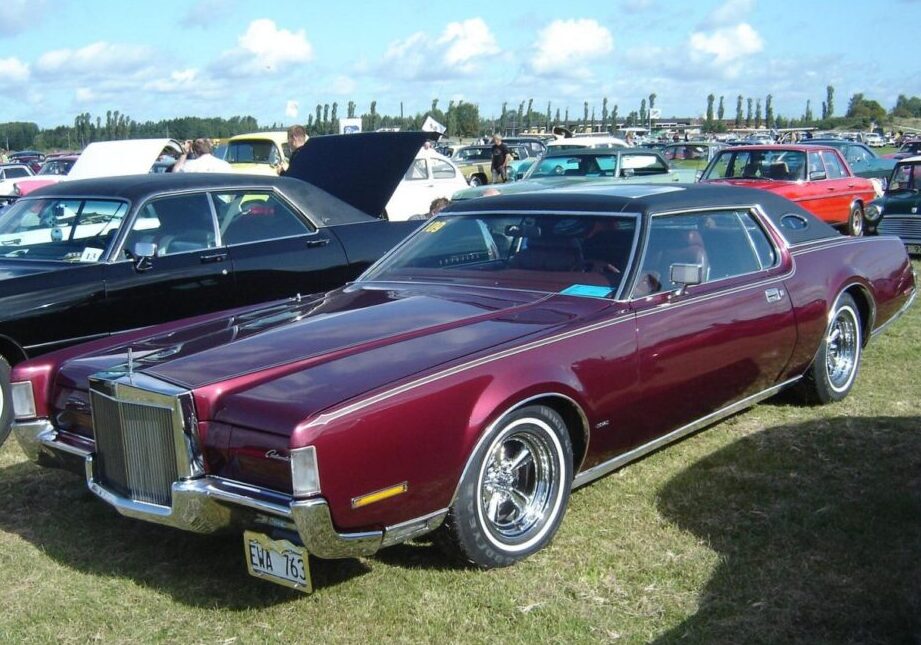
The Lincoln Continental Mark IV 7.5 V8 Automatic, produced from 1972 to 1973, represented a significant iteration of Ford’s personal luxury coupe. Falling within the fourth generation of the Continental Mark series (1969-1976), the Mark IV was characterized by its substantial size, opulent appointments, and powerful V8 engine options. This particular variant, equipped with the 7.5-liter (460 cubic inch) V8 producing 215 horsepower and a three-speed automatic transmission, occupied a prominent position in the Mark IV lineup, offering a balance of performance and luxury aimed at the discerning American buyer. It was a key player in the burgeoning personal luxury car segment, competing with rivals like the Cadillac Coupe de Ville and the Chrysler Imperial.
Technical Specifications
| Brand | Lincoln |
| Model | Continental Mark |
| Generation | Continental Mark IV |
| Type (Engine) | 7.5 V8 (215 Hp) Automatic |
| Start of production | 1972 |
| End of production | 1973 |
| Powertrain Architecture | Internal Combustion engine |
| Body type | Coupe |
| Seats | 4 |
| Doors | 2 |
| Fuel consumption (economy) – combined | 21.4 l/100 km |
| Fuel consumption (economy) – US mpg | 11 US mpg |
| Fuel consumption (economy) – UK mpg | 13.2 UK mpg |
| Fuel consumption (economy) – km/l | 4.7 km/l |
| Fuel Type | Petrol (Gasoline) |
| Acceleration 0 – 60 mph | 10.8 sec |
| Maximum speed | 190 km/h (118.06 mph) |
| Weight-to-power ratio | 10.5 kg/Hp, 94.8 Hp/tonne |
| Power | 215 Hp |
| Power per litre | 28.5 Hp/l |
| Engine layout | Front, Longitudinal |
| Engine Model/Code | Ford 385 |
| Engine displacement | 7538 cm3 (460 cu. in.) |
| Number of cylinders | 8 |
| Engine configuration | V-engine |
| Cylinder Bore | 110.74 mm (4.36 in.) |
| Piston Stroke | 97.79 mm (3.85 in.) |
| Compression ratio | 8.5:1 |
| Number of valves per cylinder | 2 |
| Fuel injection system | Carburettor |
| Engine aspiration | Naturally aspirated engine |
| Valvetrain | OHV |
| Engine oil capacity | 4.7 l (4.97 US qt | 4.14 UK qt) |
| Coolant | 19.4 l (20.5 US qt | 17.07 UK qt) |
| Kerb Weight | 2268 kg (5000.08 lbs.) |
| Trunk (boot) space – minimum | 450 l (15.89 cu. ft.) |
| Fuel tank capacity | 85 l (22.45 US gal | 18.7 UK gal) |
| Length | 5591 mm (220.12 in.) |
| Width | 2012 mm (79.21 in.) |
| Height | 1331 mm (52.4 in.) |
| Wheelbase | 3058 mm (120.39 in.) |
| Front track | 1600 mm (62.99 in.) |
| Rear (Back) track | 1603 mm (63.11 in.) |
| Drivetrain Architecture | The Internal combustion engine (ICE) drives the rear wheels of the vehicle. |
| Drive wheel | Rear wheel drive |
| Number of gears and type of gearbox | 3 gears, automatic transmission |
| Front suspension | Coil spring, Double wishbone |
| Rear suspension | Transverse stabilizer, Coil spring |
| Front brakes | Disc |
| Rear brakes | Drum |
| Power steering | Hydraulic Steering |
| Tires size | 225/75 R15 |
| Wheel rims size | 7J x 15 |
Powertrain & Engine Architecture
The heart of the Mark IV 7.5 V8 was the Ford 385 engine, a 7.5-liter (460 cubic inch) V8. This engine utilized a cast iron block and cylinder heads, with a two-barrel carburetor managing fuel delivery. The overhead valve (OHV) configuration, while traditional, proved reliable and relatively easy to maintain. The 385 engine was known for its substantial torque output, making it well-suited for the Mark IV’s considerable weight. Paired with the Ford C6 three-speed automatic transmission, the powertrain delivered smooth, if not particularly rapid, acceleration. The C6 was a robust and dependable unit, chosen for its durability and ability to handle the engine’s torque. While not offering the sophistication of more modern automatics, it provided comfortable cruising and adequate performance for the target demographic.
Driving Characteristics
The Mark IV 7.5 V8 Automatic offered a distinctly American driving experience. The emphasis was on comfortable cruising rather than sporty handling. The large displacement V8 provided ample low-end torque, making for effortless acceleration in typical driving situations. However, the car’s substantial weight (over 5,000 pounds) and the relatively simple three-speed automatic transmission meant that 0-60 mph times were in the neighborhood of 10.8 seconds. Compared to other Mark IV trims, such as those equipped with the 460 cubic inch engine with higher horsepower ratings, this variant offered a more relaxed driving experience. The automatic transmission, while convenient, did result in some power loss compared to the available manual transmission options (though manuals were rare in this model). The suspension, tuned for comfort, absorbed bumps well but didn’t offer particularly sharp handling.
Equipment & Trim Levels
The Mark IV 7.5 V8 Automatic came standard with a generous array of features befitting a luxury coupe of its era. These included power steering, power brakes, air conditioning, a tilt steering wheel, and plush carpeting. Upholstery typically consisted of cloth or vinyl, with optional leather available. The dashboard featured woodgrain accents and a comprehensive instrument cluster. Optional extras included a sunroof, rear seat entertainment system, and upgraded audio systems. The Mark IV was heavily customizable, allowing buyers to tailor the vehicle to their individual preferences. This particular variant, while not the most lavishly equipped, represented a solid mid-range offering within the Mark IV lineup.
Chassis & Braking
The Mark IV rode on a body-on-frame chassis, a common construction method for American cars of the period. The front suspension utilized a double wishbone setup with coil springs, while the rear suspension employed a solid axle with coil springs and a transverse stabilizer bar. Braking duties were handled by disc brakes at the front and drum brakes at the rear. Power steering was standard, making maneuvering the large coupe relatively easy. The chassis and braking system were designed for comfortable cruising and adequate stopping power, rather than high-performance handling.
Market Reception & Comparison
The Lincoln Continental Mark IV was a commercial success, appealing to buyers seeking a luxurious and spacious personal coupe. Critics generally praised the Mark IV’s comfortable ride, opulent interior, and powerful engine options. However, the car’s size and weight were often cited as drawbacks. The 7.5 V8 Automatic variant was viewed as a good all-around choice, offering a balance of performance and fuel economy (though fuel economy was still relatively poor by modern standards, averaging around 11 mpg). Compared to the higher-output 460 V8 models, this variant was more affordable and offered slightly better fuel efficiency, making it attractive to a wider range of buyers. Compared to the Cadillac Coupe de Ville, the Mark IV offered a slightly more modern design and a more comfortable ride.
Legacy
The Lincoln Continental Mark IV 7.5 V8 Automatic remains a popular classic car today, appreciated for its distinctive styling and comfortable driving experience. The Ford 385 engine, while not known for its cutting-edge technology, is generally considered to be a reliable and durable powerplant. However, like all classic cars, the Mark IV requires regular maintenance to keep it in good running condition. Rust can be a concern, particularly in areas with harsh winters. Parts availability is generally good, although some specific trim pieces can be difficult to find. The Mark IV represents a significant chapter in American automotive history, embodying the spirit of the personal luxury car era. Today, well-maintained examples command respectable prices in the collector car market, appealing to enthusiasts who appreciate the car’s unique blend of style, comfort, and power.