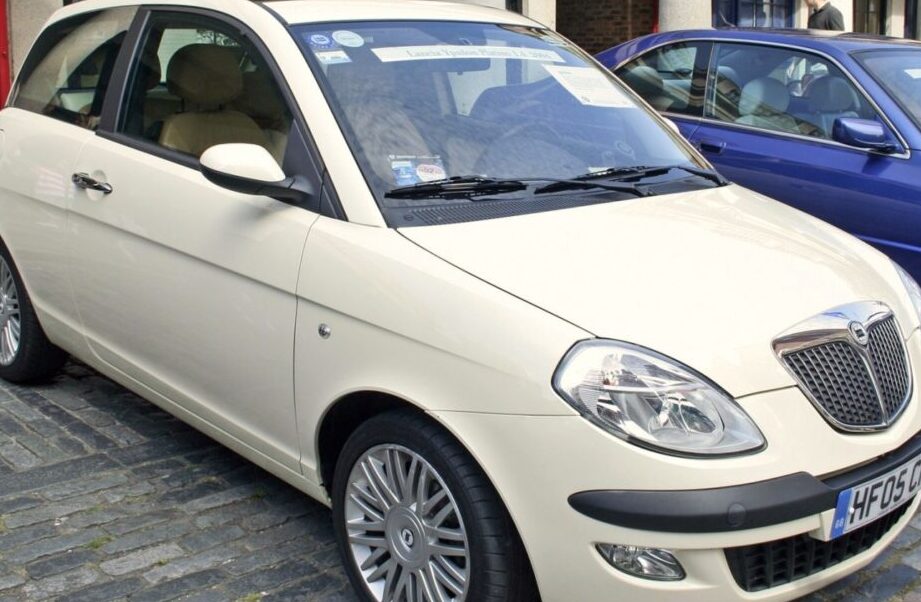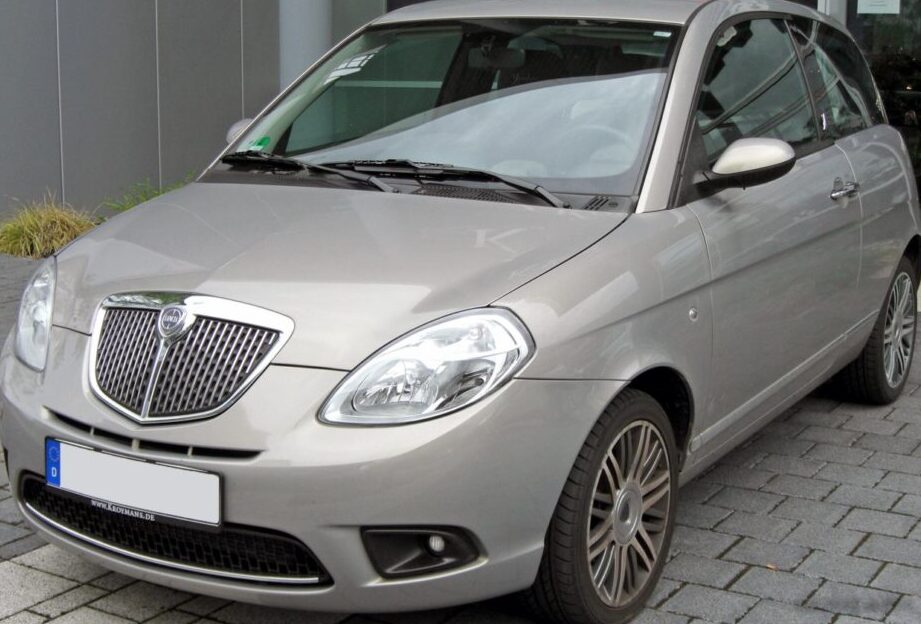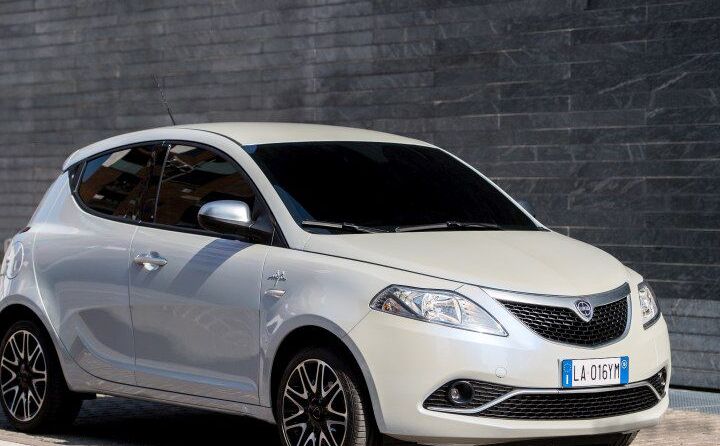
The Lancia Ypsilon (846 series, post-facelift introduced in 2015) 1.2 (69 hp) LPG represents a specific variant within the third generation of Lancia’s city car. Production of this particular configuration ran from 2016 until August 2018. Positioned as an entry-level offering, it aimed to provide an economical and practical transportation solution, particularly in markets where LPG conversions were popular. The Ypsilon, throughout its history, has been a significant model for Lancia, primarily focused on the European market, offering a blend of Italian style and compact dimensions. This facelifted version built upon the foundation of the 846 platform, originally launched in 2011, with updates to the exterior styling and interior features.
Technical Specifications
| Brand | Lancia |
| Model | Ypsilon |
| Generation | Ypsilon (846, facelift 2015) |
| Type (Engine) | 1.2 (69 Hp) LPG |
| Start of production | 2016 |
| End of production | August, 2018 |
| Powertrain Architecture | Internal Combustion engine |
| Body type | Hatchback |
| Seats | 5 |
| Doors | 5 |
| Fuel consumption (economy) – urban | 6.9 l/100 km (34.1 US mpg, 40.9 UK mpg, 14.5 km/l) |
| Fuel consumption (economy) – urban (LPG) | 8.7 l/100 km |
| Fuel consumption (economy) – extra urban | 4.4 l/100 km (53.5 US mpg, 64.2 UK mpg, 22.7 km/l) |
| Fuel consumption (economy) – extra urban (LPG) | 5.7 l/100 km |
| Fuel consumption (economy) – combined | 5.3 l/100 km (44.4 US mpg, 53.3 UK mpg, 18.9 km/l) |
| Fuel consumption (economy) – combined (LPG) | 6.8 l/100 km |
| CO2 emissions | 124 g/km |
| CO2 emissions (LPG) | 110 g/km |
| Fuel Type | Petrol / LPG |
| Acceleration 0 – 100 km/h | 15 sec |
| Acceleration 0 – 62 mph | 15 sec |
| Acceleration 0 – 60 mph | 14.3 sec |
| Maximum speed | 159 km/h (98.8 mph) |
| Emission standard | Euro 5 |
| Weight-to-power ratio | 14 kg/Hp, 71.5 Hp/tonne |
| Weight-to-torque ratio | 9.7 kg/Nm, 102.6 Nm/tonne |
| Power | 69 Hp @ 5500 rpm |
| Power per litre | 55.6 Hp/l |
| Torque | 99 Nm @ 3000 rpm (73.02 lb.-ft. @ 3000 rpm) |
| Engine layout | Front, Transverse |
| Engine Model/Code | 350 A1.000 |
| Engine displacement | 1242 cm3 (75.79 cu. in.) |
| Number of cylinders | 4 |
| Engine configuration | Inline |
| Compression ratio | 11:1 |
| Number of valves per cylinder | 2 |
| Fuel injection system | Multi-port manifold injection |
| Engine aspiration | Naturally aspirated engine |
| Engine oil capacity | 2.8 l (2.96 US qt, 2.46 UK qt) |
| Coolant | 4.9 l (5.18 US qt, 4.31 UK qt) |
| Kerb Weight | 965 kg (2127.46 lbs) |
| Trunk (boot) space – minimum | 210 l (7.42 cu. ft) |
| Fuel tank capacity | 40 l (10.57 US gal, 8.8 UK gal) |
| Fuel tank capacity (LPG) | 30.5 l |
| Length | 3842 mm (151.26 in) |
| Width | 1875 mm (73.82 in) |
| Height | 1520 mm (59.84 in) |
| Wheelbase | 2390 mm (94.09 in) |
| Front track | 1422 mm (55.98 in) |
| Rear (Back) track | 1414 mm (55.67 in) |
| Minimum turning circle | 9.4 m (30.84 ft) |
| Drivetrain Architecture | ICE, Front wheel drive |
| Drive wheel | Front wheel drive |
| Number of gears and type of gearbox | 5 gears, manual transmission |
| Front suspension | Independent, McPherson with coil spring and anti-roll bar |
| Rear suspension | Semi-independent, coil spring |
| Front brakes | Disc |
| Rear brakes | Drum |
| Assisting systems | ABS (Anti-lock braking system) |
| Steering type | Steering rack and pinion |
| Power steering | Electric Steering |
| Tires size | 185/55 R15 82 H; 195/45 R16 84 H |
| Wheel rims size | 15; 16 |
Powertrain & Engine Architecture
The heart of this Ypsilon variant is the 1.2-liter, naturally aspirated inline-four cylinder engine, designated as the 350 A1.000. This engine is a relatively simple design, featuring a single overhead camshaft (SOHC) operating two valves per cylinder. Fuel delivery is managed by a multi-point fuel injection system. The engine produces 69 horsepower at 5500 rpm and 99 Nm (73 lb-ft) of torque at 3000 rpm. The LPG conversion is a key feature, allowing the vehicle to run on either petrol or liquefied petroleum gas, offering potential fuel cost savings. The engine is transversely mounted at the front of the vehicle. The transmission is a five-speed manual gearbox, chosen for its simplicity and cost-effectiveness in this entry-level model.
Driving Characteristics
The 1.2L 69 hp Ypsilon with a manual transmission delivers modest performance. Acceleration from 0-100 km/h (0-62 mph) takes around 15 seconds, and the top speed is approximately 159 km/h (98.8 mph). The gear ratios are tuned for economy rather than outright speed. The engine feels strained when accelerating hard, and overtaking requires careful planning. Compared to higher-output versions of the Ypsilon, such as those with the 1.4-liter engine, this variant feels significantly slower. However, the LPG system provides a smoother running experience and can improve throttle response when operating on gas. The manual gearbox provides a more engaging driving experience than an automatic would, but it does require more driver involvement.
Equipment & Trim Levels
The 1.2 LPG Ypsilon typically came with a basic level of equipment. Standard features generally included power steering, ABS brakes, a driver’s airbag, and basic audio system. Interior upholstery was typically cloth, and the dashboard featured a simple, functional design. Optional extras could include air conditioning, electric windows, and a more advanced audio system. The trim level was generally positioned as the base model, focusing on affordability and practicality.
Chassis & Braking
The Ypsilon 846 utilizes a McPherson strut suspension setup at the front, providing a reasonable level of comfort and handling. The rear suspension is a semi-independent torsion beam arrangement, which is a cost-effective solution for compact cars. The front brakes are disc brakes, while the rear brakes are drum brakes. This configuration is typical for vehicles in this weight class and price range. The steering is rack and pinion with electric power assistance, offering light and easy steering feel.
Market Reception & Comparison
The 1.2 LPG Ypsilon was generally well-received as an affordable and economical city car. Critics praised its fuel efficiency, particularly when running on LPG, and its compact size made it easy to maneuver in urban environments. However, the engine’s lack of power was a common criticism. Compared to other trims in the Ypsilon lineup, such as the 1.4-liter versions, this variant offered lower performance but also a lower purchase price and potentially lower running costs due to the LPG system. It competed with other small city cars like the Fiat Panda, Renault Twingo, and Peugeot 107.
Legacy
The 1.2 LPG Ypsilon, while not the most powerful or technologically advanced version of the Ypsilon, has proven to be a relatively reliable and durable vehicle. The 350 A1.000 engine is known for its simplicity and robustness. In the used car market, these models are often sought after by buyers looking for an affordable and economical city car. The LPG conversion can add to the vehicle’s appeal, particularly in regions where LPG is readily available and relatively inexpensive. Maintenance costs are generally low, and parts availability is good, making it a practical choice for budget-conscious buyers.