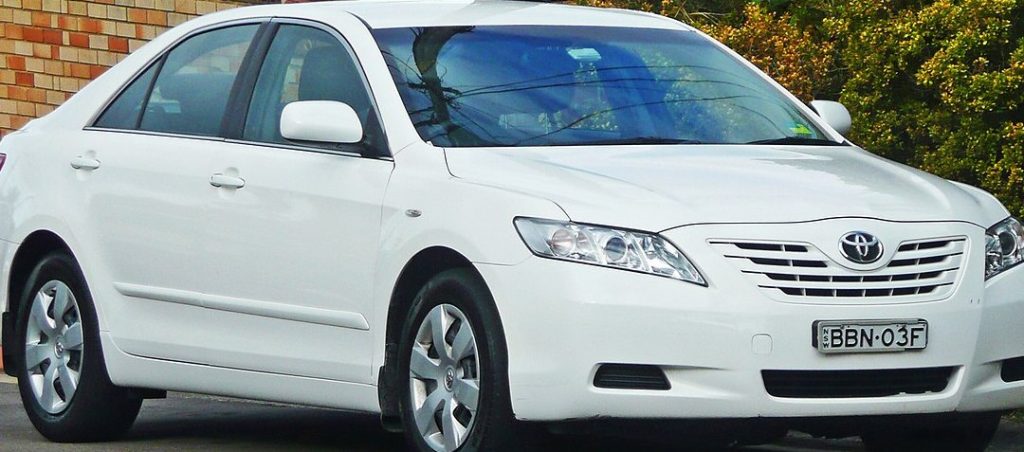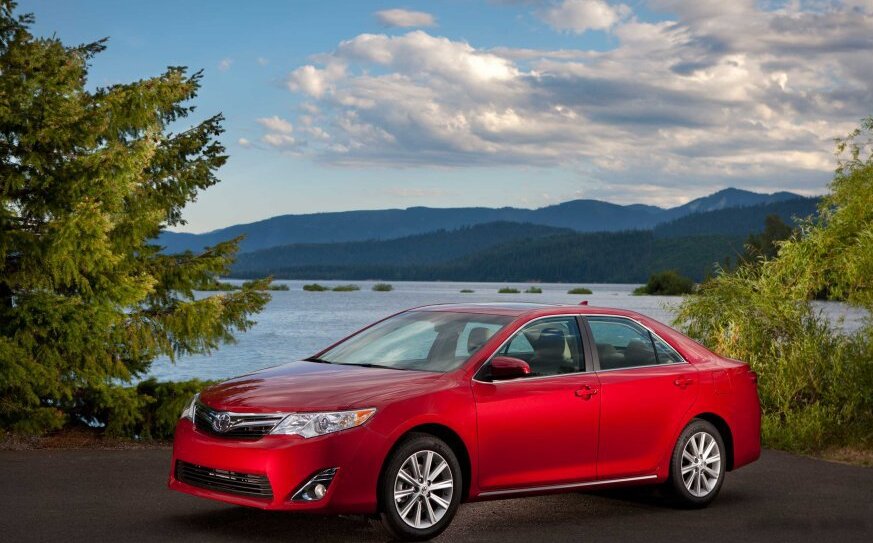
The Toyota Camry VII (XV50) 3.5 V6 Automatic, produced from 2011 to 2014, represented the top-tier performance option within the seventh generation of Toyota’s globally successful Camry sedan. Positioned as the premium trim, it catered to buyers seeking a blend of comfort, refinement, and substantial power in a mid-size family car. This variant was a key offering in the North American market, where the Camry consistently ranked among the best-selling vehicles, competing directly with rivals like the Honda Accord and Nissan Maxima. The XV50 generation Camry, built on the Toyota K platform, aimed to elevate the Camry’s image with improved styling, a more sophisticated interior, and enhanced driving dynamics.
Technical Specifications
| Brand | Toyota |
| Model | Camry |
| Generation | Camry VII (XV50) |
| Type (Engine) | 3.5 V6 (268 Hp) Automatic |
| Start of production | 2011 |
| End of production | 2014 |
| Powertrain Architecture | Internal Combustion engine |
| Body type | Sedan |
| Seats | 5 |
| Doors | 4 |
| Fuel consumption (economy) – urban | 11.2 l/100 km (21 US mpg, 25.2 UK mpg, 8.9 km/l) |
| Fuel consumption (economy) – extra urban | 7.8 l/100 km (30.2 US mpg, 36.2 UK mpg, 12.8 km/l) |
| Fuel consumption (economy) – combined | 9.4 l/100 km (25 US mpg, 30.1 UK mpg, 10.6 km/l) |
| Fuel Type | Petrol (Gasoline) |
| Weight-to-power ratio | 5.7 kg/Hp, 174 Hp/tonne |
| Weight-to-torque ratio | 4.6 kg/Nm, 218.2 Nm/tonne |
| Power | 268 Hp @ 6000 rpm |
| Power per litre | 77.5 Hp/l |
| Torque | 336 Nm @ 4700 rpm (247.82 lb.-ft. @ 4700 rpm) |
| Engine layout | Front, Transverse |
| Engine Model/Code | 2GR-FE |
| Engine displacement | 3456 cm3 (210.9 cu. in.) |
| Number of cylinders | 6 |
| Engine configuration | V-engine |
| Cylinder Bore | 94 mm (3.7 in.) |
| Piston Stroke | 83 mm (3.27 in.) |
| Compression ratio | 10.8:1 |
| Number of valves per cylinder | 4 |
| Fuel injection system | Multi-port manifold injection |
| Engine aspiration | Naturally aspirated engine |
| Valvetrain | DOHC, Dual VVT-i |
| Engine oil capacity | 6.1 l (6.45 US qt | 5.37 UK qt) |
| Coolant | 9.2 l (9.72 US qt | 8.09 UK qt) |
| Kerb Weight | 1540-1551 kg (3395.12 – 3419.37 lbs.) |
| Trunk (boot) space – minimum | 436 l (15.4 cu. ft.) |
| Fuel tank capacity | 64 l (16.91 US gal | 14.08 UK gal) |
| Length | 4806 mm (189.21 in.) |
| Width | 1821 mm (71.69 in.) |
| Height | 1470 mm (57.87 in.) |
| Wheelbase | 2776 mm (109.29 in.) |
| Front track | 1575-1585 mm (62.01 – 62.4 in.) |
| Rear (Back) track | 1566-1575 mm (61.65 – 62.01 in.) |
| Ride height (ground clearance) | 155 mm (6.1 in.) |
| Drag coefficient (Cd) | 0.280 |
| Minimum turning circle (turning diameter) | 11.1 m (36.42 ft.) |
| Drivetrain Architecture | The Internal combustion engine (ICE) drives the front wheels of the vehicle. |
| Drive wheel | Front wheel drive |
| Number of gears and type of gearbox | 6 gears, automatic transmission ECT-i |
| Front suspension | Independent, type McPherson with coil spring and anti-roll bar |
| Rear suspension | Independent multi-link spring suspension with stabilizer |
| Front brakes | Ventilated discs |
| Rear brakes | Disc |
| Assisting systems | ABS (Anti-lock braking system) |
| Steering type | Steering rack and pinion |
| Power steering | Electric Steering |
| Tires size | 215/55 R17; 225/45 R18 |
| Wheel rims size | 7.0J x 17; 7.5J x 18 |
Powertrain & Engine Architecture
The heart of the XV50 3.5 V6 was the 2GR-FE engine, a 3.5-liter (3456 cc) naturally aspirated V6. This engine was a mainstay in Toyota’s lineup, known for its reliability and smooth power delivery. It featured a 60-degree V-angle, dual overhead camshafts (DOHC), and Toyota’s Variable Valve Timing-intelligent (VVT-i) system on both intake and exhaust valves. This VVT-i system optimized valve timing for improved performance and fuel efficiency across the engine’s operating range. The 2GR-FE utilized multi-port fuel injection, delivering fuel directly to each cylinder. The engine produced 268 horsepower at 6,000 rpm and 248 lb-ft of torque at 4,700 rpm. Paired with this engine was a six-speed automatic transmission, designated ECT-i (Electronic Control Transmission – intelligent). This transmission offered smooth shifts and was tuned for a balance between performance and fuel economy. The transmission featured overdrive and manual shift control.
Driving Characteristics
The 3.5 V6 Automatic Camry offered a noticeably more spirited driving experience compared to the base 2.5-liter four-cylinder models. Acceleration was brisk, allowing for confident merging and overtaking maneuvers. While not a sports sedan, the V6 provided ample power for everyday driving situations. The six-speed automatic transmission generally shifted smoothly, although some reviewers noted a slight hesitation during kickdown. The gear ratios were optimized for both highway cruising and responsive acceleration. Compared to the manual transmission options available on other Camry trims, the automatic prioritized ease of use and comfort over outright performance. The automatic’s tuning emphasized smooth transitions and reduced driver fatigue.
Equipment & Trim Levels
The 3.5 V6 Camry typically came standard with a generous array of features. These included leather upholstery, power-adjustable front seats (often with heating), a premium audio system (often a JBL setup), automatic climate control, and keyless entry with push-button start. Higher trim levels within the 3.5 V6 range added features like a sunroof, navigation system, and upgraded interior trim. Optional extras included a rear-seat entertainment system, blind-spot monitoring, and lane departure alert. The interior design focused on a blend of comfort and functionality, with a user-friendly dashboard layout and ample interior space.
Chassis & Braking
The XV50 Camry featured an independent front suspension with McPherson struts and a multi-link rear suspension. This suspension setup provided a comfortable ride while maintaining reasonable handling characteristics. Stabilizer bars were fitted to both the front and rear axles to reduce body roll during cornering. Braking duties were handled by ventilated disc brakes at the front and solid disc brakes at the rear. The braking system was augmented by an Anti-lock Braking System (ABS) to prevent wheel lockup during hard braking. Steering was rack-and-pinion with electric power assist, providing a light and responsive feel.
Market Reception & Comparison
The 3.5 V6 Camry was generally well-received by automotive critics. It was praised for its smooth and powerful engine, comfortable ride, and spacious interior. However, some reviewers noted that the handling wasn’t as sporty as some of its rivals. Compared to the four-cylinder Camry, the V6 offered a significant performance upgrade, but at the cost of slightly lower fuel economy. The V6 also commanded a higher price tag. Against competitors like the Honda Accord V6 and Nissan Maxima, the Camry offered a compelling combination of value, reliability, and refinement. Fuel economy was rated at 25 mpg combined, which was respectable for a V6-powered sedan of its size.
Legacy
The 2GR-FE engine, in general, has proven to be exceptionally reliable, and the XV50 Camry 3.5 V6 is no exception. These vehicles are known for their longevity and relatively low maintenance costs. On the used car market, the 3.5 V6 Camry holds its value well due to its reputation for reliability and its desirable performance characteristics. Common maintenance items include routine oil changes, coolant flushes, and occasional replacement of wear items like brakes and tires. The automatic transmission is generally robust, but proper maintenance (fluid changes) is crucial for long-term reliability. Today, the XV50 3.5 V6 Camry remains a popular choice for buyers seeking a dependable and comfortable mid-size sedan with a bit more power than the base models offer.