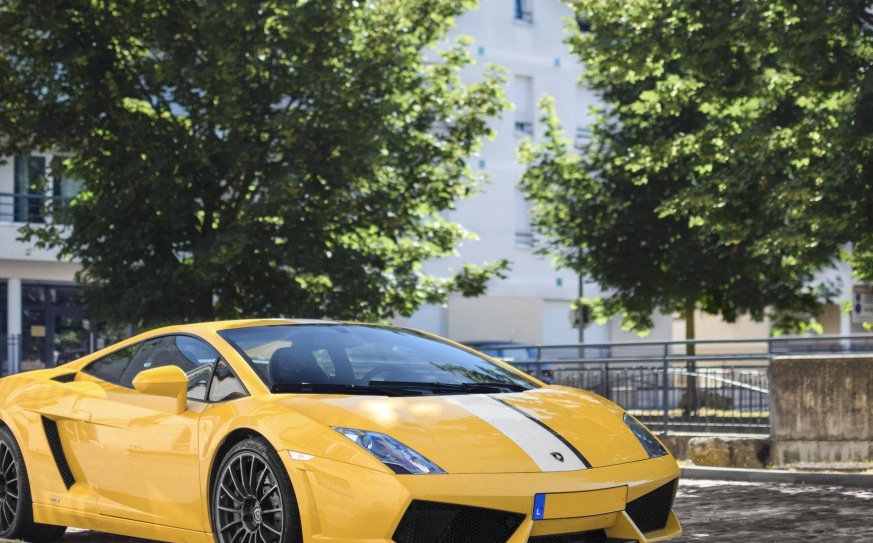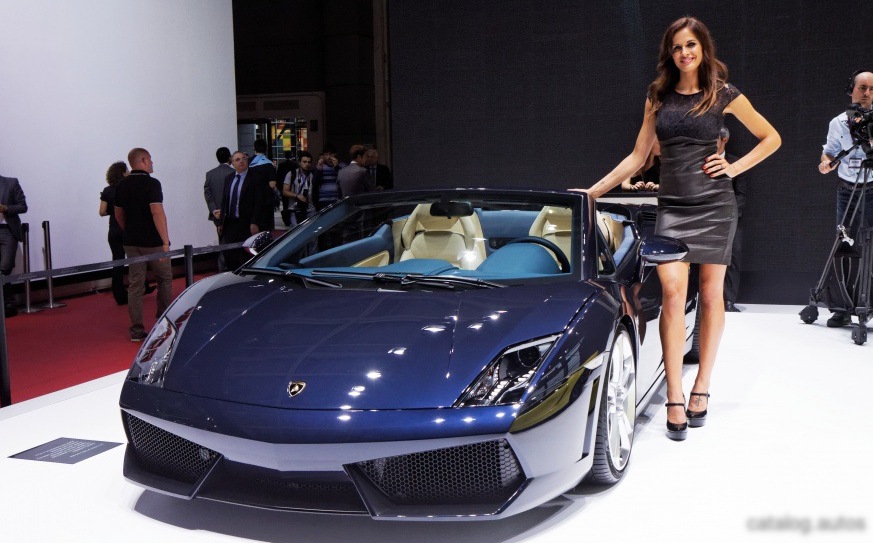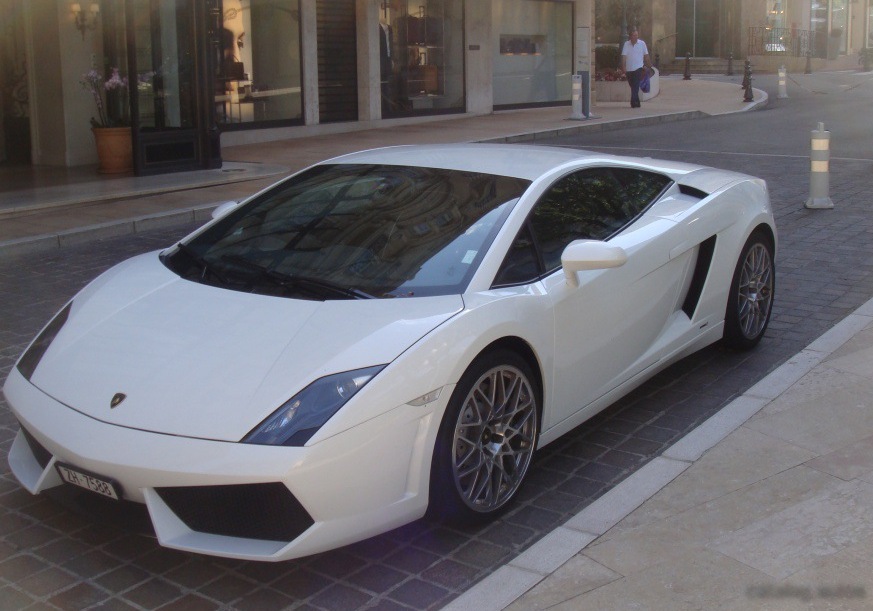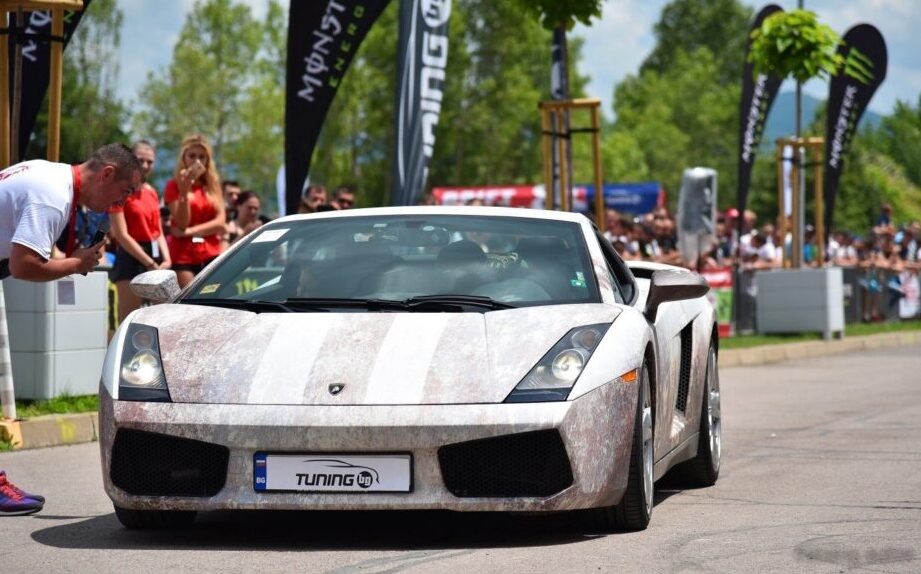
The Lamborghini Gallardo Coupe Superleggera 5.0 V10, produced from 2007 to 2008, represented a focused, high-performance iteration of Lamborghini’s entry-level model. Positioned above the standard Gallardo in terms of performance and price, the Superleggera aimed to deliver a more visceral and track-focused driving experience. It was a key model within the first generation (2003-2008) of the Gallardo, built on the Audi-derived aluminum space frame chassis, and served as a bridge between the standard Gallardo and the even more extreme Gallardo Performante that followed. The “Superleggera” designation, meaning “super light” in Italian, accurately reflected the car’s weight reduction efforts, contributing to its enhanced performance.
Technical Specifications
| Brand | Lamborghini |
| Model | Gallardo |
| Generation | Gallardo Coupe |
| Type (Engine) | Superleggera 5.0 V10 (530 Hp) AWD |
| Start of production | 2007 |
| End of production | 2008 |
| Powertrain Architecture | Internal Combustion engine |
| Body type | Coupe |
| Seats | 2 |
| Doors | 2 |
| Fuel consumption (economy) – urban | 24.8 l/100 km (9.5 US mpg, 11.4 UK mpg, 4 km/l) |
| Fuel consumption (economy) – extra urban | 12.4 l/100 km (19 US mpg, 22.8 UK mpg, 8.1 km/l) |
| Fuel consumption (economy) – combined | 17 l/100 km (13.8 US mpg, 16.6 UK mpg, 5.9 km/l) |
| CO2 emissions | 400 g/km |
| Fuel Type | Petrol (Gasoline) |
| Acceleration 0 – 100 km/h | 3.8 sec |
| Acceleration 0 – 62 mph | 3.8 sec |
| Acceleration 0 – 60 mph | 3.6 sec |
| Maximum speed | 315 km/h (195.73 mph) |
| Weight-to-power ratio | 2.5 kg/Hp, 398.5 Hp/tonne |
| Weight-to-torque ratio | 2.6 kg/Nm, 383.5 Nm/tonne |
| Power | 530 Hp @ 8000 rpm |
| Power per litre | 106.8 Hp/l |
| Torque | 510 Nm @ 4250 rpm (376.16 lb.-ft. @ 4250 rpm) |
| Engine layout | Middle, Longitudinal |
| Engine Model/Code | 07L |
| Engine displacement | 4961 cm3 (302.74 cu. in.) |
| Number of cylinders | 10 |
| Engine configuration | V-engine |
| Cylinder Bore | 82.5 mm (3.25 in.) |
| Piston Stroke | 92.8 mm (3.65 in.) |
| Compression ratio | 11:1 |
| Number of valves per cylinder | 4 |
| Fuel injection system | Multi-port manifold injection |
| Engine aspiration | Naturally aspirated engine |
| Valvetrain | DOHC, VVT |
| Engine oil capacity | 9.5 l (10.04 US qt | 8.36 UK qt) |
| Coolant | 21 l (22.19 US qt | 18.48 UK qt) |
| Kerb Weight | 1330 kg (2932.15 lbs.) |
| Max. weight | 1800 kg (3968.32 lbs.) |
| Max load | 470 kg (1036.17 lbs.) |
| Trunk (boot) space – minimum | 110 l (3.88 cu. ft.) |
| Fuel tank capacity | 90 l (23.78 US gal | 19.8 UK gal) |
| Length | 4300 mm (169.29 in.) |
| Width | 1900 mm (74.8 in.) |
| Height | 1165 mm (45.87 in.) |
| Wheelbase | 2560 mm (100.79 in.) |
| Front track | 1622 mm (63.86 in.) |
| Rear (Back) track | 1592 mm (62.68 in.) |
| Minimum turning circle | 11.5 m (37.73 ft.) |
| Drive wheel | All wheel drive (4×4) |
| Number of gears and type of gearbox | 6 gears, manual transmission |
| Front suspension | Double wishbone |
| Rear suspension | Double wishbone |
| Front brakes | Ventilated discs |
| Rear brakes | Ventilated discs |
| Assisting systems | ABS (Anti-lock braking system) |
| Steering type | Steering rack and pinion |
| Tires size | 235/35 ZR19; 295/30 R19 |
| Wheel rims size | 8.5J x 19; 11J x 19 |
Powertrain & Engine Architecture
At the heart of the Superleggera lay the 07L 4.961-liter naturally aspirated V10 engine. This engine, derived from the standard Gallardo’s V10, was tuned to produce 530 horsepower at 8,000 rpm and 376 lb-ft of torque at 4,250 rpm. The engine featured a 90-degree V-angle, four valves per cylinder, and double overhead camshafts (DOHC) with variable valve timing (VVT). Fuel delivery was handled by a multi-port fuel injection system. The engine’s architecture was inherently balanced, contributing to its smooth operation and high-revving nature. The Superleggera exclusively came with a 6-speed manual transmission, a deliberate choice to enhance driver engagement and reduce weight. The all-wheel drive system utilized a viscous coupling to distribute power between the front and rear axles, providing optimal traction.
Driving Characteristics
The Superleggera’s driving experience was defined by its responsiveness and agility. The weight reduction – achieved through the extensive use of carbon fiber in the body panels, interior trim, and even the engine cover – resulted in a significantly improved power-to-weight ratio. This translated into blistering acceleration; 0-60 mph was dispatched in around 3.6 seconds, and top speed reached 195.73 mph. The manual transmission demanded precise shifting, rewarding skilled drivers with a direct connection to the engine. Compared to the standard Gallardo, the Superleggera felt noticeably sharper and more eager to change direction. While the standard Gallardo offered a more forgiving experience, the Superleggera demanded more from the driver, making it a more rewarding machine for enthusiasts.
Equipment & Trim Levels
The Superleggera was relatively sparsely equipped compared to other Gallardo variants, reflecting its focus on performance. Standard features included leather upholstery, air conditioning, and a basic audio system. However, Lamborghini offered a range of optional extras, including carbon fiber interior trim, upgraded audio systems, and various exterior customization options. The interior was characterized by a minimalist design, with a focus on functionality. The use of carbon fiber throughout the cabin not only reduced weight but also added a sporty aesthetic. The Superleggera did not offer the same level of luxury appointments as some of the more comfort-oriented Gallardo models.
Chassis & Braking
The Gallardo Superleggera utilized a lightweight aluminum space frame chassis, providing a rigid and strong foundation for the car. The suspension consisted of double wishbones at all four corners, optimized for performance handling. The braking system featured ventilated discs on all four wheels, providing ample stopping power. ABS (Anti-lock Braking System) was standard. The Superleggera’s suspension was tuned to be firmer than the standard Gallardo, further enhancing its handling capabilities. The tires, sized 235/35 ZR19 at the front and 295/30 R19 at the rear, were specifically chosen for their grip and performance characteristics.
Market Reception & Comparison
The Superleggera was generally well-received by automotive critics, who praised its performance, handling, and engaging driving experience. However, some reviewers noted its firm ride and relatively sparse interior. Compared to the standard Gallardo, the Superleggera offered a significant performance upgrade, but at the cost of some comfort and refinement. Against other high-performance supercars of the era, the Superleggera offered a compelling combination of performance, exclusivity, and Italian flair. Fuel economy, unsurprisingly, was poor, with combined figures around 13.8 US mpg. Reliability was generally good for a supercar, but maintenance costs were substantial.
Legacy
The Lamborghini Gallardo Superleggera 5.0 V10 remains a highly sought-after model among collectors and enthusiasts. Its limited production run and focus on performance have contributed to its enduring appeal. The powertrain, while demanding in terms of maintenance, has proven to be relatively robust when properly cared for. Today, the Superleggera represents a significant chapter in Lamborghini’s history, showcasing the brand’s commitment to building high-performance, emotionally engaging supercars. The Superleggera paved the way for even more focused Gallardo variants, such as the Performante, and helped solidify Lamborghini’s position as a leader in the supercar segment. Values for well-maintained examples have steadily increased in recent years, reflecting its growing desirability.