
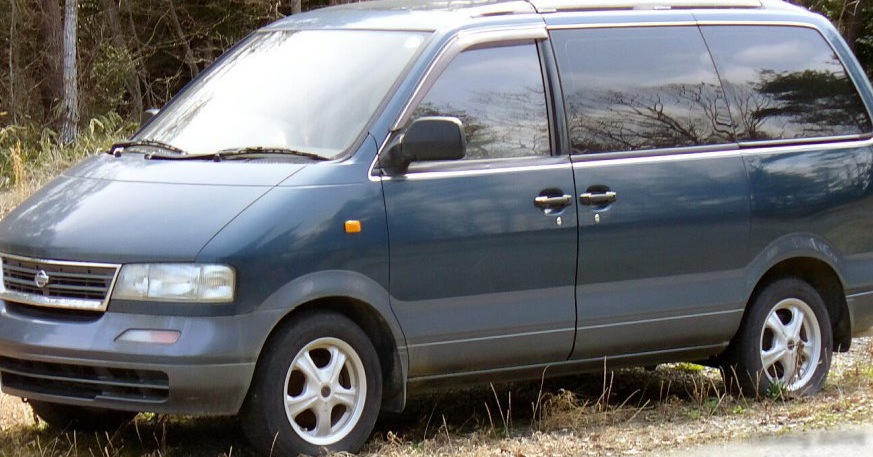
The Nissan Largo (W30), specifically the 2.0 TDi variant producing 100 horsepower, was a popular multi-purpose vehicle (MPV) manufactured from 1990 to 2000. Positioned as a practical and spacious family vehicle, the W30 Largo primarily served the Japanese domestic market (JDM) and was also exported to select regions, including Europe and Australia. This particular diesel-powered version aimed to provide a balance between fuel efficiency and adequate performance for everyday use, catering to families needing a versatile seven-seater. It occupied a middle ground in the Largo lineup, offering a more economical alternative to the gasoline-powered models while providing more power than the base engine options.
Technical Specifications
| Brand | Nissan |
| Model | Largo |
| Generation | Largo (W30) |
| Type (Engine) | 2.0 TDi (100 Hp) |
| Start of production | 1990 |
| End of production | 2000 |
| Powertrain Architecture | Internal Combustion engine |
| Body type | Minivan |
| Seats | 7 |
| Doors | 5 |
| Fuel consumption (urban) | 11.7 l/100 km (20.1 US mpg) |
| Fuel consumption (extra urban) | 6.67 l/100 km (35.3 US mpg) |
| Fuel Type | Diesel |
| Weight-to-power ratio | 16.2 kg/Hp |
| Weight-to-torque ratio | 9.2 kg/Nm |
| Power | 100 Hp @ 4400 rpm |
| Power per litre | 50.7 Hp/l |
| Torque | 177 Nm @ 2400 rpm (130.55 lb.-ft. @ 2400 rpm) |
| Engine layout | Front, Transverse |
| Engine displacement | 1974 cm3 (120.46 cu. in.) |
| Number of cylinders | 4 |
| Engine configuration | Inline |
| Cylinder Bore | 84.5 mm (3.33 in.) |
| Piston Stroke | 88 mm (3.46 in.) |
| Compression ratio | 22.2:1 |
| Number of valves per cylinder | 4 |
| Fuel injection system | Precombustion chamber injection |
| Engine aspiration | Turbocharger |
| Valvetrain | OHC |
| Kerb Weight | 1620 kg (3571.49 lbs.) |
| Max. weight | 2380 kg (5247 lbs.) |
| Max load | 760 kg (1675.51 lbs.) |
| Fuel tank capacity | 60 l (15.85 US gal) |
| Length | 4610 mm (181.5 in.) |
| Width | 1745 mm (68.7 in.) |
| Height | 1905 mm (75 in.) |
| Wheelbase | 2735 mm (107.68 in.) |
| Front track | 1485 mm (58.46 in.) |
| Rear track | 1480 mm (58.27 in.) |
| Drivetrain | Front wheel drive |
| Number of gears | 5 |
| Gearbox type | Manual transmission |
| Front suspension | Coil spring |
| Rear suspension | Coil spring |
| Front brakes | Disc |
| Rear brakes | Disc |
| Assisting systems | ABS (Anti-lock braking system) |
| Steering type | Steering rack and pinion |
| Power steering | Hydraulic |
| Tires size | 195/70 R14 |
Powertrain & Engine Architecture
The heart of the Largo 2.0 TDi is the Nissan CD20T engine, a 1974cc inline-four cylinder diesel. This engine utilized a precombustion chamber injection system, a common technology for diesel engines of the era, designed to improve combustion efficiency and reduce noise. The addition of a turbocharger significantly boosted power output to 100 horsepower at 4400 rpm and 177 Nm (130.55 lb-ft) of torque at 2400 rpm. The engine featured an overhead camshaft (OHC) valvetrain with four valves per cylinder. The five-speed manual transmission was the standard offering for this variant, providing a balance between fuel economy and drivability. The engine’s transverse mounting within the front-wheel-drive configuration contributed to maximizing interior space. The CD20T was a robust engine, known for its durability and relatively simple design, making it easier to maintain compared to more complex contemporary diesel engines.
Driving Characteristics
The 2.0 TDi Largo, equipped with the five-speed manual transmission, offered a reasonably refined driving experience for its class. While not particularly sporty, the turbo-diesel engine provided adequate power for highway cruising and overtaking maneuvers. The gear ratios were tuned for fuel efficiency, meaning that the engine needed to be revved somewhat to access its peak power. Compared to the gasoline-powered Largos, the diesel offered significantly better fuel economy, but at the expense of outright acceleration. The manual transmission allowed for greater driver control, but the shift quality wasn’t as precise as in some contemporary European vehicles. The Largo’s focus was on comfort and practicality, and the 2.0 TDi powertrain delivered on those fronts. The turbo lag was noticeable, but once spooled up, the engine provided a useful surge of torque for merging and passing. The steering was light and easy, making it well-suited for urban driving.
Equipment & Trim Levels
The 2.0 TDi Largo typically came with a respectable level of standard equipment. This included power steering, central locking, and an AM/FM radio. Interior upholstery was typically cloth, with a durable and practical design. Higher trim levels offered options such as air conditioning, power windows, and upgraded audio systems. The Largo’s interior was designed with family use in mind, featuring ample storage compartments and comfortable seating for seven passengers. The dashboard layout was functional and straightforward, prioritizing ease of use over stylistic flair. Some models also included features like a tilt-adjustable steering wheel and a rear window wiper. The overall impression was one of practicality and value, rather than luxury.
Chassis & Braking
The Largo’s chassis employed a coil spring suspension system at both the front and rear, providing a comfortable ride quality. The front brakes were discs, offering good stopping power, while the rear brakes were also discs, a feature that was relatively uncommon in vehicles of this class at the time. An Anti-lock Braking System (ABS) was included as standard equipment, enhancing safety. The steering utilized a rack and pinion system with hydraulic power assistance, providing light and precise steering feel. The vehicle rode on 195/70 R14 tires, which offered a good balance between ride comfort and handling. The suspension was tuned for comfort, absorbing bumps and irregularities in the road surface effectively. The relatively wide track contributed to stability during cornering.
Market Reception & Comparison
The Nissan Largo 2.0 TDi was generally well-received in markets where it was sold. Critics praised its spacious interior, fuel efficiency, and practicality. However, some reviewers noted that the diesel engine was somewhat noisy and lacked the refinement of some of its competitors. Compared to other MPVs available at the time, such as the Toyota Previa or the Honda Odyssey, the Largo offered a more affordable option, particularly in diesel guise. The 2.0 TDi variant was often seen as a sensible choice for families prioritizing fuel economy and space over performance. It offered a compelling alternative to larger, more expensive MPVs, particularly for those who didn’t require the extra performance of a gasoline engine.
Legacy
The Nissan Largo (W30) 2.0 TDi has developed a reputation for reliability, particularly the CD20T engine. While finding parts can be challenging in some regions due to its age and limited production outside of Japan, the engine itself is known to be durable and long-lasting when properly maintained. In the used car market, the Largo 2.0 TDi remains a relatively affordable option for those seeking a spacious and practical MPV. Its simple mechanical design and robust construction make it a popular choice for those who value reliability and ease of maintenance. The W30 Largo represents a significant chapter in Nissan’s history of producing versatile and family-friendly vehicles. It remains a testament to the enduring appeal of a well-designed and reliable MPV.
