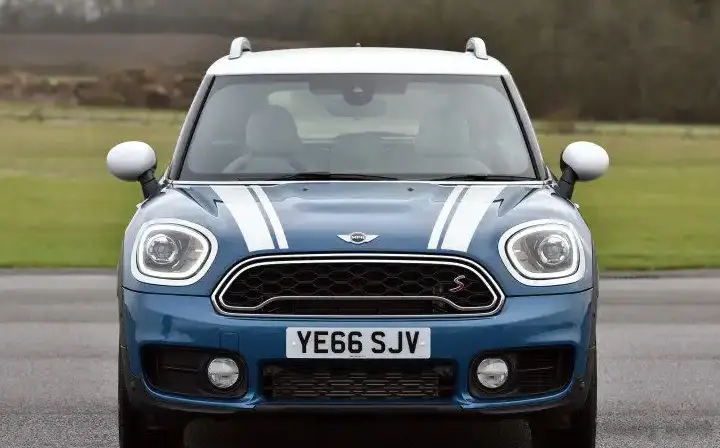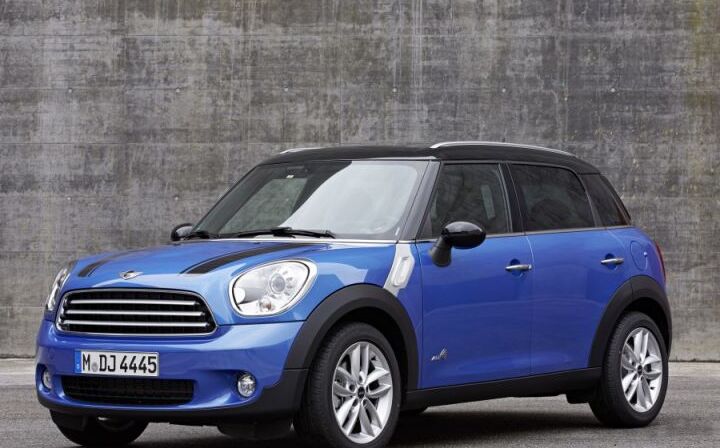
The Mini Countryman (R60) Cooper D 2.0 Automatic, produced between 2010 and 2014, represented Mini’s entry into the compact SUV segment. This variant, powered by a 2.0-liter turbocharged diesel engine producing 112 horsepower, was positioned as a fuel-efficient and practical option within the Countryman lineup. It served as a more economical alternative to the Cooper S and John Cooper Works models, appealing to buyers prioritizing fuel economy and everyday usability over outright performance. The R60 Countryman was the first crossover vehicle offered by Mini, built on a stretched version of the BMW Mini platform (1HX0/A3) and aimed at broadening the brand’s appeal beyond its traditional, smaller hatchback offerings.
Technical Specifications
| Brand | Mini |
| Model | Countryman |
| Generation | Countryman (R60) |
| Type (Engine) | Cooper D 2.0 (112 Hp) Automatic |
| Start of production | 2010 |
| End of production | 2014 |
| Powertrain Architecture | Internal Combustion engine |
| Body type | SUV |
| Seats | 4 |
| Doors | 5 |
| Fuel consumption (urban) | 7.2 l/100 km (32.7 US mpg) |
| Fuel consumption (extra urban) | 4.7 l/100 km (50 US mpg) |
| Fuel consumption (combined) | 5.6 l/100 km (42 US mpg) |
| CO2 emissions | 149 g/km |
| Fuel Type | Diesel |
| Acceleration 0 – 100 km/h | 11.3 sec |
| Acceleration 0 – 62 mph | 11.3 sec |
| Acceleration 0 – 60 mph | 10.7 sec |
| Maximum speed | 180 km/h (111.85 mph) |
| Emission standard | Euro 5 |
| Weight-to-power ratio | 11.9 kg/Hp |
| Weight-to-torque ratio | 4.9 kg/Nm |
| Power | 112 Hp @ 4000 rpm |
| Torque | 270 Nm @ 1750-2250 rpm (199.14 lb.-ft.) |
| Engine layout | Front, Transverse |
| Engine Model/Code | N47C20A |
| Engine displacement | 1995 cm3 (121.74 cu. in.) |
| Number of cylinders | 4 |
| Engine configuration | Inline |
| Cylinder Bore | 84 mm (3.31 in.) |
| Piston Stroke | 90 mm (3.54 in.) |
| Compression ratio | 16.5:1 |
| Number of valves per cylinder | 4 |
| Fuel injection system | Diesel Commonrail |
| Engine aspiration | Turbocharger, Intercooler |
| Engine oil capacity | 5.2 l (5.49 US qt | 4.58 UK qt) |
| Coolant | 5.4 l (5.71 US qt | 4.75 UK qt) |
| Kerb Weight | 1335 kg (2943.17 lbs.) |
| Max. weight | 1805 kg (3979.34 lbs.) |
| Max load | 470 kg (1036.17 lbs.) |
| Trunk (boot) space – minimum | 350 l (12.36 cu. ft.) |
| Trunk (boot) space – maximum | 1170 l (41.32 cu. ft.) |
| Fuel tank capacity | 47 l (12.42 US gal | 10.34 UK gal) |
| Max. roof load | 75 kg (165.35 lbs.) |
| Permitted trailer load with brakes (12%) | 1200 kg (2645.55 lbs.) |
| Permitted trailer load without brakes | 500 kg (1102.31 lbs.) |
| Permitted towbar download | 75 kg (165.35 lbs.) |
| Length | 4097 mm (161.3 in.) |
| Width | 1789 mm (70.43 in.) |
| Height | 1561 mm (61.46 in.) |
| Wheelbase | 2595 mm (102.17 in.) |
| Front track | 1534 mm (60.39 in.) |
| Rear (Back) track | 1559 mm (61.38 in.) |
| Ride height (ground clearance) | 149 mm (5.87 in.) |
| Minimum turning circle | 11.6 m (38.06 ft.) |
| Drivetrain Architecture | Front wheel drive |
| Number of gears and type of gearbox | 6 gears, automatic transmission |
| Front suspension | Independent, type McPherson with coil spring and anti-roll bar |
| Rear suspension | Independent multi-link suspension |
| Front brakes | Ventilated discs |
| Rear brakes | Disc |
| Tires size | 205/60 R16 92H |
| Wheel rims size | 6.5J x 16 LM |
Powertrain & Engine Architecture
The heart of the Cooper D 2.0 Automatic is the N47C20A engine, a 2.0-liter inline-four cylinder diesel. This engine is a product of BMW/PSA Peugeot Citroën collaboration, known for its efficiency and relatively compact size. It utilizes a common rail direct injection system, delivering fuel at extremely high pressure for optimized combustion. The N47 engine is equipped with a single turbocharger and an intercooler to boost power and torque. The valvetrain features four valves per cylinder, contributing to improved breathing and overall engine performance. The automatic transmission is a six-speed unit, providing smooth gear changes and contributing to the vehicle’s ease of driving. This transmission was chosen for its balance of efficiency and comfort, making it well-suited for everyday driving conditions.
Driving Characteristics
The 112 horsepower and 270 Nm (199 lb-ft) of torque delivered by the Cooper D 2.0 Automatic resulted in a respectable, though not particularly sporty, driving experience. Acceleration from 0 to 60 mph took around 10.7 seconds, and the top speed was 111.85 mph. Compared to the more powerful Cooper S models, the Cooper D felt noticeably slower, particularly during overtaking maneuvers. However, the diesel engine’s strong low-end torque made it feel responsive in city driving and provided adequate power for cruising on the highway. The automatic transmission, while smooth, could sometimes feel hesitant when downshifting. The gear ratios were tuned for fuel efficiency rather than outright performance. The front-wheel-drive configuration provided predictable handling, but lacked the agility of all-wheel-drive variants.
Equipment & Trim Levels
The Cooper D 2.0 Automatic typically came standard with features such as air conditioning, power windows, power mirrors, and a basic audio system. Interior upholstery was usually cloth, with options for leather upgrades. Standard safety equipment included ABS brakes, airbags, and stability control. Optional extras included a panoramic sunroof, navigation system, parking sensors, and upgraded audio systems. Trim levels varied depending on the market, but generally offered packages that added features like alloy wheels, fog lights, and chrome exterior trim. The interior dashboard configuration was typical of Mini, with a large central speedometer and a retro-inspired design.
Chassis & Braking
The Countryman R60 featured an independent suspension setup, with McPherson struts at the front and a multi-link system at the rear. This provided a comfortable ride quality, although it wasn’t particularly sporty. The front brakes were ventilated discs, while the rear brakes were solid discs. The braking system was adequate for the vehicle’s weight and performance, but lacked the stopping power of higher-performance models. A stabilizer bar was fitted to both the front and rear axles to reduce body roll during cornering. The ride height was relatively low, providing a stable platform for handling.
Market Reception & Comparison
The Mini Countryman Cooper D 2.0 Automatic was generally well-received by critics for its fuel efficiency and practicality. It offered a good balance of comfort, space, and economy, making it a popular choice for buyers seeking a small SUV. Compared to the Cooper S and John Cooper Works models, the Cooper D was significantly more affordable and fuel-efficient. However, it lacked the performance and sporty handling of its more powerful siblings. Fuel economy figures of around 42 US mpg combined were a major selling point. Reliability was generally good, although some owners reported issues with the diesel particulate filter (DPF) and turbocharger.
Legacy
The N47 engine, while generally reliable, became known for potential timing chain issues in later years. Regular maintenance and oil changes are crucial for ensuring the longevity of this powertrain. Today, the Countryman Cooper D 2.0 Automatic remains a relatively affordable and practical option in the used car market. Its fuel efficiency and comfortable ride make it a good choice for daily commuting and long-distance driving. However, potential buyers should be aware of the potential for DPF and timing chain issues and factor in the cost of maintenance when considering a purchase. The R60 Countryman marked a significant step for Mini, expanding its model range and attracting a wider customer base.