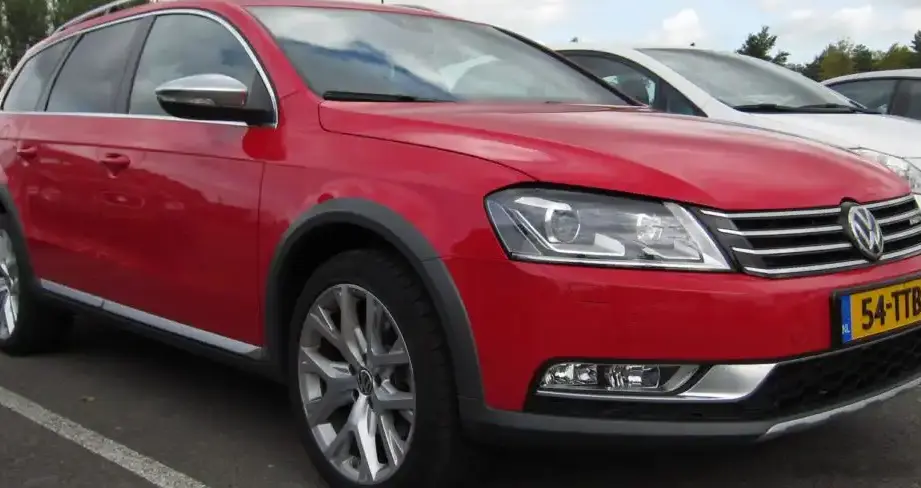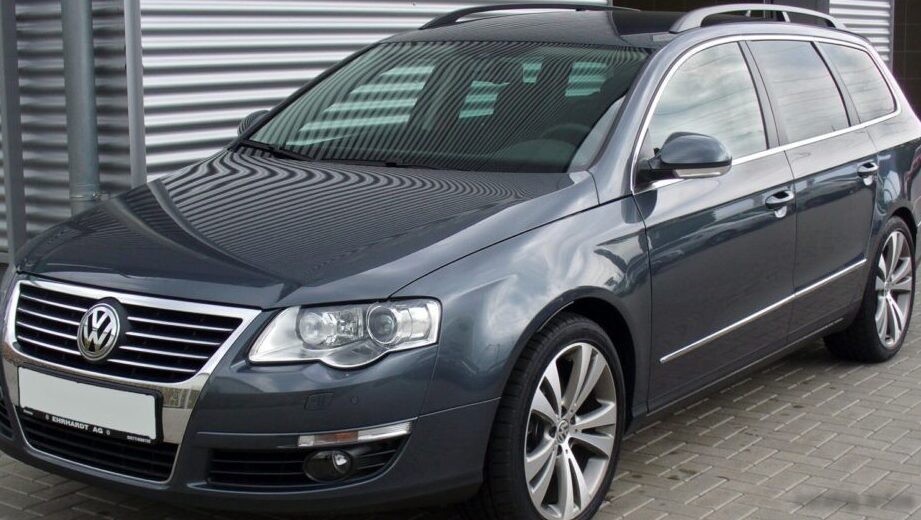
The Volkswagen Passat Variant (B6) 1.4 TSI, producing 122 horsepower, was a key offering in the Passat lineup from October 2007 to July 2010. Positioned as a more economical option within the B6 generation (2005-2010), this variant aimed to balance practicality with reasonable fuel efficiency. Built on the Volkswagen Group’s B6 platform – shared with models like the Audi A4 and Škoda Superb – the Passat Variant continued the tradition of offering a spacious, versatile wagon for European families and businesses. This particular engine and transmission combination represented a significant shift towards smaller, turbocharged engines in the mid-size segment, reflecting growing environmental concerns and a desire for improved fuel economy.
Technical Specifications
| Brand | Volkswagen |
| Model | Passat |
| Generation | Passat Variant (B6) |
| Type (Engine) | 1.4 TSI (122 Hp) |
| Start of production | October, 2007 |
| End of production | July, 2010 |
| Powertrain Architecture | Internal Combustion engine |
| Body type | Station wagon (estate) |
| Seats | 5 |
| Doors | 5 |
| Fuel consumption (urban) | 10.1 l/100 km (23.3 US mpg, 28 UK mpg, 9.9 km/l) |
| Fuel consumption (extra urban) | 6.2 l/100 km (37.9 US mpg, 45.6 UK mpg, 16.1 km/l) |
| Fuel consumption (combined) | 7.6 l/100 km (30.9 US mpg, 37.2 UK mpg, 13.2 km/l) |
| Fuel Type | Petrol (Gasoline) |
| Acceleration 0 – 100 km/h | 11.7 sec |
| Acceleration 0 – 62 mph | 11.7 sec |
| Acceleration 0 – 60 mph | 11.1 sec |
| Maximum speed | 197 km/h (122.41 mph) |
| Emission standard | Euro 4 |
| Weight-to-power ratio | 11.5 kg/Hp, 87 Hp/tonne |
| Weight-to-torque ratio | 7 kg/Nm, 142.6 Nm/tonne |
| Power | 122 Hp @ 5000 rpm |
| Power per litre | 87.8 Hp/l |
| Torque | 200 Nm @ 1500-4000 rpm (147.51 lb.-ft. @ 1500-4000 rpm) |
| Engine layout | Front, Transverse |
| Engine Model/Code | CAXA |
| Engine displacement | 1390 cm3 (84.82 cu. in.) |
| Number of cylinders | 4 |
| Engine configuration | Inline |
| Cylinder Bore | 76.5 mm (3.01 in.) |
| Piston Stroke | 75.6 mm (2.98 in.) |
| Number of valves per cylinder | 4 |
| Fuel injection system | Direct injection |
| Engine aspiration | Turbocharger, Intercooler |
| Valvetrain | DOHC |
| Engine oil capacity | 3.6 l (3.8 US qt | 3.17 UK qt) |
| Coolant | 5.6 l (5.92 US qt | 4.93 UK qt) |
| Kerb Weight | 1403 kg (3093.09 lbs.) |
| Max. weight | 2040 kg (4497.43 lbs.) |
| Max load | 637 kg (1404.34 lbs.) |
| Trunk (boot) space – minimum | 603 l (21.29 cu. ft.) |
| Trunk (boot) space – maximum | 1731 l (61.13 cu. ft.) |
| Fuel tank capacity | 70 l (18.49 US gal | 15.4 UK gal) |
| Length | 4774 mm (187.95 in.) |
| Width | 1820 mm (71.65 in.) |
| Height | 1517 mm (59.72 in.) |
| Wheelbase | 2709 mm (106.65 in.) |
| Front track | 1552 mm (61.1 in.) |
| Rear (Back) track | 1551 mm (61.06 in.) |
| Minimum turning circle | 11.4 m (37.4 ft.) |
| Drivetrain Architecture | The Internal combustion engine (ICE) drives the front wheels of the vehicle. |
| Drive wheel | Front wheel drive |
| Number of gears and type of gearbox | 6 gears, manual transmission |
| Front suspension | Spring Strut |
| Rear suspension | Coil spring |
| Front brakes | Ventilated discs |
| Rear brakes | Disc |
| Assisting systems | ABS (Anti-lock braking system) |
| Steering type | Steering rack and pinion |
| Tires size | 205/55 R16 |
| Wheel rims size | 6.5J x 16 |
Powertrain & Engine Architecture
The heart of this Passat Variant was the 1.4 TSI (Twin Stratified Injection) engine, specifically the CAXA engine code. This engine represented a significant advancement in Volkswagen’s engine technology. It featured direct fuel injection, a turbocharger with an intercooler, and a dual charging system – combining a supercharger for low-end torque and a turbocharger for higher RPM power. This setup aimed to eliminate turbo lag and provide a broader, more responsive powerband. The engine utilized a double overhead camshaft (DOHC) valvetrain with four valves per cylinder, optimizing gas flow for improved efficiency and performance. The 1.4 TSI engine was paired with a 6-speed manual transmission, offering precise gear changes and contributing to the vehicle’s overall fuel economy.
Driving Characteristics
The 122 hp 1.4 TSI engine in the Passat Variant provided adequate, though not exhilarating, performance. Acceleration from 0-60 mph took around 11.1 seconds, and the top speed was approximately 122 mph. The dual-charging system helped mitigate turbo lag, providing a usable amount of torque from relatively low engine speeds. However, compared to the more powerful 1.8 TSI or 2.0 TDI variants, this engine felt less responsive, particularly when fully loaded or tackling steep inclines. The 6-speed manual transmission was well-matched to the engine’s characteristics, allowing drivers to keep the engine in its optimal power range. The gear ratios were spaced to prioritize fuel efficiency, but also provided enough flexibility for comfortable highway cruising.
Equipment & Trim Levels
The 1.4 TSI variant of the Passat Variant typically represented an entry-level or mid-range trim level. Standard equipment generally included air conditioning, power windows, central locking, and an audio system. Safety features such as ABS, front airbags, and side airbags were also standard. Higher trim levels offered options like alloy wheels, a multi-function steering wheel, cruise control, and a more advanced audio system. Interior upholstery was typically cloth, with the option of leather upgrades. The dashboard layout was functional and straightforward, prioritizing usability over luxury.
Chassis & Braking
The Passat Variant B6 featured a MacPherson strut front suspension and a multi-link rear suspension, providing a comfortable and controlled ride. The suspension was tuned to balance handling with ride comfort, making it suitable for both city driving and long-distance journeys. The braking system consisted of ventilated discs on the front wheels and solid discs on the rear. ABS (Anti-lock Braking System) was standard, enhancing braking performance and stability. The steering was a rack-and-pinion system, providing precise and responsive steering feel.
Market Reception & Comparison
The 1.4 TSI Passat Variant was generally well-received by critics as a practical and fuel-efficient option. However, some reviewers noted that the engine lacked the punch of the more powerful variants. Compared to the 1.8 TSI, the 1.4 TSI offered better fuel economy but less performance. The 2.0 TDI diesel variant provided even greater fuel efficiency and torque, but at a higher purchase price. The 1.4 TSI appealed to buyers who prioritized fuel economy and practicality over outright performance.
Legacy
The 1.4 TSI engine proved to be a reliable and durable powertrain when properly maintained. While the dual-charging system added complexity, it generally held up well over time. Today, used examples of the Passat Variant 1.4 TSI are relatively affordable and represent a good value for buyers seeking a spacious and practical wagon. Common maintenance items include regular oil changes, timing belt replacement (if applicable), and inspection of the turbocharger and supercharger systems. The CAXA engine, while not known for being exceptionally powerful, has earned a reputation for being relatively trouble-free, making it a viable option in the used car market.