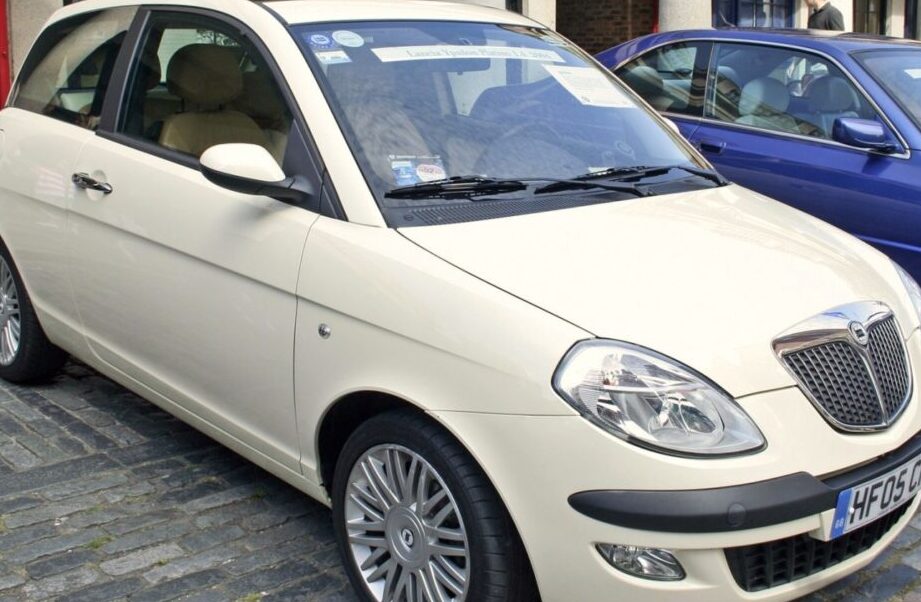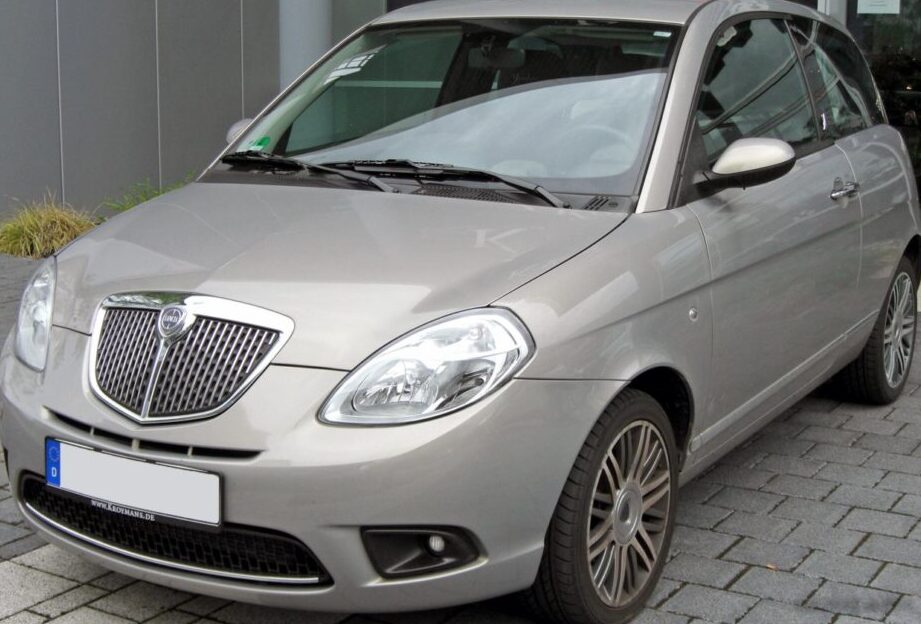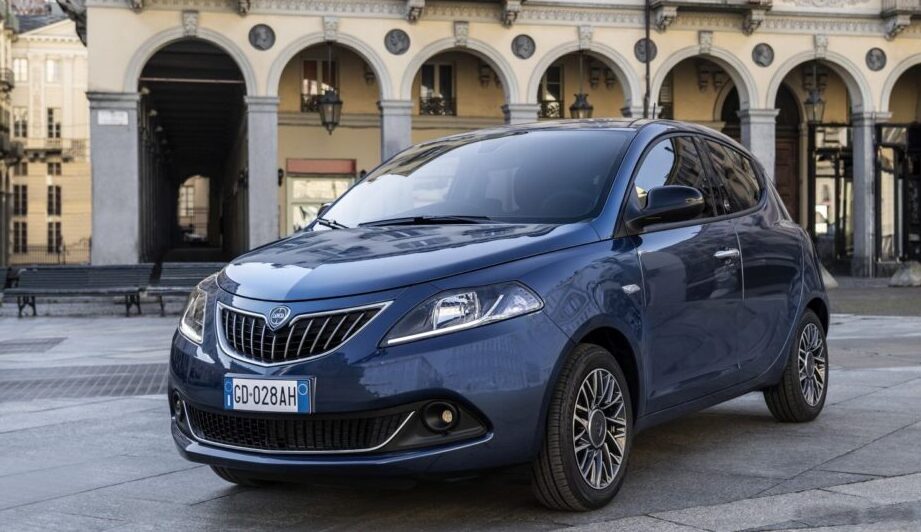
The Lancia Ypsilon (846 series, post-facelift introduced in February 2021) equipped with the 0.9 TwinAir engine producing 70 horsepower when running on Compressed Natural Gas (CNG) represents a niche offering within the Ypsilon range. Produced through January 2023, this variant aimed to provide an environmentally conscious and economically viable option for buyers in European markets, particularly Italy where CNG infrastructure is relatively well-developed. It falls within the third generation (846) of the Ypsilon, a supermini that has been a mainstay of the Lancia lineup for decades, and builds upon the platform shared with the Fiat 500 and the earlier Ford Ka. This specific configuration was positioned as an entry-level, fuel-efficient choice, appealing to urban commuters and those seeking lower running costs.
Technical Specifications
| Brand | Lancia |
| Model | Ypsilon |
| Generation | Ypsilon (846, facelift 2021) |
| Type (Engine) | 0.9 TwinAir (70 Hp) CNG |
| Start of production | February, 2021 |
| End of production | January, 2023 |
| Powertrain Architecture | Internal Combustion engine |
| Body type | Hatchback |
| Seats | 4 |
| Doors | 5 |
| Combined fuel consumption (WLTP) (CNG) | 4.1-4.2 kg/100 km |
| CO2 emissions (CNG) (WLTP) | 111-114 g/km |
| Fuel consumption (economy) – urban (CNG) | 4 kg/100 km |
| Fuel consumption (economy) – extra urban (CNG) | 2.6 kg/100 km |
| Fuel consumption (economy) – combined (CNG) | 3.1 kg/100 km |
| CO2 emissions (CNG) | 97 g/km |
| Fuel Type | Petrol / CNG |
| Acceleration 0 – 100 km/h (CNG) | 14.4 sec |
| Maximum speed (CNG) | 160 km/h |
| Emission standard | Euro 6d-Temp |
| Power (CNG) | 70 Hp @ 5500 rpm |
| Torque (CNG) | 135 Nm @ 2500 rpm |
| Engine Model/Code | 312A2000 |
| Engine displacement | 875 cm3 |
| Number of cylinders | 2 |
| Engine configuration | Inline |
| Fuel injection system | Multi-port manifold injection |
| Engine aspiration | Turbocharger |
| Engine oil capacity | 3.3 l |
| Coolant | 5.3 l |
| Kerb Weight | 1165 kg |
| Trunk (boot) space – minimum | 202 l |
| Fuel tank capacity | 40 l |
| CNG cylinder capacity | 12 kg |
| Length | 3837 mm |
| Width | 1676 mm |
| Height | 1518 mm |
| Wheelbase | 2390 mm |
| Drivetrain Architecture | The Internal combustion engine (ICE) drives the front wheels of the vehicle. |
| Drive wheel | Front wheel drive |
| Number of gears and type of gearbox | 5 gears, manual transmission |
| Front suspension | Independent type McPherson |
| Rear suspension | Torsion |
| Front brakes | Disc, 257×22 mm |
| Rear brakes | Drum, 203 mm |
Powertrain & Engine Architecture
The heart of this Ypsilon variant is the Fiat-developed 875cc TwinAir two-cylinder turbocharged engine. This engine, designated as code 312A2000, is a highly stressed unit, designed for efficiency rather than outright performance. When operating on CNG, the engine output is reduced to 70 horsepower at 5500 rpm and 135 Nm (approximately 100 lb-ft) of torque at 2500 rpm. The reduction in power compared to the petrol-only version (85 hp) is a consequence of the lower energy density of CNG and the engine management system’s adjustments to optimize for the alternative fuel. The engine utilizes a multi-point fuel injection system and a single turbocharger to enhance efficiency and provide a reasonable level of responsiveness. The 5-speed manual transmission is the only gearbox option offered with this engine, prioritizing fuel economy over driver convenience. The engine features a Start & Stop system to further reduce fuel consumption in urban driving conditions.
Driving Characteristics
The 0.9 TwinAir CNG Ypsilon delivers a driving experience focused on economy and ease of use. Acceleration is modest, taking approximately 14.4 seconds to reach 100 km/h (62 mph). The engine feels relatively strained at higher speeds, and the limited power output is noticeable when overtaking or climbing hills. The turbocharger does provide a boost in mid-range torque, making city driving more manageable. The manual transmission, while not particularly sporty, is light and easy to operate. Compared to the petrol-only version, the CNG variant feels slightly slower, particularly in acceleration, but offers significantly lower running costs. Compared to other Ypsilon trims, such as those equipped with the 1.2-liter petrol engine, this version prioritizes fuel efficiency over performance, making it ideal for short commutes and urban environments.
Equipment & Trim Levels
The 0.9 TwinAir CNG Ypsilon typically came with a base level of equipment, reflecting its position as an entry-level model. Standard features generally included air conditioning, power steering, central locking, and an audio system with USB connectivity. Interior upholstery was typically cloth, and the dashboard featured a simple, functional design. Optional extras included alloy wheels, a touchscreen infotainment system, and parking sensors. The trim level was often designated as “Eco” or a similar moniker, emphasizing its fuel-efficient nature. The focus was on providing essential features at an affordable price point, rather than luxury or advanced technology.
Chassis & Braking
The Ypsilon’s chassis utilizes a McPherson strut front suspension and a torsion beam rear suspension. This setup provides a comfortable ride quality, well-suited for city driving. The braking system consists of disc brakes on the front wheels and drum brakes on the rear, which is typical for this class of vehicle and weight. ABS (Anti-lock Braking System) is standard. The relatively light weight of the vehicle (1165 kg) helps to compensate for the modest braking performance. Stabilizer bars are present, contributing to reduced body roll during cornering, but the overall handling is geared towards comfort and stability rather than sporty dynamics.
Market Reception & Comparison
The Lancia Ypsilon 0.9 TwinAir CNG received a mixed reception from critics. While praised for its fuel efficiency and low running costs, it was often criticized for its limited power and performance. Compared to other Ypsilon trims, the CNG variant offered a compelling value proposition for buyers prioritizing economy. However, the limited availability of CNG refueling stations in some regions and the slightly higher purchase price compared to the petrol-only version were drawbacks. Fuel economy figures of around 4.1-4.2 kg/100km (CNG) were competitive within the segment, and CO2 emissions of 111-114 g/km were relatively low.
Legacy
The 0.9 TwinAir CNG Ypsilon represents a significant attempt by Lancia to offer an environmentally friendly and economically viable option within its lineup. While the Ypsilon itself has faced declining sales in recent years, the CNG variant remains a popular choice in the used car market, particularly in Italy. The TwinAir engine, despite its quirks, has proven to be relatively reliable when properly maintained. However, potential buyers should be aware of the specific maintenance requirements associated with CNG systems and the importance of using qualified technicians. The Ypsilon 0.9 TwinAir CNG serves as a reminder of the growing demand for alternative fuel vehicles and the ongoing efforts to reduce emissions in the automotive industry.