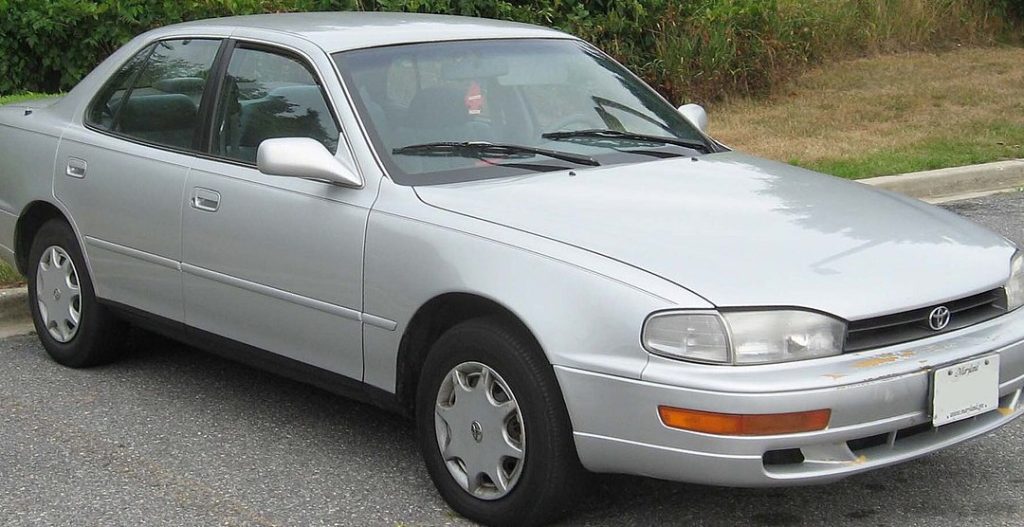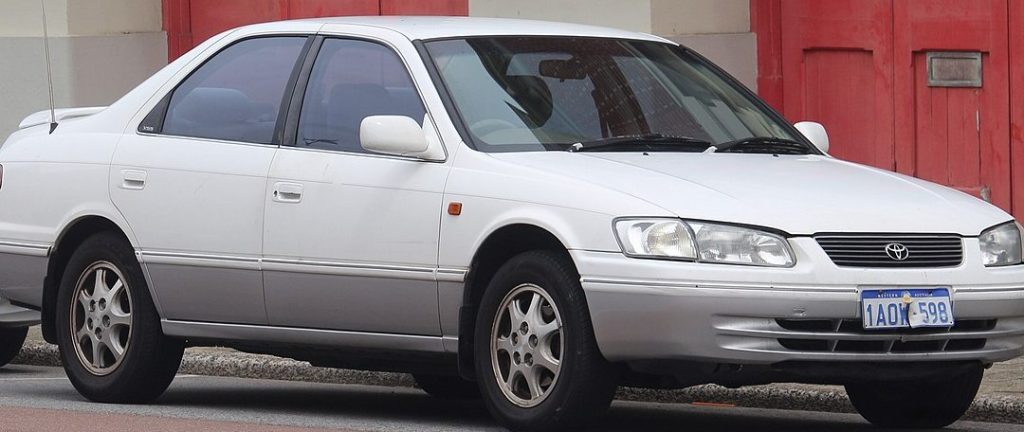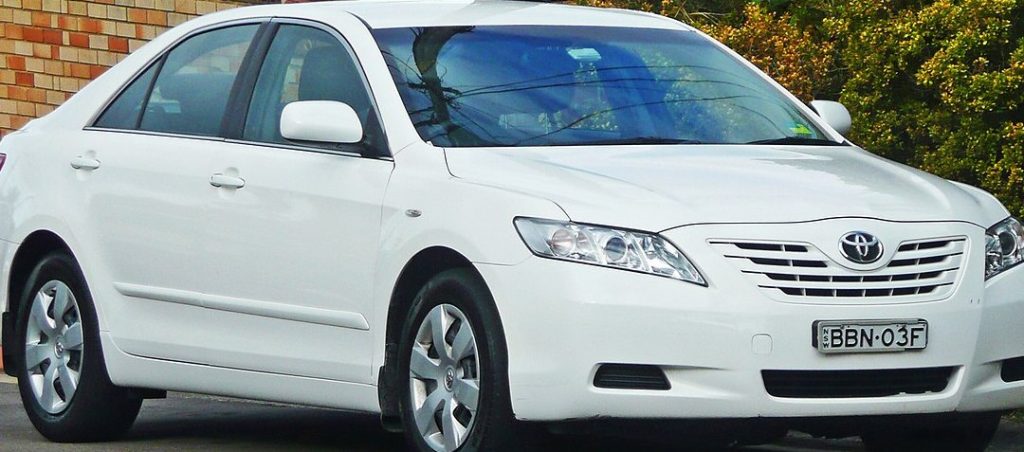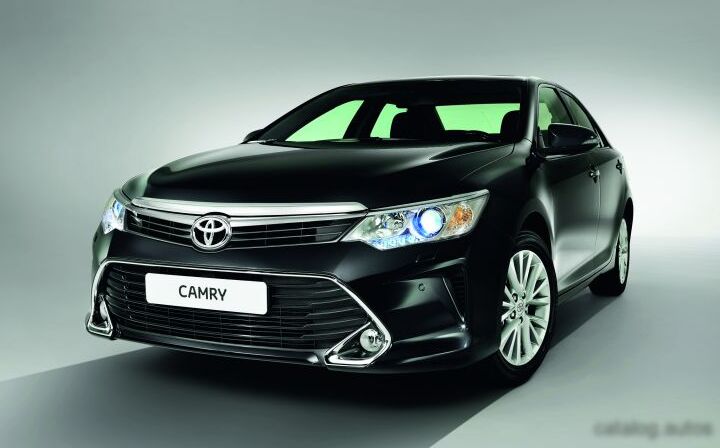
The Toyota Camry VII (XV50), specifically the facelifted model produced from 2014 to 2017, represented a significant evolution of Toyota’s globally successful mid-size sedan. Within the XV50 generation, the 2.0-liter (150 horsepower) variant paired with a six-speed automatic transmission occupied a key position as a balance between affordability, fuel efficiency, and acceptable performance. This configuration was primarily aimed at buyers seeking a comfortable and reliable daily driver, rather than outright sporty handling. The XV50 Camry was designed to appeal to a broad demographic, and this particular trim level was a mainstay in many markets, including North America, where it competed with rivals like the Honda Accord and Nissan Altima.
Technical Specifications
| Brand | Toyota |
| Model | Camry |
| Generation | Camry VII (XV50, facelift 2014) |
| Type (Engine) | 2.0 (150 Hp) Automatic |
| Start of production | 2014 |
| End of production | 2017 |
| Powertrain Architecture | Internal Combustion engine |
| Body type | Sedan |
| Seats | 5 |
| Doors | 4 |
| Fuel consumption (urban) | 10 l/100 km (23.5 US mpg) |
| Fuel consumption (extra urban) | 5.6 l/100 km (42 US mpg) |
| Fuel consumption (combined) | 7.2 l/100 km (32.7 US mpg) |
| CO2 emissions | 168 g/km |
| Fuel Type | Petrol (Gasoline) |
| Acceleration 0 – 100 km/h | 10.4 sec |
| Acceleration 0 – 62 mph | 10.4 sec |
| Acceleration 0 – 60 mph | 9.9 sec |
| Maximum speed | 210 km/h (130.49 mph) |
| Emission standard | Euro 5 |
| Weight-to-power ratio | 9.7 kg/Hp |
| Weight-to-torque ratio | 7.3 kg/Nm |
| Power | 150 Hp @ 6500 rpm |
| Torque | 199 Nm @ 4600-4600 rpm (146.77 lb.-ft. @ 4600-4600 rpm) |
| Engine layout | Front, Transverse |
| Engine Model/Code | 6AR-FSE |
| Engine displacement | 1998 cm3 (121.93 cu. in.) |
| Number of cylinders | 4 |
| Engine configuration | Inline |
| Cylinder Bore | 86 mm (3.39 in.) |
| Piston Stroke | 86 mm (3.39 in.) |
| Compression ratio | 12.8:1 |
| Number of valves per cylinder | 4 |
| Fuel injection system | Direct injection |
| Engine aspiration | Naturally aspirated engine |
| Valvetrain | DOHC, VVT-iW |
| Engine oil capacity | 4.4 l (4.65 US qt | 3.87 UK qt) |
| Coolant | 7.3 l (7.71 US qt | 6.42 UK qt) |
| Kerb Weight | 1455-1465 kg (3207.73 – 3229.77 lbs.) |
| Max. weight | 2100 kg (4629.71 lbs.) |
| Max load | 635-645 kg (1399.94 – 1421.98 lbs.) |
| Trunk (boot) space – minimum | 506 l (17.87 cu. ft.) |
| Fuel tank capacity | 70 l (18.49 US gal | 15.4 UK gal) |
| Length | 4850 mm (190.94 in.) |
| Width | 1825 mm (71.85 in.) |
| Height | 1480 mm (58.27 in.) |
| Wheelbase | 2775 mm (109.25 in.) |
| Front track | 1575 mm (62.01 in.) |
| Rear (Back) track | 1565 mm (61.61 in.) |
| Front overhang | 990 mm (38.98 in.) |
| Rear overhang | 1085 mm (42.72 in.) |
| Drag coefficient (Cd) | 0.281 |
| Minimum turning circle (turning diameter) | 11 m (36.09 ft.) |
| Drivetrain Architecture | Front wheel drive |
| Number of gears and type of gearbox | 6 gears, automatic transmission |
| Front suspension | Independent, type McPherson with coil spring and anti-roll bar |
| Rear suspension | Independent multi-link spring suspension with stabilizer |
| Front brakes | Ventilated discs |
| Rear brakes | Disc |
Powertrain & Engine Architecture
The heart of this Camry variant is the 6AR-FSE 2.0-liter inline-four engine. This engine is a member of Toyota’s AR engine family, known for its reliability and relatively efficient design. The 6AR-FSE utilizes direct fuel injection (D-4S system) and a dual Variable Valve Timing-intelligent Wide range (VVT-iW) system. D-4S combines direct and port fuel injection, optimizing combustion for both power and fuel economy. VVT-iW allows for precise control of valve timing, improving responsiveness and reducing emissions. The engine produces 150 horsepower at 6500 rpm and 199 Nm (146.77 lb-ft) of torque between 4600 and 4600 rpm. This power is delivered to the front wheels through a six-speed automatic transmission. This transmission was chosen for its smooth shifting characteristics and contribution to overall fuel efficiency, although it wasn’t designed for particularly rapid acceleration.
Driving Characteristics
The 2.0-liter Camry Automatic offers a comfortable and predictable driving experience. Acceleration is adequate for everyday driving situations, with a 0-60 mph time of around 9.9 seconds. However, it’s noticeably slower than Camry models equipped with the 2.5-liter engine or the V6. The six-speed automatic transmission generally shifts smoothly, but can sometimes feel hesitant during quick overtaking maneuvers. The gear ratios are tuned for fuel efficiency rather than performance. The suspension is tuned for comfort, absorbing bumps and road imperfections well, but doesn’t offer particularly engaging handling. Steering feel is light and precise, making it easy to maneuver in urban environments.
Equipment & Trim Levels
The 2.0-liter Automatic Camry typically came standard with a respectable array of features. These generally included air conditioning, power windows and locks, a basic audio system with USB connectivity, and standard safety features like ABS, traction control, and multiple airbags. Higher trim levels, often denoted by designations like “LE” or “XLE”, added features such as alloy wheels, a more advanced audio system with touchscreen display, automatic climate control, and optional features like leather upholstery, sunroof, and navigation. The interior typically featured cloth upholstery, with a functional and straightforward dashboard layout.
Chassis & Braking
The XV50 Camry utilizes a front-wheel-drive layout with an independent McPherson strut suspension in the front and an independent multi-link suspension in the rear. This suspension setup provides a good balance of ride comfort and handling. Braking duties are handled by ventilated discs in the front and solid discs in the rear. ABS (Anti-lock Braking System) is standard, providing enhanced braking performance in emergency situations. The steering system is a rack-and-pinion setup with electric power steering, offering light and responsive steering feel.
Market Reception & Comparison
The 2.0-liter Camry Automatic was generally well-received by critics as a practical and reliable choice for everyday transportation. It was praised for its fuel efficiency, comfortable ride, and spacious interior. However, it was often criticized for its lack of sporty driving dynamics and relatively modest acceleration. Compared to the 2.5-liter Camry, the 2.0-liter model offered lower running costs but sacrificed performance. The V6-powered Camry provided significantly more power but came with a higher price tag and reduced fuel economy. The 2.0L model was often seen as the entry-level choice for buyers prioritizing value and efficiency.
Legacy
The 6AR-FSE engine, when properly maintained, has proven to be a durable and reliable powertrain. Camry models equipped with this engine have a reputation for longevity and relatively low maintenance costs. In the used car market, the 2014-2017 Camry 2.0 Automatic remains a popular choice due to its affordability and Toyota’s reputation for reliability. While not the most exciting car to drive, it continues to offer a practical and dependable transportation solution for a wide range of buyers. Common issues reported with these models are generally related to wear and tear items like brakes, suspension components, and routine maintenance, rather than major engine or transmission failures.