
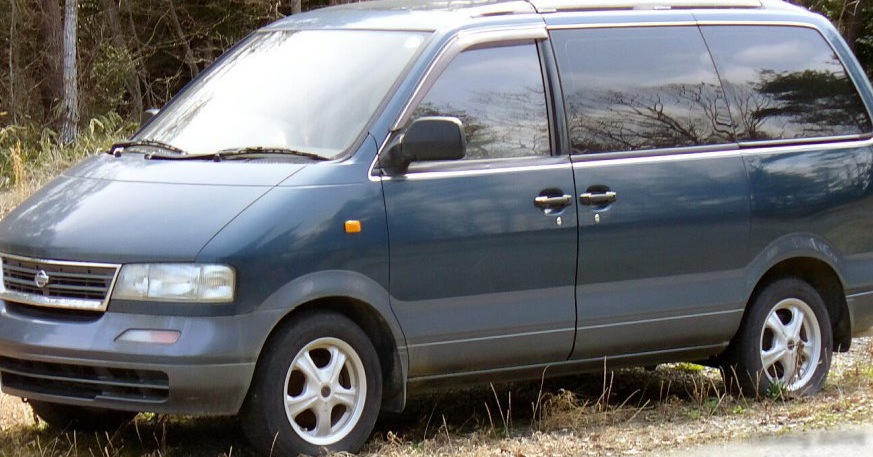
The Nissan Largo (W30), specifically the 2.4 i 16V variant producing 145 horsepower, was a seven-seat minivan produced by Nissan from 1994 to 2000. Positioned as a family-oriented vehicle, the W30 Largo primarily served the Japanese domestic market (JDM) and select export markets, including Australia and parts of Asia and Europe. It represented Nissan’s entry into the increasingly popular minivan segment, offering a spacious and practical alternative to larger, more expensive options. This particular 2.4-liter engine and five-speed manual transmission combination represented a mid-range offering within the W30 Largo lineup, balancing performance with affordability.
Technical Specifications
| Brand | Nissan |
| Model | Largo |
| Generation | Largo (W30) |
| Type (Engine) | 2.4 i 16V (145 Hp) |
| Start of production | 1994 |
| End of production | 2000 |
| Powertrain Architecture | Internal Combustion engine |
| Body type | Minivan |
| Seats | 7 |
| Doors | 5 |
| Fuel consumption (urban) | 11.7 l/100 km (20.1 US mpg) |
| Fuel consumption (extra urban) | 6.67 l/100 km (35.3 US mpg) |
| Fuel Type | Petrol (Gasoline) |
| Weight-to-power ratio | 11.2 kg/Hp |
| Weight-to-torque ratio | 8.4 kg/Nm |
| Power | 145 Hp @ 5200 rpm |
| Power per litre | 60.7 Hp/l |
| Torque | 192 Nm @ 4000 rpm (141.61 lb.-ft. @ 4000 rpm) |
| Engine layout | Front, Transverse |
| Engine displacement | 2388 cm3 (145.72 cu. in.) |
| Number of cylinders | 4 |
| Engine configuration | Inline |
| Cylinder Bore | 89 mm (3.5 in.) |
| Piston Stroke | 96 mm (3.78 in.) |
| Compression ratio | 10:1 |
| Number of valves per cylinder | 4 |
| Fuel injection system | Multi-port manifold injection |
| Engine aspiration | Naturally aspirated engine |
| Valvetrain | DOHC |
| Kerb Weight | 1620 kg (3571.49 lbs.) |
| Max. weight | 2380 kg (5247 lbs.) |
| Max load | 760 kg (1675.51 lbs.) |
| Fuel tank capacity | 60 l (15.85 US gal | 13.2 UK gal) |
| Length | 4610 mm (181.5 in.) |
| Width | 1745 mm (68.7 in.) |
| Height | 1905 mm (75 in.) |
| Wheelbase | 2735 mm (107.68 in.) |
| Front track | 1485 mm (58.46 in.) |
| Rear track | 1480 mm (58.27 in.) |
| Drivetrain Architecture | Front wheel drive |
| Number of gears and type of gearbox | 5 gears, manual transmission |
| Front suspension | Coil spring |
| Rear suspension | Coil spring |
| Front brakes | Disc |
| Rear brakes | Disc |
| Assisting systems | ABS (Anti-lock braking system) |
| Steering type | Steering rack and pinion |
| Power steering | Hydraulic Steering |
| Tires size | 195/70 R14 |
Powertrain & Engine Architecture
The heart of the Largo 2.4 i 16V is Nissan’s KA24DE engine, a 2.4-liter inline-four cylinder powerplant. This engine utilizes a cast iron block with an aluminum cylinder head, featuring dual overhead camshafts (DOHC) and four valves per cylinder. The multi-port fuel injection system delivers fuel directly to each intake port, optimizing combustion efficiency. The KA24DE is known for its relative simplicity and durability, making it a reliable engine for everyday use. The 145 horsepower output is achieved at 5200 rpm, while peak torque of 192 Nm (141.61 lb-ft) arrives at 4000 rpm. This engine was paired with a five-speed manual transmission, providing drivers with a degree of control over gear selection and engine speed. The transmission’s gear ratios were tuned for a balance between acceleration and fuel economy, suitable for the vehicle’s intended purpose as a family hauler.
Driving Characteristics
The Largo 2.4 i 16V with the five-speed manual transmission offered a reasonably engaging driving experience for a minivan. While not a performance vehicle, the 145 hp engine provided adequate power for everyday driving situations, including highway merging and overtaking. The manual transmission allowed drivers to exploit the engine’s torque curve, resulting in brisk acceleration. Compared to the automatic transmission option, the manual version offered better fuel economy and a more connected feel. However, it lacked the convenience of an automatic, which was preferred by many buyers in this segment. The Largo’s front-wheel-drive configuration provided predictable handling, although it wasn’t particularly sporty. The suspension was tuned for comfort, absorbing bumps and providing a smooth ride for passengers.
Equipment & Trim Levels
The 2.4 i 16V trim level of the Largo typically included features such as power windows, power door locks, and air conditioning as standard equipment. Interior upholstery was typically cloth, with options for upgraded materials available. The dashboard layout was functional and straightforward, with easy-to-read gauges and controls. Optional extras included a sunroof, upgraded audio system, and alloy wheels. The Largo’s spacious interior was a key selling point, offering comfortable seating for seven passengers. The rear seats could be folded or removed to create additional cargo space, enhancing the vehicle’s versatility.
Chassis & Braking
The W30 Largo utilized a conventional chassis design with independent coil spring suspension at the front and a coil spring rear suspension. This setup provided a comfortable ride and adequate handling characteristics. The braking system consisted of disc brakes on all four wheels, providing sufficient stopping power for the vehicle’s weight. An Anti-lock Braking System (ABS) was included as standard equipment, enhancing safety by preventing wheel lockup during hard braking. The steering system employed a rack and pinion setup with hydraulic power assistance, providing precise and responsive steering feel.
Market Reception & Comparison
The Nissan Largo 2.4 i 16V was generally well-received by critics and consumers alike. It was praised for its spacious interior, comfortable ride, and reliable engine. However, some reviewers noted that the styling was somewhat conservative and that the performance was not particularly exciting. Compared to other minivans in its class, such as the Toyota Previa and Honda Odyssey, the Largo offered a more affordable price point. The 2.4-liter engine provided a good balance between fuel economy and performance, making it a practical choice for families. The manual transmission version was favored by drivers who appreciated its greater control and fuel efficiency.
Legacy
The Nissan Largo W30, including the 2.4 i 16V variant, has developed a reputation for long-term reliability. The KA24DE engine is known for its durability and relatively low maintenance costs. Today, the W30 Largo is a popular choice among enthusiasts and collectors, particularly in Japan. Well-maintained examples are becoming increasingly rare, and prices have been steadily rising. The Largo’s spacious interior and practical features continue to appeal to those seeking a versatile and reliable family vehicle. While it may not be the most glamorous or technologically advanced minivan, the W30 Largo remains a testament to Nissan’s commitment to building durable and dependable vehicles.
