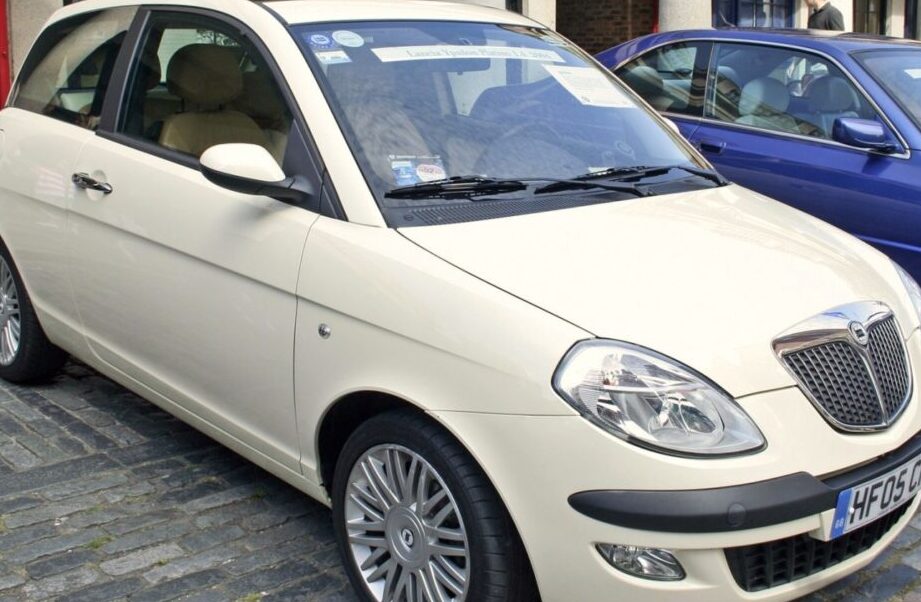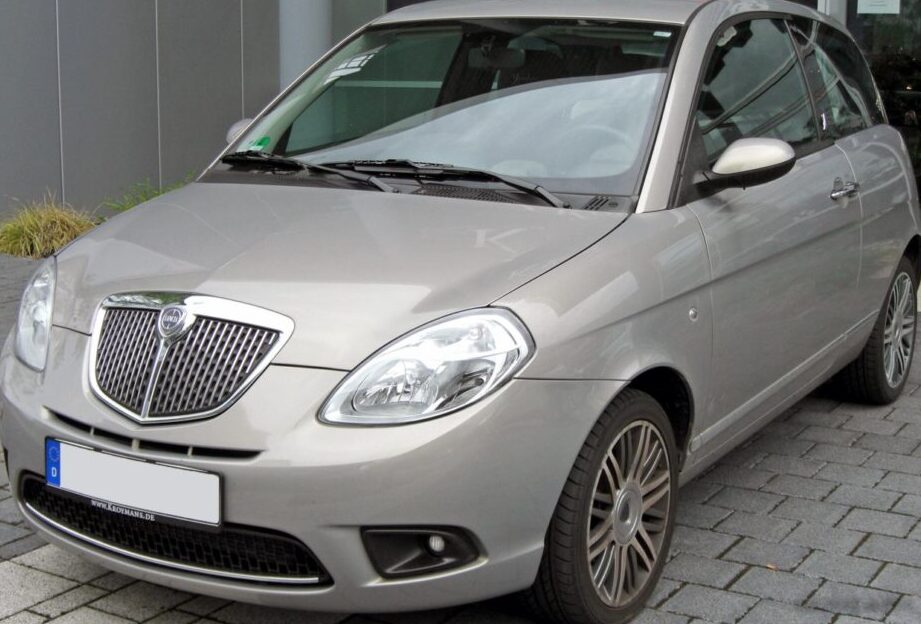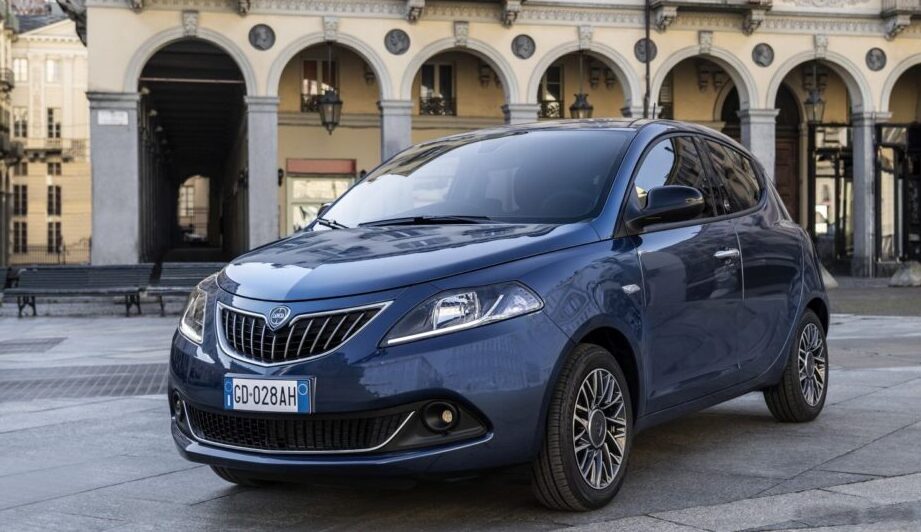
The Lancia Ypsilon (846 series, facelifted in 2021) equipped with the 0.9 TwinAir engine producing 84 horsepower represents a specific iteration of the long-running Ypsilon city car. Production of this variant spanned from February 2021 to January 2023. Positioned as an entry-level offering within the Ypsilon range, it aimed to provide economical transportation with a focus on fuel efficiency and maneuverability, particularly within the European market where the Ypsilon maintained a loyal following. The 846 series Ypsilon, a successor to previous generations, is based on the Fiat/Chrysler Small Wide platform, shared with models like the Fiat 500 and Fiat Punto.
Technical Specifications
| Brand | Lancia |
| Model | Ypsilon |
| Generation | Ypsilon (846, facelift 2021) |
| Type (Engine) | 0.9 TwinAir (84 Hp) |
| Start of production | February, 2021 |
| End of production | January, 2023 |
| Powertrain Architecture | Internal Combustion engine |
| Body type | Hatchback |
| Seats | 4 |
| Doors | 5 |
| Combined fuel consumption (WLTP) | 6.5-6.6 l/100 km (36.2 – 35.6 US mpg, 43.5 – 42.8 UK mpg, 15.4 – 15.2 km/l) |
| CO2 emissions (WLTP) | 147-149 g/km |
| Fuel Type | Petrol (Gasoline) |
| Acceleration 0 – 100 km/h | 13 sec |
| Acceleration 0 – 62 mph | 13 sec |
| Acceleration 0 – 60 mph | 12.4 sec |
| Maximum speed | 170 km/h (105.63 mph) |
| Emission standard | Euro 6d-Final |
| Weight-to-power ratio | 13.9 kg/Hp, 72.1 Hp/tonne |
| Weight-to-torque ratio | 8 kg/Nm, 124.5 Nm/tonne |
| Power | 84 Hp @ 5500 rpm |
| Power per litre | 96 Hp/l |
| Torque | 145 Nm @ 1900 rpm (106.95 lb.-ft. @ 1900 rpm) |
| Engine layout | Front, Transverse |
| Engine Model/Code | 312A2000 |
| Engine displacement | 875 cm3 (53.4 cu. in.) |
| Number of cylinders | 2 |
| Engine configuration | Inline |
| Compression ratio | 10:1 |
| Number of valves per cylinder | 4 |
| Fuel injection system | Multi-port manifold injection |
| Engine aspiration | Turbocharger, Intercooler |
| Engine oil capacity | 3.3 l (3.49 US qt | 2.9 UK qt) |
| Coolant | 5.3 l (5.6 US qt | 4.66 UK qt) |
| Kerb Weight | 1165 kg (2568.39 lbs.) |
| Trunk (boot) space – minimum | 202 l (7.13 cu. ft.) |
| Fuel tank capacity | 40 l (10.57 US gal | 8.8 UK gal) |
| Length | 3837 mm (151.06 in.) |
| Width | 1676 mm (65.98 in.) |
| Height | 1518 mm (59.76 in.) |
| Wheelbase | 2390 mm (94.09 in.) |
| Front track | 1411 mm (55.55 in.) |
| Rear (Back) track | 1407 mm (55.39 in.) |
| Minimum turning circle | 9.4 m (30.84 ft.) |
| Drivetrain Architecture | The Internal combustion engine (ICE) drives the front wheels of the vehicle. |
| Drive wheel | Front wheel drive |
| Number of gears and type of gearbox | 5 gears, manual transmission |
| Front suspension | Independent type McPherson |
| Rear suspension | Torsion |
| Front brakes | Disc, 257×22 mm |
| Rear brakes | Drum, 203 mm |
| Assisting systems | ABS (Anti-lock braking system) |
| Steering type | Steering rack and pinion |
| Power steering | Electric Steering |
| Tires size | 175/65 R15 84T |
Powertrain & Engine Architecture
The heart of this Ypsilon variant is the Fiat 312A2000 0.9-liter TwinAir two-cylinder turbocharged engine. This engine, a member of the Firefly family, is notable for its small displacement and use of turbocharging to achieve a reasonable power output. The engine utilizes multi-point fuel injection and a single overhead camshaft operating four valves per cylinder. The turbocharger, coupled with an intercooler, helps to mitigate turbo lag and improve efficiency. The 84 horsepower output is achieved at 5500 rpm, while peak torque of 145 Nm (107 lb-ft) is delivered at a low 1900 rpm. This characteristic provides decent low-end responsiveness for urban driving. The engine is paired with a 5-speed manual transmission, chosen for its simplicity and contribution to fuel economy. The engine also incorporates a Start & Stop system to further reduce fuel consumption during city driving.
Driving Characteristics
The 0.9 TwinAir engine in the Ypsilon delivers a driving experience geared towards urban environments. Acceleration is adequate for city traffic, with a 0-60 mph time of around 12.4 seconds. However, it feels less confident on highways or when overtaking, requiring more planning and anticipation. The turbocharger provides a noticeable boost in power, but the engine can feel strained at higher speeds. The 5-speed manual transmission is well-matched to the engine’s characteristics, offering smooth shifts and a reasonable spread of gears. Compared to higher-powered Ypsilon variants, such as those with the 1.2-liter engine, this version prioritizes fuel economy over outright performance. The lighter engine weight contributes to nimble handling, making it easy to maneuver in tight spaces.
Equipment & Trim Levels
The 846 Ypsilon 0.9 TwinAir typically came equipped with a base level of features, reflecting its position as an entry-level model. Standard equipment generally included air conditioning, power steering, electric front windows, a basic audio system with USB connectivity, and ABS brakes. Interior upholstery was typically cloth, with a functional but not luxurious design. Optional extras included alloy wheels, a more advanced infotainment system with touchscreen display, parking sensors, and upgraded interior trim materials. Trim levels varied slightly depending on the market, but generally offered incremental upgrades in terms of features and aesthetics.
Chassis & Braking
The Ypsilon 846 utilizes a McPherson strut independent suspension at the front and a torsion beam suspension at the rear. This setup provides a comfortable ride quality, particularly on smooth roads. The front brakes are disc brakes, measuring 257x22mm, while the rear brakes are drum brakes, measuring 203mm. ABS (Anti-lock Braking System) is standard, providing enhanced braking performance and stability. The steering is electrically assisted, offering light and precise control. The relatively lightweight construction of the Ypsilon contributes to its agile handling characteristics.
Market Reception & Comparison
The Lancia Ypsilon 0.9 TwinAir was generally well-received as an economical and practical city car. Critics praised its fuel efficiency and nimble handling, but some noted its limited power output and somewhat unrefined engine note. Compared to other Ypsilon variants, the 0.9 TwinAir offered the lowest purchase price and the best fuel economy, making it an attractive option for budget-conscious buyers. However, those seeking more performance or a more refined driving experience often opted for the 1.2-liter engine. In terms of reliability, the TwinAir engine has been known to experience occasional issues with turbocharger and ignition components, requiring preventative maintenance.
Legacy
The Lancia Ypsilon 0.9 TwinAir represents a significant attempt to combine small displacement engine technology with turbocharging to deliver acceptable performance and excellent fuel economy. While the Ypsilon itself has been discontinued, the 0.9 TwinAir engine continued to be used in other Fiat and Alfa Romeo models. On the used car market, these Ypsilons are generally affordable and represent a practical choice for urban commuting. However, potential buyers should be aware of the potential for issues with the turbocharger and ignition system and ensure that the vehicle has been properly maintained. The Ypsilon 0.9 TwinAir remains a testament to Lancia’s focus on stylish and efficient city cars.