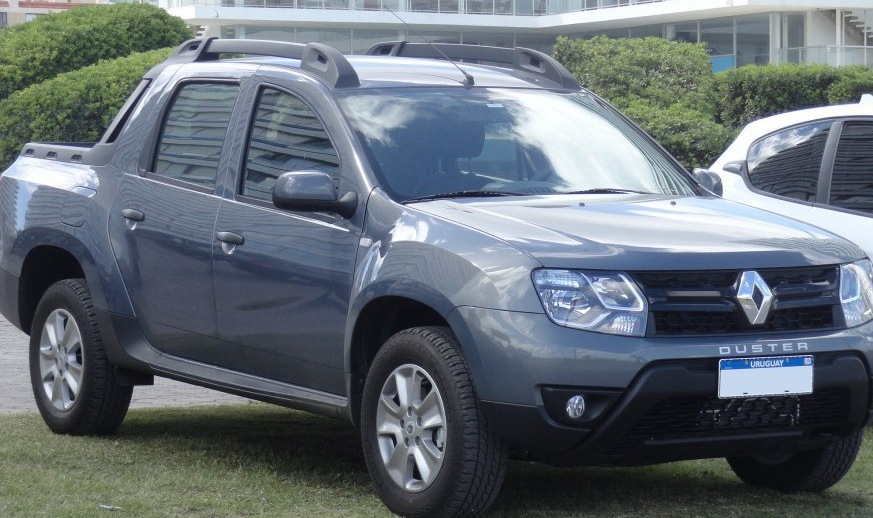
The Renault Duster Oroch 2.0 16V Automatic, produced from 2015 to 2019, represents a unique offering within the broader Duster range. Positioned as a compact pickup truck, the Oroch was primarily developed and marketed for the South American market, particularly Brazil and Argentina, where the demand for such vehicles is significant. It aimed to bridge the gap between traditional SUVs and utilitarian pickups, offering a blend of passenger comfort and cargo-carrying capability. This variant, equipped with the 2.0-liter engine and a four-speed automatic transmission, occupied a mid-range position in the Oroch lineup, offering a balance between affordability and convenience. It was designed to appeal to buyers seeking an easy-to-drive, practical vehicle for both work and leisure.
Technical Specifications
| Brand | Renault |
| Model | Duster |
| Generation | Duster Oroch |
| Type (Engine) | 2.0 16V (143 Hp) Automatic |
| Start of production | 2015 |
| End of production | 2019 |
| Powertrain Architecture | Internal Combustion engine |
| Body type | Pick-up |
| Seats | 5 |
| Doors | 4 |
| CO2 emissions | 147 g/km |
| Fuel Type | Petrol (Gasoline) |
| Acceleration 0 – 100 km/h | 11.5 sec |
| Acceleration 0 – 62 mph | 11.5 sec |
| Acceleration 0 – 60 mph | 10.9 sec |
| Maximum speed | 173 km/h (107.5 mph) |
| Weight-to-power ratio | 9.6 kg/Hp, 104 Hp/tonne |
| Weight-to-torque ratio | 6.9 kg/Nm, 144 Nm/tonne |
| Power | 143 Hp @ 5750 rpm |
| Power per litre | 71.6 Hp/l |
| Torque | 198 Nm @ 4000 rpm (146.04 lb.-ft. @ 4000 rpm) |
| Engine layout | Front, Transverse |
| Engine Model/Code | F4R |
| Engine displacement | 1998 cm3 (121.93 cu. in.) |
| Number of cylinders | 4 |
| Engine configuration | Inline |
| Number of valves per cylinder | 4 |
| Fuel injection system | Multi-port manifold injection |
| Engine aspiration | Naturally aspirated engine |
| Engine oil capacity | 5.4 l (5.71 US qt | 4.75 UK qt) |
| Coolant | 4.5 l (4.76 US qt | 3.96 UK qt) |
| Kerb Weight | 1375 kg (3031.36 lbs) |
| Trunk (boot) space – minimum | 683 l (24.12 cu. ft) |
| Fuel tank capacity | 50 l (13.21 US gal | 11 UK gal) |
| Length | 4700 mm (185.04 in) |
| Width | 1821 mm (71.69 in) |
| Height | 1694 mm (66.69 in) |
| Wheelbase | 2829 mm (111.38 in) |
| Ride height (ground clearance) | 206 mm (8.11 in) |
| Approach angle | 26° |
| Departure angle | 19.9° |
| Drivetrain Architecture | The Internal combustion engine (ICE) drives the front wheels of the vehicle. |
| Drive wheel | Front wheel drive |
| Number of gears and type of gearbox | 4 gears, automatic transmission |
| Front suspension | Independent type McPherson |
| Rear suspension | Independent multi-link spring suspension with stabilizer |
| Front brakes | Ventilated discs |
| Rear brakes | Drum |
| Assisting systems | ABS (Anti-lock braking system) |
| Steering type | Steering rack and pinion |
| Power steering | Electric Steering |
| Tires size | 215/65 R16 |
| Wheel rims size | 16 |
Powertrain & Engine Architecture
The Renault Duster Oroch 2.0 16V Automatic is powered by the F4R engine, a 1.998-liter inline-four cylinder gasoline engine. This engine, a staple in many Renault and Nissan vehicles globally, is known for its relative simplicity and durability. The ‘16V’ designation indicates the engine features four valves per cylinder, enhancing volumetric efficiency and contributing to improved power output. The F4R utilizes a multi-point fuel injection system, delivering fuel directly into the intake ports. This system, while not as advanced as direct injection, provides reliable and consistent fuel delivery. The engine’s 143 horsepower at 5750 rpm and 198 Nm (146 lb-ft) of torque at 4000 rpm are respectable figures for its displacement and class. Paired with this engine is a four-speed automatic transmission. This transmission, while providing convenience, is a relatively older design compared to more modern six or eight-speed automatics. It prioritizes simplicity and cost-effectiveness over ultimate efficiency or performance.
Driving Characteristics
The driving experience in the Duster Oroch 2.0 Automatic is characterized by adequate, but not exhilarating, performance. The four-speed automatic transmission, while smooth in operation, lacks the responsiveness and efficiency of newer transmissions. Acceleration from 0 to 60 mph takes approximately 10.9 seconds, and the top speed is around 107.5 mph. The engine delivers usable torque at lower RPMs, making it suitable for everyday driving and light hauling. However, when fully loaded or tackling steep inclines, the engine can feel strained, and the transmission may hunt for the appropriate gear. Compared to the manual transmission versions of the Oroch, the automatic suffers a slight performance penalty. The manual allows for more precise control and better utilization of the engine’s power band. The Oroch’s suspension is tuned for comfort, providing a reasonably smooth ride on paved roads, but it can feel somewhat soft and wallowy when encountering rough terrain.
Equipment & Trim Levels
The 2.0 16V Automatic trim of the Duster Oroch typically included standard features such as air conditioning, power windows, power door locks, and a basic audio system with USB connectivity. Safety features included ABS brakes and dual front airbags. Higher trim levels, available as options, added features like alloy wheels, fog lights, a more advanced audio system with Bluetooth connectivity, and a rear parking sensor. Interior upholstery was typically cloth, with a durable and practical design. The dashboard layout was functional and straightforward, prioritizing ease of use over aesthetic flair. Optional extras often included a roof rack, bed liner, and upgraded sound systems.
Chassis & Braking
The Duster Oroch utilizes a front-wheel-drive layout. The front suspension consists of an independent McPherson strut setup, providing a good balance of ride comfort and handling. The rear suspension employs an independent multi-link spring suspension with a stabilizer bar, which helps to reduce body roll and improve stability. The braking system features ventilated discs on the front wheels and drum brakes on the rear. While adequate for normal driving conditions, the rear drum brakes are a cost-saving measure and offer less stopping power and fade resistance compared to rear disc brakes. The steering is rack and pinion with electric power assistance, providing light and easy steering feel.
Market Reception & Comparison
The Renault Duster Oroch 2.0 Automatic was generally well-received in the South American market as a practical and affordable pickup truck. Critics praised its spacious cabin, comfortable ride, and decent fuel economy (around 24 mpg combined). However, the four-speed automatic transmission was often criticized for its lack of refinement and efficiency. Compared to other trims in the Oroch lineup, the 2.0 Automatic offered a more convenient driving experience than the manual transmission versions, but it sacrificed some performance and fuel economy. The 1.6-liter engine option was more fuel-efficient but lacked the power of the 2.0-liter. The Oroch competed with other compact pickups like the Fiat Strada and Volkswagen Saveiro.
Legacy
The Renault Duster Oroch 2.0 16V Automatic has proven to be a relatively reliable vehicle, with the F4R engine being known for its durability. Common maintenance items include regular oil changes, timing belt replacements (typically every 60,000 miles), and spark plug replacements. The four-speed automatic transmission, while generally reliable, may require more frequent servicing than more modern transmissions. On the used car market, the Oroch 2.0 Automatic remains a popular choice for buyers seeking an affordable and practical pickup truck. Its combination of passenger comfort, cargo-carrying capability, and relatively low running costs make it a compelling option in its segment.