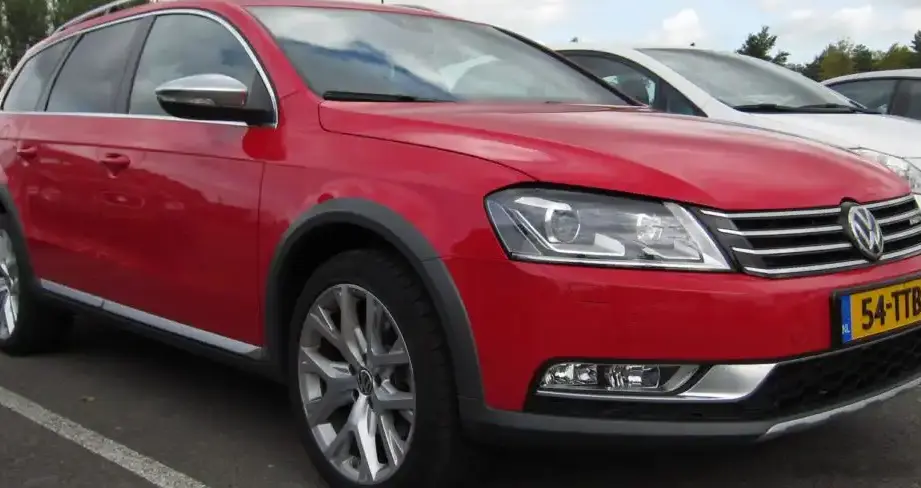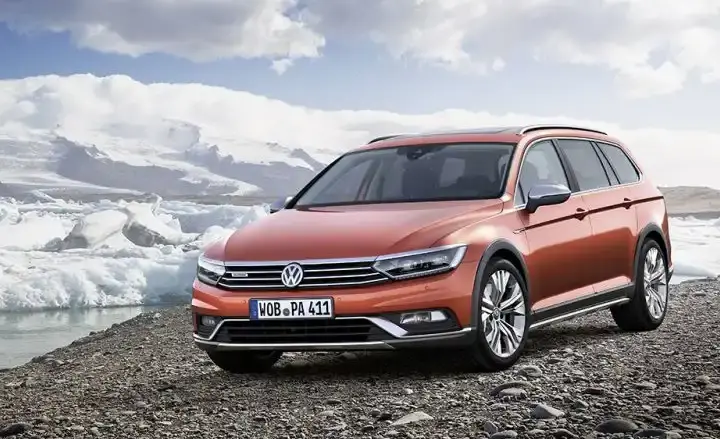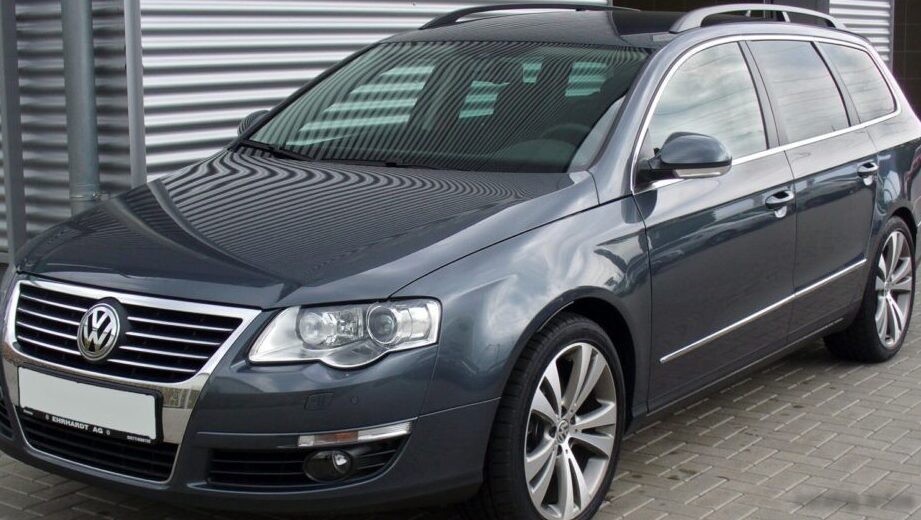
The Volkswagen Passat Variant (B6) 1.4 TSI (150 hp) EcoFuel DSG, produced from 2009 to 2010, represented a unique offering within the broader B6 Passat range. This variant combined a turbocharged and supercharged 1.4-liter gasoline engine with the flexibility of Compressed Natural Gas (CNG) operation, paired with Volkswagen’s dual-clutch DSG (Direct-Shift Gearbox) automatic transmission. Positioned as a fuel-efficient and environmentally conscious option, it catered to buyers seeking lower running costs and reduced emissions without sacrificing the practicality of a spacious station wagon. The B6 Passat itself was a significant model for Volkswagen, building upon the success of its predecessor and offering a more refined and technologically advanced package.
Technical Specifications
| Brand | Volkswagen |
| Model | Passat |
| Generation | Passat Variant (B6) |
| Type (Engine) | 1.4 TSI (150 Hp) EcoFuel DSG |
| Start of production | 2009 |
| End of production | 2010 |
| Powertrain Architecture | Internal Combustion engine |
| Body type | Station wagon (estate) |
| Seats | 5 |
| Doors | 5 |
| Fuel consumption (economy) – urban (NEDC) | 8.8 l/100 km (26.7 US mpg, 32.1 UK mpg, 11.4 km/l) |
| Fuel consumption (economy) – urban (CNG) (NEDC) | 5.8 kg/100 km |
| Fuel consumption (economy) – extra urban (NEDC) | 5.6 l/100 km (42 US mpg, 50.4 UK mpg, 17.9 km/l) |
| Fuel consumption (economy) – extra urban (CNG) (NEDC) | 3.7 kg/100 km |
| Fuel consumption (economy) – combined (NEDC) | 6.8 l/100 km (34.6 US mpg, 41.5 UK mpg, 14.7 km/l) |
| Fuel consumption (economy) – combined (CNG) (NEDC) | 4.4 kg/100 km |
| CO2 emissions (NEDC) | 158 g/km |
| CO2 emissions (CNG) (NEDC) | 121 g/km |
| Fuel Type | Petrol / CNG |
| Acceleration 0 – 100 km/h | 9.9 sec |
| Acceleration 0 – 62 mph | 9.9 sec |
| Acceleration 0 – 60 mph | 9.4 sec |
| Maximum speed | 208 km/h (129.25 mph) |
| Emission standard | Euro 5 |
| Weight-to-power ratio | 10.5 kg/Hp, 95.1 Hp/tonne |
| Weight-to-torque ratio | 7.2 kg/Nm, 139.5 Nm/tonne |
| Power | 150 Hp @ 5500 rpm |
| Power per litre | 107.9 Hp/l |
| Torque | 220 Nm @ 1500-4500 rpm (162.26 lb.-ft. @ 1500-4500 rpm) |
| Engine layout | Front, Transverse |
| Engine Model/Code | EA111 / CDGA |
| Engine displacement | 1390 cm3 (84.82 cu. in.) |
| Number of cylinders | 4 |
| Engine configuration | Inline |
| Cylinder Bore | 76.5 mm (3.01 in.) |
| Piston Stroke | 75.6 mm (2.98 in.) |
| Compression ratio | 10:1 |
| Number of valves per cylinder | 4 |
| Fuel injection system | Direct injection and Multi-port manifold injection |
| Engine aspiration | Turbocharging and Supercharger, Intercooler |
| Valvetrain | DOHC |
| Engine oil capacity | 3.6 l (3.8 US qt | 3.17 UK qt) |
| Kerb Weight | 1577 kg (3476.69 lbs.) |
| Max. weight | 2200 kg (4850.17 lbs.) |
| Max load | 623 kg (1373.48 lbs.) |
| Trunk (boot) space – minimum | 523 l (18.47 cu. ft.) |
| Trunk (boot) space – maximum | 1651 l (58.3 cu. ft.) |
| Fuel tank capacity | 31 l (8.19 US gal | 6.82 UK gal) |
| CNG cylinder capacity | 21 kg |
| Max. roof load | 100 kg (220.46 lbs.) |
| Permitted trailer load with brakes (8%) | 1700 kg (3747.86 lbs.) |
| Permitted trailer load with brakes (12%) | 1500 kg (3306.93 lbs.) |
| Permitted trailer load without brakes | 750 kg (1653.47 lbs.) |
| Permitted towbar download | 90 kg (198.42 lbs.) |
| Length | 4774 mm (187.95 in.) |
| Width | 1820 mm (71.65 in.) |
| Width including mirrors | 1991 mm (78.39 in.) |
| Height | 1517 mm (59.72 in.) |
| Wheelbase | 2709 mm (106.65 in.) |
| Front track | 1552 mm (61.1 in.) |
| Rear (Back) track | 1551 mm (61.06 in.) |
| Ride height (ground clearance) | 114 mm (4.49 in.) |
| Minimum turning circle (turning diameter) | 11.4 m (37.4 ft.) |
| Drivetrain Architecture | The Internal combustion engine (ICE) drives the front wheels of the vehicle. |
| Drive wheel | Front wheel drive |
| Number of gears and type of gearbox | 7 gears, automatic transmission DSG |
| Front suspension | Independent type McPherson, Transverse stabilizer |
| Rear suspension | Independent multi-link suspension, Transverse stabilizer |
| Front brakes | Ventilated discs |
| Rear brakes | Disc |
| Assisting systems | ABS (Anti-lock braking system) |
| Steering type | Steering rack and pinion |
| Power steering | Electric Steering |
| Tires size | 205/55 R 16 |
| Wheel rims size | 6.5 J x 16 |
Powertrain & Engine Architecture
The heart of this Passat variant was the EA111 engine family, specifically the CDGA code. This 1.4-liter inline-four engine was notable for its combination of a turbocharger and a supercharger – a configuration known as “twincharging.” The supercharger provided immediate boost at low engine speeds, eliminating turbo lag, while the turbocharger took over at higher RPMs for sustained power delivery. Direct fuel injection further enhanced efficiency and performance. The engine produced 150 horsepower at 5500 rpm and 220 Nm (162 lb-ft) of torque between 1500 and 4500 rpm. The EcoFuel designation indicated the engine’s capability to run on Compressed Natural Gas (CNG). When running on CNG, the engine’s output was slightly reduced, but fuel costs were significantly lower. The seven-speed DSG dual-clutch transmission offered quick and smooth gear changes, contributing to both performance and fuel economy.
Driving Characteristics
The 1.4 TSI EcoFuel DSG Passat offered a surprisingly refined driving experience. The twincharged engine provided adequate power for everyday driving, with the supercharger ensuring brisk acceleration from a standstill. While not a sports car, the Passat could comfortably maintain highway speeds and overtake slower traffic. The DSG transmission shifted seamlessly, and the gear ratios were well-suited to both urban and long-distance driving. Compared to the higher-output 1.8 TSI or 2.0 TSI Passat variants, this model felt less powerful, but it compensated with superior fuel economy and a more relaxed driving style. The automatic transmission, while convenient, didn’t offer the same level of driver engagement as a manual gearbox.
Equipment & Trim Levels
The 1.4 TSI EcoFuel DSG typically came with a reasonable level of standard equipment. This included air conditioning, power windows, central locking, an audio system, and alloy wheels. Safety features such as ABS, airbags, and electronic stability control were also standard. Optional extras included a sunroof, leather upholstery, a navigation system, and parking sensors. The interior trim was generally functional and well-built, reflecting the Passat’s position as a mid-range family car. The EcoFuel models often featured specific badging and instrumentation to indicate their alternative fuel capability.
Chassis & Braking
The B6 Passat featured an independent suspension setup, with McPherson struts at the front and a multi-link system at the rear. This provided a comfortable ride quality and good handling characteristics. The front brakes were ventilated discs, while the rear brakes were solid discs. The steering was power-assisted, offering a light and precise feel. Stabilizer bars were fitted to both the front and rear axles to reduce body roll during cornering. The suspension was tuned to prioritize comfort over outright sportiness, making it well-suited to long journeys.
Market Reception & Comparison
The Passat 1.4 TSI EcoFuel DSG was generally well-received by critics, who praised its fuel efficiency, low emissions, and comfortable ride. However, some reviewers noted that the engine could feel strained when fully loaded or driving uphill. Compared to the petrol-only 1.4 TSI, the EcoFuel version offered lower running costs, but required access to a CNG refueling infrastructure. Against the diesel-powered Passats, such as the 1.9 TDI or 2.0 TDI, it offered a quieter and smoother driving experience, but lacked the same level of torque and fuel economy. The EcoFuel variant appealed to environmentally conscious buyers and those who could benefit from the lower cost of CNG.
Legacy
The 1.4 TSI EcoFuel DSG Passat represents an interesting chapter in Volkswagen’s history, showcasing its commitment to alternative fuels and efficient engine technology. While CNG infrastructure remains limited in some regions, these models continue to offer a viable option for those seeking to reduce their carbon footprint and fuel expenses. The EA111 engine, despite some early reliability concerns related to carbon buildup, has proven to be generally durable with proper maintenance. Today, these Passats can be found on the used car market at relatively affordable prices, offering a practical and economical choice for buyers seeking a spacious and well-equipped station wagon.