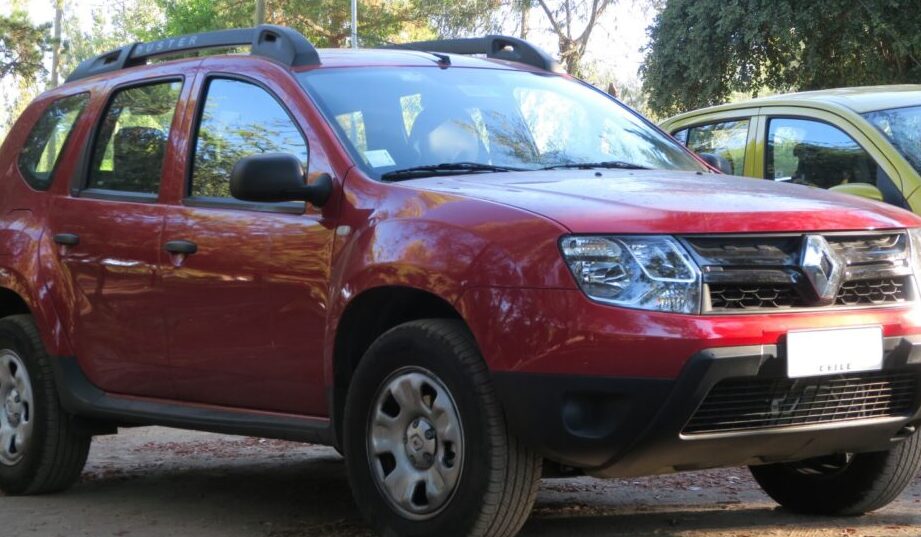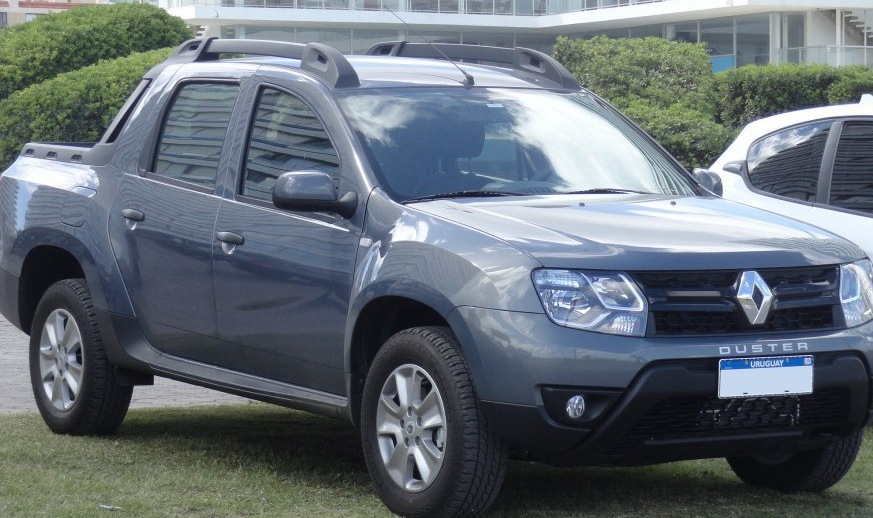
The Renault Duster Oroch 2.0 16V (148 hp) Ethanol, produced from 2015 to 2019, represents Renault’s entry into the compact pickup truck segment, specifically tailored for the South American market. Positioned as a versatile and affordable option, the Oroch aimed to bridge the gap between traditional SUVs and utilitarian pickups. It’s based on the Duster SUV platform (Dacia Logan/Renault Sandero underpinnings), offering a unique blend of passenger comfort and cargo-carrying capability. This particular variant, equipped with the 2.0-liter engine and a manual transmission, served as a core offering within the Oroch lineup, appealing to buyers seeking a balance of performance and fuel efficiency, particularly with the availability of ethanol as a fuel source.
Technical Specifications
| Brand | Renault |
| Model | Duster |
| Generation | Duster Oroch |
| Type (Engine) | 2.0 16V (148 Hp) Ethanol |
| Start of production | 2015 |
| End of production | 2019 |
| Powertrain Architecture | Internal Combustion engine |
| Body type | Pick-up |
| Seats | 5 |
| Doors | 4 |
| Fuel Type | Petrol / Ethanol – E85 |
| Acceleration 0 – 100 km/h | 10 sec |
| Acceleration 0 – 62 mph | 10 sec |
| Acceleration 0 – 60 mph | 9.5 sec |
| Maximum speed | 186 km/h (115.58 mph) |
| Weight-to-power ratio | 9.2 kg/Hp, 109.2 Hp/tonne |
| Weight-to-torque ratio | 6.6 kg/Nm, 151.3 Nm/tonne |
| Power | 148 Hp @ 5750 rpm |
| Power per litre | 74.1 Hp/l |
| Torque | 205 Nm @ 4000 rpm (151.2 lb.-ft. @ 4000 rpm) |
| Engine layout | Front, Transverse |
| Engine Model/Code | F4R |
| Engine displacement | 1998 cm3 (121.93 cu. in.) |
| Number of cylinders | 4 |
| Engine configuration | Inline |
| Number of valves per cylinder | 4 |
| Fuel injection system | Multi-port manifold injection |
| Engine aspiration | Naturally aspirated engine |
| Engine oil capacity | 5.4 l (5.71 US qt | 4.75 UK qt) |
| Coolant | 4.5 l (4.76 US qt | 3.96 UK qt) |
| Kerb Weight | 1355 kg (2987.26 lbs) |
| Trunk (boot) space – minimum | 683 l (24.12 cu. ft) |
| Fuel tank capacity | 50 l (13.21 US gal | 11 UK gal) |
| Length | 4700 mm (185.04 in) |
| Width | 1821 mm (71.69 in) |
| Height | 1694 mm (66.69 in) |
| Wheelbase | 2829 mm (111.38 in) |
| Ride height (ground clearance) | 206 mm (8.11 in) |
| Approach angle | 26° |
| Departure angle | 19.9° |
| Drivetrain Architecture | The Internal combustion engine (ICE) drives the front wheels of the vehicle. |
| Drive wheel | Front wheel drive |
| Number of gears and type of gearbox | 6 gears, manual transmission |
| Front suspension | Independent type McPherson |
| Rear suspension | Independent multi-link spring suspension with stabilizer |
| Front brakes | Ventilated discs |
| Rear brakes | Drum |
| Assisting systems | ABS (Anti-lock braking system) |
| Steering type | Steering rack and pinion |
| Power steering | Electric Steering |
| Tires size | 215/65 R16 |
| Wheel rims size | 16 |
Powertrain & Engine Architecture
The Renault Duster Oroch 2.0 16V utilizes the F4R engine, a naturally aspirated 1.998-liter inline-four cylinder engine. This engine is a well-established design within the Renault/Nissan alliance, known for its robustness and relatively simple maintenance requirements. The “16V” designation indicates the engine features four valves per cylinder, enhancing breathing and contributing to its power output. Fuel delivery is managed by a multi-point fuel injection system, optimized for both gasoline and ethanol (E85) operation. The engine’s design allows it to automatically adjust to the fuel blend being used. The 6-speed manual transmission was the standard offering for this variant, providing drivers with direct control over gear selection. The transmission’s gear ratios are tuned for a balance of acceleration and fuel economy, prioritizing usability in everyday driving conditions.
Driving Characteristics
The 148 hp output, coupled with the 6-speed manual transmission, provides adequate performance for the Duster Oroch. Acceleration from 0-60 mph takes approximately 9.5 seconds, which is competitive within its class. While not a performance-oriented vehicle, the engine delivers sufficient torque (205 Nm or 151.2 lb-ft) for hauling moderate loads and navigating varied terrain. The manual transmission allows for precise control, particularly useful when tackling challenging road conditions. Compared to potential higher-output versions (which were not widely available on the Oroch), this variant prioritizes fuel efficiency and affordability. The gear ratios are spaced to provide reasonable acceleration in lower gears and comfortable cruising at highway speeds. The front-wheel-drive configuration contributes to a lighter vehicle weight, further enhancing fuel economy.
Equipment & Trim Levels
The base trim level of the Duster Oroch 2.0 16V typically included features such as air conditioning, power windows, power door locks, and a basic audio system with USB connectivity. Safety features included ABS brakes and dual front airbags. Higher trim levels offered additional features like alloy wheels, fog lights, a more advanced audio system with Bluetooth connectivity, and a rear parking sensor. Interior upholstery was typically cloth, with a durable and practical design. The dashboard layout was functional and straightforward, prioritizing ease of use. Optional extras included a navigation system and a rearview camera.
Chassis & Braking
The Duster Oroch utilizes a McPherson strut front suspension and an independent multi-link rear suspension, providing a comfortable ride quality and decent handling characteristics. The suspension is tuned to balance ride comfort with load-carrying capability. Front brakes are ventilated discs, offering good stopping power, while rear brakes are drums, a cost-saving measure common in this segment. The electric power steering provides light and responsive steering feel. Ground clearance of 206 mm (8.11 inches) allows for confident driving on unpaved roads and rough terrain. The vehicle’s relatively short wheelbase contributes to its maneuverability in urban environments.
Market Reception & Comparison
The Renault Duster Oroch was generally well-received in the South American market, praised for its affordability, practicality, and versatility. Critics noted its robust construction and ability to handle both on-road and off-road conditions. Compared to other compact pickups in the region, the Oroch offered a compelling combination of features and value. The 2.0-liter engine with manual transmission was considered a good balance between performance and fuel economy. Fuel economy figures varied depending on driving conditions and fuel type, but typically ranged from 22-28 mpg (gasoline) and slightly lower with ethanol. Reliability was generally good, with the F4R engine proving to be a durable and dependable unit.
Legacy
The Renault Duster Oroch established Renault as a significant player in the compact pickup truck segment in South America. The 2.0-liter engine and manual transmission combination proved to be a popular choice among buyers, offering a reliable and affordable transportation solution. On the used car market, these models are generally sought after for their practicality and relatively low maintenance costs. The F4R engine is known for its longevity, and parts availability remains good. While newer iterations of the Oroch have been introduced, the original 2015-2019 models continue to represent a solid value proposition for buyers seeking a versatile and dependable pickup truck.