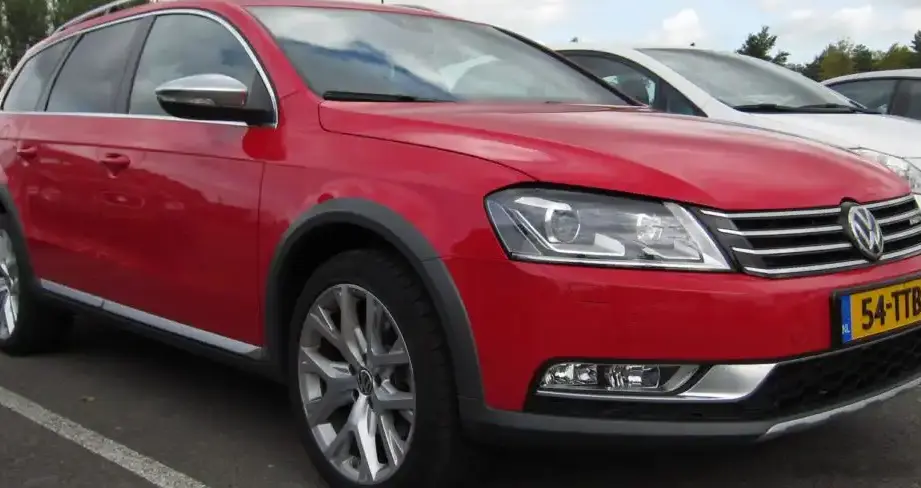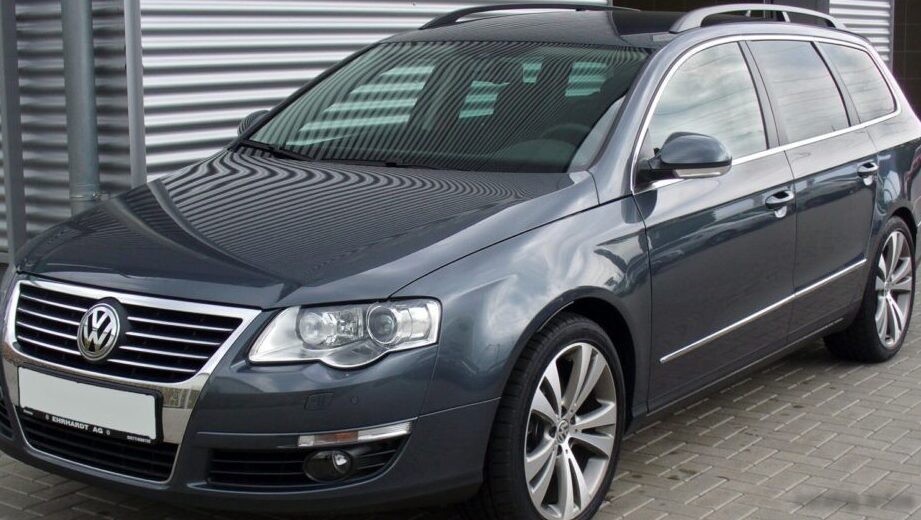
The Volkswagen Passat Variant (B6) 1.4 TSI BMT, produced from 2009 to 2010, represents a key iteration within the sixth generation (B6) of Volkswagen’s popular mid-size family car. This variant, a station wagon (estate) body style, was positioned as an efficient and practical option within the Passat lineup, appealing to buyers seeking a balance between fuel economy, space, and reasonable performance. It was primarily marketed in Europe, where the station wagon format remained highly popular, offering a compelling alternative to sedan models. The “BMT” designation stands for “BlueMotion Technology,” signifying Volkswagen’s efforts to improve fuel efficiency and reduce emissions.
Technical Specifications
| Brand | Volkswagen |
| Model | Passat |
| Generation | Passat Variant (B6) |
| Type (Engine) | 1.4 TSI BMT (122 Hp) |
| Start of production | 2009 |
| End of production | 2010 |
| Powertrain Architecture | Internal Combustion engine |
| Body type | Station wagon (estate) |
| Seats | 5 |
| Doors | 5 |
| Fuel consumption (economy) – urban (NEDC) | 7.9 l/100 km (29.8 US mpg, 35.8 UK mpg, 12.7 km/l) |
| Fuel consumption (economy) – extra urban (NEDC) | 5.1 l/100 km (46.1 US mpg, 55.4 UK mpg, 19.6 km/l) |
| Fuel consumption (economy) – combined (NEDC) | 6.1 l/100 km (38.6 US mpg, 46.3 UK mpg, 16.4 km/l) |
| CO2 emissions (NEDC) | 142 g/km |
| Fuel Type | Petrol (Gasoline) |
| Acceleration 0 – 100 km/h | 10.6 sec |
| Acceleration 0 – 62 mph | 10.6 sec |
| Acceleration 0 – 60 mph | 10.1 sec |
| Maximum speed | 202 km/h (125.52 mph) |
| Emission standard | Euro 5 |
| Weight-to-power ratio | 11.5 kg/Hp, 87.3 Hp/tonne |
| Weight-to-torque ratio | 7 kg/Nm, 143.1 Nm/tonne |
| Power | 122 Hp @ 5000 rpm |
| Power per litre | 87.8 Hp/l |
| Torque | 200 Nm @ 1500-4000 rpm (147.51 lb.-ft. @ 1500-4000 rpm) |
| Engine layout | Front, Transverse |
| Engine Model/Code | CAXA |
| Engine displacement | 1390 cm3 (84.82 cu. in.) |
| Number of cylinders | 4 |
| Engine configuration | Inline |
| Number of valves per cylinder | 4 |
| Fuel injection system | Direct injection |
| Engine aspiration | Turbocharger, Intercooler |
| Valvetrain | DOHC |
| Engine oil capacity | 3.6 l (3.8 US qt | 3.17 UK qt) |
| Coolant | 5.6 l (5.92 US qt | 4.93 UK qt) |
| Kerb Weight | 1398 kg (3082.06 lbs.) |
| Max. weight | 2020 kg (4453.34 lbs.) |
| Max load | 622 kg (1371.28 lbs.) |
| Trunk (boot) space – minimum | 603 l (21.29 cu. ft.) |
| Trunk (boot) space – maximum | 1731 l (61.13 cu. ft.) |
| Fuel tank capacity | 70 l (18.49 US gal | 15.4 UK gal) |
| Max. roof load | 100 kg (220.46 lbs.) |
| Permitted trailer load with brakes (8%) | 1600 kg (3527.4 lbs.) |
| Permitted trailer load with brakes (12%) | 1400 kg (3086.47 lbs.) |
| Permitted trailer load without brakes | 730 kg (1609.37 lbs.) |
| Permitted towbar download | 90 kg (198.42 lbs.) |
| Length | 4774 mm (187.95 in.) |
| Width | 1820 mm (71.65 in.) |
| Width including mirrors | 1991 mm (78.39 in.) |
| Height | 1517 mm (59.72 in.) |
| Wheelbase | 2709 mm (106.65 in.) |
| Front track | 1552 mm (61.1 in.) |
| Rear (Back) track | 1551 mm (61.06 in.) |
| Ride height (ground clearance) | 114 mm (4.49 in.) |
| Minimum turning circle (turning diameter) | 11.4 m (37.4 ft.) |
| Approach angle | 14.4° |
| Departure angle | 12.7° |
| Ramp-over (brakeover) angle | 10.8° |
| Drivetrain Architecture | The Internal combustion engine (ICE) drives the front wheels of the vehicle. |
| Drive wheel | Front wheel drive |
| Number of gears and type of gearbox | 6 gears, manual transmission |
| Front suspension | Independent type McPherson, Transverse stabilizer |
| Rear suspension | Independent multi-link suspension, Transverse stabilizer |
| Front brakes | Ventilated discs |
| Rear brakes | Disc |
| Assisting systems | ABS (Anti-lock braking system) |
| Steering type | Steering rack and pinion |
| Power steering | Electric Steering |
| Tires size | 205/55 R 16 |
| Wheel rims size | 6.5 J x 16 |
Powertrain & Engine Architecture
The heart of the Passat Variant 1.4 TSI BMT is the CAXA engine code, a 1.4-liter turbocharged inline-four cylinder gasoline engine. This engine utilizes direct fuel injection (FSI) and an intercooled turbocharger to deliver a balance of power and efficiency. The “TSI” designation stands for “Turbocharged Stratified Injection,” highlighting these key technologies. The engine’s 16-valve DOHC (Double Overhead Camshaft) valvetrain contributes to its responsive nature. The BMT package incorporates features like start-stop technology and regenerative braking to further reduce fuel consumption. The engine is transversely mounted at the front of the vehicle. The 6-speed manual transmission was standard, designed to optimize fuel economy and provide adequate acceleration.
Driving Characteristics
The 122 horsepower and 200 Nm (147 lb-ft) of torque produced by the 1.4 TSI engine provided adequate, though not exhilarating, performance for the Passat Variant. Acceleration from 0-100 km/h (0-62 mph) took approximately 10.6 seconds. The engine’s peak torque was available from a relatively low 1500 rpm, offering decent responsiveness in everyday driving situations. Compared to higher-output Passat variants, such as those equipped with the 2.0 TSI engine, the 1.4 TSI felt less powerful, particularly when fully loaded or tackling steep inclines. However, the 6-speed manual transmission allowed drivers to keep the engine in its optimal power band. The BMT features, while enhancing fuel economy, could sometimes result in a slightly less refined driving experience due to the start-stop system’s occasional abruptness.
Equipment & Trim Levels
The 1.4 TSI BMT variant of the Passat Variant (B6) typically came with a reasonable level of standard equipment. This included features like air conditioning, power windows, central locking, and an audio system. Safety features such as ABS (Anti-lock Braking System) and multiple airbags were also standard. Interior upholstery was typically cloth, with options for upgraded materials available. Trim levels varied depending on the market, but generally, this engine was offered in base or mid-range trims. Optional extras could include alloy wheels, a sunroof, parking sensors, and a more advanced infotainment system.
Chassis & Braking
The Passat Variant (B6) featured an independent suspension setup, with McPherson struts at the front and a multi-link suspension at the rear. This configuration provided a comfortable ride and decent handling characteristics. Stabilizer bars were fitted to both axles to reduce body roll during cornering. The braking system consisted of ventilated discs at the front and solid discs at the rear, providing adequate stopping power for the vehicle’s weight class. The electric power steering offered a light and precise feel.
Market Reception & Comparison
The Passat Variant 1.4 TSI BMT was generally well-received by critics for its fuel efficiency and practicality. It offered a compelling alternative to larger, more expensive station wagons. However, some reviewers noted that the engine could feel underpowered at times, particularly when carrying a full load. Compared to other Passat variants, such as the 2.0 TDI diesel, the 1.4 TSI offered lower running costs but less torque and potentially lower resale value. Fuel economy figures of around 6.1 l/100 km (38.6 US mpg) were competitive for its class.
Legacy
The 1.4 TSI engine, in various iterations, proved to be a relatively reliable powertrain. However, early versions of this engine (including the CAXA code) were known to experience some issues with carbon buildup on the intake valves, potentially leading to rough running and reduced performance. Regular servicing and the use of quality fuel were essential to mitigate this risk. Today, the Passat Variant (B6) 1.4 TSI BMT can be found on the used car market at affordable prices. It remains a practical and economical choice for buyers seeking a spacious and fuel-efficient station wagon, provided that the engine has been well-maintained.