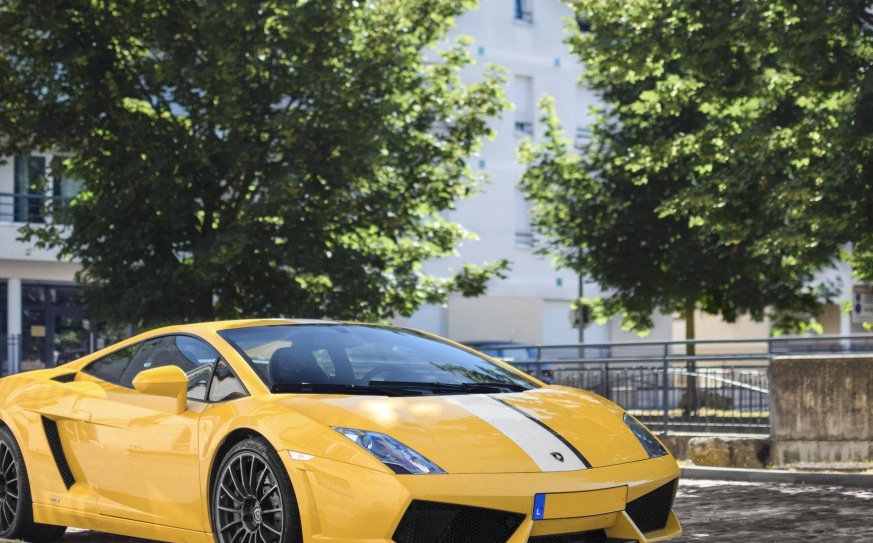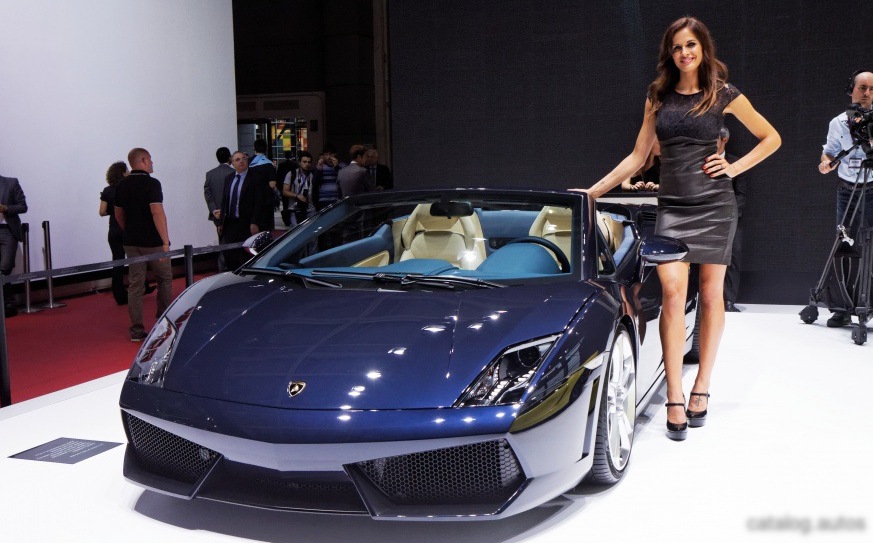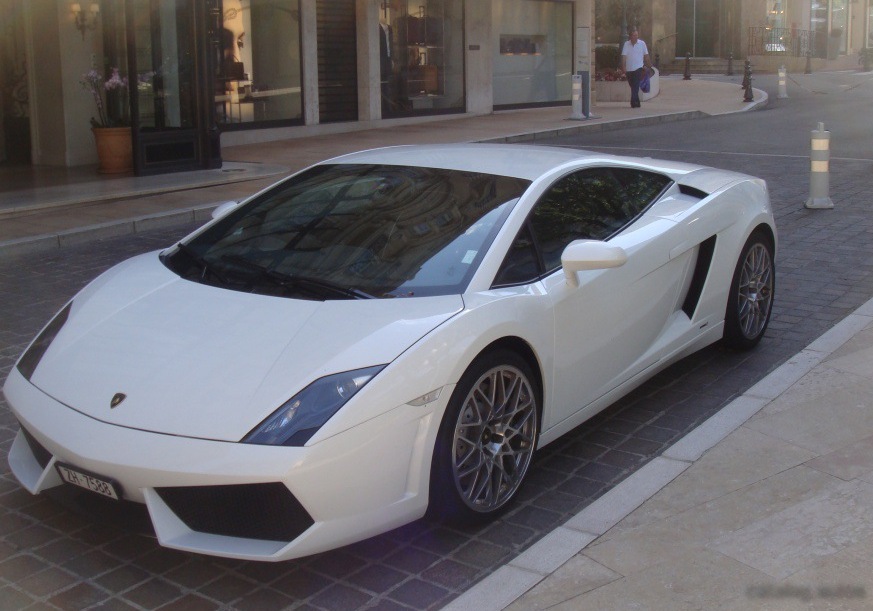
The Lamborghini Gallardo LP 560-4, produced from 2008 to 2013, represented a significant evolution of Lamborghini’s entry-level model. Replacing the original Gallardo, the LP 560-4 featured a revised engine, updated styling penned by Luc Donckerwolke, and improvements to the chassis and aerodynamics. It sat firmly within the high-performance supercar segment, offering a more refined and technologically advanced experience compared to its predecessor. The “LP” designation stands for “Leggera Performance,” signifying weight reduction and enhanced performance, while “560-4” denotes the engine’s 560 horsepower output and all-wheel-drive configuration. The model played a crucial role in broadening Lamborghini’s appeal and increasing production volume during this period.
Technical Specifications
| Brand | Lamborghini |
| Model | Gallardo |
| Generation | Gallardo LP 560-4 |
| Type (Engine) | 5.2i V10 (560 Hp) AWD E-Gear |
| Start of production | 2008 |
| End of production | 2013 |
| Powertrain Architecture | Internal Combustion engine |
| Body type | Coupe |
| Seats | 2 |
| Doors | 2 |
| Fuel consumption (economy) – urban | 20.1 l/100 km (11.7 US mpg, 14.1 UK mpg, 5 km/l) |
| Fuel consumption (economy) – extra urban | 9.2 l/100 km (25.6 US mpg, 30.7 UK mpg, 10.9 km/l) |
| Fuel consumption (economy) – combined | 13.3 l/100 km (17.7 US mpg, 21.2 UK mpg, 7.5 km/l) |
| CO2 emissions | 315 g/km |
| Fuel Type | Petrol (Gasoline) |
| Acceleration 0 – 100 km/h | 3.9 sec |
| Acceleration 0 – 62 mph | 3.9 sec |
| Acceleration 0 – 60 mph | 3.7 sec |
| Maximum speed | 320 km/h (198.84 mph) |
| Emission standard | Euro 4 |
| Weight-to-power ratio | 2.6 kg/Hp, 384.9 Hp/tonne |
| Weight-to-torque ratio | 2.7 kg/Nm, 371.1 Nm/tonne |
| Power | 560 Hp @ 8000 rpm |
| Power per litre | 107.6 Hp/l |
| Torque | 540 Nm @ 6500 rpm (398.28 lb.-ft. @ 6500 rpm) |
| Engine layout | Middle, Longitudinal |
| Engine Model/Code | CEH |
| Engine displacement | 5204 cm3 (317.57 cu. in.) |
| Number of cylinders | 10 |
| Engine configuration | V-engine |
| Cylinder Bore | 84.5 mm (3.33 in.) |
| Piston Stroke | 92.8 mm (3.65 in.) |
| Compression ratio | 12.5:1 |
| Number of valves per cylinder | 4 |
| Fuel injection system | Direct injection |
| Engine aspiration | Naturally aspirated engine |
| Engine oil capacity | 8.3 l (8.77 US qt | 7.3 UK qt) |
| Coolant | 21 l (22.19 US qt | 18.48 UK qt) |
| Kerb Weight | 1455 kg (3207.73 lbs.) |
| Max. weight | 1800 kg (3968.32 lbs.) |
| Max load | 345 kg (760.59 lbs.) |
| Trunk (boot) space – minimum | 110 l (3.88 cu. ft.) |
| Fuel tank capacity | 90 l (23.78 US gal | 19.8 UK gal) |
| Length | 4345 mm (171.06 in.) |
| Width | 1900 mm (74.8 in.) |
| Height | 1165 mm (45.87 in.) |
| Wheelbase | 2560 mm (100.79 in.) |
| Front track | 1622 mm (63.86 in.) |
| Rear (Back) track | 1592 mm (62.68 in.) |
| Drag coefficient (Cd) | 0.36 |
| Minimum turning circle (turning diameter) | 11.5 m (37.73 ft.) |
| Drive wheel | All wheel drive (4×4) |
| Number of gears and type of gearbox | 6 gears, automatic transmission E-Gear |
| Front suspension | Double wishbone |
| Rear suspension | Double wishbone |
| Front brakes | Ventilated discs |
| Rear brakes | Ventilated discs |
| Assisting systems | ABS (Anti-lock braking system) |
| Steering type | Steering rack and pinion |
| Tires size | 235/35 R19; 295/30 R19 |
| Wheel rims size | 8.5J x 19; 11J x 19 |
Powertrain & Engine Architecture
At the heart of the LP 560-4 lies the CEH engine, a 5.2-liter naturally aspirated V10. This engine represented a significant upgrade over the earlier 5.0-liter unit, boasting increased displacement and a higher redline. The engine utilizes a direct fuel injection system, contributing to improved efficiency and power delivery. Each cylinder features four valves, and the engine produces 560 horsepower at 8,000 rpm and 540 Nm (398 lb-ft) of torque at 6,500 rpm. The engine’s architecture is a 90-degree V10, known for its smooth operation and distinctive exhaust note. The E-Gear transmission is a six-speed automated manual transmission, essentially a traditional manual gearbox with electronically controlled actuation. It offered faster shift times than a conventional manual, but lacked the smoothness of a traditional torque-converter automatic.
Driving Characteristics
The LP 560-4’s driving experience is defined by its raw power and responsive handling. The all-wheel-drive system provides exceptional traction, allowing for rapid acceleration even in less-than-ideal conditions. The E-Gear transmission, while quick, could be jerky at low speeds, particularly during stop-and-go traffic. Compared to a manual Gallardo, the E-Gear version offered convenience but sacrificed some driver engagement. The car’s steering is direct and precise, providing excellent feedback to the driver. The suspension is firm, prioritizing handling over ride comfort, but still manages to absorb bumps reasonably well. The combination of a lightweight chassis and powerful engine results in a 0-60 mph time of around 3.7 seconds and a top speed of 200 mph.
Equipment & Trim Levels
The LP 560-4 came standard with a comprehensive list of features, befitting its status as a high-performance supercar. Standard equipment included leather upholstery, power-adjustable seats, a navigation system, and a premium audio system. Optional extras were plentiful, allowing buyers to personalize their vehicles. These included carbon fiber interior trim, upgraded audio systems, and various exterior styling enhancements. The interior design was focused on functionality and driver engagement, with a minimalist dashboard layout and a prominent center console.
Chassis & Braking
The Gallardo LP 560-4 utilizes an aluminum space frame chassis, providing a lightweight and rigid foundation for the vehicle. The suspension consists of double wishbones at all four corners, with adjustable dampers. Braking duties are handled by ventilated discs on all four wheels, providing ample stopping power. The car is equipped with an anti-lock braking system (ABS) and electronic stability control (ESC) to enhance safety. The front brakes are larger than the rear brakes to account for the weight transfer during braking.
Market Reception & Comparison
The Gallardo LP 560-4 was generally well-received by automotive critics, who praised its performance, handling, and styling. However, the E-Gear transmission received mixed reviews, with some finding it too jerky and others appreciating its speed and convenience. Compared to the earlier Gallardo, the LP 560-4 offered improved performance and a more refined driving experience. Fuel economy, unsurprisingly, was not a strong point, with combined fuel consumption of around 17.7 US mpg. Reliability was generally good, although maintenance costs were high, as expected for a supercar.
Legacy
The Lamborghini Gallardo LP 560-4 remains a highly desirable supercar in the used car market. Its combination of performance, styling, and relative reliability has made it a popular choice among enthusiasts. The 5.2-liter V10 engine is known for its durability, and the E-Gear transmission, while requiring specialized maintenance, is generally reliable when properly cared for. The LP 560-4 represents a pivotal moment in Lamborghini’s history, solidifying the brand’s position as a leader in the high-performance supercar segment. It paved the way for the Huracán, which continues to build upon the Gallardo’s legacy.