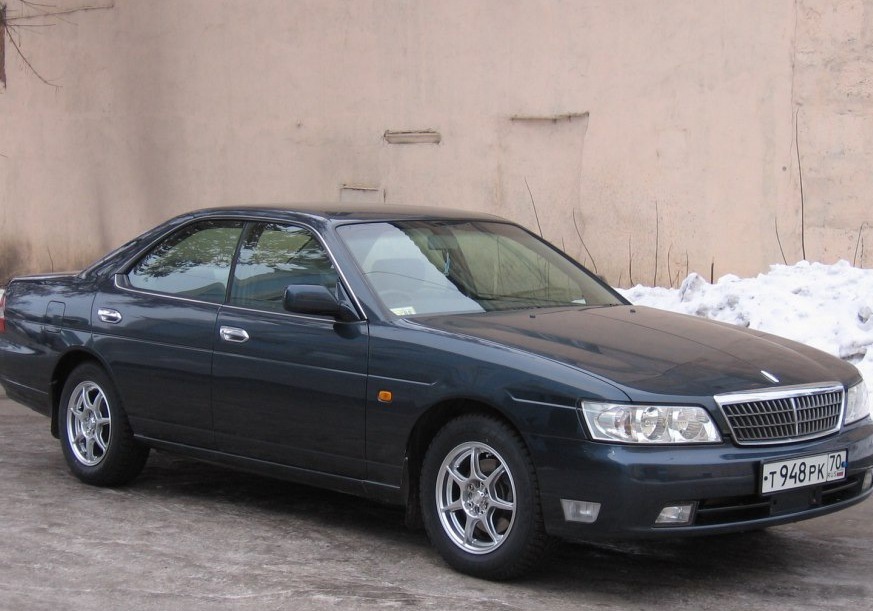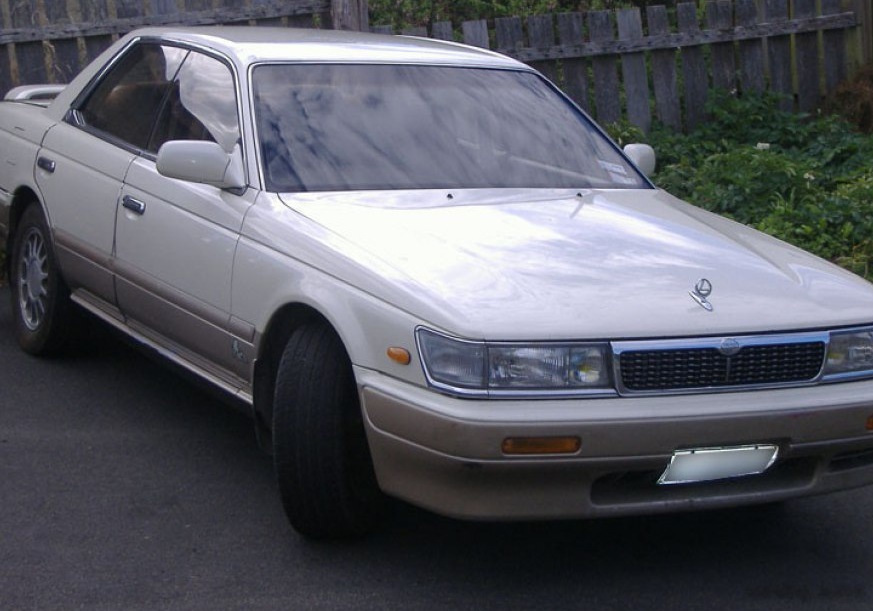
The Nissan Laurel E-HC33 2.5 24V Club S, produced between 1990 and 1997, represents a significant iteration of Nissan’s long-running Laurel executive car. This generation, the eighth, moved the Laurel further upmarket, offering a blend of comfort, performance, and technology aimed at the discerning Japanese driver. The Club S trim, specifically with the 2.5-liter engine and automatic transmission, occupied a middle ground in the HC33 lineup, offering a step up in performance from the base models while remaining more accessible than the top-tier variations. It was primarily a domestic market vehicle, with limited exports, and catered to a buyer seeking a refined and relatively sporty sedan.
Technical Specifications
| Brand | Nissan |
| Model | Laurel |
| Generation | Laurel (E-HC33) |
| Type | 2.5 24V Club S (190 Hp) |
| Start of production | 1990 |
| End of production | 1997 |
| Powertrain Architecture | Internal Combustion engine |
| Body type | Sedan |
| Seats | 5 |
| Doors | 4 |
| Fuel consumption (combined) | 8 l/100 km (29.4 US mpg, 35.3 UK mpg, 12.5 km/l) |
| Fuel Type | Petrol (Gasoline) |
| Weight-to-power ratio | 7.5 kg/Hp, 133.8 Hp/tonne |
| Weight-to-torque ratio | 6.2 kg/Nm, 162 Nm/tonne |
| Power | 190 Hp @ 6400 rpm |
| Power per litre | 76 Hp/l |
| Torque | 230 Nm @ 4800 rpm (169.64 lb.-ft. @ 4800 rpm) |
| Engine layout | Front, Longitudinal |
| Engine displacement | 2499 cm3 (152.5 cu. in.) |
| Number of cylinders | 6 |
| Engine configuration | Inline |
| Cylinder Bore | 86 mm (3.39 in.) |
| Piston Stroke | 71.7 mm (2.82 in.) |
| Compression ratio | 10:1 |
| Number of valves per cylinder | 4 |
| Fuel injection system | Multi-port manifold injection |
| Engine aspiration | Naturally aspirated engine |
| Valvetrain | DOHC |
| Kerb Weight | 1420 kg (3130.56 lbs.) |
| Max. weight | 1695 kg (3736.84 lbs.) |
| Max load | 275 kg (606.27 lbs.) |
| Fuel tank capacity | 65 l (17.17 US gal | 14.3 UK gal) |
| Length | 4710 mm (185.43 in.) |
| Width | 1720 mm (67.72 in.) |
| Height | 1380 mm (54.33 in.) |
| Wheelbase | 2720 mm (107.09 in.) |
| Front track | 1460 mm (57.48 in.) |
| Rear track | 1470 mm (57.87 in.) |
| Drivetrain Architecture | Rear wheel drive |
| Drive wheel | Rear wheel drive |
| Number of gears and type of gearbox | 5 gears, automatic transmission |
| Front suspension | Wishbone |
| Rear suspension | Coil spring |
| Front brakes | Ventilated discs |
| Rear brakes | Ventilated discs |
| Assisting systems | ABS (Anti-lock braking system) |
| Steering type | Steering rack and pinion |
| Power steering | Hydraulic Steering |
| Tires size | 205/60 R15 |
Powertrain & Engine Architecture
The heart of the Laurel 2.5 24V Club S is the RB25DE engine, a 2.5-liter inline-six cylinder powerplant. This engine, part of Nissan’s renowned RB series, features a double overhead camshaft (DOHC) valvetrain operating 24 valves (four per cylinder). The multi-port fuel injection system delivers fuel directly to each cylinder, optimizing combustion and contributing to the engine’s smooth power delivery. The RB25DE is a naturally aspirated engine, meaning it doesn’t rely on turbocharging or supercharging for increased power. The engine’s 10:1 compression ratio strikes a balance between performance and fuel efficiency. Paired with this engine is a 5-speed automatic transmission, designed for comfortable and effortless cruising. This transmission, while not offering the driver engagement of a manual, provided smooth shifts and was well-suited to the Laurel’s intended role as a comfortable executive car.
Driving Characteristics
The 190 horsepower and 230 Nm (169.64 lb-ft) of torque produced by the RB25DE in the Club S trim provided a respectable level of performance for its time. While not a sports car, the Laurel offered brisk acceleration and comfortable highway cruising. The automatic transmission, while smooth, did slightly diminish the engine’s responsiveness compared to the available manual transmission. Gear ratios were tuned for relaxed driving, prioritizing fuel economy and comfort over outright acceleration. Compared to the higher-output RB25DET (turbocharged) versions found in other Laurel trims, the 2.5 24V Club S offered a more linear power delivery and a less demanding driving experience. It was also more fuel-efficient and generally less expensive to maintain than its turbocharged sibling.
Equipment & Trim Levels
The Club S trim level offered a good balance of features and affordability. Standard equipment typically included power windows, power locks, air conditioning, and a quality audio system. Interior upholstery was usually cloth, though leather options were available. The dashboard layout was functional and well-designed, with clear instrumentation. Optional extras could include a sunroof, upgraded audio systems, and alloy wheels. The Club S trim aimed to provide a comfortable and well-equipped interior without the premium price tag of the higher-spec models.
Chassis & Braking
The E-HC33 Laurel utilized a traditional body-on-frame construction, contributing to its robust feel and durability. The front suspension employed a wishbone setup, while the rear featured a coil spring arrangement. This suspension configuration provided a comfortable ride, absorbing bumps and irregularities in the road surface effectively. Braking duties were handled by ventilated discs on all four wheels, providing adequate stopping power. An Anti-lock Braking System (ABS) was included as standard, enhancing safety and control during emergency braking situations. The steering system was a rack and pinion setup with hydraulic power assistance, offering precise and responsive steering feel.
Market Reception & Comparison
The Nissan Laurel E-HC33 2.5 24V Club S was well-received in the Japanese market as a comfortable, reliable, and stylish executive car. Critics praised its smooth engine, comfortable ride, and well-appointed interior. Compared to other trims in the lineup, the 2.5 24V Club S offered a more accessible price point and better fuel economy than the turbocharged models, making it a popular choice for buyers who prioritized comfort and practicality over outright performance. Its fuel economy of 8 l/100 km was competitive for its class. Reliability was generally good, although like any vehicle of its age, regular maintenance was crucial.
Legacy
The Nissan Laurel E-HC33 2.5 24V Club S remains a popular choice among enthusiasts and collectors in Japan. The RB25DE engine is known for its durability and relatively simple maintenance requirements. While parts availability can be a challenge outside of Japan, the engine is generally considered to be robust and long-lasting. Today, well-maintained examples of the Laurel E-HC33 2.5 24V Club S are sought after for their classic styling, comfortable ride, and the enduring appeal of the RB25DE engine. It represents a high point in Nissan’s history of producing refined and reliable executive cars.