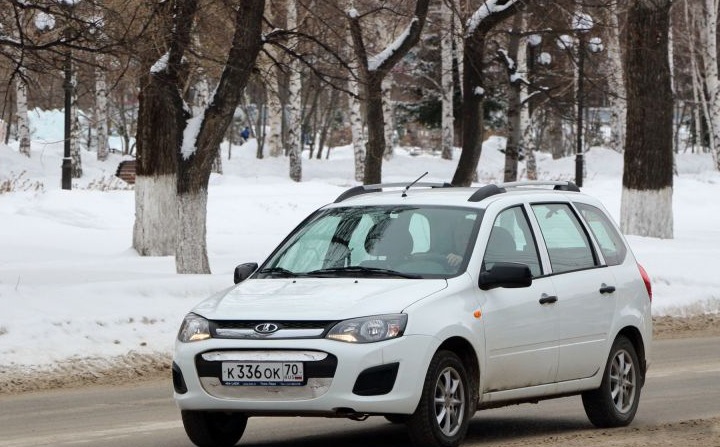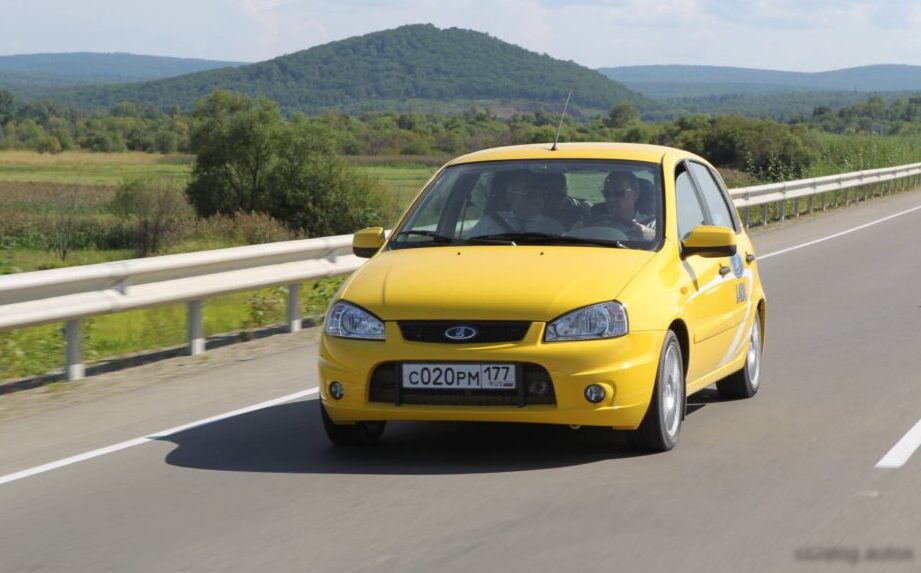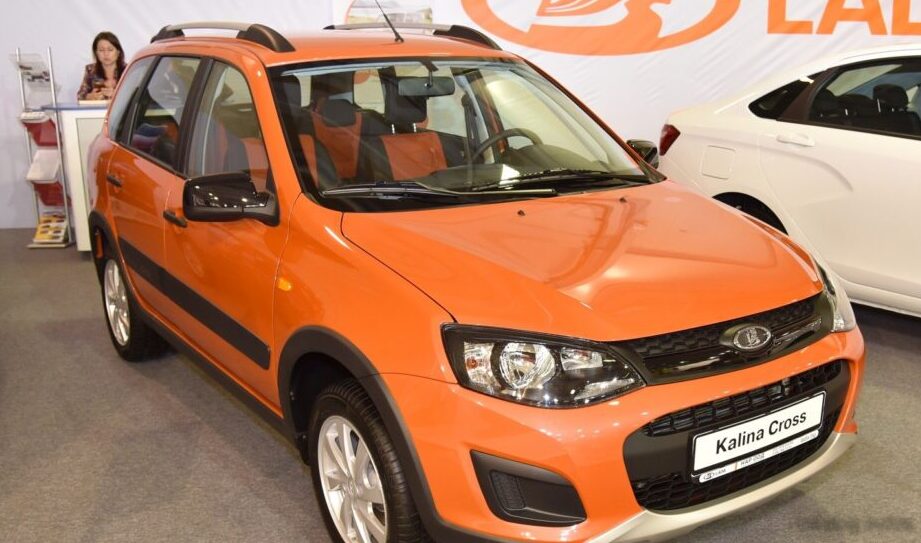
The Lada Kalina Cross 21941, specifically the 1.6-liter (106 horsepower) variant, was a subcompact wagon produced by the Russian automaker Lada from 2014 to 2018. Positioned as an affordable and practical vehicle, the Kalina Cross aimed to offer increased ground clearance and a more rugged appearance compared to the standard Kalina hatchback and sedan. It represented Lada’s attempt to modernize its offerings and appeal to buyers seeking a versatile vehicle capable of handling less-than-ideal road conditions, particularly in the Russian market. This variant occupied the middle ground in the Kalina Cross lineup, offering a balance between price and performance.
Technical Specifications
| Brand | Lada |
| Model | Kalina |
| Generation | Kalina Cross (21941) |
| Type (Engine) | 1.6 (106 Hp) |
| Start of production | 2014 |
| End of production | 2018 |
| Powertrain Architecture | Internal Combustion engine |
| Body type | Station wagon (estate) |
| Seats | 5 |
| Doors | 5 |
| Fuel consumption (urban) | 9 l/100 km (26.1 US mpg, 31.4 UK mpg, 11.1 km/l) |
| Fuel consumption (extra urban) | 5.8 l/100 km (40.6 US mpg, 48.7 UK mpg, 17.2 km/l) |
| Fuel consumption (combined) | 7 l/100 km (33.6 US mpg, 40.4 UK mpg, 14.3 km/l) |
| Fuel Type | Petrol (Gasoline) |
| Acceleration 0 – 100 km/h | 10.8 sec |
| Acceleration 0 – 62 mph | 10.8 sec |
| Acceleration 0 – 60 mph | 10.3 sec |
| Maximum speed | 177 km/h (109.98 mph) |
| Weight-to-power ratio | 10.6 kg/Hp, 94.2 Hp/tonne |
| Weight-to-torque ratio | 7.6 kg/Nm, 131.6 Nm/tonne |
| Power | 106 Hp @ 5800 rpm |
| Power per litre | 66.4 Hp/l |
| Torque | 148 Nm @ 4000 rpm (109.16 lb.-ft. @ 4000 rpm) |
| Engine layout | Front, Transverse |
| Engine Model/Code | 21127 |
| Engine displacement | 1596 cm3 (97.39 cu. in.) |
| Number of cylinders | 4 |
| Engine configuration | Inline |
| Number of valves per cylinder | 4 |
| Fuel injection system | Multi-port manifold injection |
| Engine aspiration | Naturally aspirated engine |
| Engine oil capacity | 3.2 l (3.38 US qt | 2.82 UK qt) |
| Coolant capacity | 7.84 l (8.28 US qt | 6.9 UK qt) |
| Kerb Weight | 1125 kg (2480.2 lbs) |
| Max. weight | 1560 kg (3439.21 lbs) |
| Max load | 435 kg (959.01 lbs) |
| Trunk (boot) space – minimum | 355 l (12.54 cu. ft) |
| Trunk (boot) space – maximum | 670 l (23.66 cu. ft) |
| Fuel tank capacity | 50 l (13.21 US gal | 11 UK gal) |
| Permitted trailer load with brakes (12%) | 900 kg (1984.16 lbs) |
| Permitted trailer load without brakes | 450 kg (992.08 lbs) |
| Length | 4104 mm (161.57 in) |
| Width | 1700 mm (66.93 in) |
| Height | 1560 mm (61.42 in) |
| Wheelbase | 2476 mm (97.48 in) |
| Front track | 1430 mm (56.3 in) |
| Rear (Back) track | 1418 mm (55.83 in) |
| Ride height (ground clearance) | 183 mm (7.2 in) |
| Drivetrain Architecture | Front wheel drive |
| Number of gears and type of gearbox | 5 gears, manual transmission |
| Front suspension | Independent, type McPherson with coil spring and anti-roll bar |
| Rear suspension | Semi-independent, coil spring |
| Assisting systems | ABS (Anti-lock braking system) |
| Steering type | Steering rack and pinion |
| Tires size | 195/55 R15 |
| Wheel rims size | 15 |
INTRODUCTION
The Lada Kalina Cross 21941, launched in 2014, was a derivative of the standard Kalina, designed to appeal to buyers seeking a more rugged and versatile vehicle. Built on the B-platform, shared with other Dacia and Renault models, the Kalina Cross featured increased ground clearance, plastic body cladding, and reinforced suspension components. The 1.6-liter, 106-horsepower engine paired with a five-speed manual transmission was a popular configuration, offering a balance of affordability and usability. Production continued until 2018, when it was superseded by the Lada Vesta SW Cross.
Powertrain & Engine Architecture
The Kalina Cross 1.6 utilized the Lada 21127 engine, an inline-four cylinder, naturally aspirated gasoline engine. This engine, a descendant of earlier Lada designs, featured a multi-point fuel injection system and a single overhead camshaft (SOHC) valvetrain with four valves per cylinder. The engine produced 106 horsepower at 5800 rpm and 148 Nm (109 lb-ft) of torque at 4000 rpm. The five-speed manual transmission was the standard offering, providing relatively long gear ratios geared towards fuel efficiency rather than outright performance. The transmission itself was a conventional design, known for its durability but lacking in refinement compared to more modern units. The engine’s architecture was relatively simple, contributing to its ease of maintenance and repair, a key consideration for buyers in its target market.
Driving Characteristics
The Kalina Cross 1.6 with the manual transmission offered modest performance. Acceleration from 0 to 100 km/h (0-62 mph) took approximately 10.8 seconds, and the top speed was around 177 km/h (109.98 mph). The long gear ratios meant that the engine needed to be revved to access its peak power, and overtaking maneuvers required careful planning. Compared to potential higher-output versions (which weren’t widely available), this variant prioritized fuel economy and ease of driving over sporty performance. The increased ride height, while beneficial for navigating rough roads, also resulted in noticeable body roll during cornering. The steering was light and lacked feedback, further contributing to a less engaging driving experience.
Equipment & Trim Levels
The Kalina Cross 1.6 typically came with a basic level of equipment, reflecting its affordable price point. Standard features included power steering, central locking, front power windows, and an ABS anti-lock braking system. Interior upholstery was typically cloth, and the dashboard featured a simple, functional design. Optional extras included air conditioning, a radio with CD player, and power windows for the rear doors. Higher trim levels offered additional features such as alloy wheels, fog lights, and a more comprehensive audio system. The focus was on providing essential features rather than luxury amenities.
Chassis & Braking
The Kalina Cross featured a McPherson strut front suspension and a semi-independent coil spring rear suspension. The suspension was reinforced compared to the standard Kalina to handle the increased ride height and potential off-road use. The front brakes were ventilated discs, while the rear brakes were drums. This configuration was typical for vehicles in its class and price range. The steering system utilized a rack and pinion setup, providing adequate steering response for everyday driving. The tires were typically 195/55 R15, offering a compromise between comfort and grip.
Market Reception & Comparison
The Lada Kalina Cross 1.6 was generally well-received in the Russian market as an affordable and practical vehicle. Critics praised its increased ground clearance and rugged appearance, making it suitable for navigating poor road conditions. However, the engine’s performance was often criticized as being underpowered, and the interior was considered basic compared to some competitors. Compared to other trims in the Kalina Cross lineup, the 1.6-liter variant offered the best value for money, appealing to budget-conscious buyers. Fuel economy was reasonable, averaging around 7 liters per 100 kilometers (33.6 US mpg).
Legacy
The Lada Kalina Cross 1.6, while not a groundbreaking vehicle, played an important role in Lada’s efforts to modernize its product lineup. The 21127 engine proved to be relatively reliable, and parts availability remains good in regions where the Kalina Cross was sold. On the used car market, these models are often sought after for their affordability and practicality. While not known for its performance or refinement, the Kalina Cross 1.6 remains a viable option for buyers seeking a basic, dependable, and inexpensive wagon.