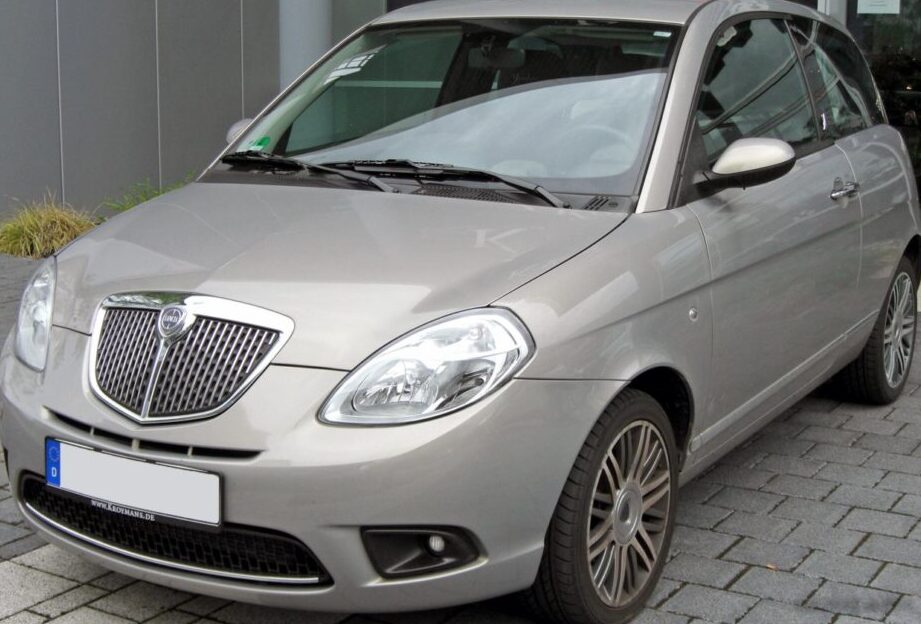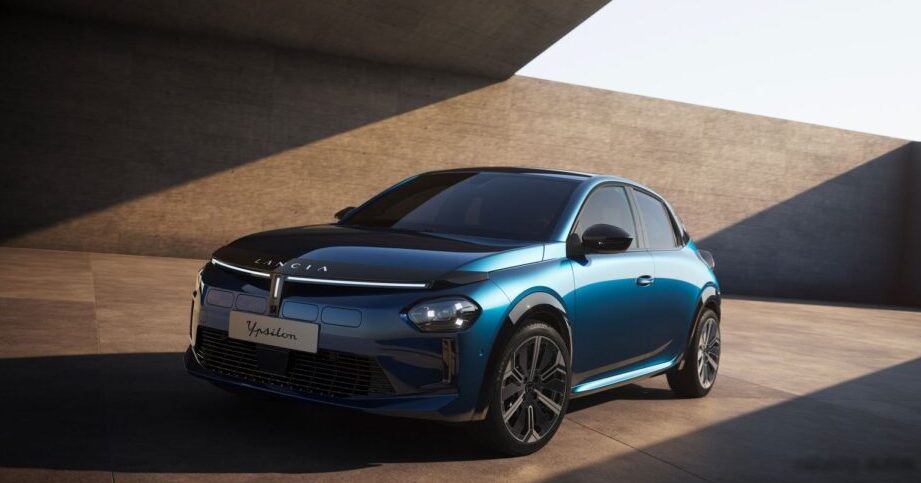
The Lancia Ypsilon (L21) 1.2 (100 Hp) Mild Hybrid e-DCT represents a significant step in the revitalization of the Lancia brand, launched in March 2024 and continuing through April 2025. Positioned as a stylish and technologically advanced supermini, this variant aimed to appeal to a market increasingly focused on fuel efficiency and reduced emissions. It forms part of the L21 generation of the Ypsilon, a model with a long history in the European city car segment. This particular configuration, combining a 1.2-liter turbocharged engine with a 48-volt mild hybrid system and a six-speed dual-clutch transmission (e-DCT), occupied a mid-range position within the Ypsilon lineup, offering a balance between performance, economy, and features.
Technical Specifications
| Brand | Lancia |
| Model | Ypsilon |
| Generation | Ypsilon (L21) |
| Type (Engine) | 1.2 (100 Hp) Mild Hybrid e-DCT |
| Start of production | March, 2024 |
| End of production | April, 2025 |
| Powertrain Architecture | MHEV (Mild Hybrid Electric Vehicle) |
| Body type | Hatchback |
| Seats | 5 |
| Doors | 5 |
| Combined fuel consumption (WLTP) | 4.6 l/100 km (51.1 US mpg, 61.4 UK mpg, 21.7 km/l) |
| CO2 emissions (WLTP) | 103 g/km |
| Fuel Type | Petrol (Gasoline) |
| Acceleration 0 – 100 km/h | 9.3 sec |
| Acceleration 0 – 62 mph | 9.3 sec |
| Acceleration 0 – 60 mph | 8.8 sec |
| Maximum speed | 190 km/h (118.06 mph) |
| Emission standard | Euro 6.4 |
| Battery voltage | 48 V |
| Battery technology | Lithium-ion (Li-Ion) |
| Battery location | Below the floor, under the front seats |
| Electric motor power | 28 Hp |
| Electric motor location | Integrated into the transmission |
| Power | 100 Hp |
| Torque | 205 Nm @ 1750 rpm (151.2 lb.-ft. @ 1750 rpm) |
| Engine layout | Front, Transverse |
| Engine Model/Code | EB2ADTD |
| Engine displacement | 1199 cm3 (73.17 cu. in.) |
| Number of cylinders | 3 |
| Engine configuration | Inline |
| Number of valves per cylinder | 4 |
| Fuel injection system | Direct injection |
| Engine aspiration | Turbocharger, Intercooler |
| Engine oil capacity | 3.5 l (3.7 US qt, 3.08 UK qt) |
| Trunk (boot) space – minimum | 352 l (12.43 cu. ft.) |
| Fuel tank capacity | 44 l (11.62 US gal, 9.68 UK gal) |
| Length | 4075 mm (160.43 in.) |
| Width | 1755 mm (69.09 in.) |
| Height | 1435 mm (56.5 in.) |
| Wheelbase | 2537 mm (99.88 in.) |
| Front track | 1515 mm (59.65 in.) |
| Rear (Back) track | 1515 mm (59.65 in.) |
| Minimum turning circle | 10.36 m (33.99 ft.) |
| Drivetrain Architecture | Front wheel drive, MHEV |
| Drive wheel | Front wheel drive |
| Number of gears and type of gearbox | 6 gears, automatic transmission e-DCT |
| Front brakes | Disc, 283 mm |
| Rear brakes | Disc, 249 mm |
| Assisting systems | ABS (Anti-lock braking system) |
| Steering type | Steering rack and pinion |
| Power steering | Electric Steering |
| Tires size | 195/55 R16 91H |
| Wheel rims size | 16 |
Powertrain & Engine Architecture
At the heart of the Ypsilon 1.2 Mild Hybrid e-DCT lies the EB2ADTD engine, a 1.2-liter, three-cylinder turbocharged gasoline engine. This engine is part of the PureTech family developed by Stellantis. The engine utilizes direct fuel injection and a turbocharger with an intercooler to deliver a respectable 100 horsepower. The mild hybrid system incorporates a 48-volt electric motor integrated with the e-DCT six-speed dual-clutch transmission. This system provides a power boost during acceleration, allows for extended periods of engine-off coasting, and facilitates a smoother start-stop function. The 48V lithium-ion battery is strategically positioned under the front seats, minimizing intrusion into passenger or cargo space. The e-DCT transmission offers quick and precise gear changes, contributing to both performance and fuel efficiency.
Driving Characteristics
The Ypsilon 1.2 Mild Hybrid e-DCT delivers a refined and comfortable driving experience, particularly well-suited for urban environments. While not a performance-oriented variant, the 100 hp engine and the electric motor assist provide adequate acceleration, achieving 0-60 mph in approximately 8.8 seconds. The e-DCT transmission contributes to seamless gear changes, and the mild hybrid system helps to smooth out power delivery. Compared to higher-output versions of the Ypsilon, this variant prioritizes fuel economy and ease of driving over outright speed. The gear ratios are tuned for efficiency, and the turbocharger provides a noticeable boost in torque at lower engine speeds. The mild hybrid system’s ability to shut off the engine during coasting further enhances fuel savings.
Equipment & Trim Levels
The Ypsilon 1.2 Mild Hybrid e-DCT typically came equipped with a range of standard features designed to enhance comfort, convenience, and safety. These included air conditioning, a touchscreen infotainment system with smartphone integration (Apple CarPlay and Android Auto), Bluetooth connectivity, and a suite of driver-assistance systems such as automatic emergency braking and lane departure warning. Interior upholstery was typically cloth, with options for upgraded materials and finishes available. Optional extras could include a panoramic sunroof, premium audio system, and parking sensors. The trim level often dictated the availability of these additional features.
Chassis & Braking
The Ypsilon 1.2 Mild Hybrid e-DCT utilizes a front-wheel-drive chassis with a MacPherson strut suspension at the front and a torsion beam suspension at the rear. The braking system consists of disc brakes on all four wheels, with the front discs measuring 283mm and the rear discs measuring 249mm. Anti-lock braking system (ABS) is standard. The suspension setup is tuned for comfort and ride quality, prioritizing a smooth and controlled driving experience. Stabilizer bars are included to reduce body roll during cornering. The relatively lightweight nature of the vehicle contributes to its agility and responsiveness.
Market Reception & Comparison
The Lancia Ypsilon 1.2 Mild Hybrid e-DCT was generally well-received by critics for its stylish design, comfortable interior, and fuel-efficient powertrain. It was seen as a viable alternative to other superminis in the European market, such as the Fiat 500, Volkswagen Polo, and Renault Clio. Compared to other Ypsilon trims, the 1.2 Mild Hybrid e-DCT offered a compelling balance between performance and economy. While the higher-output versions provided more exhilarating acceleration, they also came with increased fuel consumption. The mild hybrid system helped to reduce emissions and improve fuel economy, making it an attractive option for environmentally conscious buyers.
Legacy
The Lancia Ypsilon 1.2 Mild Hybrid e-DCT represents a transitional point for the Lancia brand, embracing hybrid technology and a more modern design language. While long-term reliability data is still emerging, the Stellantis-sourced powertrain is expected to be reasonably durable. The 1.2-liter turbocharged engine has proven to be reliable in other applications. The e-DCT transmission, when properly maintained, is also known for its longevity. On the used car market, these models are likely to appeal to buyers seeking a stylish, fuel-efficient, and well-equipped supermini with a touch of Italian flair. The integration of mild hybrid technology positions this variant as a forward-thinking option in the compact car segment.