Technical Specifications
| Brand | Subaru |
| Model | Crosstrek |
| Generation | Crosstrek III |
| Type | 2.0ie (136 Hp) Mild Hybrid AWD Lineartronic |
| Start of production | January, 2024 |
| Powertrain Architecture | MHEV (Mild Hybrid Electric Vehicle) |
| Body type | SUV, Crossover |
| Seats | 5 |
| Doors | 5 |
| Fuel consumption at Low speed (WLTP) | 8 l/100 km (29.4 US mpg) |
| Fuel consumption at Medium speed (WLTP) | 7.4 l/100 km (31.8 US mpg) |
| Fuel consumption at High speed (WLTP) | 6.7 l/100 km (35.1 US mpg) |
| Fuel consumption at Very high speed (WLTP) | 8.6 l/100 km (27.4 US mpg) |
| Combined fuel consumption (WLTP) | 7.7 l/100 km (30.5 US mpg) |
| CO2 emissions (WLTP) | 174 g/km |
| Fuel Type | Petrol (Gasoline) |
| Acceleration 0 – 100 km/h | 10.8 sec |
| Acceleration 0 – 62 mph | 10.8 sec |
| Acceleration 0 – 60 mph | 10.3 sec |
| Maximum speed | 198 km/h (123.03 mph) |
| Emission standard | Euro 6d-ISC-FCM |
| Weight-to-power ratio | 11.2 kg/Hp |
| Weight-to-torque ratio | 8.4 kg/Nm |
| Battery voltage | 118.4 V |
| Battery technology | Lithium-ion (Li-Ion) |
| Electric motor power | 17 Hp |
| Electric motor Torque | 66 Nm (48.68 lb.-ft.) |
| Electric motor location | Integrated into the transmission |
| Electric motor type | Synchronous |
| Power | 136 Hp @ 5600 rpm |
| Torque | 182 Nm @ 4000 rpm (134.24 lb.-ft. @ 4000 rpm) |
| Engine layout | Front, Longitudinal |
| Engine Model/Code | FB20 |
| Engine displacement | 1995 cm3 (121.74 cu. in.) |
| Number of cylinders | 4 |
| Engine configuration | Boxer |
| Cylinder Bore | 84 mm (3.31 in.) |
| Piston Stroke | 90 mm (3.54 in.) |
| Compression ratio | 12.5:1 |
| Number of valves per cylinder | 4 |
| Fuel injection system | Direct injection |
| Engine aspiration | Naturally aspirated |
| Kerb Weight | 1520-1553 kg (3351.03 – 3423.78 lbs.) |
| Max. weight | 2100 kg (4629.71 lbs.) |
| Max load | 547-580 kg (1205.93 – 1278.68 lbs.) |
| Trunk (boot) space – minimum | 315 l (11.12 cu. ft.) |
| Fuel tank capacity | 48 l (12.68 US gal) |
| Max. roof load | 80 kg (176.37 lbs.) |
| Permitted trailer load with brakes (12%) | 1270 kg (2799.87 lbs.) |
| Permitted trailer load without brakes | 750 kg (1653.47 lbs.) |
| Permitted towbar download | 80 kg (176.37 lbs.) |
| Length | 4495 mm (176.97 in.) |
| Width | 1800 mm (70.87 in.) |
| Width including mirrors | 2018 mm (79.45 in.) |
| Height | 1600 mm (62.99 in.) |
| Wheelbase | 2670 mm (105.12 in.) |
| Front track | 1555 mm (61.22 in.) |
| Rear (Back) track | 1555 mm (61.22 in.) |
| Ride height (ground clearance) | 220 mm (8.66 in.) |
| Minimum turning circle | 11.8 m (38.71 ft.) |
| Front brakes | Ventilated discs |
| Rear brakes | Ventilated discs |
| Gearbox | automatic transmission Lineartronic CVT |
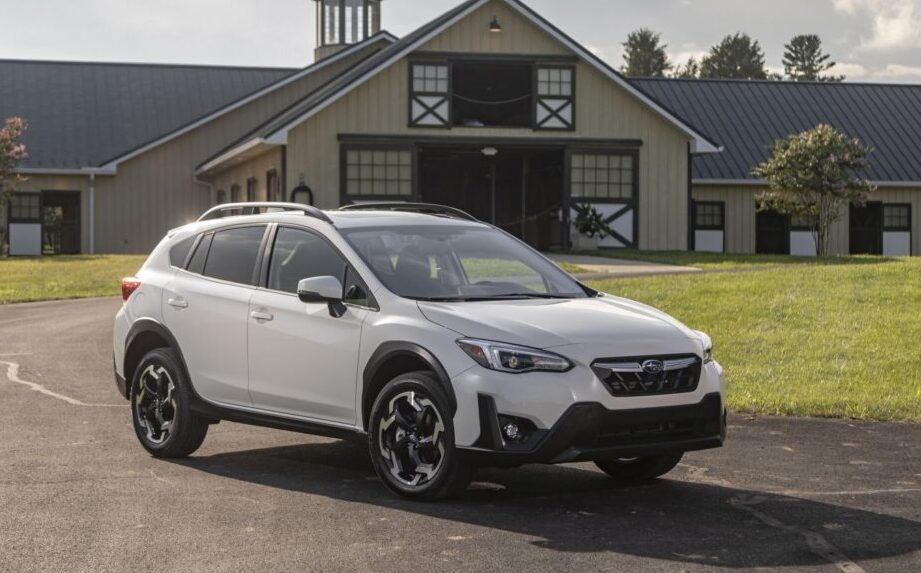
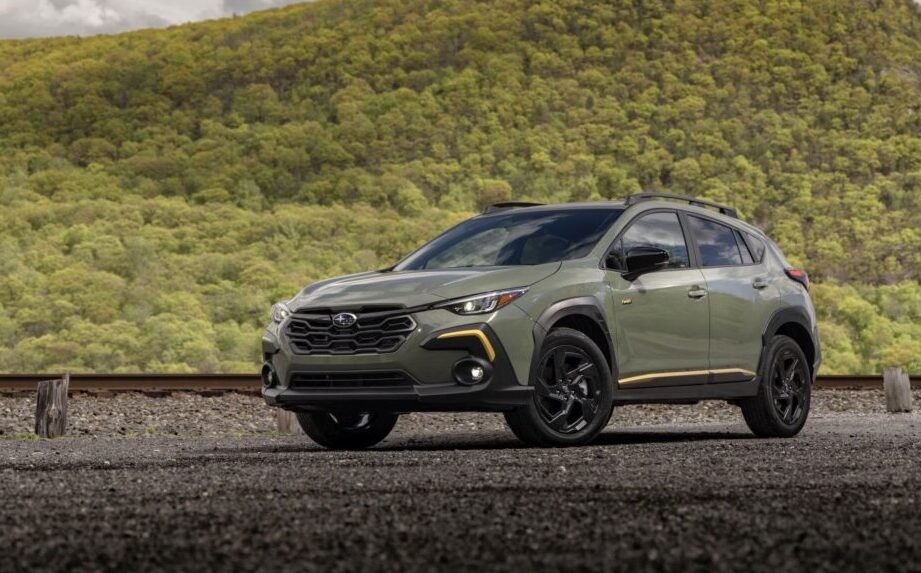
The Subaru Crosstrek III 2.0ie, introduced in January 2024, represents the latest iteration of Subaru’s popular subcompact crossover SUV. This specific variant, powered by a 2.0-liter naturally aspirated boxer engine paired with a mild-hybrid system and a Lineartronic continuously variable transmission (CVT), occupies a key position in the Crosstrek lineup, offering a balance of fuel efficiency, standard all-wheel drive, and accessible pricing. It’s designed to appeal to buyers seeking a practical and capable vehicle for daily commuting and light adventure, particularly in markets where Subaru has a strong presence like North America and Canada.
Powertrain & Engine Architecture
At the heart of the 2.0ie Crosstrek lies the FB20 2.0-liter horizontally-opposed (boxer) four-cylinder engine. This engine benefits from direct fuel injection, contributing to improved efficiency and responsiveness. The mild-hybrid system incorporates a 17-horsepower electric motor integrated with the Lineartronic CVT, providing a small boost during acceleration and enabling a smoother start/stop function. The electric motor draws power from a 118.4V lithium-ion battery. The Lineartronic CVT is programmed to simulate stepped gear changes, offering a more engaging driving experience than traditional CVTs. The engine produces 136 horsepower at 5600 rpm and 182 Nm (134.24 lb-ft) of torque at 4000 rpm.
Driving Characteristics
The 2.0ie’s powertrain delivers adequate, though not exhilarating, performance. Acceleration from 0-60 mph takes approximately 10.3 seconds. The CVT is tuned for fuel economy, prioritizing smooth transitions over aggressive shifts. While it lacks the punch of higher-output engine options, the mild-hybrid assist provides a noticeable improvement in low-speed responsiveness. The all-wheel-drive system, standard on all Crosstrek models, provides confident traction in various weather conditions. The CVT’s continuously variable ratios help keep the engine in its optimal power band, but can sometimes feel disconnected from the engine’s output.
Equipment & Trim Levels
The 2.0ie trim typically serves as the entry point to the Crosstrek lineup. Standard features generally include Subaru’s EyeSight driver-assist technology (including adaptive cruise control, lane departure warning, and automatic emergency braking), a 7-inch touchscreen infotainment system with Apple CarPlay and Android Auto compatibility, automatic climate control, and LED headlights. Interior upholstery is typically cloth, with options for upgraded materials available. Available options often include a larger touchscreen display, a premium audio system, and power-adjustable driver’s seat.
Chassis & Braking
The Crosstrek III utilizes a MacPherson strut front suspension and a double-wishbone rear suspension, tuned for a comfortable ride and predictable handling. All-wheel drive is standard, employing a symmetrical system that distributes power to all four wheels continuously. Braking duties are handled by ventilated discs on all four corners. The vehicle’s relatively light weight (1520-1553 kg) contributes to its nimble handling characteristics. Stabilizer bars are fitted front and rear to reduce body roll during cornering.
Market Reception & Comparison
The 2.0ie Crosstrek has been generally well-received by automotive critics as a practical and fuel-efficient option in the subcompact crossover segment. Its standard all-wheel drive and comprehensive safety features are often highlighted as key strengths. Compared to higher-trim Crosstreks with more powerful engines, the 2.0ie offers a more affordable entry point, but sacrifices some performance. Fuel economy is competitive, achieving around 30.5 US mpg in combined driving. Reliability is generally considered good, consistent with Subaru’s reputation for durability.
Legacy
The FB20 engine, in various iterations, has been a mainstay in Subaru’s lineup for over a decade. Its proven reliability and relatively simple design contribute to its longevity. The addition of mild-hybrid technology in the 2.0ie variant represents Subaru’s commitment to improving fuel efficiency and reducing emissions. As a used vehicle, the 2.0ie Crosstrek is expected to hold its value well, thanks to Subaru’s strong brand reputation and the vehicle’s inherent practicality and capability. The Lineartronic CVT, while generally reliable, may require fluid changes at recommended intervals to ensure optimal performance and longevity.