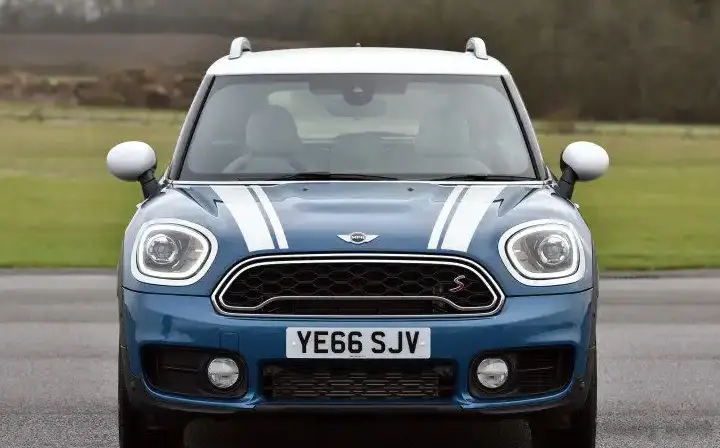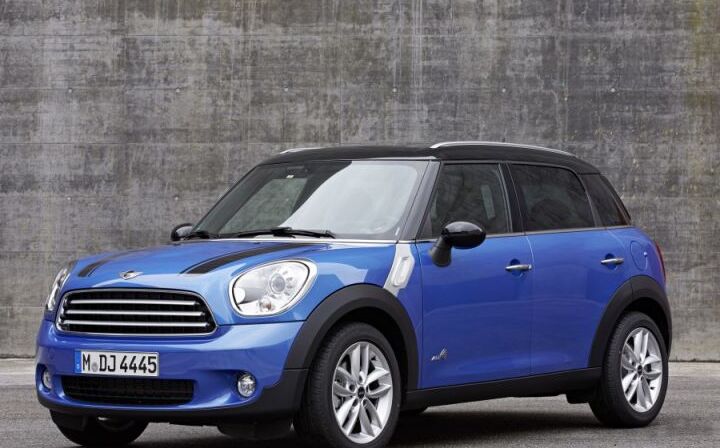
The Mini Countryman (R60) Cooper SD 2.0 Automatic, produced between 2010 and 2014, represented a significant expansion of the Mini brand into the compact SUV segment. This variant, powered by a 2.0-liter turbocharged diesel engine producing 143 horsepower, was positioned as a mid-range offering within the R60 Countryman lineup, slotting between the base Cooper models and the more performance-oriented John Cooper Works variants. It aimed to provide a balance of fuel efficiency, practicality, and the distinctive Mini driving experience. The R60 Countryman was the first crossover vehicle offered by Mini, built on a stretched version of the Mini Hatch (R56) platform, and was intended to appeal to buyers seeking a more versatile and spacious vehicle while retaining the brand’s iconic styling and handling characteristics.
Technical Specifications
| Brand | Mini |
| Model | Countryman |
| Generation | Countryman (R60) |
| Type (Engine) | Cooper SD 2.0 (143 Hp) Automatic |
| Start of production | 2010 |
| End of production | 2014 |
| Powertrain Architecture | Internal Combustion engine |
| Body type | SUV |
| Seats | 4-5 |
| Doors | 5 |
| Fuel consumption (urban) | 7.3 l/100 km (32.2 US mpg) |
| Fuel consumption (extra urban) | 4.8 l/100 km (49 US mpg) |
| Fuel consumption (combined) | 5.7 l/100 km (41.3 US mpg) |
| CO2 emissions | 150 g/km |
| Fuel Type | Diesel |
| Acceleration 0 – 100 km/h | 9.5 sec |
| Acceleration 0 – 62 mph | 9.5 sec |
| Acceleration 0 – 60 mph | 9 sec |
| Maximum speed | 195 km/h (121.17 mph) |
| Emission standard | Euro 5 |
| Weight-to-power ratio | 9.4 kg/Hp |
| Weight-to-torque ratio | 4.4 kg/Nm |
| Power | 143 Hp @ 4000 rpm |
| Torque | 305 Nm @ 1750-2700 rpm (224.96 lb.-ft.) |
| Engine layout | Front, Transverse |
| Engine Model/Code | N47C20A |
| Engine displacement | 1995 cm3 (121.74 cu. in.) |
| Number of cylinders | 4 |
| Engine configuration | Inline |
| Cylinder Bore | 84 mm (3.31 in.) |
| Piston Stroke | 90 mm (3.54 in.) |
| Compression ratio | 16.5:1 |
| Number of valves per cylinder | 4 |
| Fuel injection system | Diesel Commonrail |
| Engine aspiration | Turbocharger, Intercooler |
| Engine oil capacity | 5.2 l (5.49 US qt | 4.58 UK qt) |
| Coolant capacity | 5.4 l (5.71 US qt | 4.75 UK qt) |
| Kerb Weight | 1345 kg (2965.22 lbs.) |
| Max. weight | 1815 kg (4001.39 lbs.) |
| Max load | 470 kg (1036.17 lbs.) |
| Trunk (boot) space – minimum | 350 l (12.36 cu. ft.) |
| Trunk (boot) space – maximum | 1170 l (41.32 cu. ft.) |
| Fuel tank capacity | 47 l (12.42 US gal | 10.34 UK gal) |
| Max. roof load | 75 kg (165.35 lbs.) |
| Permitted trailer load with brakes (12%) | 1200 kg (2645.55 lbs.) |
| Permitted trailer load without brakes | 500 kg (1102.31 lbs.) |
| Permitted towbar download | 75 kg (165.35 lbs.) |
| Length | 4110 mm (161.81 in.) |
| Width | 1789 mm (70.43 in.) |
| Height | 1561 mm (61.46 in.) |
| Wheelbase | 2595 mm (102.17 in.) |
| Front track | 1525 mm (60.04 in.) |
| Rear track | 1551 mm (61.06 in.) |
| Ride height (ground clearance) | 149 mm (5.87 in.) |
| Minimum turning circle | 11.6 m (38.06 ft.) |
| Drivetrain Architecture | Front wheel drive |
| Number of gears | 6 |
| Gearbox type | Automatic transmission |
| Front suspension | Independent, McPherson with coil spring and anti-roll bar |
| Rear suspension | Independent multi-link suspension |
| Front brakes | Ventilated discs |
| Rear brakes | Disc |
| Assisting systems | ABS (Anti-lock braking system) |
| Steering type | Steering rack and pinion |
| Tires size | 205/55 R17 91V RSC |
| Wheel rims size | 7J x 17 LM |
Powertrain & Engine Architecture
The heart of the Cooper SD 2.0 Automatic is the N47C20A engine, a 2.0-liter inline-four cylinder diesel. This engine is a product of BMW/PSA Peugeot Citroën collaboration, known for its efficiency and refinement. It utilizes a common rail direct injection system, delivering fuel at extremely high pressure for optimized combustion. A single turbocharger with an intercooler provides forced induction, boosting power and torque. The N47 engine is known for its relatively complex valvetrain, featuring variable valve timing (VANOS) on the intake side to improve responsiveness and efficiency. The six-speed automatic transmission, sourced from Aisin, was chosen for its smooth operation and efficiency. It features a torque converter and electronic controls for optimized shift points. This transmission was a key component in making the Cooper SD appealing to drivers prioritizing comfort and ease of use.
Driving Characteristics
The 143 horsepower and 305 Nm (224.96 lb-ft) of torque delivered by the Cooper SD 2.0 Automatic provided adequate performance for everyday driving. Acceleration from 0-60 mph took around 9 seconds, and top speed was 121.17 mph. While not particularly sporty, the engine offered a broad torque curve, making it feel responsive in most situations. Compared to the more powerful Cooper S models, the SD offered a more relaxed driving experience, prioritizing fuel economy and comfort. The automatic transmission, while smooth, could sometimes feel hesitant during quick acceleration, especially when compared to the more engaging manual transmission options available on other Countryman models. The gear ratios were tuned for fuel efficiency, resulting in a slightly less dynamic feel than the sportier trims.
Equipment & Trim Levels
The Cooper SD 2.0 Automatic typically came standard with features such as air conditioning, power windows, power mirrors, a multi-function steering wheel, and a basic audio system. Upholstery was usually cloth, though leather options were available. Optional extras included a panoramic sunroof, navigation system, upgraded audio, parking sensors, and various cosmetic enhancements. Trim levels varied by market, but generally, the SD Automatic offered a step up in terms of standard equipment compared to the base Cooper models, while remaining less lavishly equipped than the Cooper S or John Cooper Works variants.
Chassis & Braking
The R60 Countryman’s chassis featured independent suspension all around – McPherson struts at the front and a multi-link setup at the rear. This provided a comfortable ride quality, although the higher center of gravity compared to the Mini Hatch resulted in more noticeable body roll during cornering. The Cooper SD 2.0 Automatic typically came equipped with ventilated disc brakes at the front and solid disc brakes at the rear. ABS (Anti-lock Braking System) was standard. The suspension tuning was geared towards comfort and stability, rather than outright sportiness, reflecting the car’s intended role as a practical and versatile crossover.
Market Reception & Comparison
The Mini Countryman Cooper SD 2.0 Automatic was generally well-received by critics for its fuel efficiency, practicality, and comfortable ride. However, some reviewers noted that the automatic transmission could feel sluggish at times, and the overall driving experience wasn’t as engaging as that of the manual transmission models or the more powerful Cooper S variants. Compared to competitors like the Audi Q3 and BMW X1, the Countryman offered a more distinctive style and a more playful driving experience, but often at a slightly higher price point. Fuel economy was a strong point, consistently achieving around 41.3 US mpg in combined driving, making it an attractive option for those seeking a fuel-efficient SUV.
Legacy
The N47 engine, while generally reliable, has been known to experience timing chain issues in some cases, particularly with insufficient oil maintenance. Regular oil changes with the correct specification are crucial for long-term reliability. The six-speed Aisin automatic transmission is generally considered robust and reliable. Today, the R60 Countryman Cooper SD 2.0 Automatic remains a popular choice in the used car market, offering a blend of style, practicality, and fuel efficiency. Its distinctive Mini design and relatively affordable price make it an appealing option for buyers seeking a compact SUV with a touch of personality. However, potential buyers should be aware of the potential timing chain issues and ensure that the vehicle has been properly maintained.