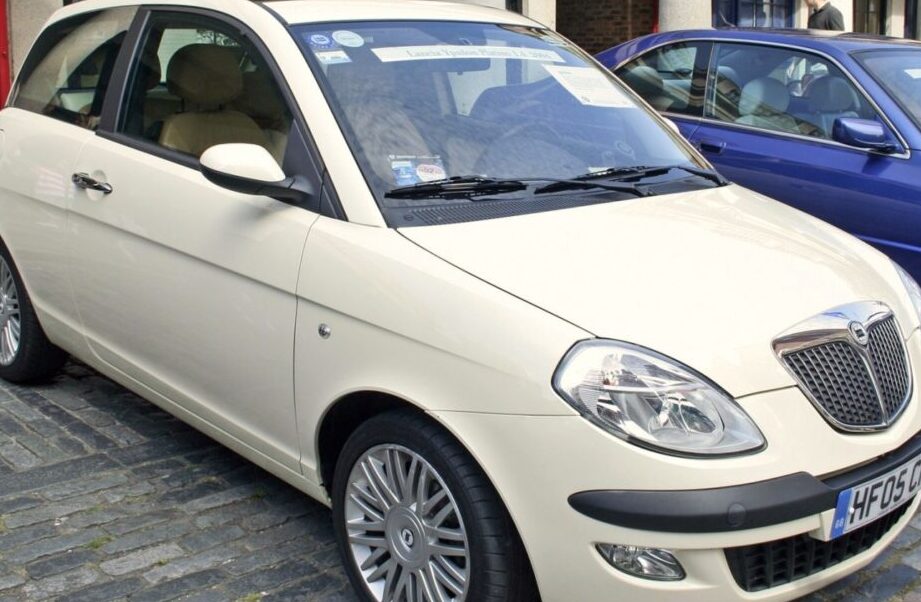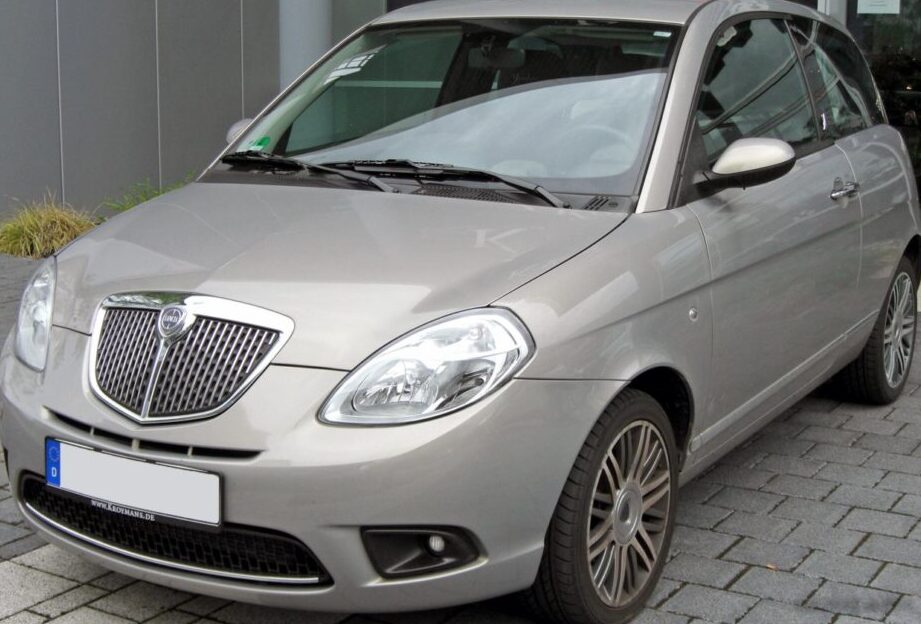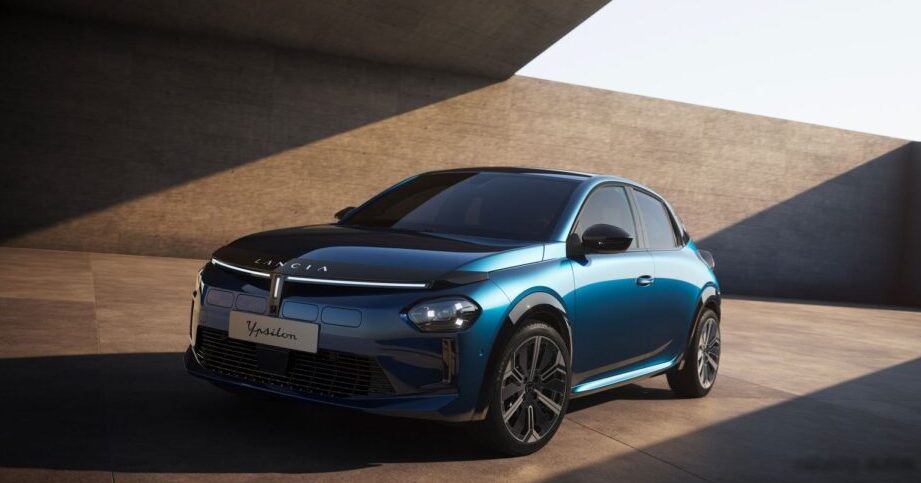
The Lancia Ypsilon (L21) 51 kWh Electric, launched in February 2024, represents a significant step in the revitalization of the Lancia brand, focusing on a fully electric powertrain and a premium, stylish design. This variant, producing 156 horsepower, is positioned as the primary offering in the initial Ypsilon L21 lineup, aiming to capture a segment of the European market seeking a compact, fashionable, and zero-emission vehicle. It builds upon the legacy of the Ypsilon as a popular city car, but transitions it into a modern, technologically advanced offering. The L21 platform signifies a departure from previous Ypsilon generations, embracing a dedicated electric vehicle architecture.
Technical Specifications
| Brand | Lancia |
| Model | Ypsilon |
| Generation | Ypsilon (L21) |
| Type (Engine) | 51 kWh (156 Hp) Electric |
| Start of production | February, 2024 |
| Powertrain Architecture | BEV (Electric Vehicle) |
| Body type | Hatchback |
| Seats | 5 |
| Doors | 5 |
| Fuel Type | Electricity |
| Acceleration 0 – 100 km/h | 8.2 sec |
| Acceleration 0 – 62 mph | 8.2 sec |
| Acceleration 0 – 60 mph | 7.8 sec |
| Maximum speed | 150 km/h (93.21 mph) |
| Gross battery capacity | 51 kWh |
| Net (usable) battery capacity | 48 kWh |
| Battery voltage | 400 V |
| Battery technology | Lithium nickel manganese cobalt oxides (Li-NMC) |
| Battery weight | 340 kg (749.57 lbs.) |
| Battery location | Below the floor |
| All-electric range (WLTP) | 402 km (249.79 mi) |
| Average Energy consumption (WLTP) | 14.3 kWh/100 km (23.01 kWh/100 mi) |
| MPGe | 146 |
| km/kWh | 7 |
| mi/kWh | 4.3 |
| Electric motor power | 156 Hp |
| Electric motor Torque | 260 Nm (191.77 lb.-ft.) |
| Electric motor location | Front axle, Transverse |
| Electric motor type | Synchronous |
| System power | 156 Hp |
| System torque | 260 Nm (191.77 lb.-ft.) |
| Trunk (boot) space – minimum | 309 l (10.91 cu. ft.) |
| Length | 4075 mm (160.43 in.) |
| Width | 1755 mm (69.09 in.) |
| Height | 1435 mm (56.5 in.) |
| Wheelbase | 2545 mm (100.2 in.) |
| Front track | 1515 mm (59.65 in.) |
| Rear (Back) track | 1515 mm (59.65 in.) |
| Minimum turning circle | 10.31 m (33.83 ft.) |
| Drivetrain Architecture | One electric motor drives the front wheels. |
| Drive wheel | Front wheel drive |
| Number of gears and type of gearbox | 1 gears, automatic transmission |
| Front brakes | Disc, 283 mm |
| Rear brakes | Disc, 268 mm |
| Assisting systems | ABS (Anti-lock braking system) |
| Steering type | Steering rack and pinion |
| Power steering | Electric Steering |
| Tires size | 195/55 R16 91H |
| Wheel rims size | 16 |
Powertrain & Engine Architecture
The Lancia Ypsilon L21 51 kWh Electric utilizes a fully Battery Electric Vehicle (BEV) powertrain. At its heart is a 51 kWh gross (48 kWh net/usable) lithium-nickel-manganese-cobalt-oxide (Li-NMC) battery pack positioned under the vehicle floor, contributing to a low center of gravity. This battery powers a front-mounted synchronous electric motor, delivering 156 horsepower and 260 Nm (191.77 lb.-ft.) of torque. The single-speed automatic transmission is inherent to electric vehicle design, providing seamless acceleration. The 400V architecture is a common choice for current EV designs, balancing cost and performance. The electric motor’s transverse mounting optimizes space utilization within the front-wheel-drive configuration.
Driving Characteristics
The Ypsilon L21 Electric offers brisk acceleration for its class, achieving 0-62 mph (0-100 km/h) in 8.2 seconds. The instant torque delivery characteristic of electric motors provides responsive acceleration in urban environments. While not designed for outright performance, the 156 hp powertrain offers sufficient power for confident highway merging and overtaking. The single-speed automatic transmission ensures smooth, linear power delivery. Compared to potential future, higher-performance variants, this base model prioritizes efficiency and a comfortable driving experience over outright speed. The low center of gravity, thanks to the underfloor battery pack, contributes to stable handling.
Equipment & Trim Levels
The initial launch of the Ypsilon L21 focuses on a well-equipped single trim level. Standard features include a modern infotainment system with a touchscreen display, digital instrument cluster, automatic climate control, and a suite of advanced driver-assistance systems (ADAS) such as autonomous emergency braking and lane-keeping assist. Interior upholstery is a blend of premium fabrics and sustainable materials, reflecting Lancia’s focus on style and eco-consciousness. Optional extras include a panoramic sunroof, premium audio system, and advanced parking assistance features. The exterior styling emphasizes a sophisticated and elegant aesthetic, with distinctive LED lighting and a choice of stylish paint colors.
Chassis & Braking
The Ypsilon L21 utilizes a front-wheel-drive configuration with a MacPherson strut front suspension and a torsion beam rear suspension. This setup balances cost-effectiveness with acceptable ride quality and handling characteristics. The braking system features disc brakes on all four wheels – 283mm at the front and 268mm at the rear – coupled with an Anti-lock Braking System (ABS) and Electronic Stability Control (ESC). The electric steering system provides light and precise steering feel, making it well-suited for city driving. The vehicle rides on 16-inch alloy wheels with 195/55 R16 tires.
Market Reception & Comparison
The Lancia Ypsilon L21 Electric is primarily targeted at the European market, where demand for compact electric vehicles is growing rapidly. Initial reviews have praised the car’s stylish design, comfortable interior, and smooth electric powertrain. Critics have noted the competitive range of 402 km (WLTP) and the relatively quick charging times. Compared to rivals such as the Fiat 500e and Peugeot e-208, the Ypsilon L21 aims to offer a more premium and sophisticated experience. Fuel economy, expressed as energy consumption, is rated at 14.3 kWh/100 km (WLTP), translating to approximately 146 MPGe. Reliability data is still emerging, but Lancia is banking on the inherent simplicity of the electric powertrain to deliver good long-term dependability.
Legacy
The Lancia Ypsilon L21 51 kWh Electric represents a pivotal moment for the brand, signaling its commitment to electrification and a renewed focus on design and quality. The longevity of the powertrain is expected to be high, given the reduced mechanical complexity compared to internal combustion engines. The Li-NMC battery technology is well-established, and the 400V architecture is supported by a growing charging infrastructure. In the used car market, the Ypsilon L21 Electric is likely to hold its value well, particularly as demand for electric vehicles continues to increase. Its success will be crucial in establishing Lancia as a viable player in the competitive European EV landscape.