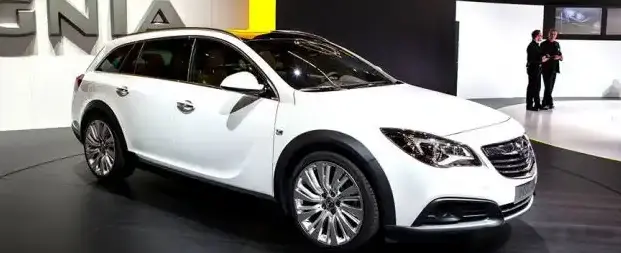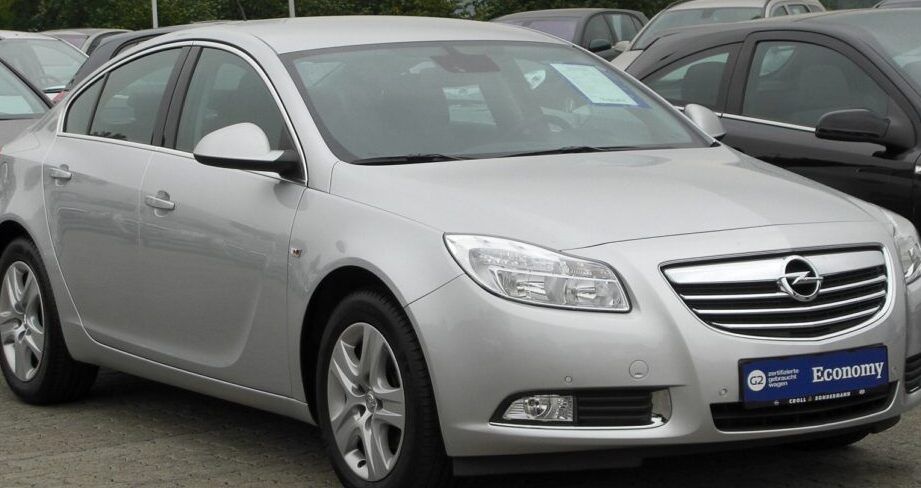
The Opel Insignia Sedan (A) 2.0 Turbo, producing 250 horsepower, was a significant offering in the mid-size sedan segment when it debuted in July 2011 and continued through June 2013. Positioned as a more performance-oriented variant within the Insignia A range, it aimed to provide a blend of comfort, practicality, and spirited driving. This model represented Opel’s attempt to elevate its brand image and compete more effectively with established European and increasingly, global automakers. The Insignia A, built on the GM Delta II platform, was a crucial model for Opel, replacing the Vectra and Signum, and the 2.0 Turbo variant was a key component of its appeal.
Technical Specifications
| Brand | Opel |
| Model | Insignia |
| Generation | Insignia Sedan (A) |
| Type (Engine) | 2.0 Turbo (250 Hp) |
| Start of production | July, 2011 |
| End of production | June, 2013 |
| Powertrain Architecture | Internal Combustion engine |
| Body type | Sedan |
| Seats | 5 |
| Doors | 4 |
| Fuel consumption (urban) | 10.1 l/100 km (23.3 US mpg) |
| Fuel consumption (extra urban) | 5.5 l/100 km (42.8 US mpg) |
| Fuel consumption (combined) | 7.2 l/100 km (32.7 US mpg) |
| CO2 emissions | 169 g/km |
| Fuel Type | Petrol (Gasoline) |
| Acceleration 0 – 100 km/h | 7.6 sec |
| Acceleration 0 – 62 mph | 7.6 sec |
| Acceleration 0 – 60 mph | 7.2 sec |
| Maximum speed | 242 km/h (150.37 mph) |
| Emission standard | Euro 5 |
| Weight-to-power ratio | 6 kg/Hp |
| Weight-to-torque ratio | 3.8 kg/Nm |
| Power | 250 Hp @ 5300 rpm |
| Torque | 400 Nm @ 2400-3600 rpm (295.02 lb.-ft.) |
| Engine layout | Front, Transverse |
| Engine Model/Code | A20NFT |
| Engine displacement | 1998 cm3 (121.93 cu. in.) |
| Number of cylinders | 4 |
| Engine configuration | Inline |
| Cylinder Bore | 86 mm (3.39 in.) |
| Piston Stroke | 86 mm (3.39 in.) |
| Compression ratio | 9.3:1 |
| Number of valves per cylinder | 4 |
| Fuel injection system | Direct injection |
| Engine aspiration | Twin-scroll turbo, Intercooler |
| Engine oil capacity | 5.7 l (6.02 US qt | 5.02 UK qt) |
| Coolant capacity | 7.8 l (8.24 US qt | 6.86 UK qt) |
| Kerb Weight | 1503 kg (3313.55 lbs.) |
| Max. weight | 2020 kg (4453.34 lbs.) |
| Max load | 517 kg (1139.79 lbs.) |
| Trunk (boot) space – minimum | 500 l (17.66 cu. ft.) |
| Trunk (boot) space – maximum | 1010 l (35.67 cu. ft.) |
| Fuel tank capacity | 70 l (18.49 US gal | 15.4 UK gal) |
| Length | 4830 mm (190.16 in.) |
| Width | 1858 mm (73.15 in.) |
| Height | 1498 mm (58.98 in.) |
| Wheelbase | 2737 mm (107.76 in.) |
| Front track | 1585 mm (62.4 in.) |
| Rear track | 1587 mm (62.48 in.) |
| Ride height (ground clearance) | 160 mm (6.3 in.) |
| Minimum turning circle | 10.8 m (35.43 ft.) |
| Drivetrain Architecture | Front wheel drive |
| Number of gears | 6 |
| Gearbox type | Manual transmission |
| Front brakes | Ventilated discs |
| Rear brakes | Disc |
| Assisting systems | ABS (Anti-lock braking system) |
| Tires size | 215/60 R16 |
| Wheel rims size | 16 |
Powertrain & Engine Architecture
At the heart of the Insignia 2.0 Turbo was the A20NFT engine, a 1.998-liter inline-four cylinder gasoline engine. This engine featured direct fuel injection and a twin-scroll turbocharger, technologies aimed at maximizing power output and improving fuel efficiency. The twin-scroll turbo design minimized turbo lag, providing a more responsive driving experience. The engine produced 250 horsepower at 5300 rpm and 400 Nm (295 lb-ft) of torque between 2400 and 3600 rpm. This power was delivered through a six-speed manual transmission, which was standard for this trim level. The engine’s architecture was a product of Opel’s engineering, leveraging advancements in combustion technology and turbocharging to deliver a competitive power-to-weight ratio.
Driving Characteristics
The 2.0 Turbo Insignia Sedan offered a noticeably more engaging driving experience compared to lower-powered variants. The 250 hp output, combined with the six-speed manual transmission, allowed for brisk acceleration – 0 to 60 mph in approximately 7.2 seconds. The turbocharger provided a strong mid-range punch, making overtaking maneuvers effortless. While not a dedicated sports sedan, the Insignia 2.0 Turbo offered a good balance between comfort and performance. The manual transmission allowed for greater driver control, but the gear ratios were tuned more for fuel efficiency and relaxed cruising than outright performance. Compared to the later 2.8L V6 models, the 2.0 Turbo offered a lighter front end and more balanced handling, though it lacked the V6’s sheer power and refined engine note.
Equipment & Trim Levels
The 2.0 Turbo trim typically included a generous level of standard equipment. This often included features like alloy wheels, automatic climate control, a CD/MP3 stereo system with auxiliary input, power windows and mirrors, and ABS brakes. Higher trim levels, often available as optional packages, could add features such as leather upholstery, a sunroof, navigation system, and upgraded audio systems. Interior upholstery was typically cloth, with leather options available. The dashboard layout was functional and modern for its time, with a focus on ergonomics and ease of use.
Chassis & Braking
The Insignia Sedan (A) utilized a MacPherson strut front suspension and a multi-link rear suspension. This setup provided a comfortable ride while maintaining reasonable handling characteristics. The 2.0 Turbo variant typically featured slightly stiffer suspension components compared to lower-powered models to better manage the increased power. Braking duties were handled by ventilated discs at the front and solid discs at the rear, equipped with ABS. The braking system was adequate for the car’s performance capabilities, providing confident stopping power in most driving situations.
Market Reception & Comparison
The Opel Insignia 2.0 Turbo was generally well-received by automotive critics. It was praised for its stylish design, spacious interior, and engaging driving dynamics. However, some reviewers noted that the interior materials weren’t quite as premium as those found in some of its competitors. Compared to other engines in the Insignia lineup, the 2.0 Turbo offered a compelling balance between performance and fuel economy. The lower-powered 1.6L models were more economical but lacked the 2.0 Turbo’s punch, while the 2.8L V6 offered more power but at the expense of fuel efficiency and a higher price tag. The 2.0 Turbo was often seen as the sweet spot in the range for drivers who wanted a comfortable and capable sedan without breaking the bank.
Legacy
The Opel Insignia A, and particularly the 2.0 Turbo variant, established a solid reputation for reliability. The A20NFT engine, while not without its minor quirks, proved to be a durable and relatively trouble-free unit. On the used car market, the Insignia 2.0 Turbo remains a popular choice for buyers seeking a well-equipped and reasonably priced mid-size sedan. Maintenance costs are generally moderate, and parts availability is good. The Insignia A paved the way for the subsequent Insignia B, continuing Opel’s commitment to offering stylish and capable vehicles in the competitive European market.