
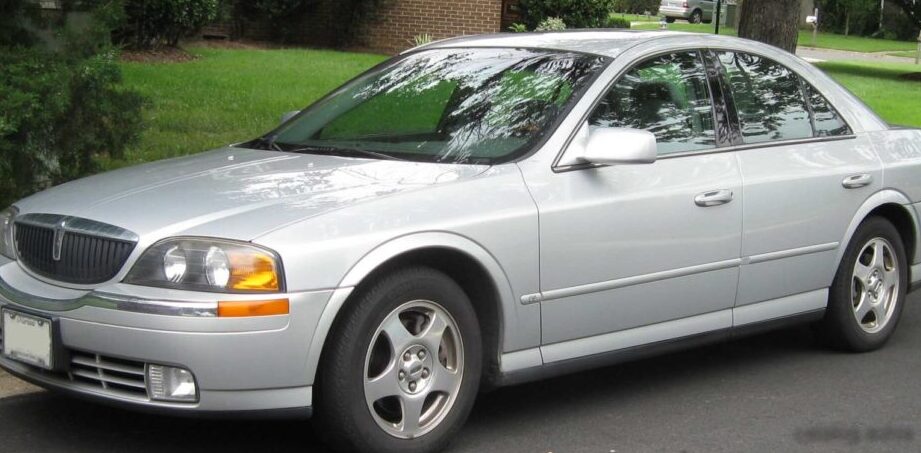
The Lincoln LS 3.0 i V6 24V, producing 235 horsepower, was a mid-size luxury sedan produced by Lincoln from 2003 to 2006. It represented Lincoln’s attempt to compete directly with European sport sedans like the BMW 5 Series and Mercedes-Benz E-Class. Positioned as a step up from the base 3.0L V6 model, the 3.0 i offered a balance of performance and luxury features within the LS lineup. It was part of the first generation LS (2000-2006), which utilized a rear-wheel-drive platform – a departure for Lincoln at the time – and aimed to deliver a more engaging driving experience than their traditionally front-wheel-drive offerings.
Technical Specifications
| Brand | Lincoln |
| Model | LS |
| Generation | LS |
| Type (Engine) | 3.0 i V6 24V (235 Hp) |
| Start of production | 2003 |
| End of production | 2006 |
| Powertrain Architecture | Internal Combustion engine |
| Body type | Sedan |
| Seats | 5 |
| Doors | 4 |
| Fuel consumption (urban) | 14 l/100 km (16.8 US mpg) |
| Fuel consumption (extra urban) | 8 l/100 km (29.4 US mpg) |
| Fuel Type | Petrol (Gasoline) |
| Maximum speed | 210 km/h (130.49 mph) |
| Weight-to-power ratio | 7.1 kg/Hp |
| Weight-to-torque ratio | 5.6 kg/Nm |
| Power | 235 Hp @ 6750 rpm |
| Power per litre | 79.2 Hp/l |
| Torque | 298 Nm @ 4500 rpm (219.79 lb.-ft. @ 4500 rpm) |
| Engine layout | Front, Longitudinal |
| Engine Model/Code | 99S |
| Engine displacement | 2967 cm3 (181.06 cu. in.) |
| Number of cylinders | 6 |
| Engine configuration | V-engine |
| Cylinder Bore | 89 mm (3.5 in.) |
| Piston Stroke | 79.5 mm (3.13 in.) |
| Compression ratio | 10.5:1 |
| Number of valves per cylinder | 4 |
| Fuel injection system | Multi-port manifold injection |
| Engine aspiration | Naturally aspirated engine |
| Valvetrain | DOHC |
| Engine oil capacity | 6.5 l (6.87 US qt | 5.72 UK qt) |
| Coolant | 11.3 l (11.94 US qt | 9.94 UK qt) |
| Kerb Weight | 1670 kg (3681.72 lbs.) |
| Trunk (boot) space – minimum | 380 l (13.42 cu. ft.) |
| Fuel tank capacity | 68 l (17.96 US gal | 14.96 UK gal) |
| Length | 4925 mm (193.9 in.) |
| Width | 1860 mm (73.23 in.) |
| Height | 1450 mm (57.09 in.) |
| Wheelbase | 2910 mm (114.57 in.) |
| Front track | 1535 mm (60.43 in.) |
| Rear (Back) track | 1545 mm (60.83 in.) |
| Drivetrain Architecture | Rear wheel drive |
| Number of gears and type of gearbox | 5 gears, automatic transmission |
| Front suspension | Coil spring |
| Rear suspension | Coil spring |
| Front brakes | Ventilated discs |
| Rear brakes | Ventilated discs |
| Assisting systems | ABS (Anti-lock braking system) |
| Steering type | Steering rack and pinion |
| Power steering | Hydraulic Steering |
| Tires size | 225/55 R16 |
| Wheel rims size | 7J x 16 |
Powertrain & Engine Architecture
The Lincoln LS 3.0 i was powered by the 3.0-liter (2967 cc) 99S V6 engine. This engine was a 60-degree V6, featuring a cast iron block and aluminum cylinder heads. It utilized a multi-port fuel injection system and a double overhead camshaft (DOHC) valvetrain with four valves per cylinder. The engine produced 235 horsepower at 6750 rpm and 298 Nm (219.79 lb-ft) of torque at 4500 rpm. The 5-speed automatic transmission, sourced from Ford, was the sole transmission option for this variant. This transmission was designed to provide smooth shifts and contribute to the LS’s overall refined driving experience. The engine’s longitudinal mounting and rear-wheel-drive configuration were significant departures from Lincoln’s traditional front-wheel-drive layout, aiming to provide a more balanced and sporty feel.
Driving Characteristics
The 3.0 i with the automatic transmission offered a comfortable and refined driving experience. While not as overtly sporty as some of its European rivals, it provided adequate acceleration for most driving situations. The automatic transmission, while smooth, wasn’t particularly quick to downshift, which could sometimes feel sluggish during aggressive driving. Compared to the higher-output 3.7L V8 version of the LS, the 3.0 i felt noticeably less powerful, especially during highway passing maneuvers. However, the 3.0 i’s lighter weight and more balanced handling made it more nimble in city driving. The gear ratios were tuned for fuel efficiency and smooth cruising rather than outright performance.
Equipment & Trim Levels
The Lincoln LS 3.0 i typically came standard with features such as leather upholstery, power-adjustable front seats, a premium sound system, automatic climate control, and alloy wheels. Optional extras included a navigation system, a sunroof, heated seats, and upgraded interior trim packages. The trim level often dictated the availability of these options. The 3.0 i was generally positioned as the entry-level or mid-range LS model, offering a good balance of features and price. It was aimed at buyers who wanted a luxury sedan with a comfortable ride and a respectable level of equipment, but didn’t necessarily require the extra performance of the V8-powered models.
Chassis & Braking
The Lincoln LS featured an independent front and rear suspension, utilizing coil springs and stabilizer bars. The front suspension employed a short-and-long arm design, while the rear suspension used a multi-link setup. This suspension configuration aimed to provide a comfortable ride while maintaining good handling characteristics. The 3.0 i models were equipped with ventilated disc brakes on all four wheels, providing adequate stopping power. An Anti-lock Braking System (ABS) was standard. The chassis was designed to be rigid, contributing to the LS’s overall stability and handling. The rear suspension setup was tuned to accommodate the weight distribution of the V6 engine and automatic transmission.
Market Reception & Comparison
The Lincoln LS 3.0 i received mixed reviews from automotive critics. While praised for its comfortable ride, spacious interior, and refined features, it was often criticized for its lack of sporty character compared to its European competitors. Fuel economy was considered average for its class. Compared to the LS V8, the 3.0 i offered better fuel efficiency but significantly less performance. The 3.0 i was generally considered a more practical and affordable option for buyers who didn’t prioritize outright speed. Reliability was generally good, although some owners reported issues with the automatic transmission and various electronic components.
Legacy
The Lincoln LS, despite its relatively short production run, remains a somewhat sought-after vehicle among enthusiasts. The 3.0 i variant, while not the most powerful LS model, is often considered a good value on the used car market. The 99S V6 engine, while not known for being particularly groundbreaking, proved to be reasonably reliable with proper maintenance. Parts availability is generally good, although some specific components may be becoming increasingly difficult to find. The LS’s rear-wheel-drive platform and relatively sporty handling characteristics have earned it a following among those who appreciate a more engaging driving experience in a luxury sedan. Today, well-maintained examples of the Lincoln LS 3.0 i can still provide a comfortable and enjoyable driving experience.
