
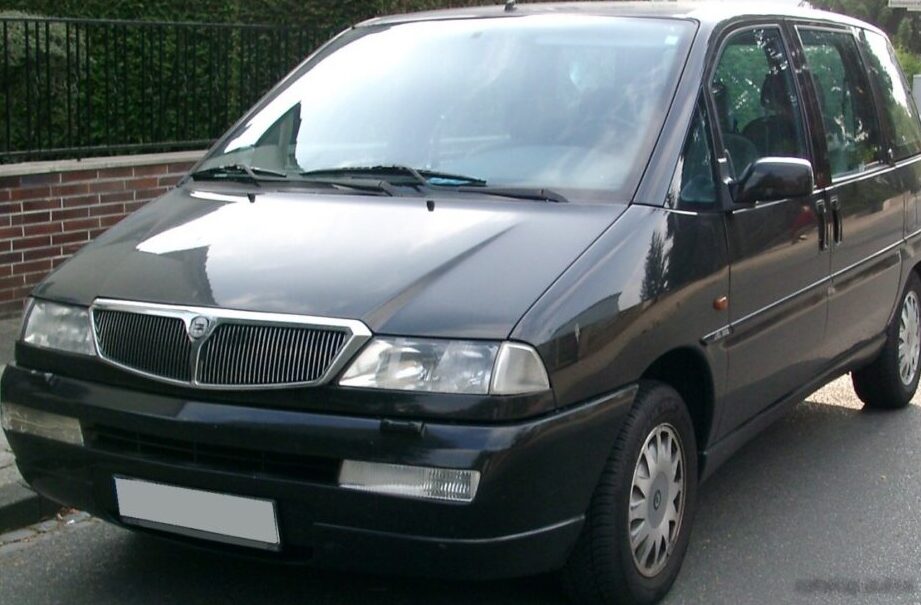
The Lancia Zeta 2.0 JTD, producing 109 horsepower, was a diesel-powered variant of the Zeta minivan produced between September 1999 and September 2002. Positioned as a fuel-efficient and practical option within the Zeta range, it aimed to appeal to families and those requiring a spacious vehicle. The Zeta itself was a significant model for Lancia, representing their entry into the increasingly popular multi-purpose vehicle (MPV) segment, competing with vehicles like the Renault Espace and Citroën Evasion. This particular 2.0 JTD version offered a balance between performance and economy, making it a popular choice in European markets.
Technical Specifications
| Brand | Lancia |
| Model | Zeta |
| Generation | Zeta |
| Type (Engine) | 2.0 JTD (109 Hp) |
| Start of production | September, 1999 |
| End of production | September, 2002 |
| Powertrain Architecture | Internal Combustion engine |
| Body type | Minivan |
| Seats | 5 |
| Doors | 5-6 |
| Fuel consumption (urban) | 8.4 l/100 km (28 US mpg, 33.6 UK mpg, 11.9 km/l) |
| Fuel consumption (extra urban) | 5.6 l/100 km (42 US mpg, 50.4 UK mpg, 17.9 km/l) |
| Fuel consumption (combined) | 6.7 l/100 km (35.1 US mpg, 42.2 UK mpg, 14.9 km/l) |
| Fuel Type | Diesel |
| Acceleration 0 – 100 km/h | 14.8 sec |
| Acceleration 0 – 62 mph | 14.8 sec |
| Acceleration 0 – 60 mph | 14.1 sec |
| Maximum speed | 175 km/h (108.74 mph) |
| Weight-to-power ratio | 13.5 kg/Hp, 74.1 Hp/tonne |
| Weight-to-torque ratio | 5.9 kg/Nm, 170.1 Nm/tonne |
| Power | 109 Hp @ 4000 rpm |
| Power per litre | 54.6 Hp/l |
| Torque | 250 Nm @ 1750 rpm (184.39 lb.-ft. @ 1750 rpm) |
| Engine layout | Front, Transverse |
| Engine Model/Code | RHZ |
| Engine displacement | 1997 cm3 (121.86 cu. in.) |
| Number of cylinders | 4 |
| Engine configuration | Inline |
| Cylinder Bore | 85 mm (3.35 in.) |
| Piston Stroke | 88 mm (3.46 in.) |
| Number of valves per cylinder | 2 |
| Fuel injection system | Diesel Commonrail |
| Engine aspiration | Turbocharger, Intercooler |
| Valvetrain | SOHC |
| Engine oil capacity | 4.5 l (4.76 US qt | 3.96 UK qt) |
| Coolant | 9 l (9.51 US qt | 7.92 UK qt) |
| Kerb Weight | 1470-1807 kg (3240.8 – 3983.75 lbs.) |
| Max. weight | 2395 kg (5280.07 lbs.) |
| Max load | 588-925 kg (1296.32 – 2039.28 lbs.) |
| Fuel tank capacity | 80 l (21.13 US gal | 17.6 UK gal) |
| Permitted trailer load with brakes (8%) | 1900 kg (4188.78 lbs.) |
| Permitted trailer load without brakes | 750 kg (1653.47 lbs.) |
| Permitted towbar download | 75 kg (165.35 lbs.) |
| Length | 4470 mm (175.98 in.) |
| Width | 1832 mm (72.13 in.) |
| Height | 1714 mm (67.48 in.) |
| Wheelbase | 2824 mm (111.18 in.) |
| Front track | 1534 mm (60.39 in.) |
| Rear track | 1540 mm (60.63 in.) |
| Minimum turning circle | 11.8 m (38.71 ft.) |
| Drivetrain Architecture | Front wheel drive |
| Number of gears | 5 |
| Gearbox type | Automatic transmission |
| Front suspension | Independent type McPherson |
| Rear suspension | Torsion |
| Front brakes | Ventilated discs |
| Rear brakes | Disc |
| Assisting systems | ABS (Anti-lock braking system) |
| Steering type | Steering rack and pinion |
| Power steering | Hydraulic Steering |
| Tires size | 205/65 R15 |
| Wheel rims size | 6.5J x 15 |
Powertrain & Engine Architecture
The Lancia Zeta 2.0 JTD was powered by the RHZ engine, a 1.997-liter inline-four cylinder diesel engine. This engine was part of the common rail direct injection (CRDI) family of engines developed by Fiat/Lancia. The RHZ engine featured a turbocharger with an intercooler, boosting power output to 109 horsepower. The common rail system allowed for precise control of fuel injection timing and pressure, resulting in improved fuel efficiency, reduced emissions, and smoother engine operation compared to older diesel technologies. The engine utilized a single overhead camshaft (SOHC) valvetrain with two valves per cylinder. The automatic transmission was a conventional five-speed unit, chosen for its ease of use and suitability for family transport.
Driving Characteristics
The 2.0 JTD automatic combination in the Zeta offered a comfortable, if not particularly sporty, driving experience. Acceleration was adequate for everyday driving, with the 0-60 mph time around 14.1 seconds. The automatic transmission, while smooth, did detract from overall responsiveness. Gear ratios were tuned for fuel economy rather than outright performance. Compared to the manual transmission versions of the 2.0 JTD, the automatic felt noticeably slower. Higher-powered Zeta variants, such as those equipped with the 2.4 JTD engine, offered significantly more performance, but at the expense of fuel economy. The torque characteristics of the engine meant that it felt reasonably strong in mid-range acceleration, making overtaking on highways manageable.
Equipment & Trim Levels
The 2.0 JTD automatic Zeta typically came with a reasonable level of standard equipment. This included power windows, central locking, air conditioning, and an audio system. Interior upholstery was generally cloth, with options for upgraded materials available. Dashboard configuration was functional and straightforward, prioritizing usability over aesthetic flair. Optional extras included alloy wheels, a sunroof, and upgraded audio systems. The trim level often dictated the availability of features like rear parking sensors and leather upholstery. The 2.0 JTD automatic was generally positioned as a mid-range offering, bridging the gap between the base models and the more luxurious, higher-powered trims.
Chassis & Braking
The Zeta’s chassis featured an independent McPherson strut suspension at the front and a torsion beam suspension at the rear. This setup provided a comfortable ride, although it wasn’t particularly engaging for enthusiastic drivers. Braking was handled by ventilated discs at the front and solid discs at the rear. Anti-lock Braking System (ABS) was standard, enhancing safety. The Zeta’s weight, ranging from 1470 to 1807 kg depending on equipment, meant that the braking system needed to work reasonably hard to bring the vehicle to a stop. Stabilizer bars were fitted front and rear to reduce body roll during cornering.
Market Reception & Comparison
The Lancia Zeta 2.0 JTD automatic received generally positive reviews for its practicality, spaciousness, and fuel economy. Critics praised the engine’s refinement and the comfort of the ride. However, the automatic transmission was often criticized for its lack of responsiveness. Compared to other MPVs in its class, the Zeta offered a distinctive Italian style and a comfortable interior. Fuel economy was competitive, averaging around 35.1 US mpg in combined driving. Reliability was generally good, although some owners reported issues with the electronic systems. The 2.0 JTD offered a more affordable entry point into the Zeta range compared to the more powerful 2.4 JTD models, making it a popular choice for budget-conscious buyers.
Legacy
The Lancia Zeta, including the 2.0 JTD automatic variant, has become a relatively sought-after vehicle among enthusiasts and collectors. The RHZ engine is known for its durability and relatively straightforward maintenance. While parts availability can be a challenge due to the vehicle’s age and limited production numbers, the engine itself is generally reliable. Today, well-maintained examples of the Zeta 2.0 JTD automatic command reasonable prices in the used car market, appealing to those seeking a spacious, comfortable, and fuel-efficient MPV with a touch of Italian flair.
