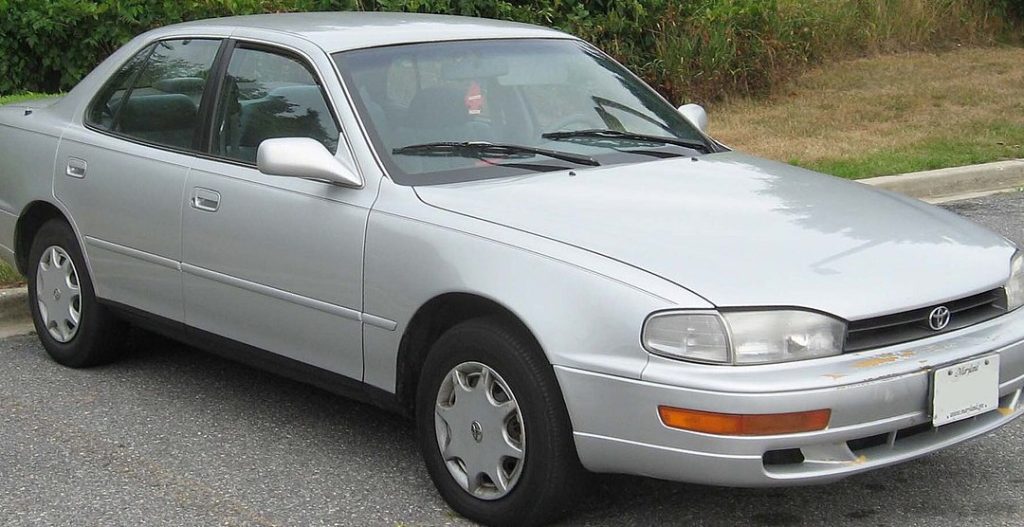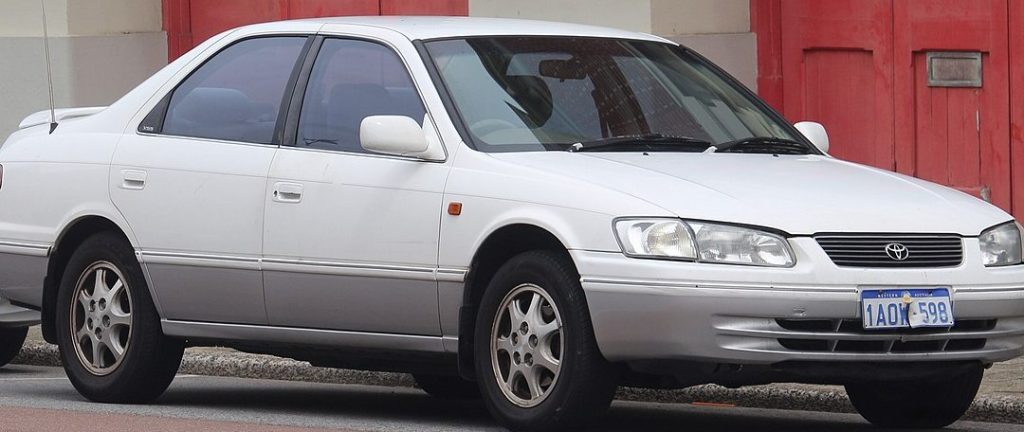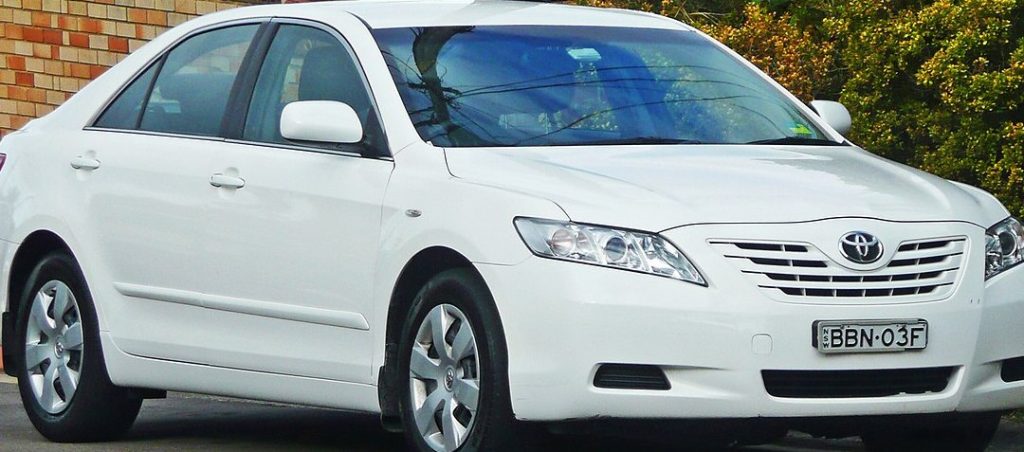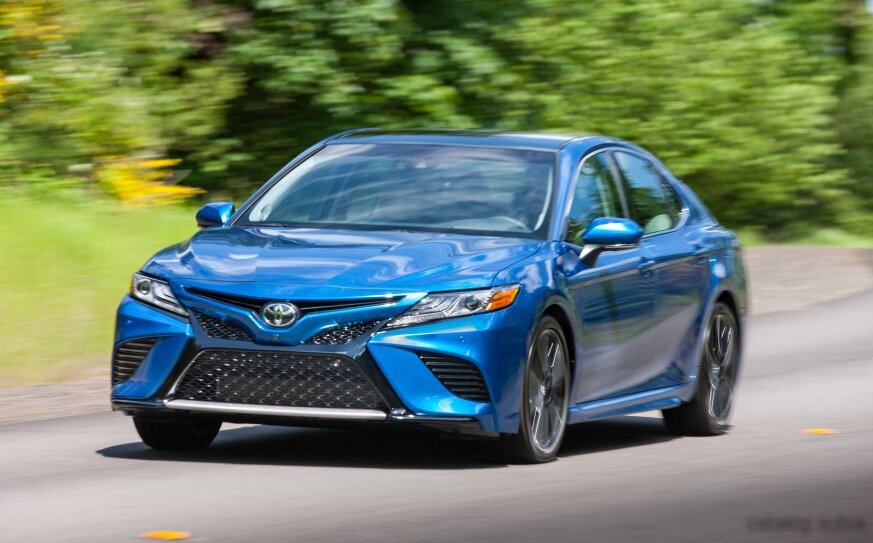
The Toyota Camry VIII (XV70) 2.5 Hybrid, produced from 2018 to 2020, represents a significant evolution in Toyota’s popular mid-size sedan. This generation Camry, built on the TNGA (Toyota New Global Architecture) platform, prioritized a more engaging driving experience alongside the renowned Camry reliability and fuel efficiency. The 2.5-liter Hybrid variant, utilizing Toyota’s Hybrid Synergy Drive, was positioned as a premium offering within the XV70 lineup, appealing to buyers seeking a balance of performance, economy, and advanced technology. It served as a key model in Toyota’s push towards electrification and solidified the Camry’s position as a leader in the competitive family sedan segment in North America and global markets.
Technical Specifications
| Brand | Toyota |
| Model | Camry |
| Generation | Camry VIII (XV70) |
| Type (Engine) | 2.5 (218 Hp) Hybrid e-CVT |
| Start of production | 2018 year |
| End of production | 2020 year |
| Powertrain Architecture | FHEV (Full Hybrid Electric Vehicle) |
| Body type | Sedan |
| Seats | 5 |
| Doors | 4 |
| Fuel consumption (economy) – combined | 4.2-4.3 l/100 km (56 – 54.7 US mpg, 67.3 – 65.7 UK mpg, 23.8 – 23.3 km/l) |
| CO2 emissions | 98-101 g/km |
| Fuel Type | Petrol (Gasoline) |
| Acceleration 0 – 100 km/h | 8.3 sec |
| Acceleration 0 – 62 mph | 8.3 sec |
| Acceleration 0 – 60 mph | 7.9 sec |
| Maximum speed | 180 km/h (111.85 mph) |
| Weight-to-power ratio | 7.3 kg/Hp, 136.7 Hp/tonne |
| Weight-to-torque ratio | 7.2 kg/Nm, 138.6 Nm/tonne |
| Battery voltage | 244.8 V |
| Battery technology | Nickel-metal hydride (NiMH) |
| Battery location | Under the rear seats |
| Electric motor power | 120 Hp |
| Electric motor Torque | 202 Nm (148.99 lb.-ft.) |
| Electric motor location | Integrated into the transmission |
| Electric motor type | Synchronous |
| System power | 218 Hp |
| Internal combustion engine specs Power | 177 Hp @ 5700 rpm |
| Power per litre | 71.2 Hp/l |
| Torque | 221 Nm @ 3600-5200 rpm (163 lb.-ft. @ 3600-5200 rpm) |
| Engine layout | Front, Transverse |
| Engine Model/Code | A25A-FXS |
| Engine displacement | 2487 cm3 (151.77 cu. in.) |
| Number of cylinders | 4 |
| Engine configuration | Inline |
| Cylinder Bore | 87.5 mm (3.44 in.) |
| Piston Stroke | 103.4 mm (4.07 in.) |
| Number of valves per cylinder | 4 |
| Fuel injection system | Multi-port manifold injection |
| Engine aspiration | Naturally aspirated engine |
| Valvetrain | Dual VVT-i, VVT-iE |
| Engine oil capacity | 4.5 l (4.76 US qt | 3.96 UK qt) |
| Coolant | 6.9 l (7.29 US qt | 6.07 UK qt) |
| Kerb Weight | 1595-1635 kg (3516.37 – 3604.56 lbs.) |
| Trunk (boot) space – minimum | 524 l (18.5 cu. ft.) |
| Fuel tank capacity | 49 l (12.94 US gal | 10.78 UK gal) |
| Length | 4885 mm (192.32 in.) |
| Width | 1840 mm (72.44 in.) |
| Height | 1445 mm (56.89 in.) |
| Wheelbase | 2825 mm (111.22 in.) |
| Front track | 1580-1590 mm (62.2 – 62.6 in.) |
| Rear (Back) track | 1590-1600 mm (62.6 – 62.99 in.) |
| Drivetrain Architecture | The Internal combustion engine (ICE) and electric motor drive the front wheels of the car with the ability to work in full electric or mixed mode. |
| Drive wheel | Front wheel drive |
| Number of gears and type of gearbox | automatic transmission e-CVT |
| Front suspension | Independent type McPherson |
| Rear suspension | Double wishbone |
| Front brakes | Ventilated discs |
| Rear brakes | Disc |
| Assisting systems | ABS (Anti-lock braking system) |
| Steering type | Steering rack and pinion |
| Power steering | Electric Steering |
| Tires size | 215/55 R17; 235/45 R18 |
| Wheel rims size | 7.5J x 17; 8J x 18 |
Powertrain & Engine Architecture
The heart of the XV70 Camry Hybrid is the A25A-FXS 2.5-liter inline-four engine. This engine utilizes Toyota’s D-4S fuel injection system, combining direct injection and port injection for optimal efficiency and power delivery. The engine also features Dual VVT-iE (Variable Valve Timing with intelligence – Electric motor), which allows for precise control of valve timing, further enhancing fuel economy and reducing emissions. The engine produces 177 horsepower at 5700 rpm and 163 lb-ft of torque between 3600 and 5200 rpm.
Complementing the gasoline engine is a permanent magnet synchronous electric motor, generating 120 horsepower and 148.99 lb-ft of torque. The combined system output is 218 horsepower. Power is delivered to the front wheels via a unique electronically controlled continuously variable transmission (e-CVT). Unlike traditional CVTs with belts and pulleys, Toyota’s e-CVT utilizes a planetary gearset to seamlessly blend power from the engine and electric motor, providing a smooth and efficient driving experience. The Nickel-metal hydride (NiMH) battery pack is located under the rear seats, minimizing impact on passenger space.
Driving Characteristics
The 2.5-liter Hybrid e-CVT Camry offers a refined and comfortable driving experience. The e-CVT provides seamless acceleration, and the electric motor provides instant torque, resulting in brisk off-the-line performance. While not as overtly sporty as some competitors, the Camry Hybrid delivers adequate power for everyday driving situations. The 0-60 mph time of around 7.9 seconds is respectable for a hybrid sedan. The hybrid system prioritizes fuel efficiency, and the car can operate in electric-only mode at lower speeds, further reducing fuel consumption. The steering is light and precise, and the suspension provides a comfortable ride, absorbing bumps and imperfections in the road effectively.
Equipment & Trim Levels
The 2.5-liter Hybrid Camry typically came well-equipped, often positioned as a mid-to-high trim level. Standard features generally included Toyota Safety Sense P (TSS-P), which encompassed pre-collision system with pedestrian detection, lane departure alert with steering assist, automatic high beams, and dynamic radar cruise control. Interior features included comfortable cloth or SofTex (Toyota’s synthetic leather) upholstery, a 7-inch touchscreen infotainment system with Apple CarPlay and Android Auto compatibility, and a rearview camera. Higher trims offered upgrades such as leather upholstery, a larger touchscreen display, a premium audio system, and blind spot monitoring with rear cross-traffic alert.
Chassis & Braking
The XV70 Camry utilizes a MacPherson strut front suspension and a double-wishbone rear suspension, providing a balanced ride and handling characteristics. The chassis is designed for rigidity, contributing to improved handling and reduced noise, vibration, and harshness (NVH). The braking system consists of ventilated discs at the front and solid discs at the rear, providing adequate stopping power. Anti-lock brakes (ABS) are standard, along with electronic brake-force distribution (EBD) and brake assist.
Market Reception & Comparison
The Camry Hybrid was generally well-received by critics and consumers alike. It was praised for its fuel efficiency, comfortable ride, and reliability. Compared to the standard gasoline-powered Camry, the Hybrid offered significantly better fuel economy, making it an attractive option for environmentally conscious buyers. Compared to other hybrid sedans in its class, such as the Honda Accord Hybrid, the Camry Hybrid often stood out for its value proposition and Toyota’s reputation for long-term reliability. Some critics noted that the driving experience wasn’t as engaging as some competitors, but the Camry Hybrid prioritized comfort and efficiency over outright performance.
Legacy
The Toyota Camry VIII (XV70) 2.5 Hybrid has proven to be a reliable and durable vehicle. The Hybrid Synergy Drive system has a strong track record for longevity, and the A25A-FXS engine is known for its dependability. In the used car market, these Camrys hold their value well, due to their reputation for reliability and fuel efficiency. The XV70 generation Camry, and particularly the Hybrid variant, helped solidify Toyota’s position as a leader in the hybrid vehicle market and paved the way for further advancements in hybrid technology.