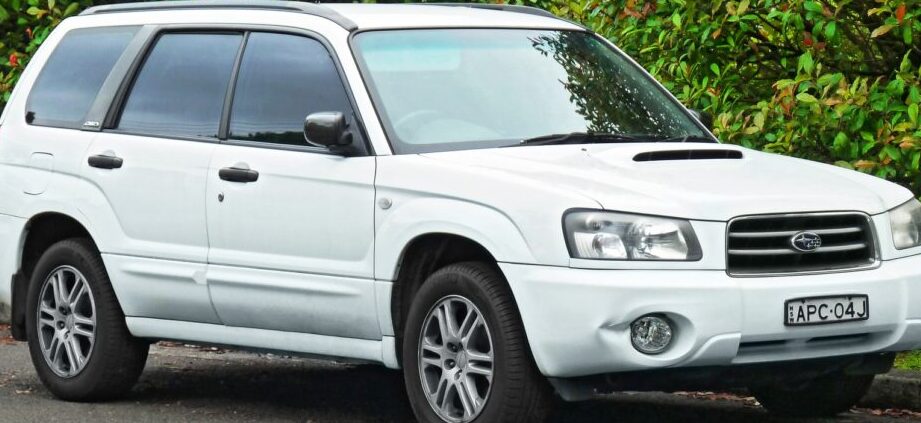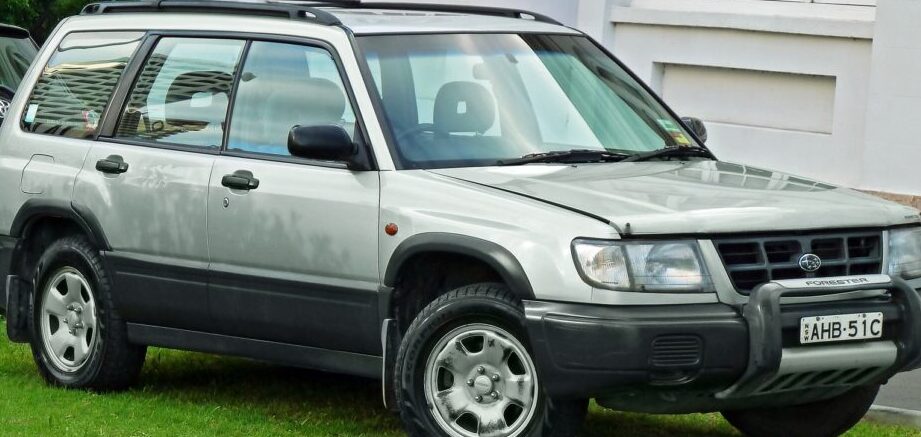
The Subaru Forester I 2.0, produced between 1997 and 2000, represents the inaugural generation of Subaru’s popular compact SUV. Positioned as a practical and capable all-weather vehicle, the Forester I aimed to bridge the gap between traditional station wagons and the emerging SUV market. This particular variant, equipped with the 2.0-liter EJ203 engine producing 122 horsepower, served as a core offering within the Forester lineup, appealing to buyers seeking a balance of affordability, fuel efficiency, and Subaru’s renowned symmetrical all-wheel drive system. It was built on the Subaru C platform, shared with the Impreza, and marked Subaru’s early foray into a more crossover-oriented vehicle design.
Technical Specifications
| Brand | Subaru |
| Model | Forester |
| Generation | Forester I |
| Type (Engine) | 2.0 (122 Hp) |
| Start of production | 1997 |
| End of production | 2000 |
| Powertrain Architecture | Internal Combustion engine |
| Body type | SUV, Crossover |
| Seats | 5 |
| Doors | 5 |
| Fuel consumption (urban) | 11.7 l/100 km (20.1 US mpg) |
| Fuel consumption (extra urban) | 7.7 l/100 km (30.5 US mpg) |
| Fuel Type | Petrol (Gasoline) |
| Acceleration 0 – 100 km/h | 10.8 sec |
| Acceleration 0 – 62 mph | 10.8 sec |
| Acceleration 0 – 60 mph | 10.3 sec |
| Maximum speed | 178 km/h (110.6 mph) |
| Weight-to-power ratio | 11.3 kg/Hp |
| Weight-to-torque ratio | 7.8 kg/Nm |
| Power | 122 Hp @ 5600 rpm |
| Torque | 176 Nm @ 4000 rpm (129.81 lb.-ft. @ 4000 rpm) |
| Engine layout | Front, Longitudinal |
| Engine Model/Code | EJ203 |
| Engine displacement | 1994 cm3 (121.68 cu. in.) |
| Number of cylinders | 4 |
| Engine configuration | Boxer |
| Cylinder Bore | 92 mm (3.62 in.) |
| Piston Stroke | 75 mm (2.95 in.) |
| Compression ratio | 9.7:1 |
| Number of valves per cylinder | 4 |
| Fuel injection system | Multi-port manifold injection |
| Engine aspiration | Naturally aspirated engine |
| Valvetrain | OHC |
| Engine oil capacity | 4 l (4.23 US qt | 3.52 UK qt) |
| Kerb Weight | 1380 kg (3042.38 lbs.) |
| Max. weight | 1860 kg (4100.6 lbs.) |
| Max load | 480 kg (1058.22 lbs.) |
| Trunk (boot) space – minimum | 410 l (14.48 cu. ft.) |
| Trunk (boot) space – maximum | 1530 l (54.03 cu. ft.) |
| Fuel tank capacity | 60 l (15.85 US gal | 13.2 UK gal) |
| Length | 4450 mm (175.2 in.) |
| Width | 1735 mm (68.31 in.) |
| Height | 1590 mm (62.6 in.) |
| Wheelbase | 2525 mm (99.41 in.) |
| Front track | 1475 mm (58.07 in.) |
| Rear (Back) track | 1450 mm (57.09 in.) |
| Drive wheel | All wheel drive (4×4) |
| Number of gears and type of gearbox | 5 gears, manual transmission |
| Front suspension | Spring Strut |
| Rear suspension | Double wishbone |
| Front brakes | Ventilated discs |
| Rear brakes | Drum |
| Assisting systems | ABS (Anti-lock braking system) |
| Steering type | Steering rack and pinion |
| Power steering | Hydraulic Steering |
| Tires size | 205/70R15 |
Powertrain & Engine Architecture
The heart of the Forester I 2.0 is the EJ203 engine, a 1994cc naturally aspirated, horizontally-opposed (boxer) four-cylinder gasoline engine. This engine design, a Subaru hallmark, provides a low center of gravity, contributing to improved handling and stability. The EJ203 utilizes a single overhead camshaft (OHC) design and multi-point fuel injection. The 122 horsepower output at 5600 rpm and 176 Nm (129.81 lb-ft) of torque at 4000 rpm were achieved through a relatively conservative tuning, prioritizing reliability and fuel economy over outright performance. The engine’s longitudinal mounting, coupled with Subaru’s symmetrical all-wheel drive system, delivered predictable and balanced handling characteristics. The five-speed manual transmission was the standard offering for this trim, providing direct control over the engine’s powerband.
Driving Characteristics
The 2.0-liter Forester I, with its 122 hp and five-speed manual transmission, offered a practical and capable driving experience. Acceleration was adequate for everyday driving, with a 0-60 mph time of around 10.3 seconds. However, it wasn’t a particularly quick vehicle, especially when compared to higher-spec Forester models equipped with the turbocharged EJ205 engine. The manual transmission provided a more engaging driving experience than the optional four-speed automatic, allowing drivers to better utilize the engine’s torque. The all-wheel drive system provided excellent traction in various weather conditions, making it a popular choice in regions with inclement weather. The gear ratios were tuned for fuel efficiency and everyday usability, rather than outright performance.
Equipment & Trim Levels
The base Forester I 2.0 typically included features such as power windows and locks, manual air conditioning, and a basic audio system. Interior upholstery was typically cloth, and the dashboard featured a functional, if somewhat spartan, design. Optional extras included a sunroof, upgraded audio systems, and alloy wheels. The Forester I prioritized practicality over luxury, offering a comfortable and functional interior without excessive frills. This trim level was considered the entry point into the Forester range, appealing to budget-conscious buyers.
Chassis & Braking
The Forester I utilized a MacPherson strut front suspension and a double-wishbone rear suspension, providing a comfortable ride and predictable handling. Front brakes were ventilated discs, offering good stopping power, while rear brakes were drums. The use of drum brakes on the rear was a cost-saving measure common in this class of vehicle. Anti-lock brakes (ABS) were standard, enhancing safety by preventing wheel lockup during hard braking. The chassis was designed to accommodate the all-wheel drive system and provide adequate ground clearance for light off-road use.
Market Reception & Comparison
The Subaru Forester I 2.0 was generally well-received by automotive critics as a practical and capable SUV. It was praised for its all-wheel drive system, comfortable ride, and spacious interior. However, some critics noted its relatively modest performance compared to competitors and higher-spec Forester models. Compared to the turbocharged Forester models, the 2.0-liter version offered better fuel economy but significantly less power. The 2.0L was often seen as a sensible choice for buyers prioritizing practicality and affordability over performance.
Legacy
The Subaru Forester I 2.0, while not the most powerful or luxurious vehicle in its class, established the Forester as a reliable and capable compact SUV. The EJ203 engine, while not without its quirks, proved to be a relatively durable powerplant when properly maintained. Today, well-maintained examples of the Forester I 2.0 are sought after by Subaru enthusiasts and those looking for a classic, affordable all-wheel drive vehicle. The simplicity of the design and the availability of parts contribute to its continued appeal in the used car market. The Forester I laid the foundation for the continued success of the Forester line, which has become a mainstay in the compact SUV segment.