
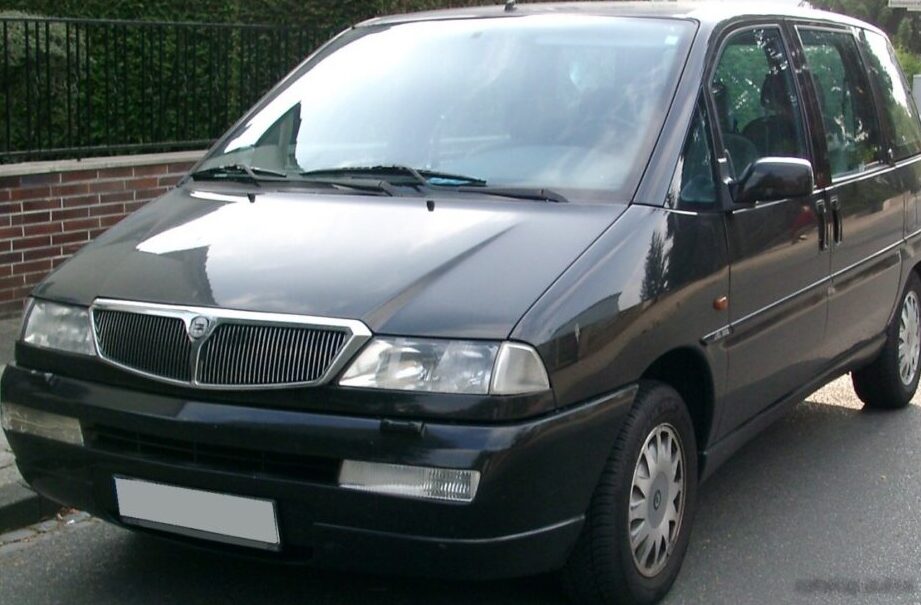
The Lancia Zeta 2.0 JTD, produced between 1999 and 2002, was a diesel-powered variant of the Zeta minivan, representing a significant offering in the European MPV (Multi-Purpose Vehicle) market. Positioned as a practical and spacious family vehicle, the 2.0 JTD model aimed to balance fuel efficiency with reasonable performance. It sat within the Zeta range alongside petrol engine options, offering a more economical alternative for drivers covering high mileages. The Zeta, overall, was Lancia’s entry into the increasingly popular people-carrier segment, competing with vehicles like the Renault Espace and Citroën Evasion.
Technical Specifications
| Brand | Lancia |
| Model | Zeta |
| Generation | Zeta |
| Type (Engine) | 2.0 JTD (136 Hp) |
| Start of production | 1999 |
| End of production | 2002 |
| Powertrain Architecture | Internal Combustion engine |
| Body type | Minivan |
| Seats | 5 |
| Doors | 4 |
| Fuel consumption (urban) | 12.7 l/100 km (18.5 US mpg) |
| Fuel consumption (extra urban) | 5.6 l/100 km (42 US mpg) |
| Fuel Type | Diesel |
| Acceleration 0 – 100 km/h | 14.8 sec |
| Acceleration 0 – 62 mph | 14.8 sec |
| Acceleration 0 – 60 mph | 14.1 sec |
| Maximum speed | 175 km/h (108.74 mph) |
| Weight-to-power ratio | 11.9 kg/Hp |
| Weight-to-torque ratio | 6.5 kg/Nm |
| Power | 136 Hp @ 6000 rpm |
| Power per litre | 68.1 Hp/l |
| Torque | 250 Nm @ 1750 rpm (184.39 lb.-ft. @ 1750 rpm) |
| Engine layout | Front, Transverse |
| Engine Model/Code | RFN |
| Engine displacement | 1997 cm3 (121.86 cu. in.) |
| Number of cylinders | 4 |
| Engine configuration | Inline |
| Cylinder Bore | 85 mm (3.35 in.) |
| Piston Stroke | 88 mm (3.46 in.) |
| Compression ratio | 17.6:1 |
| Number of valves per cylinder | 2 |
| Fuel injection system | Precombustion chamber injection |
| Engine aspiration | Turbocharger |
| Valvetrain | OHC |
| Kerb Weight | 1615 kg (3560.47 lbs.) |
| Max. weight | 2385 kg (5258.02 lbs.) |
| Max load | 770 kg (1697.56 lbs.) |
| Trunk (boot) space – minimum | 340 l (12.01 cu. ft.) |
| Trunk (boot) space – maximum | 3300 l (116.54 cu. ft.) |
| Fuel tank capacity | 80 l (21.13 US gal | 17.6 UK gal) |
| Length | 4470 mm (175.98 in.) |
| Width | 1834 mm (72.2 in.) |
| Height | 1714 mm (67.48 in.) |
| Wheelbase | 2825 mm (111.22 in.) |
| Front track | 1534 mm (60.39 in.) |
| Rear (Back) track | 1540 mm (60.63 in.) |
| Drivetrain Architecture | The Internal combustion engine (ICE) drives the front wheels of the vehicle. |
| Drive wheel | Front wheel drive |
| Number of gears and type of gearbox | 5 gears, manual transmission |
| Front suspension | Coil spring |
| Rear suspension | Coil spring |
| Front brakes | Ventilated discs |
| Rear brakes | Drum |
| Assisting systems | ABS (Anti-lock braking system) |
| Steering type | Steering rack and pinion |
| Power steering | Hydraulic Steering |
| Tires size | 205/65 R15 |
Powertrain & Engine Architecture
The heart of the Zeta 2.0 JTD was the RFN engine, a 1.997-liter inline-four cylinder diesel. This engine utilized a precombustion chamber injection system, a common technology in European diesels of the era. This system involved injecting fuel into a small pre-chamber within the cylinder head, where it partially combusted before igniting the main charge. This design aided in smoother combustion and reduced engine noise compared to direct injection systems of the time. The engine was turbocharged, boosting power output to 136 horsepower at 6000 rpm and 250 Nm (184 lb-ft) of torque at a relatively low 1750 rpm. The five-speed manual transmission was the only gearbox option available with this engine, providing a balance between fuel economy and drivability.
Driving Characteristics
The 2.0 JTD Zeta offered a distinctly different driving experience compared to its petrol-powered siblings. While lacking the outright acceleration of the higher-powered petrol engines, the diesel provided significantly more torque, making it well-suited for carrying passengers and luggage. The turbocharger helped to mitigate turbo lag, delivering a usable surge of power from relatively low engine speeds. The five-speed manual transmission was well-matched to the engine’s characteristics, allowing drivers to keep the engine in its optimal torque band. However, the gear ratios were geared towards economy rather than performance, and the Zeta 2.0 JTD wasn’t designed for spirited driving. The overall driving experience was comfortable and refined, prioritizing practicality and ease of use.
Equipment & Trim Levels
The Lancia Zeta 2.0 JTD typically came with a reasonable level of standard equipment, reflecting its position as a family-oriented vehicle. Standard features included power steering, central locking, electric front windows, and an ABS anti-lock braking system. Interior upholstery was typically cloth, with a functional and durable design. Optional extras included air conditioning, alloy wheels, a sunroof, and upgraded audio systems. Trim levels varied depending on the market, but generally offered incremental improvements in interior appointments and exterior styling.
Chassis & Braking
The Zeta’s chassis employed a coil spring suspension system at both the front and rear, providing a comfortable ride quality. The front suspension utilized independent coil springs, while the rear suspension featured a semi-independent twist beam setup. Braking duties were handled by ventilated discs at the front and drum brakes at the rear. While adequate for everyday driving, the braking system wasn’t particularly powerful, reflecting the vehicle’s weight and intended use. The Zeta’s steering was rack and pinion, providing reasonably precise control, although it lacked the feedback of more performance-oriented systems.
Market Reception & Comparison
The Lancia Zeta 2.0 JTD was generally well-received by critics as a practical and fuel-efficient MPV. The diesel engine was praised for its torque and economy, making it a popular choice for high-mileage drivers. However, some reviewers noted that the engine was somewhat noisy compared to petrol alternatives. Compared to the petrol-powered Zeta variants, the 2.0 JTD offered significantly better fuel economy but lacked the same level of performance. It was often seen as a more sensible and economical choice for families prioritizing practicality over driving excitement.
Legacy
The Lancia Zeta 2.0 JTD, while not a groundbreaking vehicle, remains a reasonably well-regarded MPV in the used car market. The RFN diesel engine, when properly maintained, is known for its durability and longevity. However, like all diesel engines of this era, it’s susceptible to issues related to fuel quality and infrequent servicing. Finding well-maintained examples can be challenging, but a well-cared-for Zeta 2.0 JTD can still provide reliable and economical transportation. Its spacious interior and practical design continue to appeal to buyers seeking a versatile family vehicle.
