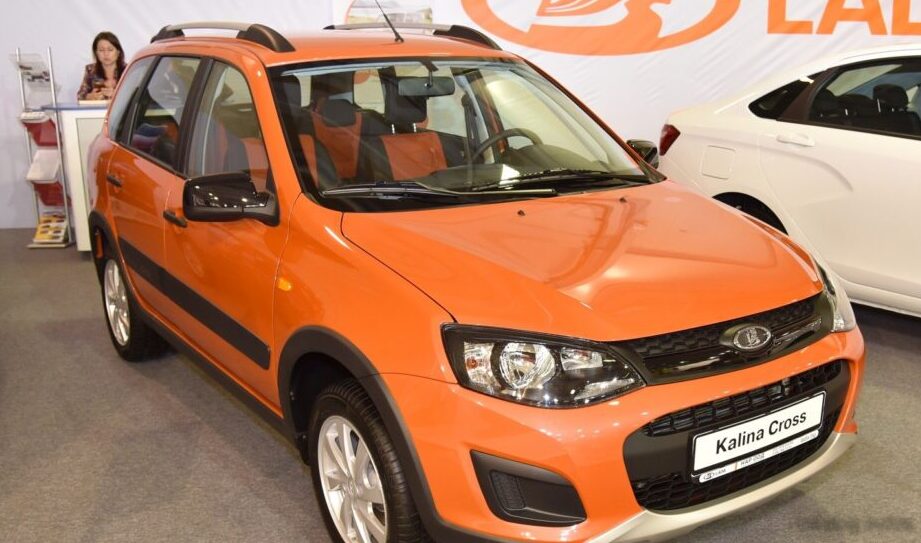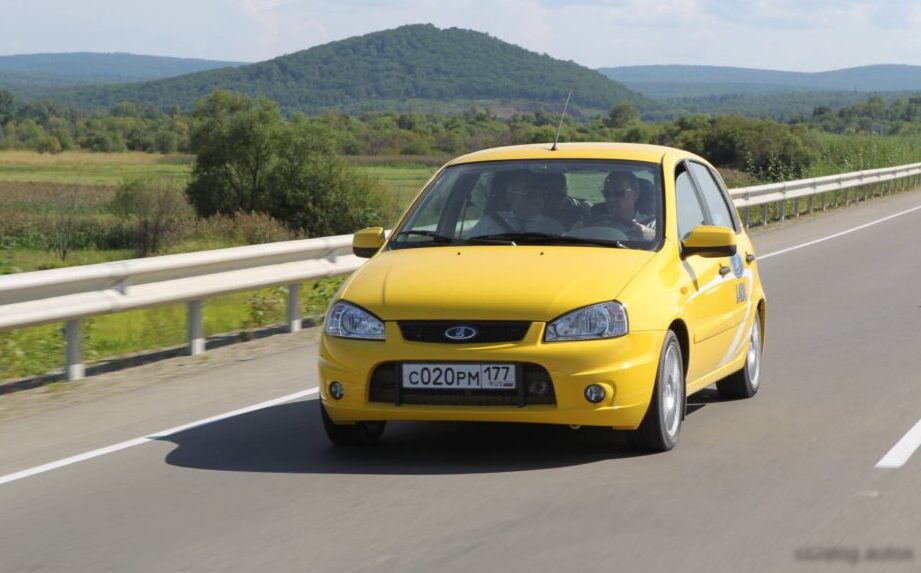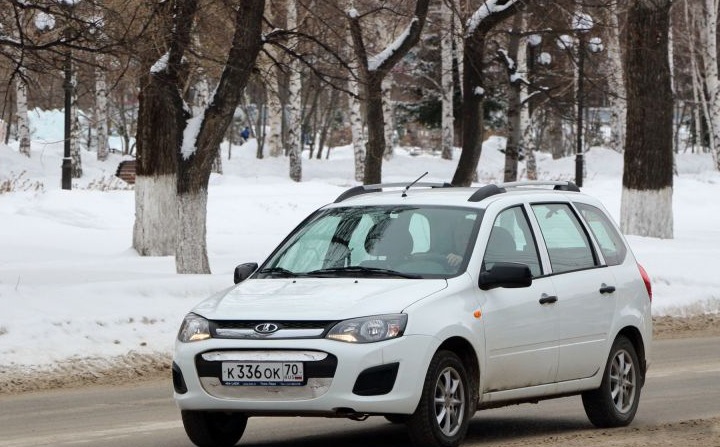
The Lada Kalina II Combi (2194) 1.6 (98 hp) Automatic, produced from 2013 to 2018, represents a practical and affordable station wagon option within the Lada lineup. Positioned as a mid-range offering, it aimed to provide a balance between economy, space, and convenience, particularly appealing to families and those requiring a versatile vehicle. The Kalina II Combi was a key model for Lada, representing a significant step forward in design and build quality compared to its predecessors, and was primarily marketed within Russia and other Eastern European countries. It was built on the B-platform, shared with other Renault-Nissan vehicles after the alliance with Renault.
Technical Specifications
| Brand | Lada |
| Model | Kalina |
| Generation | Kalina II Combi (2194) |
| Type (Engine) | 1.6 (98 Hp) Automatic |
| Start of production | 2013 |
| End of production | 2018 |
| Powertrain Architecture | Internal Combustion engine |
| Body type | Station wagon (estate) |
| Seats | 5 |
| Doors | 5 |
| Fuel consumption (urban) | 9.9 l/100 km (23.8 US mpg) |
| Fuel consumption (extra urban) | 6.1 l/100 km (38.6 US mpg) |
| Fuel consumption (combined) | 7.6 l/100 km (30.9 US mpg) |
| Fuel Type | Petrol (Gasoline) |
| Acceleration 0 – 100 km/h | 13.1 sec |
| Acceleration 0 – 62 mph | 13.1 sec |
| Acceleration 0 – 60 mph | 12.4 sec |
| Maximum speed | 175 km/h (108.74 mph) |
| Weight-to-power ratio | 11.5 kg/Hp |
| Weight-to-torque ratio | 7.8 kg/Nm |
| Power | 98 Hp @ 5600 rpm |
| Torque | 145 Nm @ 4000 rpm (106.95 lb.-ft. @ 4000 rpm) |
| Engine layout | Front, Transverse |
| Engine displacement | 1596 cm3 (97.39 cu. in.) |
| Number of cylinders | 4 |
| Engine configuration | Inline |
| Number of valves per cylinder | 4 |
| Fuel injection system | Multi-port manifold injection |
| Engine aspiration | Naturally aspirated engine |
| Engine oil capacity | 4.4 l (4.65 US qt | 3.87 UK qt) |
| Coolant capacity | 7.84 l (8.28 US qt | 6.9 UK qt) |
| Kerb Weight | 1125 kg (2480.2 lbs.) |
| Max. weight | 1560 kg (3439.21 lbs.) |
| Max load | 435 kg (959.01 lbs.) |
| Trunk (boot) space – minimum | 355 l (12.54 cu. ft.) |
| Trunk (boot) space – maximum | 670 l (23.66 cu. ft.) |
| Fuel tank capacity | 50 l (13.21 US gal | 11 UK gal) |
| Permitted trailer load with brakes (12%) | 900 kg (1984.16 lbs.) |
| Permitted trailer load without brakes | 450 kg (992.08 lbs.) |
| Length | 4084 mm (160.79 in.) |
| Width | 1700 mm (66.93 in.) |
| Height | 1504 mm (59.21 in.) |
| Wheelbase | 2476 mm (97.48 in.) |
| Front track | 1430 mm (56.3 in.) |
| Rear track | 1414 mm (55.67 in.) |
| Ride height (ground clearance) | 145 mm (5.71 in.) |
| Drivetrain Architecture | Front wheel drive |
| Number of gears and type of gearbox | 4 gears, automatic transmission |
| Front suspension | Independent, type McPherson with coil spring and anti-roll bar |
| Rear suspension | Semi-independent, coil spring |
| Assisting systems | ABS (Anti-lock braking system) |
| Steering type | Steering rack and pinion |
| Tires size | 175/65 R14; 185/60 R14; 185/55 R15 |
| Wheel rims size | 14; 15 |
Powertrain & Engine Architecture
The Kalina II Combi 1.6 Automatic utilizes the Lada 11186 engine, a 1.6-liter inline-four cylinder gasoline engine. This engine, while relatively simple in design, was a significant improvement over earlier Lada engines. It features a multi-point fuel injection system, which improved fuel efficiency and reduced emissions compared to carburetor-based systems. The engine produces 98 horsepower at 5600 rpm and 145 Nm (107 lb-ft) of torque at 4000 rpm. The engine’s valvetrain consists of two valves per cylinder (eight valves total), operated by a single overhead camshaft. The automatic transmission is a four-speed unit, sourced from Japan, and was designed to provide smooth, if not particularly sporty, gear changes. This transmission was chosen for its reliability and affordability, aligning with Lada’s overall market positioning.
Driving Characteristics
The 1.6-liter engine paired with the four-speed automatic transmission delivers modest performance. Acceleration from 0 to 100 km/h (0-62 mph) takes approximately 13.1 seconds, and the top speed is around 175 km/h (109 mph). The automatic transmission prioritizes fuel economy and smooth operation over rapid acceleration. Gear ratios are tuned for everyday driving, with a focus on providing adequate power for merging and overtaking. Compared to the manual transmission versions of the Kalina II, the automatic variant feels noticeably slower, particularly during acceleration. However, the automatic offers a more relaxed driving experience, especially in urban traffic. The suspension is tuned for comfort, providing a reasonably smooth ride, although it can feel somewhat soft when cornering.
Equipment & Trim Levels
The Kalina II Combi 1.6 Automatic typically came with a base level of equipment, including power steering, central locking, front power windows, and an audio system. Higher trim levels, often denoted by suffixes like “Standard” or “Lux,” added features such as air conditioning, heated front seats, electric rear windows, and alloy wheels. Interior upholstery was typically cloth, with a simple and functional dashboard layout. Optional extras included a more advanced audio system, parking sensors, and a security alarm. The overall interior design was practical and durable, prioritizing functionality over luxury.
Chassis & Braking
The Kalina II Combi features a front-wheel-drive layout with an independent McPherson strut suspension at the front and a semi-independent coil spring suspension at the rear. The front suspension incorporates an anti-roll bar to reduce body roll during cornering. Braking is handled by disc brakes at the front and drum brakes at the rear. ABS (Anti-lock Braking System) was standard equipment, enhancing safety. The chassis is relatively simple, designed for durability and ease of maintenance. The steering system utilizes a rack and pinion setup, providing reasonably precise steering feel.
Market Reception & Comparison
The Lada Kalina II Combi 1.6 Automatic was generally well-received in its target markets as an affordable and practical family vehicle. Critics noted its spacious interior, reasonable fuel economy (around 7.6 l/100 km combined), and relatively low purchase price. However, the automatic transmission was often criticized for its slow response and limited number of gears. Compared to the manual transmission versions, the automatic offered less engaging driving experience. Compared to other station wagons available in the same price range, the Kalina II Combi offered a competitive level of equipment and space, but lacked the refinement and performance of some Western European or Asian competitors. Reliability was generally considered good, although maintenance costs were relatively low due to the simplicity of the engine and transmission.
Legacy
The Lada Kalina II Combi 1.6 Automatic, while not a performance icon, remains a popular choice in the used car market, particularly in Eastern Europe. The 1.6-liter engine and four-speed automatic transmission are known for their durability and relatively low maintenance requirements. Parts availability is generally good, and repair costs are typically affordable. The Kalina II Combi represents a significant step forward for Lada in terms of design, build quality, and features, and it helped to establish the brand as a more competitive player in the budget car segment. While it has been superseded by newer models, the Kalina II Combi continues to offer a practical and affordable transportation solution for many drivers.