
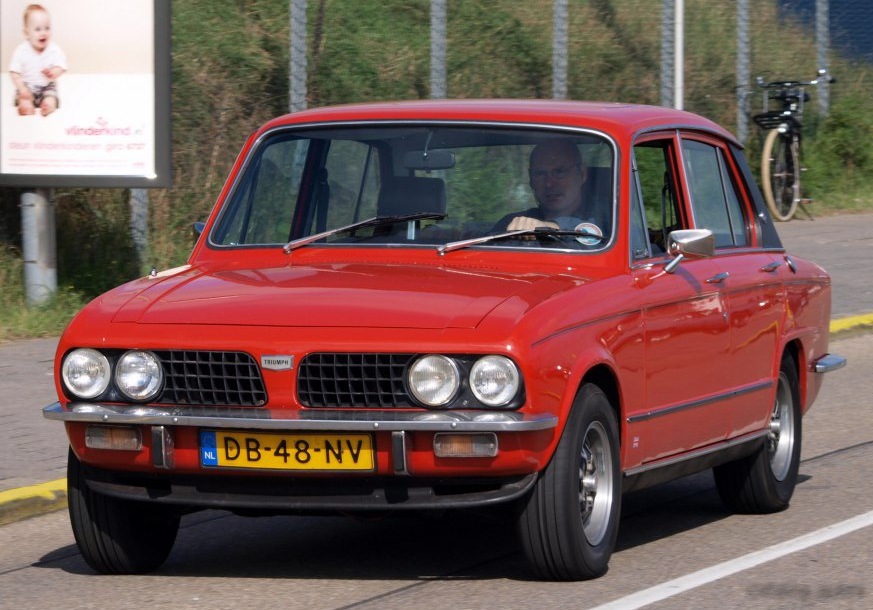
The Triumph Dolomite 1850, produced between 1972 and 1977, represented a significant step forward for the Triumph Motor Company. Positioned as a mid-range offering within the Dolomite line, it aimed to provide a blend of performance and practicality for the British market and export customers. The 1850 utilized Triumph’s newly developed 1.8-liter inline-four engine, a departure from the earlier Dolomite 1300 models. It was a key component in Triumph’s attempt to modernize its lineup and compete with increasingly sophisticated European and Japanese rivals. While the Dolomite range ultimately faced challenges, the 1850 remains a fondly remembered classic, particularly for its spirited driving experience.
Technical Specifications
| Brand | Triumph |
| Model | Dolomite |
| Generation | Dolomite |
| Type (Engine) | 1850 (91 Hp) |
| Start of production | 1972 |
| End of production | 1977 |
| Powertrain Architecture | Internal Combustion engine |
| Body type | Sedan |
| Seats | 5 |
| Doors | 4 |
| Fuel consumption (urban) | 9.3 l/100 km (25.3 US mpg) |
| Fuel consumption (extra urban) | 6.1 l/100 km (38.6 US mpg) |
| Fuel Type | Petrol (Gasoline) |
| Acceleration 0 – 60 mph | 11.5 sec |
| Maximum speed | 161 km/h (100.04 mph) |
| Weight-to-power ratio | 10.6 kg/Hp |
| Weight-to-torque ratio | 6.8 kg/Nm |
| Power | 91 Hp @ 5200 rpm |
| Power per litre | 49.1 Hp/l |
| Torque | 142 Nm @ 3500 rpm (104.73 lb.-ft. @ 3500 rpm) |
| Engine layout | Front, Longitudinal |
| Engine displacement | 1854 cm3 (113.14 cu. in.) |
| Number of cylinders | 4 |
| Engine configuration | Inline |
| Cylinder Bore | 87 mm (3.43 in.) |
| Piston Stroke | 78 mm (3.07 in.) |
| Compression ratio | 9:1 |
| Number of valves per cylinder | 2 |
| Fuel injection system | Carburettor |
| Engine aspiration | Naturally aspirated |
| Valvetrain | SOHC |
| Engine oil capacity | 4.5 l (4.76 US qt | 3.96 UK qt) |
| Coolant capacity | 5.4 l (5.71 US qt | 4.75 UK qt) |
| Kerb Weight | 967 kg (2131.87 lbs.) |
| Max. weight | 1329 kg (2929.94 lbs.) |
| Max load | 362 kg (798.07 lbs.) |
| Trunk (boot) space – minimum | 375 l (13.24 cu. ft.) |
| Fuel tank capacity | 57 l (15.06 US gal | 12.54 UK gal) |
| Max. roof load | 50 kg (110.23 lbs.) |
| Permitted trailer load without brakes | 762 kg (1679.92 lbs.) |
| Length | 4115 mm (162.01 in.) |
| Width | 1568 mm (61.73 in.) |
| Height | 1372 mm (54.02 in.) |
| Wheelbase | 2454 mm (96.61 in.) |
| Front track | 1353 mm (53.27 in.) |
| Rear (Back) track | 1270 mm (50 in.) |
| Ride height (ground clearance) | 108 mm (4.25 in.) |
| Minimum turning circle (turning diameter) | 9.4 m (30.84 ft.) |
| Drivetrain Architecture | Rear wheel drive |
| Drive wheel | Rear wheel drive |
| Number of gears and type of gearbox | 4 gears, manual transmission |
| Front suspension | Wishbone |
| Rear suspension | Independent multi-link suspension |
| Front brakes | Disc, 222 mm |
| Rear brakes | Drum, 204×38 mm |
| Steering type | Steering rack and pinion |
| Wheel rims size | Front wheel rims: 4.5J x 13 Rear wheel rims: 4.5J x 13 |
Introduction
The Triumph Dolomite 1850 debuted in 1972 as an upgrade to the existing Dolomite range, which had been introduced in 1971. Built on the 1HX0/A3 platform, the 1850 aimed to address criticisms of the earlier 1300 models, primarily concerning their lack of outright performance. The larger engine and revised specifications positioned the 1850 as a more capable and desirable family saloon, appealing to buyers seeking a blend of comfort, style, and driving enjoyment. It was a crucial model for Triumph, representing a significant investment in a new engine family and a commitment to modernizing the brand’s image.
Powertrain & Engine Architecture
The heart of the Dolomite 1850 was Triumph’s all-new 1854cc inline-four engine. This engine, designated as the SAH, was a significant departure from Triumph’s previous designs. It featured a single overhead camshaft (SOHC) operating two valves per cylinder. Fuel delivery was handled by a Zenith-Stromberg 175CD carburetor. The engine produced 91 horsepower at 5200 rpm and 142 Nm (104.73 lb-ft) of torque at 3500 rpm. The engine was longitudinally mounted and drove the rear wheels. The Dolomite 1850 was exclusively offered with a four-speed manual transmission, providing a direct and engaging driving experience. The transmission was known for its robust construction, but its relatively wide gear ratios meant that it wasn’t the most modern unit available at the time.
Driving Characteristics
The Dolomite 1850 offered a noticeably more spirited driving experience than the 1300. Acceleration to 60 mph took around 11.5 seconds, and the car could achieve a top speed of 100 mph. While these figures weren’t groundbreaking, they were competitive within its class. The engine’s torque delivery provided good responsiveness in everyday driving situations, making it easy to navigate city streets and country roads. The manual transmission, while not particularly sophisticated, allowed drivers to fully exploit the engine’s power. Compared to later, fuel-injected versions of the Dolomite 1850, the carbureted model offered a slightly less refined but arguably more characterful driving experience. The car’s rear-wheel-drive layout contributed to a balanced and predictable handling characteristic.
Equipment & Trim Levels
The Dolomite 1850 was generally well-equipped for its time, although it wasn’t considered a luxury car. Standard features included reclining front seats, a heater, and a comprehensive instrument panel. Interior trim typically consisted of cloth upholstery, available in a range of colors. Optional extras included a vinyl roof, a radio, and upgraded interior trim materials. The dashboard layout was functional and straightforward, with clearly marked gauges for speed, fuel level, coolant temperature, and oil pressure. The 1850 sat in the middle of the Dolomite range, offering more features than the base 1300 but lacking the premium appointments of the later 1500 HL models.
Chassis & Braking
The Dolomite 1850 featured a robust chassis with independent front suspension utilizing wishbones and coil springs. The rear suspension employed an independent multi-link setup, providing a comfortable ride and good handling characteristics. Braking was accomplished via disc brakes on the front wheels and drum brakes on the rear. The braking system was adequate for the car’s performance, but it lacked the stopping power of more modern systems. Steering was via a rack and pinion system, providing precise and responsive control. The car’s relatively light weight (approximately 967 kg or 2132 lbs) contributed to its nimble handling.
Market Reception & Comparison
The Dolomite 1850 was generally well-received by automotive critics. It was praised for its lively engine, comfortable ride, and attractive styling. However, some critics noted the car’s somewhat dated interior and the limitations of the four-speed manual transmission. Compared to rivals such as the Ford Cortina and Vauxhall Victor, the Dolomite 1850 offered a more sporting driving experience but was often perceived as less practical. Fuel economy was reasonable for the time, averaging around 25.3 mpg in urban driving and 38.6 mpg on the open road. Reliability was generally good, although the Zenith-Stromberg carburetor could sometimes require adjustment.
Legacy
The Triumph Dolomite 1850 remains a popular classic car today, appreciated for its character, style, and driving enjoyment. The SAH engine, while not without its quirks, proved to be a durable and reliable unit when properly maintained. Parts availability is generally good, although some components can be difficult to find. The Dolomite 1850’s rear-wheel-drive layout and manual transmission make it a rewarding car to drive, appealing to enthusiasts who appreciate a more engaging driving experience. While it may not be as widely recognized as some other British classics, the Dolomite 1850 holds a special place in the hearts of many Triumph enthusiasts and continues to be a sought-after vehicle in the used car market.
