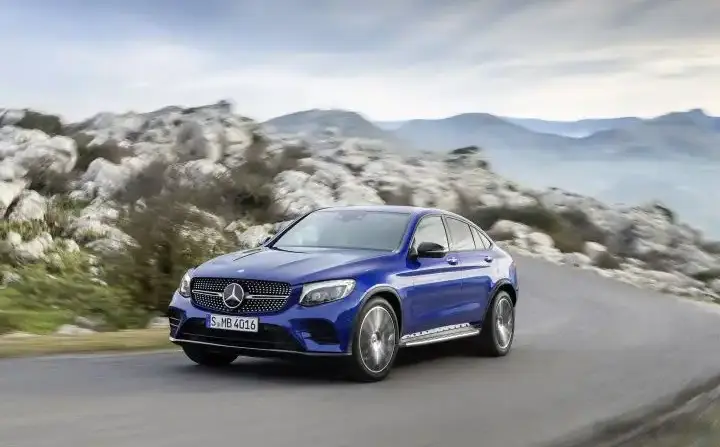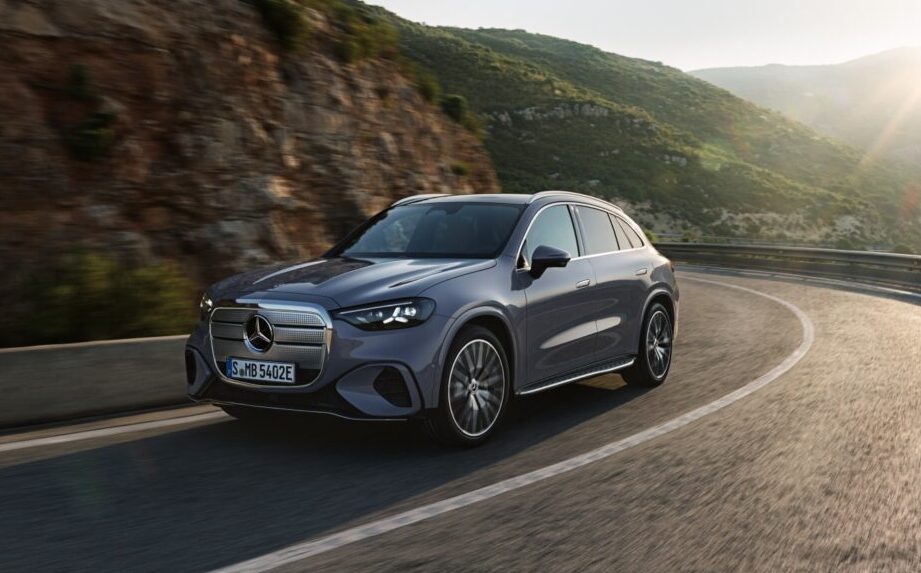
The Mercedes-Benz GLC 400 94 kWh (489 Hp) 4MATIC EQ Technology represents the fully electric variant of the redesigned X540 generation GLC SUV, slated for release in 2026. Positioned as a premium offering within the GLC lineup, it signifies Mercedes-Benz’s commitment to expanding its electric vehicle portfolio. This model is designed to compete directly with other luxury electric SUVs, offering a blend of performance, range, and advanced technology. The X540 generation marks a significant departure from previous GLC models, embracing a fully electric powertrain and incorporating the latest advancements in battery technology and driver-assistance systems.
Technical Specifications
| Brand | Mercedes-Benz |
| Model | GLC |
| Generation | GLC SUV (X540) |
| Type | GLC 400 94 kWh (489 Hp) 4MATIC EQ Technology |
| Start of production | 2026 |
| Powertrain Architecture | BEV (Electric Vehicle) |
| Body type | SUV |
| Seats | 5 |
| Doors | 5 |
| Fuel Type | Electricity |
| Acceleration 0 – 100 km/h | 4.3 sec |
| Acceleration 0 – 62 mph | 4.3 sec |
| Acceleration 0 – 60 mph | 4.1 sec |
| Maximum speed | 210 km/h (130.49 mph) |
| Weight-to-power ratio | 5 kg/Hp, 198.8 Hp/tonne |
| Weight-to-torque ratio | 3.1 kg/Nm, 325.2 Nm/tonne |
| Net (usable) battery capacity | 94 kWh |
| Battery voltage | 800 V |
| Battery technology | Lithium-ion (Li-Ion) |
| Battery location | Below the floor |
| Recuperation output | 300 kW |
| All-electric range | 568-715 km (352.94 – 444.28 mi) |
| Average Energy consumption | 14.9-18.8 kWh/100 km (23.98 – 30.26 kWh/100 mi) |
| MPGe | 141 – 111 |
| km/kWh | 6.7 – 5.3 |
| mi/kWh | 4.2 – 3.3 |
| Electric motor 1 location | Rear axle, Transverse |
| Electric motor 1 type | Synchronous |
| Electric motor 2 location | Front axle, Transverse |
| Electric motor 2 type | Synchronous |
| System power | 489 Hp |
| System torque | 800 Nm (590.05 lb.-ft.) |
| Kerb Weight | 2460 kg (5423.37 lbs.) |
| Max. weight | 3040 kg (6702.05 lbs.) |
| Max load | 580 kg (1278.68 lbs.) |
| Trunk (boot) space – minimum | 570 l (20.13 cu. ft.) |
| Trunk (boot) space – maximum | 1740 l (61.45 cu. ft.) |
| Max. roof load | 75 kg (165.35 lbs.) |
| Permitted trailer load with brakes (12%) | 2400 kg (5291.09 lbs.) |
| Permitted trailer load without brakes | 750 kg (1653.47 lbs.) |
| Permitted towbar download | 100 kg (220.46 lbs.) |
| Length | 4858 mm (191.26 in.) |
| Width | 1913 mm (75.31 in.) |
| Width including mirrors | 2089 mm (82.24 in.) |
| Height | 1649 mm (64.92 in.) |
| Wheelbase | 2972 mm (117.01 in.) |
| Front track | 1629 mm (64.13 in.) |
| Rear (Back) track | 1615 mm (63.58 in.) |
| Front overhang | 888 mm (34.96 in.) |
| Rear overhang | 998 mm (39.29 in.) |
| Minimum turning circle | 11.2 m (36.75 ft.) |
| Approach angle | 17.9° |
| Departure angle | 18.7° |
| Ramp-over angle | 12.3° |
| Drivetrain Architecture | One electric motor drives the front wheels, one electric motor drives the rear wheels. |
| Drive wheel | All wheel drive (4×4) |
| Number of gears | 2 |
| Gearbox type | Automatic transmission |
| Front suspension | Double wishbone, Transverse stabilizer, Air suspension |
| Rear suspension | Independent multi-link suspension, Air suspension, Transverse stabilizer |
| Front wheel tires | 235/55 R19; 235/50 R20; 235/45 R21 |
| Rear wheel tires | 255/50 R19; 265/45 R20; 265/40 R21 |
| Front wheel rims | 8J x 19; 8J x 20; 8J x 21 |
| Rear wheel rims | 9J x 19; 9.5J x 20; 9.5J x 21 |
Powertrain & Engine Architecture
The GLC 400 94 kWh utilizes a dual-motor, all-wheel-drive (4MATIC) powertrain. Each axle is driven by a synchronous electric motor, delivering a combined system output of 489 horsepower and 800 Nm (590.05 lb.-ft.) of torque. The vehicle features an 800-volt architecture, enabling faster charging times compared to older 400-volt systems. The 94 kWh lithium-ion battery pack is positioned under the floor, contributing to a low center of gravity and optimized weight distribution. The battery’s advanced thermal management system ensures consistent performance and longevity. Regenerative braking, with a recuperation output of 300 kW, captures energy during deceleration, further extending the vehicle’s range.
Driving Characteristics
The dual-motor setup provides instant torque and brisk acceleration, achieving 0-60 mph in approximately 4.1 seconds. The all-wheel-drive system ensures confident handling in various weather conditions. The two-speed automatic transmission optimizes efficiency at both low and high speeds. While specific gear ratios haven’t been publicly released, the transmission is designed to maximize the electric motors’ efficiency and deliver a smooth driving experience. Compared to potential future higher-performance AMG variants, the GLC 400 prioritizes a balance between performance and efficiency, offering a more accessible and comfortable driving experience.
Equipment & Trim Levels
Details regarding specific trim levels for the GLC 400 94 kWh are still emerging. However, it is expected to come standard with a comprehensive suite of technology and comfort features, including a large touchscreen infotainment system, a digital instrument cluster, premium upholstery, and advanced driver-assistance systems. Optional extras are likely to include features such as a panoramic sunroof, upgraded audio system, and more sophisticated driver-assistance packages. The interior design will likely follow Mercedes-Benz’s current design language, emphasizing luxury and modern aesthetics.
Chassis & Braking
The GLC 400 94 kWh features a sophisticated suspension system, incorporating double wishbones at the front and an independent multi-link setup at the rear. Air suspension is standard, providing adjustable ride height and enhanced comfort. The vehicle is equipped with a comprehensive braking system, including ABS (Anti-lock braking system) and 4-wheel steering (4WS, active rear steering) for improved agility and stability. Tire sizes vary depending on the chosen wheel size, ranging from 235/55 R19 to 265/40 R21.
Market Reception & Comparison
As a 2026 model, the GLC 400 94 kWh has yet to undergo extensive market testing and critical review. However, it is expected to be well-received by consumers seeking a luxury electric SUV with a competitive range and performance. Compared to other electric SUVs in its class, such as the BMW iX and the Audi e-tron, the GLC 400 aims to offer a compelling combination of value, technology, and driving dynamics. Its fuel economy, measured in kWh/100km and MPGe, is expected to be competitive within the electric SUV segment.
Legacy
The long-term reliability of the GLC 400 94 kWh’s powertrain remains to be seen, but Mercedes-Benz has a strong track record of building durable and reliable vehicles. The 800-volt architecture and advanced battery management system are expected to contribute to the battery’s longevity. In the used car market, the X540 generation GLC 400 is likely to be sought after for its combination of luxury, performance, and electric efficiency, potentially holding its value well compared to traditional internal combustion engine counterparts.