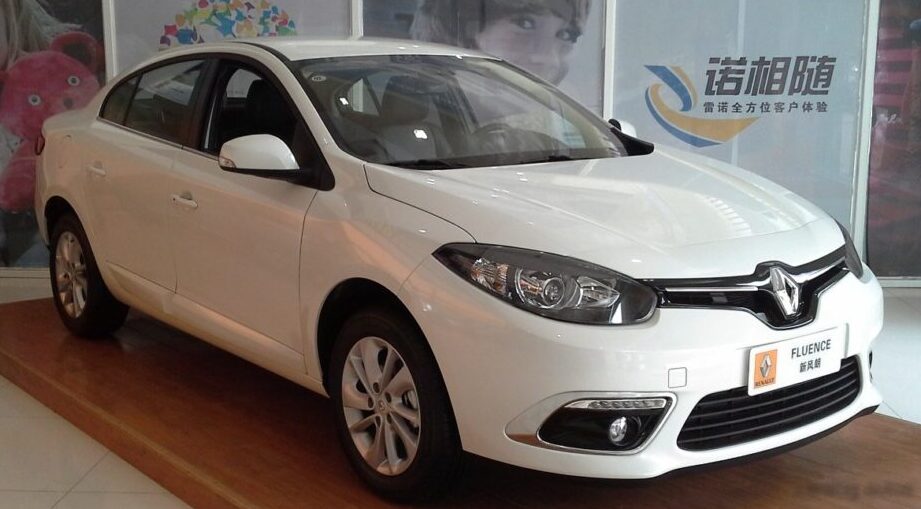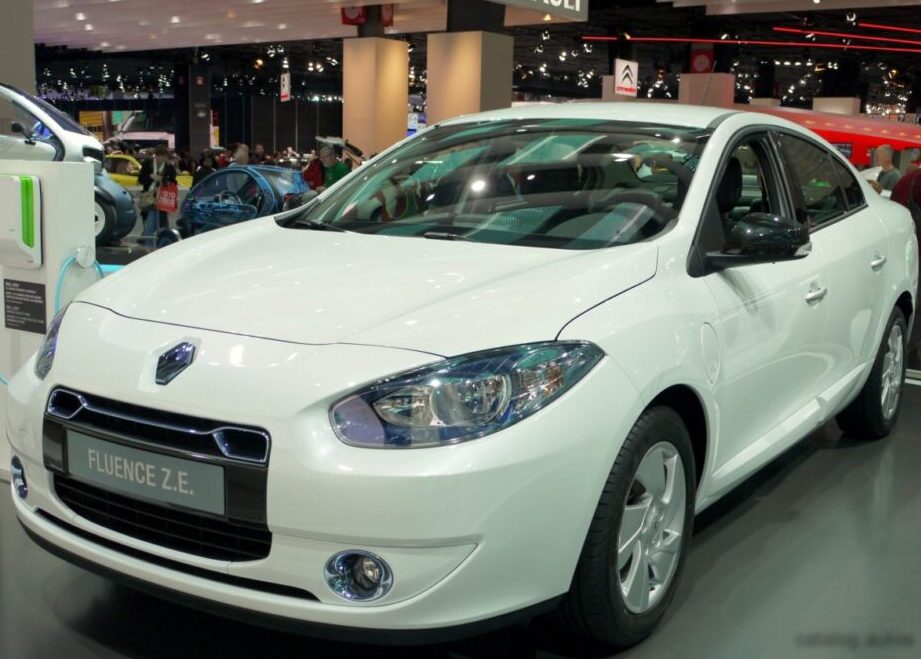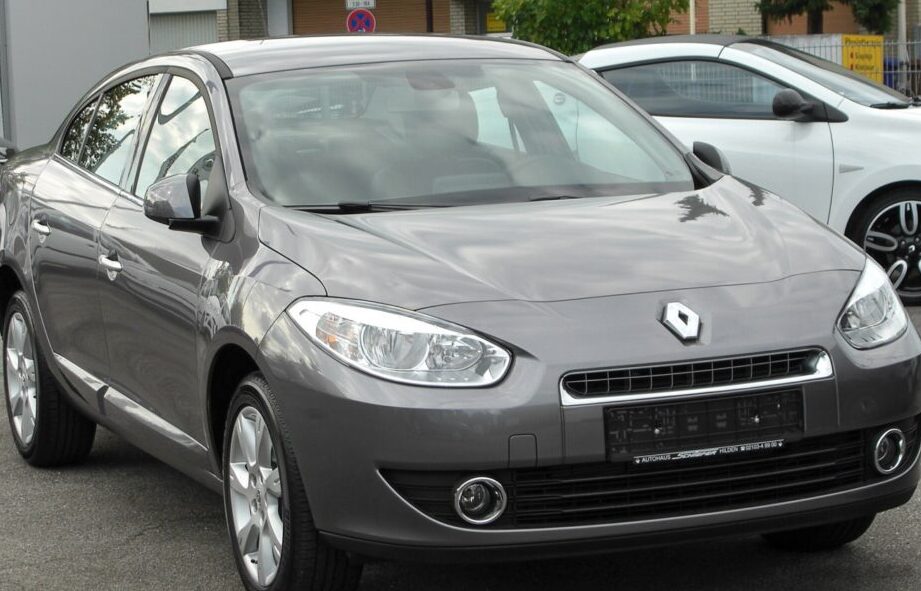
The Renault Fluence 2.0 16V, producing 140 horsepower, was a significant variant within the Fluence lineup, manufactured between November 2009 and October 2012. Positioned as a mid-range offering, it aimed to provide a balance between performance and fuel efficiency for buyers in markets where the Fluence was sold, particularly in Eastern Europe, Latin America, and parts of North Africa. The Fluence itself was Renault’s entry into the compact sedan segment, designed to replace the Megane Sedan in many international markets. It shared its platform – the B9K – with the third-generation Renault Megane hatchback, but featured unique styling and a longer wheelbase to maximize rear passenger space. This variant, with its 2.0-liter engine, represented a step up in performance from the base 1.6-liter models.
Technical Specifications
| Brand | Renault |
| Model | Fluence |
| Generation | Fluence |
| Type (Engine) | 2.0 16V (140 Hp) |
| Start of production | November, 2009 |
| End of production | October, 2012 |
| Powertrain Architecture | Internal Combustion engine |
| Body type | Sedan |
| Seats | 5 |
| Doors | 4 |
| Fuel consumption (urban) | 10.5 l/100 km (22.4 US mpg, 26.9 UK mpg, 9.5 km/l) |
| Fuel consumption (extra urban) | 6.1 l/100 km (38.6 US mpg, 46.3 UK mpg, 16.4 km/l) |
| Fuel consumption (combined) | 7.7 l/100 km (30.5 US mpg, 36.7 UK mpg, 13 km/l) |
| Fuel Type | Petrol (Gasoline) |
| Acceleration 0 – 100 km/h | 10.4 sec |
| Acceleration 0 – 62 mph | 10.4 sec |
| Acceleration 0 – 60 mph | 9.9 sec |
| Maximum speed | 195 km/h (121.17 mph) |
| Emission standard | Euro 5 |
| Weight-to-power ratio | 9.2 kg/Hp, 108.7 Hp/tonne |
| Weight-to-torque ratio | 6.6 kg/Nm, 151.4 Nm/tonne |
| Power | 140 Hp @ 6000 rpm |
| Power per litre | 70.1 Hp/l |
| Torque | 195 Nm @ 3750 rpm (143.82 lb.-ft. @ 3750 rpm) |
| Engine layout | Front, Transverse |
| Engine Model/Code | M4R |
| Engine displacement | 1997 cm3 (121.86 cu. in.) |
| Number of cylinders | 4 |
| Engine configuration | Inline |
| Number of valves per cylinder | 4 |
| Fuel injection system | Multi-port manifold injection |
| Engine aspiration | Naturally aspirated engine |
| Valvetrain | DOHC |
| Engine oil capacity | 4.4 l (4.65 US qt | 3.87 UK qt) |
| Coolant | 6.8 l (7.19 US qt | 5.98 UK qt) |
| Kerb Weight | 1288 kg (2839.55 lbs.) |
| Max. weight | 1785 kg (3935.25 lbs.) |
| Max load | 497 kg (1095.7 lbs.) |
| Fuel tank capacity | 60 l (15.85 US gal | 13.2 UK gal) |
| Drivetrain Architecture | The Internal combustion engine (ICE) drives the front wheels of the vehicle. |
| Drive wheel | Front wheel drive |
| Number of gears and type of gearbox | 6 gears, manual transmission |
| Front suspension | Independent type McPherson |
| Rear suspension | Elastic beam |
| Assisting systems | ABS (Anti-lock braking system) |
| Steering type | Steering rack and pinion |
| Power steering | Electric Steering |
| Tires size | 205/65 R15; 205/60 R16; 205/55 R17 |
| Wheel rims size | 15; 16; 17 |
Powertrain & Engine Architecture
The heart of the Fluence 2.0 16V is the Renault M4R engine, a 1.997-liter (121.86 cubic inches) inline-four cylinder gasoline engine. This engine utilizes a multi-point fuel injection system and a double overhead camshaft (DOHC) valvetrain, operating with four valves per cylinder. The M4R engine was a relatively common powerplant within the Renault-Nissan alliance, also finding application in various other models. It’s known for its generally robust construction, though early versions were sometimes criticized for rough idling. The 140 horsepower peak is achieved at 6000 rpm, while the 195 Nm (143.82 lb-ft) of torque is delivered at 3750 rpm. The engine’s design prioritizes a broad torque curve for everyday drivability rather than outright peak power. The standard transmission for this variant was a six-speed manual gearbox, providing precise shifts and contributing to the car’s overall efficiency. While an automatic transmission was offered in some markets, it wasn’t as common with the 2.0L engine.
Driving Characteristics
The Fluence 2.0 16V with the six-speed manual transmission offered a noticeably more engaging driving experience than the base 1.6-liter models. Acceleration from 0 to 100 km/h (0-62 mph) took approximately 10.4 seconds, making it competitive within its class. The engine provided sufficient power for highway cruising and overtaking maneuvers. The six-speed gearbox allowed for relatively tight ratios, keeping the engine within its optimal power band during spirited driving. Compared to the 1.6-liter Fluence, the 2.0-liter version felt more responsive and less strained when fully loaded or climbing hills. While not a sports sedan, the 2.0L Fluence offered a comfortable and capable driving experience for everyday use. The steering was light and precise, making it easy to maneuver in urban environments.
Equipment & Trim Levels
The 2.0 16V Fluence typically came equipped with a reasonable level of standard features. These included air conditioning, power windows, power door locks, and a basic audio system with CD player and MP3 compatibility. Higher trim levels added features such as alloy wheels, fog lights, a more advanced audio system with steering wheel-mounted controls, and automatic climate control. Interior upholstery was typically cloth, with options for leather seats on higher-spec models. Safety features included ABS brakes, front airbags, and seatbelt pretensioners. Optional extras often included a sunroof, parking sensors, and a navigation system.
Chassis & Braking
The Fluence utilized a McPherson strut independent suspension at the front and an elastic beam (torsion beam) suspension at the rear. This setup provided a good balance between ride comfort and handling. The front suspension geometry was tuned for stability and predictable handling. The rear elastic beam suspension was a cost-effective solution that offered adequate performance for most driving conditions. Braking duties were handled by disc brakes at the front and drum brakes at the rear on most variants. ABS (Anti-lock Braking System) was standard, enhancing braking performance and safety. Steering was rack and pinion with electric power assistance, providing light and responsive steering feel.
Market Reception & Comparison
The Renault Fluence 2.0 16V was generally well-received by automotive critics as a practical and comfortable sedan. It was praised for its spacious interior, comfortable ride, and reasonable fuel economy. However, some reviewers noted that the engine lacked the refinement of some of its competitors. Compared to the 1.6-liter Fluence, the 2.0-liter version offered a significant performance upgrade, but at the cost of slightly higher fuel consumption. Against rivals like the Toyota Corolla and Ford Focus, the Fluence offered a competitive package in terms of price and features, but often lagged behind in terms of brand prestige and perceived reliability. Fuel economy averaged around 7.7 l/100 km (30.5 US mpg), which was respectable for its class.
Legacy
The Renault Fluence 2.0 16V has proven to be a relatively reliable vehicle in the used car market. The M4R engine, while not without its quirks, is generally durable and can withstand high mileage with proper maintenance. Common issues include occasional rough idling and potential for oil leaks as the engine ages. The six-speed manual transmission is also known for its robustness. Parts availability is generally good, and maintenance costs are reasonable. Today, the Fluence 2.0 16V represents a good value proposition for buyers seeking an affordable and practical compact sedan. Its spacious interior and comfortable ride continue to appeal to those looking for a reliable and economical vehicle.