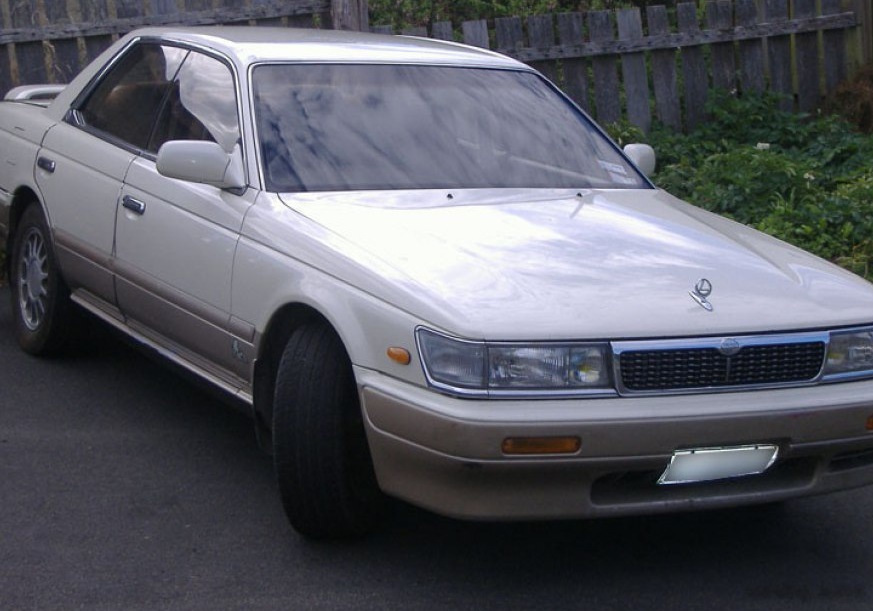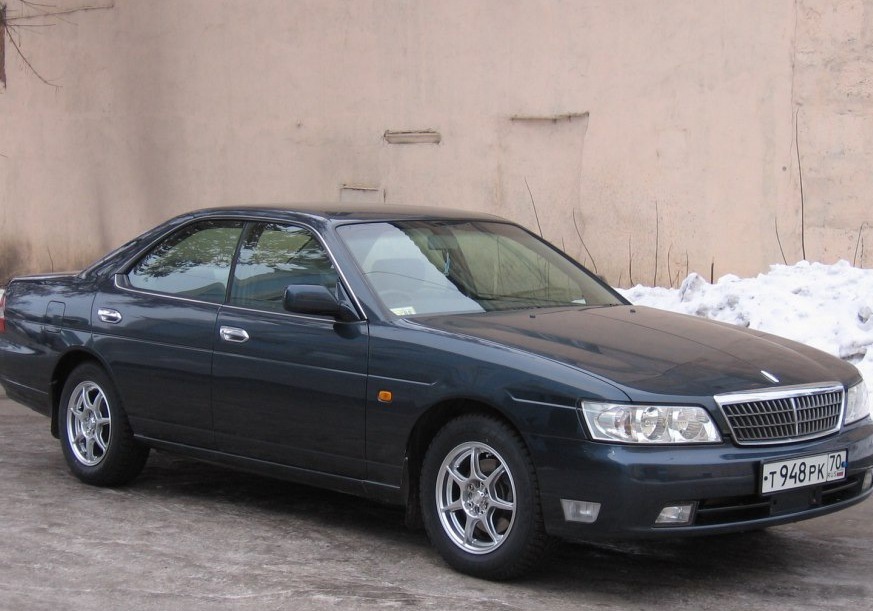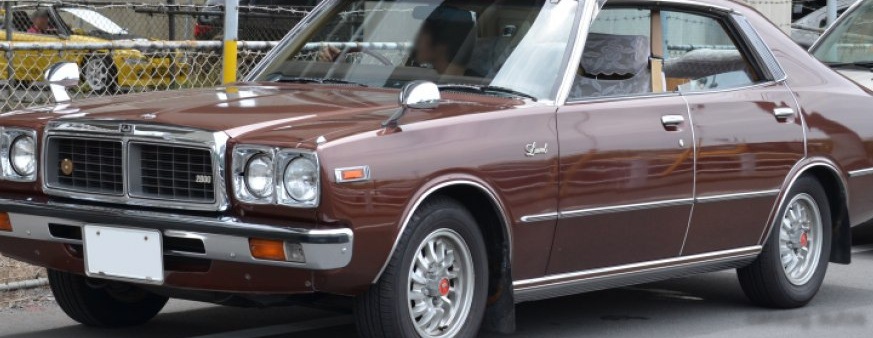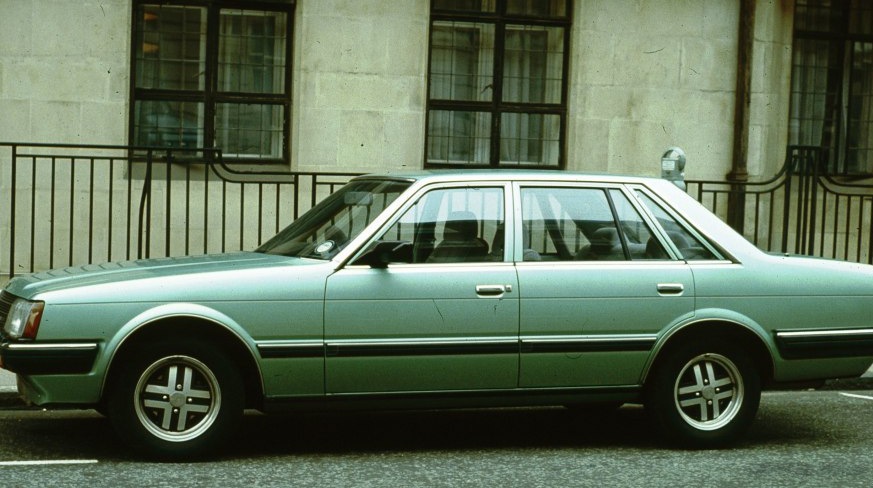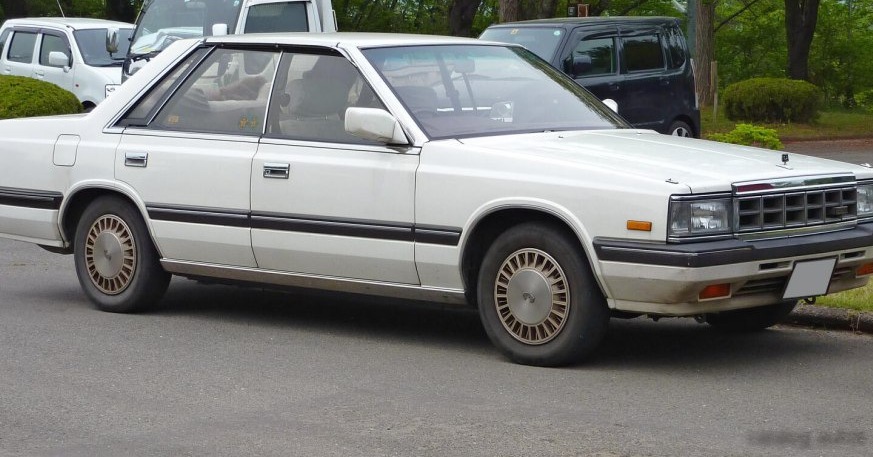
The Nissan Laurel JC32, produced between 1985 and 1987, represented a continuation of Nissan’s long-running Laurel lineage, a vehicle historically favored for its comfort and understated styling within the Japanese domestic market (JDM). The JC32 generation, positioned as a mid-size sedan, aimed to blend practicality with a degree of luxury, appealing to a broad customer base. This particular variant, equipped with the 2.4-liter L24 engine producing 128 horsepower, occupied a middle ground within the JC32 lineup, offering a balance between performance and fuel economy. It served as a more accessible alternative to the higher-performance turbocharged models and the more economical smaller-displacement engines.
Technical Specifications
| Brand | Nissan |
| Model | Laurel |
| Generation | Laurel (JC32) |
| Type (Engine) | 2.4 (128 Hp) |
| Start of production | 1985 |
| End of production | 1987 |
| Powertrain Architecture | Internal Combustion engine |
| Body type | Sedan |
| Seats | 5 |
| Doors | 4 |
| Fuel consumption (urban) | 14.5 l/100 km (16.2 US mpg, 19.5 UK mpg) |
| Fuel consumption (extra urban) | 7.9 l/100 km (29.8 US mpg, 35.8 UK mpg) |
| Fuel Type | Petrol (Gasoline) |
| Maximum speed | 195 km/h (121.17 mph) |
| Weight-to-power ratio | 9.8 kg/Hp |
| Weight-to-torque ratio | 6.9 kg/Nm |
| Power | 128 Hp @ 5600 rpm |
| Power per litre | 53.5 Hp/l |
| Torque | 180 Nm @ 4400 rpm (132.76 lb.-ft. @ 4400 rpm) |
| Engine layout | Front, Longitudinal |
| Engine Model/Code | L24 |
| Engine displacement | 2393 cm3 (146.03 cu. in.) |
| Number of cylinders | 6 |
| Engine configuration | Inline |
| Cylinder Bore | 83 mm (3.27 in.) |
| Piston Stroke | 73.7 mm (2.9 in.) |
| Compression ratio | 8.9:1 |
| Number of valves per cylinder | 2 |
| Fuel injection system | Multi-port manifold injection |
| Engine aspiration | Naturally aspirated engine |
| Valvetrain | SOHC |
| Engine oil capacity | 4.4 l (4.65 US qt | 3.87 UK qt) |
| Coolant capacity | 9.7 l (10.25 US qt | 8.53 UK qt) |
| Kerb Weight | 1250 kg (2755.78 lbs.) |
| Max. weight | 1805 kg (3979.34 lbs.) |
| Max load | 555 kg (1223.57 lbs.) |
| Trunk (boot) space | 397 l (14.02 cu. ft.) |
| Fuel tank capacity | 65 l (17.17 US gal | 14.3 UK gal) |
| Length | 4650 mm (183.07 in.) |
| Width | 1690 mm (66.54 in.) |
| Height | 1425 mm (56.1 in.) |
| Wheelbase | 2670 mm (105.12 in.) |
| Front track | 1410 mm (55.51 in.) |
| Rear track | 1390 mm (54.72 in.) |
| Minimum turning circle | 11 m (36.09 ft.) |
| Drivetrain | Rear wheel drive |
| Number of gears | 5 gears, manual transmission |
| Front suspension | Independent, McPherson with coil spring and anti-roll bar |
| Rear suspension | Trailing arm |
| Front brakes | Ventilated discs |
| Rear brakes | Drum |
| Steering type | Steering rack and pinion |
| Power steering | Hydraulic |
| Tires size | 185/70 R14 |
| Wheel rims size | 5.5J x 14 |
Powertrain & Engine Architecture
The heart of this Laurel variant is the L24 engine, a 2.4-liter inline-six cylinder powerplant. This engine, a staple of Nissan’s offerings throughout the 1970s and 80s, is known for its smoothness and relative durability. The L24 utilizes a single overhead camshaft (SOHC) valvetrain, operating two valves per cylinder. Fuel delivery is managed by a multi-port fuel injection system, a significant upgrade over earlier carbureted versions, contributing to improved fuel efficiency and throttle response. The engine’s 8.9:1 compression ratio was a compromise between performance and the fuel quality available in the Japanese market. The JC32 2.4 was exclusively offered with a five-speed manual transmission, providing drivers with full control over the engine’s powerband. This transmission was chosen to complement the engine’s characteristics, offering a balance between spirited driving and comfortable cruising.
Driving Characteristics
The 128 horsepower and 180 Nm (132.76 lb-ft) of torque produced by the L24 engine in the JC32 Laurel provided adequate, though not exhilarating, performance. Acceleration was respectable for the era, but the car wasn’t designed for outright speed. The five-speed manual transmission allowed drivers to keep the engine in its optimal power range, making overtaking maneuvers manageable. Compared to the turbocharged Laurel variants, this 2.4-liter model felt less urgent, but it offered a more linear power delivery and a more predictable driving experience. The rear-wheel-drive configuration contributed to a balanced feel, although it lacked the sophistication of more modern traction control systems. The gear ratios were tuned for a blend of fuel economy and usability, prioritizing comfortable highway cruising over aggressive acceleration.
Equipment & Trim Levels
The JC32 Laurel 2.4 typically came equipped with a reasonable level of standard features for its time. These included power steering, a basic audio system, and cloth upholstery. Higher trim levels, often denoted by suffixes like “Super DX” or “Medallion,” added features such as electric windows, central locking, and upgraded interior trim. The dashboard layout was functional and straightforward, with clearly marked gauges and controls. Optional extras included air conditioning, a sunroof, and upgraded audio systems. The interior materials were generally durable, though not particularly luxurious, reflecting the car’s positioning as a mid-range offering.
Chassis & Braking
The JC32 Laurel utilized a traditional body-on-frame construction, providing a robust and durable chassis. The front suspension employed an independent McPherson strut setup with coil springs and an anti-roll bar, offering a comfortable ride and reasonable handling. The rear suspension featured a trailing arm design, which was simpler and more cost-effective but less sophisticated than independent setups. Braking duties were handled by ventilated discs at the front and drum brakes at the rear. While adequate for normal driving conditions, the braking system lacked the stopping power and modulation of more modern systems. The steering was a rack-and-pinion setup, providing precise and responsive steering feel.
Market Reception & Comparison
The Nissan Laurel JC32 2.4 was generally well-received in the Japanese market as a practical and reliable family sedan. Critics praised its comfortable ride, spacious interior, and smooth engine. However, some noted that its performance was not as exciting as that of its turbocharged counterparts. Compared to other models in the Laurel lineup, the 2.4-liter version offered a compelling value proposition, providing a good balance between performance, fuel economy, and price. It was often seen as a sensible choice for buyers who prioritized practicality and reliability over outright performance. Fuel economy figures were respectable for the time, averaging around 14.5 l/100km in urban driving and 7.9 l/100km on the highway.
Legacy
The Nissan Laurel JC32 2.4, while not the most sought-after variant of the JC32 generation, remains a respected and reliable classic car. The L24 engine is known for its durability and relative simplicity, making it a relatively easy engine to maintain and repair. Today, these cars are increasingly appreciated by enthusiasts for their classic styling and straightforward mechanicals. Finding well-maintained examples can be challenging, as many have been subjected to years of use. However, the JC32 Laurel 2.4 continues to offer a glimpse into a bygone era of Japanese automotive engineering, representing a blend of comfort, practicality, and understated style.