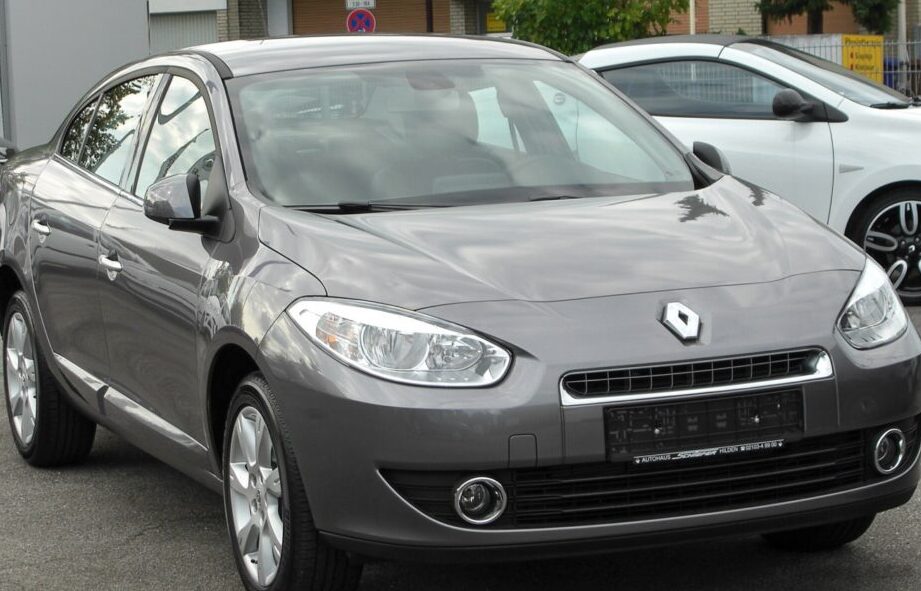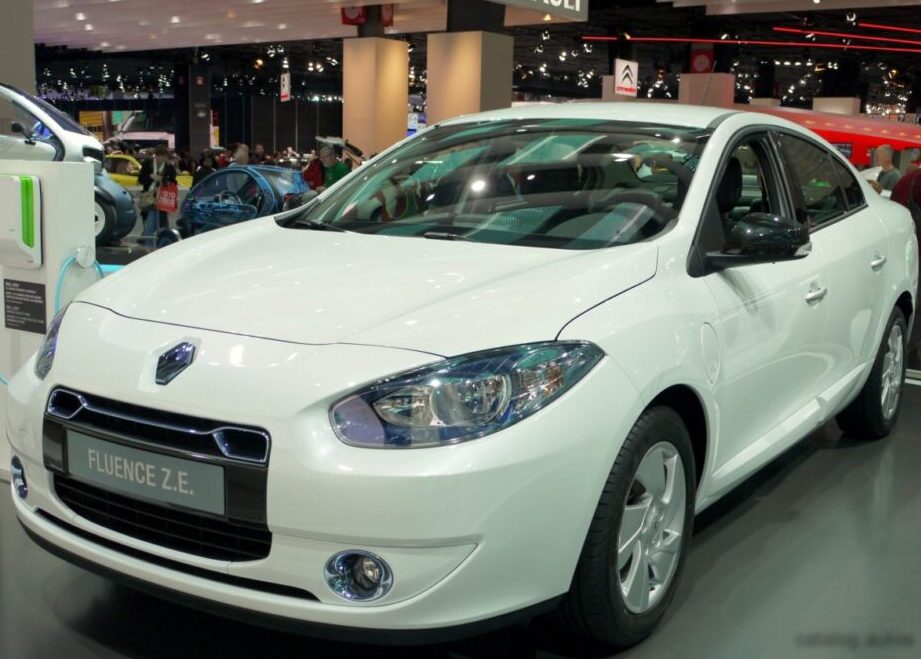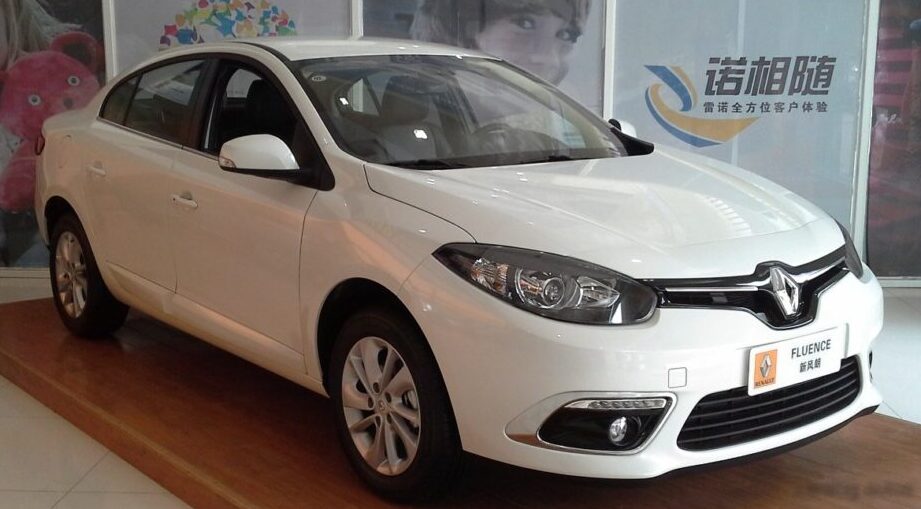
The Renault Fluence, particularly the facelifted version introduced in 2012, represented Renault’s entry into the competitive compact sedan segment, primarily aimed at markets outside of Europe where sedans retained significant popularity. The 1.5 dCi variant, producing 110 horsepower, was a key offering, balancing fuel efficiency with acceptable performance. This model year saw updates to the Fluence’s exterior styling and interior appointments, aiming to modernize the vehicle and broaden its appeal. The Fluence, built upon the shared Dacia/Renault platform, served as a more conventional sedan alternative to the Megane hatchback, particularly in regions like Turkey, Russia, and Latin America.
Technical Specifications
| Brand | Renault |
| Model | Fluence |
| Generation | Fluence (facelift 2012) |
| Type (Engine) | 1.5 dCi (110 Hp) |
| Start of production | 2012 |
| Powertrain Architecture | Internal Combustion engine |
| Body type | Sedan |
| Seats | 5 |
| Doors | 4 |
| Fuel consumption (urban) | 5.6 l/100 km (42 US mpg, 50.4 UK mpg, 17.9 km/l) |
| Fuel consumption (extra urban) | 4 l/100 km (58.8 US mpg, 70.6 UK mpg, 25 km/l) |
| Fuel consumption (combined) | 4.6 l/100 km (51.1 US mpg, 61.4 UK mpg, 21.7 km/l) |
| Fuel Type | Diesel |
| Acceleration 0 – 100 km/h | 11 sec |
| Acceleration 0 – 62 mph | 11 sec |
| Acceleration 0 – 60 mph | 10.5 sec |
| Maximum speed | 185 km/h (114.95 mph) |
| Emission standard | Euro 5 |
| Weight-to-power ratio | 11.9 kg/Hp, 84.2 Hp/tonne |
| Weight-to-torque ratio | 5.4 kg/Nm, 183.6 Nm/tonne |
| Power | 110 Hp @ 4000 rpm |
| Power per litre | 75.3 Hp/l |
| Torque | 240 Nm @ 1750 rpm (177.01 lb.-ft. @ 1750 rpm) |
| Engine layout | Front, Transverse |
| Engine Model/Code | K9K |
| Engine displacement | 1461 cm3 (89.16 cu. in.) |
| Number of cylinders | 4 |
| Engine configuration | Inline |
| Cylinder Bore | 76 mm (2.99 in.) |
| Piston Stroke | 80.5 mm (3.17 in.) |
| Compression ratio | 15.2:1 |
| Number of valves per cylinder | 2 |
| Fuel injection system | Diesel Commonrail |
| Engine aspiration | Turbocharger, Intercooler |
| Engine oil capacity | 4.5 l (4.76 US qt | 3.96 UK qt) |
| Coolant capacity | 6.5 l (6.87 US qt | 5.72 UK qt) |
| Kerb Weight | 1307 kg (2881.44 lbs.) |
| Max. weight | 1801 kg (3970.53 lbs.) |
| Max load | 494 kg (1089.08 lbs.) |
| Trunk (boot) space – minimum | 530 l (18.72 cu. ft.) |
| Fuel tank capacity | 60 l (15.85 US gal | 13.2 UK gal) |
| Length | 4622 mm (181.97 in.) |
| Width | 1809 mm (71.22 in.) |
| Height | 1479 mm (58.23 in.) |
| Wheelbase | 2702 mm (106.38 in.) |
| Front track | 1541 mm (60.67 in.) |
| Rear track | 1563 mm (61.54 in.) |
| Drivetrain Architecture | The Internal combustion engine (ICE) drives the front wheels of the vehicle. |
| Drive wheel | Front wheel drive |
| Number of gears and type of gearbox | 6 gears, manual transmission |
| Front suspension | Independent type McPherson |
| Rear suspension | Elastic beam |
| Front brakes | Ventilated discs |
| Rear brakes | Disc |
| Assisting systems | ABS (Anti-lock braking system) |
| Steering type | Steering rack and pinion |
| Tires size | 205/65 R15; 205/60 R16; 205/55 R17 |
| Wheel rims size | 6.5J x 15; 6.5J x 16; 7.0J x 17 |
Powertrain & Engine Architecture
The heart of the Fluence 1.5 dCi is the K9K engine, a member of Renault’s widely used family of small-displacement diesel engines. This 1461cc inline-four cylinder engine utilizes a common rail direct injection system, delivering fuel at extremely high pressures for optimized combustion. The engine is turbocharged and intercooled, enhancing power output and efficiency. The K9K engine is known for its relatively simple design and robust construction. The 110 horsepower variant featured a slightly different engine mapping compared to other K9K outputs. The engine’s valvetrain consists of two valves per cylinder (SOHC). The 6-speed manual transmission was the standard offering, chosen for its balance of fuel economy and driver engagement. The transmission’s gear ratios were tuned to maximize the engine’s torque output, providing reasonable acceleration and highway cruising ability.
Driving Characteristics
The 1.5 dCi 110 hp Fluence offered a comfortable, if not particularly sporty, driving experience. Acceleration from 0-60 mph took around 10.5 seconds, making it adequate for everyday driving but not exceptionally quick. The engine’s 240 Nm (177 lb-ft) of torque, available from 1750 rpm, provided sufficient pulling power for overtaking and climbing hills. The manual transmission allowed for precise gear selection, and the relatively long gearing contributed to good fuel economy. Compared to higher-output versions of the Fluence, such as those with more powerful diesel engines or the petrol options, the 1.5 dCi felt less responsive. However, it excelled in fuel efficiency, making it a practical choice for drivers prioritizing economy.
Equipment & Trim Levels
The Fluence 1.5 dCi typically came with a reasonable level of standard equipment. Base models included air conditioning, power windows, central locking, and an audio system with USB connectivity. Higher trim levels added features such as alloy wheels, fog lights, cruise control, and a more sophisticated infotainment system. Interior upholstery was typically cloth, with options for leather seats on higher-spec models. Safety features included ABS brakes, front airbags, and seatbelt pretensioners. Optional extras included a sunroof, rear parking sensors, and a navigation system.
Chassis & Braking
The Fluence utilized a McPherson strut front suspension and an elastic beam rear suspension. This setup provided a comfortable ride quality, absorbing bumps and imperfections in the road surface effectively. The front brakes were ventilated discs, offering good stopping power, while the rear brakes were solid discs. ABS (Anti-lock Braking System) was standard, enhancing safety during emergency braking situations. The steering was a rack and pinion system, providing precise and responsive handling. Tire sizes varied depending on the trim level, ranging from 205/65 R15 to 205/55 R17.
Market Reception & Comparison
The Renault Fluence 1.5 dCi was generally well-received by automotive critics for its fuel efficiency, comfortable ride, and spacious interior. However, it was often criticized for its somewhat bland styling and lack of driving excitement. Compared to other compact sedans in its class, such as the Toyota Corolla and Honda Civic, the Fluence offered a more affordable price point but lacked the same level of refinement and brand prestige. Within the Fluence lineup, the 1.5 dCi was positioned as the entry-level diesel option, appealing to budget-conscious buyers who prioritized fuel economy. The petrol versions offered more power but at the expense of fuel efficiency, while higher-output diesel variants provided more performance but came with a higher price tag.
Legacy
The Renault Fluence 1.5 dCi has proven to be a relatively reliable vehicle, with the K9K engine being known for its durability. However, like all diesel engines, it is susceptible to issues related to the fuel injection system and turbocharger. Regular maintenance, including oil changes and filter replacements, is crucial for ensuring long-term reliability. In the used car market, the Fluence 1.5 dCi remains a popular choice for buyers seeking an affordable and fuel-efficient sedan. Its simple mechanical design and readily available parts make it relatively easy and inexpensive to maintain. While it may not offer the same level of sophistication as some of its competitors, the Fluence 1.5 dCi provides a practical and economical transportation solution.