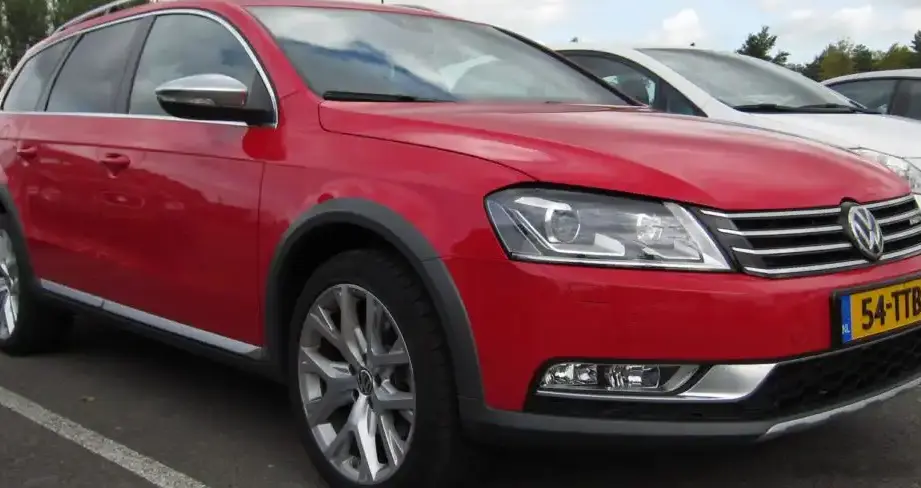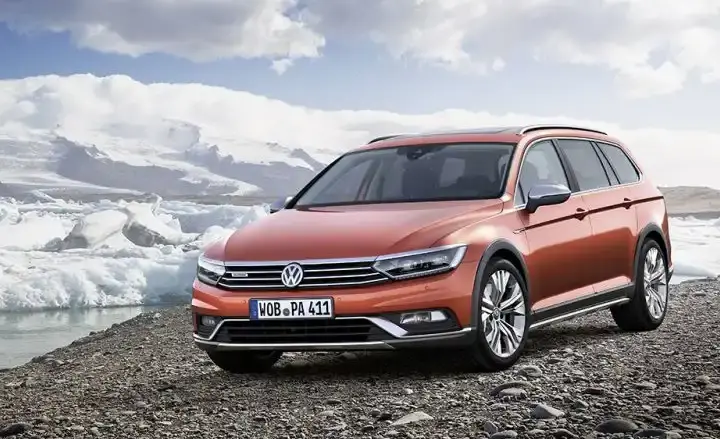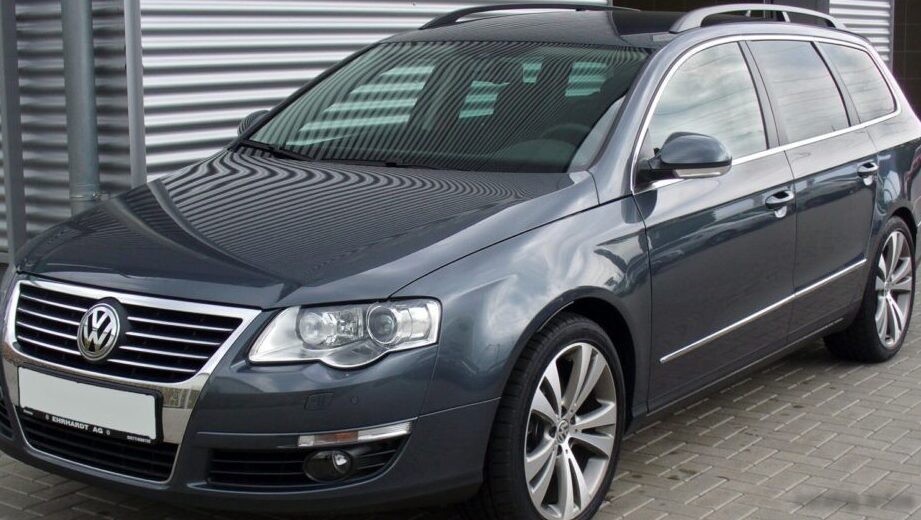
The Volkswagen Passat Variant (B6) 2.0 TDI producing 110 horsepower was a mainstay of the Passat range in Europe from October 2008 to July 2010. Positioned as a fuel-efficient and practical option, it catered to buyers prioritizing economy and space over outright performance. This variant occupied a mid-range slot within the B6 Passat lineup, sitting below the more powerful petrol and higher-output diesel models, and above the base-level engine options. It was a key component of Volkswagen’s strategy to offer a versatile family vehicle with a focus on diesel efficiency, particularly important in the European market where diesel fuel was more prevalent and often incentivized.
Technical Specifications
| Brand | Volkswagen |
| Model | Passat |
| Generation | Passat Variant (B6) |
| Type (Engine) | 2.0 TDI (110 Hp) |
| Start of production | October, 2008 |
| End of production | July, 2010 |
| Powertrain Architecture | Internal Combustion engine |
| Body type | Station wagon (estate) |
| Seats | 5 |
| Doors | 5 |
| Fuel consumption (urban) | 7.1 l/100 km (33.1 US mpg, 39.8 UK mpg, 14.1 km/l) |
| Fuel consumption (extra urban) | 4.7 l/100 km (50 US mpg, 60.1 UK mpg, 21.3 km/l) |
| Fuel consumption (combined) | 5.6 l/100 km (42 US mpg, 50.4 UK mpg, 17.9 km/l) |
| CO2 emissions | 146 g/km |
| Fuel Type | Diesel |
| Acceleration 0 – 100 km/h | 12 sec |
| Acceleration 0 – 62 mph | 12 sec |
| Acceleration 0 – 60 mph | 11.4 sec |
| Maximum speed | 190 km/h (118.06 mph) |
| Emission standard | Euro 5 |
| Weight-to-power ratio | 13.5 kg/Hp, 74.2 Hp/tonne |
| Weight-to-torque ratio | 5.9 kg/Nm, 168.7 Nm/tonne |
| Power | 110 Hp @ 4200 rpm |
| Power per litre | 55.9 Hp/l |
| Torque | 250 Nm @ 1500-2500 rpm (184.39 lb.-ft. @ 1500-2500 rpm) |
| Engine layout | Front, Transverse |
| Engine Model/Code | CBDC, CEHC, CLCA |
| Engine displacement | 1968 cm3 (120.09 cu. in.) |
| Number of cylinders | 4 |
| Engine configuration | Inline |
| Cylinder Bore | 81 mm (3.19 in.) |
| Piston Stroke | 95.5 mm (3.76 in.) |
| Number of valves per cylinder | 4 |
| Fuel injection system | Diesel Commonrail |
| Engine aspiration | Turbocharger, Intercooler |
| Valvetrain | DOHC |
| Engine oil capacity | 4.3 l (4.54 US qt | 3.78 UK qt) |
| Kerb Weight | 1482 kg (3267.25 lbs.) |
| Max. weight | 2160 kg (4761.98 lbs.) |
| Max load | 678 kg (1494.73 lbs.) |
| Trunk (boot) space – minimum | 603 l (21.29 cu. ft.) |
| Trunk (boot) space – maximum | 1731 l (61.13 cu. ft.) |
| Fuel tank capacity | 70 l (18.49 US gal | 15.4 UK gal) |
| Max. roof load | 100 kg (220.46 lbs.) |
| Permitted trailer load with brakes (8%) | 1700 kg (3747.86 lbs.) |
| Permitted trailer load with brakes (12%) | 1500 kg (3306.93 lbs.) |
| Permitted trailer load without brakes | 750 kg (1653.47 lbs.) |
| Permitted towbar download | 90 kg (198.42 lbs.) |
| Length | 4774 mm (187.95 in.) |
| Width | 1820 mm (71.65 in.) |
| Width including mirrors | 1991 mm (78.39 in.) |
| Height | 1517 mm (59.72 in.) |
| Wheelbase | 2709 mm (106.65 in.) |
| Front track | 1552 mm (61.1 in.) |
| Rear (Back) track | 1551 mm (61.06 in.) |
| Minimum turning circle | 11.4 m (37.4 ft.) |
| Drivetrain Architecture | The Internal combustion engine (ICE) drives the front wheels of the vehicle. |
| Drive wheel | Front wheel drive |
| Number of gears and type of gearbox | 5 gears, manual transmission |
| Front suspension | Spring Strut |
| Rear suspension | Coil spring |
| Front brakes | Ventilated discs |
| Rear brakes | Disc |
| Assisting systems | ABS (Anti-lock braking system) |
| Steering type | Steering rack and pinion |
| Tires size | 215/55 R16 |
| Wheel rims size | 6.5J x 16 |
Powertrain & Engine Architecture
The heart of this Passat Variant was the 2.0-liter four-cylinder diesel engine, available with engine codes CBDC, CEHC, and CLCA depending on the specific year and market. This engine belonged to Volkswagen’s common rail TDI (Turbocharged Direct Injection) family. The common rail system, operating at extremely high pressures, allowed for precise fuel metering and multiple injections per combustion cycle, optimizing efficiency and reducing emissions. The engine featured a turbocharger with an intercooler, boosting power output and improving throttle response. The double overhead camshaft (DOHC) valvetrain, with four valves per cylinder, further enhanced breathing and contributed to the engine’s overall performance. The 5-speed manual transmission was the standard offering, chosen for its simplicity and fuel efficiency. While an automatic transmission was available as an option, it was less common and often resulted in slightly reduced fuel economy.
Driving Characteristics
The 110 hp 2.0 TDI Passat Variant offered a comfortable and practical driving experience, prioritizing fuel economy over sporty performance. Acceleration from 0-60 mph took around 11.4 seconds, and top speed was limited to 118 mph. The engine delivered its peak torque of 250 Nm (184 lb-ft) between 1500 and 2500 rpm, providing adequate pulling power for everyday driving and highway cruising. The 5-speed manual transmission was well-matched to the engine’s characteristics, offering smooth gear changes and a reasonable spread of ratios. Compared to the more powerful 140 hp or 170 hp TDI variants, this engine felt less responsive, particularly when overtaking or climbing hills. However, it excelled in fuel efficiency, consistently achieving combined fuel economy figures of around 42 US mpg. The suspension provided a comfortable ride, absorbing bumps and imperfections in the road surface effectively.
Equipment & Trim Levels
The 110 hp 2.0 TDI Passat Variant typically came equipped with a reasonable level of standard features. These included air conditioning, power windows, central locking, and an audio system. Higher trim levels, such as Trendline or Comfortline, added features like alloy wheels, a multi-function steering wheel, cruise control, and upgraded upholstery. Optional extras included a sunroof, navigation system, and parking sensors. Interior upholstery was typically cloth, with leather options available on higher-spec models. The dashboard layout was functional and straightforward, with clear instrumentation and intuitive controls.
Chassis & Braking
The B6 Passat Variant featured a MacPherson strut front suspension and a multi-link rear suspension, providing a good balance of ride comfort and handling. The front brakes were ventilated discs, while the rear brakes were solid discs. Anti-lock Braking System (ABS) was standard, enhancing safety and stability during braking. The steering was a rack-and-pinion system, offering precise and responsive steering feel. The chassis was designed to accommodate the weight of the engine and the load-carrying capacity of the estate body style.
Market Reception & Comparison
The 110 hp 2.0 TDI Passat Variant was generally well-received by critics as a practical and fuel-efficient family car. It was praised for its spacious interior, comfortable ride, and low running costs. However, some reviewers noted that the engine lacked the punch of the more powerful TDI variants. Compared to the 140 hp TDI, the 110 hp version offered slightly better fuel economy but noticeably slower acceleration. The 1.6 TDI models were even more economical but felt underpowered, especially when fully loaded. The 2.0 TDI 110 hp struck a reasonable balance between performance and economy, making it a popular choice for buyers prioritizing practicality and value.
Legacy
The 2.0 TDI engine, in its various iterations, proved to be a reliable and durable powertrain. While early common rail diesels were sometimes prone to issues with fuel injectors and the diesel particulate filter (DPF), the engines in the B6 Passat generally proved to be robust. Today, well-maintained examples of the 2.0 TDI 110 hp Passat Variant can still be found on the used car market, offering a cost-effective and practical transportation solution. However, potential buyers should be aware of the potential for DPF issues and ensure that the vehicle has been properly serviced throughout its life. The B6 Passat Variant remains a popular choice for those seeking a spacious, comfortable, and fuel-efficient estate car.