
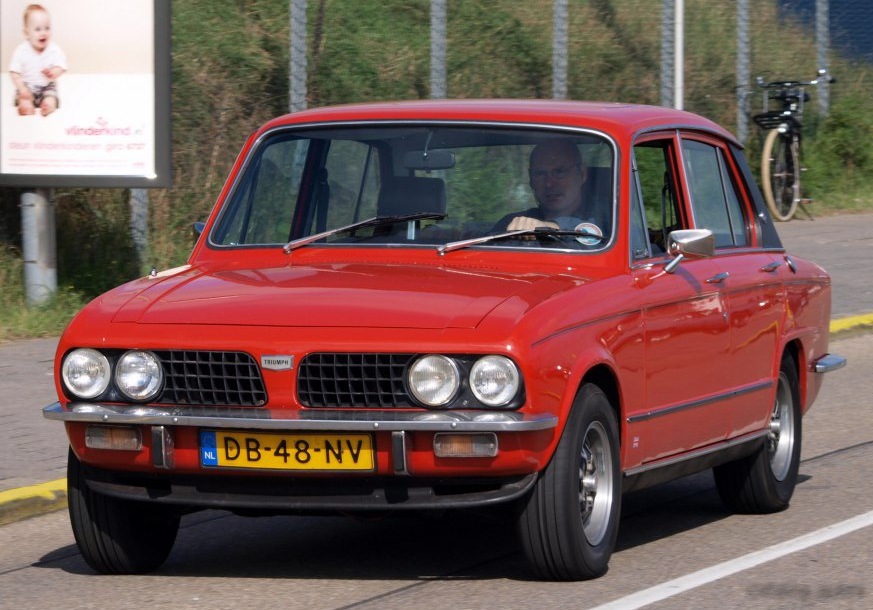
The Triumph Dolomite Sprint, produced between 1973 and 1981, was the performance-oriented variant of the Triumph Dolomite range. Representing a significant step forward for the Dolomite line, the Sprint aimed to deliver a sporting driving experience in a practical, four-door package. It was positioned as Triumph’s offering in the compact executive car segment, competing with vehicles like the Ford Cortina and Vauxhall Victor in the UK market. The Sprint distinguished itself through its unique, high-compression engine and sophisticated suspension, offering a blend of performance and refinement that set it apart from its more pedestrian siblings.
Technical Specifications
| Brand | Triumph |
| Model | Dolomite |
| Generation | Dolomite |
| Type (Engine) | Sprint (129 Hp) |
| Start of production | 1973 |
| End of production | 1981 |
| Powertrain Architecture | Internal Combustion engine |
| Body type | Sedan |
| Seats | 5 |
| Doors | 4 |
| Fuel consumption (economy) – urban | 12.1 l/100 km (19.4 US mpg, 23.3 UK mpg, 8.3 km/l) |
| Fuel consumption (economy) – extra urban | 7 l/100 km (33.6 US mpg, 40.4 UK mpg, 14.3 km/l) |
| Fuel Type | Petrol (Gasoline) |
| Weight-to-power ratio | 8.1 kg/Hp, 123.9 Hp/tonne |
| Weight-to-torque ratio | 6.3 kg/Nm, 158.5 Nm/tonne |
| Power | 129 Hp @ 5700 rpm |
| Power per litre | 64.6 Hp/l |
| Torque | 165 Nm @ 4500 rpm (121.7 lb.-ft. @ 4500 rpm) |
| Engine layout | Front, Longitudinal |
| Engine displacement | 1998 cm3 (121.93 cu. in.) |
| Number of cylinders | 4 |
| Engine configuration | Inline |
| Cylinder Bore | 90.3 mm (3.56 in.) |
| Piston Stroke | 78 mm (3.07 in.) |
| Compression ratio | 9.2:1 |
| Number of valves per cylinder | 2 |
| Fuel injection system | Carburettor |
| Engine aspiration | Naturally aspirated engine |
| Valvetrain | SOHC |
| Engine oil capacity | 4.5 l (4.76 US qt | 3.96 UK qt) |
| Coolant | 5.4 l (5.71 US qt | 4.75 UK qt) |
| Kerb Weight | 1041 kg (2295.01 lbs.) |
| Fuel tank capacity | 57 l (15.06 US gal | 12.54 UK gal) |
| Max. roof load | 50 kg (110.23 lbs.) |
| Permitted trailer load without brakes | 762 kg (1679.92 lbs.) |
| Length | 4122 mm (162.28 in.) |
| Width | 1588 mm (62.52 in.) |
| Height | 1372 mm (54.02 in.) |
| Wheelbase | 2454 mm (96.61 in.) |
| Front track | 1356 mm (53.39 in.) |
| Rear (Back) track | 1290 mm (50.79 in.) |
| Minimum turning circle (turning diameter) | 9.4 m (30.84 ft.) |
| Drivetrain Architecture | The Internal combustion engine (ICE) drives the rear wheels of the vehicle. |
| Drive wheel | Rear wheel drive |
| Number of gears and type of gearbox | 4 gears, manual transmission |
| Front suspension | Independent coil spring |
| Rear suspension | Independent multi-link suspension, Transverse stabilizer |
| Front brakes | Disc, 222 mm |
| Rear brakes | Drum, 228 mm |
| Steering type | Steering rack and pinion |
Powertrain & Engine Architecture
The heart of the Dolomite Sprint was its 1998 cc inline-four cylinder engine. Designated as the ‘SAH’ unit, this engine was a significant departure from the standard Dolomite’s 1850 cc powerplant. The Sprint engine featured a high-compression (9.2:1) cylinder head with larger valves and a revised port design, optimized for increased airflow. It utilized twin Stromberg carburetors, carefully tuned to deliver a responsive throttle response. The engine employed a single overhead camshaft (SOHC) valvetrain, a relatively simple but effective design for the era. The engine was mounted longitudinally in the front of the car, driving the rear wheels. The four-speed manual transmission was a robust unit, providing a direct and engaging driving experience. While an automatic transmission was offered, it was less common and generally considered to detract from the Sprint’s sporting character.
Driving Characteristics
The Dolomite Sprint offered a noticeably more spirited driving experience than its standard counterparts. The 129 horsepower output, while modest by modern standards, provided brisk acceleration for the time. The car could reach 60 mph in around 8.6 seconds, and achieve a top speed of approximately 118 mph. The Sprint’s handling was also a key strength, thanks to its independent suspension on all four wheels. The rear suspension featured a transverse stabilizer, which helped to reduce body roll and improve stability in corners. The steering was precise and well-weighted, providing good feedback to the driver. The manual transmission offered a satisfyingly direct connection to the engine, allowing drivers to fully exploit the engine’s power. The automatic transmission, while offering convenience, resulted in noticeable performance loss and a less engaging driving experience.
Equipment & Trim Levels
The Dolomite Sprint was generally well-equipped for its time. Standard features included reclining front seats, a wood-rimmed steering wheel, and a comprehensive instrument panel with a tachometer. Interior trim was typically cloth upholstery, available in a range of colors. Optional extras included a sunroof, a radio, and upgraded interior trim materials. The Sprint was often identified by its distinctive body-colored wheel arch extensions and a rear spoiler, adding to its sporty appearance. The dashboard layout was functional and driver-focused, with all essential controls within easy reach.
Chassis & Braking
The Dolomite Sprint utilized a robust chassis with independent suspension all around. The front suspension employed coil springs and wishbones, while the rear suspension featured a multi-link design with a transverse stabilizer. This setup provided a good balance between ride comfort and handling precision. Braking was accomplished via disc brakes on the front wheels and drum brakes on the rear. While adequate for the car’s performance, the rear drum brakes were a point of criticism, as they lacked the stopping power of disc brakes. The steering system was a rack and pinion setup, providing precise and responsive steering feel.
Market Reception & Comparison
The Dolomite Sprint was generally well-received by automotive critics. It was praised for its lively performance, engaging handling, and comfortable interior. However, some critics noted the car’s relatively basic interior trim and the limitations of the rear drum brakes. Compared to other Dolomite variants, the Sprint offered a significant performance upgrade. The standard 1850 model, with its lower-output engine, was considerably slower and less engaging to drive. The Sprint’s fuel economy was reasonable for the time, averaging around 23 mpg in mixed driving. Reliability was generally good, although the Stromberg carburetors could require occasional adjustment.
Legacy
The Triumph Dolomite Sprint remains a popular classic car today, appreciated for its blend of performance, style, and affordability. The SAH engine is known for its durability, and well-maintained examples can still provide years of reliable service. The Sprint’s relatively simple mechanical design makes it relatively easy to maintain and repair. However, sourcing parts can sometimes be a challenge, as production ceased over four decades ago. The Dolomite Sprint holds a special place in British automotive history as a capable and enjoyable sports sedan that offered a compelling alternative to its more mainstream rivals. It represents a high point in Triumph’s engineering and design capabilities, and continues to be cherished by enthusiasts around the world.
