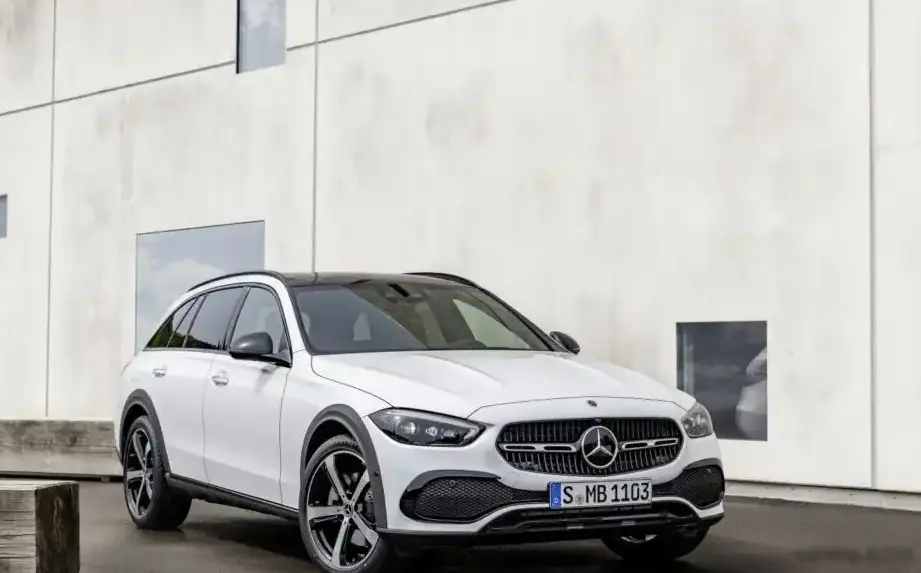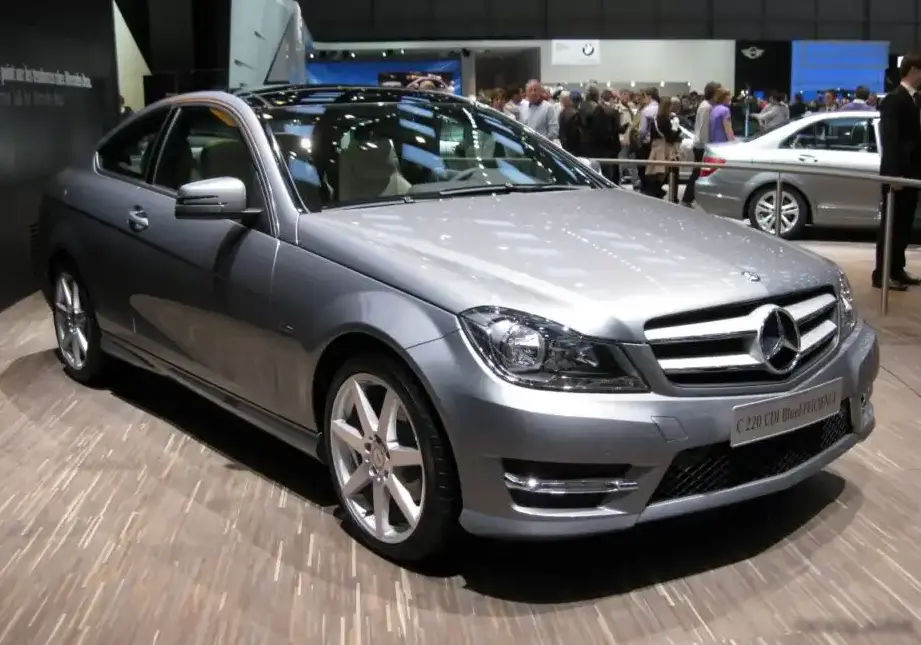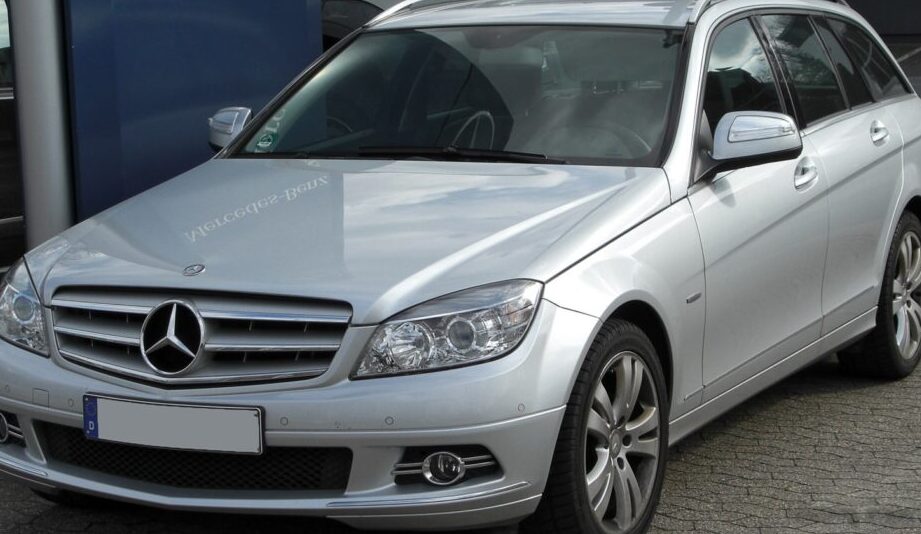
The Mercedes-Benz C-Class T-modell (S204) C 250 CGI BlueEFFICIENCY, produced from 2009 to 2011, represented a compelling blend of performance, practicality, and efficiency within the broader C-Class estate (wagon) range. Positioned as a mid-range offering, it slotted between the more economical base models and the higher-performance C 350 variants. This particular configuration – the 1.8-liter turbocharged engine paired with the 5G-TRONIC automatic transmission – aimed to deliver a refined driving experience with reasonable running costs, appealing to buyers seeking a versatile and comfortable family vehicle. The S204 generation C-Class T-modell, built on the W204 platform, was Mercedes-Benz’s entry into the premium compact executive estate market, competing with models like the Audi A4 Avant and BMW 3 Series Touring.
Technical Specifications
| Brand | Mercedes-Benz |
| Model | C-Class |
| Generation | C-Class T-modell (S204) |
| Type | C 250 CGI BlueEFFICIENCY (204 Hp) 5G-TRONIC |
| Start of production | 2009 |
| End of production | 2011 |
| Powertrain Architecture | Internal Combustion engine |
| Body type | Station wagon (estate) |
| Seats | 5 |
| Doors | 5 |
| Fuel consumption (urban) | 10.3-10.7 l/100 km (22.8 – 22 US mpg, 27.4 – 26.4 UK mpg, 9.7 – 9.3 km/l) |
| Fuel consumption (extra urban) | 5.9-6.5 l/100 km (39.9 – 36.2 US mpg, 47.9 – 43.5 UK mpg, 16.9 – 15.4 km/l) |
| Fuel consumption (combined) | 7.5-8 l/100 km (31.4 – 29.4 US mpg, 37.7 – 35.3 UK mpg, 13.3 – 12.5 km/l) |
| CO2 emissions | 175-188 g/km |
| Fuel Type | Petrol (Gasoline) |
| Acceleration 0 – 100 km/h | 7.5 sec |
| Acceleration 0 – 62 mph | 7.5 sec |
| Acceleration 0 – 60 mph | 7.1 sec |
| Maximum speed | 233 km/h (144.78 mph) |
| Emission standard | Euro 5 |
| Weight-to-power ratio | 7.4 kg/Hp, 136 Hp/tonne |
| Weight-to-torque ratio | 4.8 kg/Nm, 206.7 Nm/tonne |
| Power | 204 Hp @ 5500 rpm |
| Power per litre | 113.6 Hp/l |
| Torque | 310 Nm @ 2000-4300 rpm (228.64 lb.-ft. @ 2000-4300 rpm) |
| Engine layout | Front, Longitudinal |
| Engine Model/Code | M 271.860 |
| Engine displacement | 1796 cm3 (109.6 cu. in.) |
| Number of cylinders | 4 |
| Engine configuration | Inline |
| Cylinder Bore | 82 mm (3.23 in.) |
| Piston Stroke | 85 mm (3.35 in.) |
| Compression ratio | 9.3:1 |
| Number of valves per cylinder | 4 |
| Fuel injection system | Direct injection |
| Engine aspiration | Turbocharger, Intercooler |
| Valvetrain | DOHC |
| Engine oil capacity | 5.5 l (5.81 US qt | 4.84 UK qt) |
| Kerb Weight | 1500 kg (3306.93 lbs.) |
| Max. weight | 2115 kg (4662.78 lbs.) |
| Max load | 615 kg (1355.84 lbs.) |
| Trunk (boot) space – minimum | 485 l (17.13 cu. ft.) |
| Trunk (boot) space – maximum | 1500 l (52.97 cu. ft.) |
| Fuel tank capacity | 59 l (15.59 US gal | 12.98 UK gal) |
| Permitted trailer load with brakes (12%) | 1800 kg (3968.32 lbs.) |
| Permitted trailer load without brakes | 750 kg (1653.47 lbs.) |
| Length | 4596 mm (180.94 in.) |
| Width | 1770 mm (69.69 in.) |
| Width including mirrors | 2009 mm (79.09 in.) |
| Height | 1459 mm (57.44 in.) |
| Wheelbase | 2760 mm (108.66 in.) |
| Front track | 1541 mm (60.67 in.) |
| Rear track | 1544 mm (60.79 in.) |
| Front overhang | 765 mm (30.12 in.) |
| Rear overhang | 1071 mm (42.17 in.) |
| Minimum turning circle | 10.84 m (35.56 ft.) |
| Drivetrain Architecture | Rear wheel drive |
| Drive wheel | Rear wheel drive |
| Number of gears and type of gearbox | 5 gears, automatic transmission G-TRONIC |
| Front suspension | Independent type McPherson, Transverse stabilizer |
| Rear suspension | Independent multi-link suspension, Transverse stabilizer |
| Front brakes | Ventilated discs |
| Rear brakes | Disc |
| Assisting systems | ABS (Anti-lock braking system) |
| Steering type | Steering rack and pinion |
| Power steering | Hydraulic Steering |
| Tires size | 205/55 R16 |
| Wheel rims size | 7J x 16 |
Powertrain & Engine Architecture
At the heart of the C 250 CGI BlueEFFICIENCY lies the M 271.860 1.8-liter inline-four cylinder engine. This engine is a key example of Mercedes-Benz’s efforts to downsize and turbocharge for improved efficiency without sacrificing performance. The “CGI” designation stands for “Charged Gasoline Injection,” indicating the use of direct fuel injection combined with a turbocharger and intercooler. This combination allowed for a high compression ratio of 9.3:1, contributing to both power and efficiency. The engine utilizes a dual overhead camshaft (DOHC) valvetrain with four valves per cylinder, optimizing airflow for enhanced combustion. The 5G-TRONIC automatic transmission, a five-speed unit, was specifically tuned to work with the engine’s torque characteristics, providing smooth and responsive gear changes. While not as advanced as some of the newer seven or nine-speed automatics, it was a reliable and well-regarded transmission for its time.
Driving Characteristics
The C 250 CGI BlueEFFICIENCY offered a comfortable and refined driving experience. The 204 horsepower and 310 Nm (228.64 lb-ft) of torque provided adequate acceleration, with a 0-60 mph time of around 7.1 seconds. Compared to the more powerful C 350, the C 250 felt less urgent, but the turbocharger provided a noticeable boost in mid-range power. The 5G-TRONIC transmission, while smooth, could sometimes feel a bit hesitant during quick downshifts. The gear ratios were optimized for fuel economy, which meant that the engine occasionally felt strained during aggressive acceleration. However, for everyday driving, the combination of engine and transmission proved to be well-suited, offering a balance of performance and efficiency.
Equipment & Trim Levels
The C 250 CGI BlueEFFICIENCY typically came standard with features such as automatic climate control, power windows and locks, a multi-function steering wheel, and a basic audio system. Upholstery was generally cloth, with leather options available as an upgrade. Common optional extras included a sunroof, navigation system, premium sound system, and parking sensors. The “BlueEFFICIENCY” designation indicated the inclusion of various fuel-saving technologies, such as start-stop functionality and optimized aerodynamics. Trim levels could vary depending on the market, but generally, the C 250 offered a good level of standard equipment for its price point.
Chassis & Braking
The S204 C-Class T-modell featured an independent suspension system, with McPherson struts at the front and a multi-link setup at the rear. This configuration provided a comfortable ride and good handling characteristics. Stabilizer bars were fitted to both axles to reduce body roll during cornering. The braking system consisted of ventilated discs at the front and solid discs at the rear. Anti-lock braking system (ABS) was standard, providing enhanced stopping power and control. The chassis was designed to balance comfort and handling, making it suitable for both everyday commuting and longer journeys.
Market Reception & Comparison
The C 250 CGI BlueEFFICIENCY was generally well-received by automotive critics. It was praised for its fuel efficiency, comfortable ride, and refined interior. However, some reviewers noted that the performance was not as exhilarating as that of the C 350. Compared to the C 350, the C 250 offered better fuel economy and lower running costs, making it a more practical choice for many buyers. Against competitors like the Audi A4 Avant and BMW 3 Series Touring, the C 250 offered a similar level of performance and features, with a focus on comfort and refinement.
Legacy
The M 271 engine, in its various iterations, proved to be a relatively reliable powertrain. While some early versions experienced issues with timing chain tensioners, these were generally addressed in later production years. The 5G-TRONIC transmission is also known for its durability, provided it was properly maintained. Today, the C 250 CGI BlueEFFICIENCY T-modell represents a good value proposition in the used car market. It offers a comfortable and practical estate car experience with reasonable running costs. However, potential buyers should be aware of the potential for timing chain issues and ensure that the vehicle has been regularly serviced.