
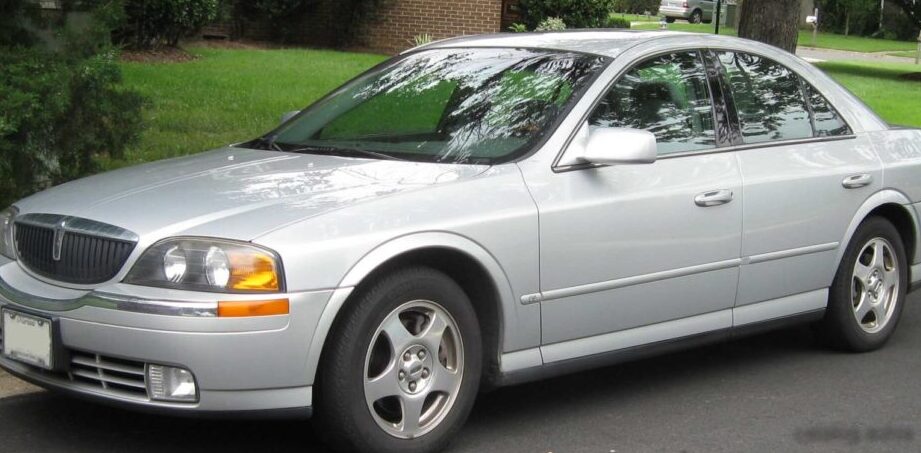
The Lincoln LS 3.9 V8 32V, produced from 1998 to 2000, represented a significant departure for the Lincoln brand, aiming to deliver a more sporting and refined experience than traditional American luxury sedans. Positioned as an entry-level luxury vehicle, the LS sought to compete with European rivals like the BMW 5 Series and Mercedes-Benz E-Class. This particular variant, equipped with the 3.9-liter V8 engine and a four-speed automatic transmission, was a key offering in the initial LS lineup, providing a balance of performance and convenience. It was built on the WH platform, shared with the Jaguar S-Type, a result of Ford’s ownership of both brands at the time.
Technical Specifications
| Brand | Lincoln |
| Model | LS |
| Generation | LS |
| Type (Engine) | 3.9 V8 32V (256 Hp) |
| Start of production | 1998 |
| End of production | 2000 |
| Powertrain Architecture | Internal Combustion engine |
| Body type | Sedan |
| Seats | 5 |
| Doors | 4 |
| Fuel consumption (urban) | 16 l/100 km (14.7 US mpg) |
| Fuel consumption (extra urban) | 9 l/100 km (26.1 US mpg) |
| Fuel Type | Petrol (Gasoline) |
| Maximum speed | 220 km/h (136.7 mph) |
| Power | 256 Hp @ 6100 rpm |
| Power per litre | 64.8 Hp/l |
| Torque | 354 Nm @ 4250 rpm (261.1 lb.-ft. @ 4250 rpm) |
| Engine layout | Front, Longitudinal |
| Engine Model/Code | 99A |
| Engine displacement | 3950 cm3 (241.04 cu. in.) |
| Number of cylinders | 8 |
| Engine configuration | V-engine |
| Cylinder Bore | 86 mm (3.39 in.) |
| Piston Stroke | 85 mm (3.35 in.) |
| Compression ratio | 10.5:1 |
| Number of valves per cylinder | 4 |
| Fuel injection system | Multi-port manifold injection |
| Engine aspiration | Naturally aspirated engine |
| Valvetrain | DOHC |
| Engine oil capacity | 5.7 l (6.02 US qt | 5.02 UK qt) |
| Coolant | 11.3 l (11.94 US qt | 9.94 UK qt) |
| Trunk (boot) space (minimum) | 380 l (13.42 cu. ft.) |
| Fuel tank capacity | 68 l (17.96 US gal | 14.96 UK gal) |
| Length | 4925 mm (193.9 in.) |
| Width | 1860 mm (73.23 in.) |
| Height | 1450 mm (57.09 in.) |
| Wheelbase | 2910 mm (114.57 in.) |
| Front track | 1535 mm (60.43 in.) |
| Rear track | 1545 mm (60.83 in.) |
| Drivetrain Architecture | Rear wheel drive |
| Drive wheel | Rear wheel drive |
| Number of gears and type of gearbox | 4 gears, automatic transmission |
| Front suspension | Coil spring |
| Rear suspension | Coil spring |
| Front brakes | Ventilated discs |
| Rear brakes | Disc |
| Assisting systems | ABS (Anti-lock braking system) |
| Steering type | Steering rack and pinion |
| Power steering | Hydraulic Steering |
| Tires size | 215/60 R15 |
| Wheel rims size | 15 |
Powertrain & Engine Architecture
The heart of the LS 3.9 was the 99A engine, a 3.9-liter (3950 cc) naturally aspirated V8. This engine featured a 60-degree V-angle, a cast iron block with aluminum cylinder heads, and dual overhead camshafts (DOHC) operating four valves per cylinder. The multi-port fuel injection system delivered fuel directly to each cylinder, optimizing combustion. The engine produced 256 horsepower at 6100 rpm and 354 Nm (261 lb-ft) of torque at 4250 rpm. The four-speed automatic transmission, a Ford 4R70W unit, was chosen for its smoothness and reliability. While not a particularly advanced transmission by contemporary standards, it was well-suited to the engine’s torque curve and provided comfortable shifts for everyday driving.
Driving Characteristics
The LS 3.9 with the automatic transmission offered a comfortable and refined driving experience. Acceleration was brisk, with a 0-60 mph time estimated around 7.5 seconds. However, it wasn’t as engaging as the manual transmission-equipped models or the higher-output versions. The automatic transmission’s gear ratios were geared towards cruising comfort rather than outright performance. The rear-wheel-drive configuration provided a balanced feel, although the car’s weight (around 3,800 lbs) was noticeable in cornering. Compared to the later 3.0-liter V6 models, the 3.9 V8 offered significantly more power and torque, resulting in more effortless acceleration and passing ability.
Equipment & Trim Levels
The Lincoln LS 3.9 typically came standard with features such as leather upholstery, power-adjustable front seats, a premium sound system, automatic climate control, and alloy wheels. Optional extras included a navigation system, sunroof, and upgraded interior trim packages. The base LS trim was well-equipped, but the higher trims added features like heated seats, a CD changer, and more luxurious leather options. The interior design emphasized a clean and modern aesthetic, with a focus on comfort and ergonomics.
Chassis & Braking
The LS featured an independent front suspension with coil springs and an independent rear suspension, also utilizing coil springs. The front brakes were ventilated discs, while the rear brakes were solid discs. Anti-lock braking system (ABS) was standard. The suspension was tuned for a comfortable ride, prioritizing isolation from road imperfections. The steering was hydraulic power-assisted rack and pinion, providing a reasonably responsive feel. Tire size was typically 215/60R15.
Market Reception & Comparison
Initial reviews of the Lincoln LS were generally positive, praising its stylish design, comfortable interior, and strong V8 engine. However, critics also noted that it lacked the dynamic finesse of its European competitors. The 3.9 V8 automatic combination was seen as a good all-around choice, offering a balance of performance and convenience. Fuel economy was reasonable for a V8-powered sedan, averaging around 16 mpg in the city and 26 mpg on the highway. Compared to the 3.0-liter V6 LS, the 3.9 V8 offered a noticeable performance advantage, but at the cost of slightly lower fuel economy. Reliability was generally good, although some owners reported minor issues with the automatic transmission and electrical components.
Legacy
The Lincoln LS, despite its relatively short production run, remains a fondly remembered vehicle among enthusiasts. The 3.9 V8 engine is particularly well-regarded for its smooth power delivery and robust construction. Today, well-maintained examples of the LS 3.9 can be found on the used car market at affordable prices. While not a high-performance icon, the LS 3.9 represents a unique chapter in Lincoln’s history, a period when the brand attempted to challenge the established European luxury carmakers with a more sporting and refined offering. The 4R70W transmission, while generally reliable, may require periodic maintenance as it ages. Overall, the LS 3.9 V8 remains a comfortable, capable, and relatively affordable entry into the world of American luxury sedans.
