
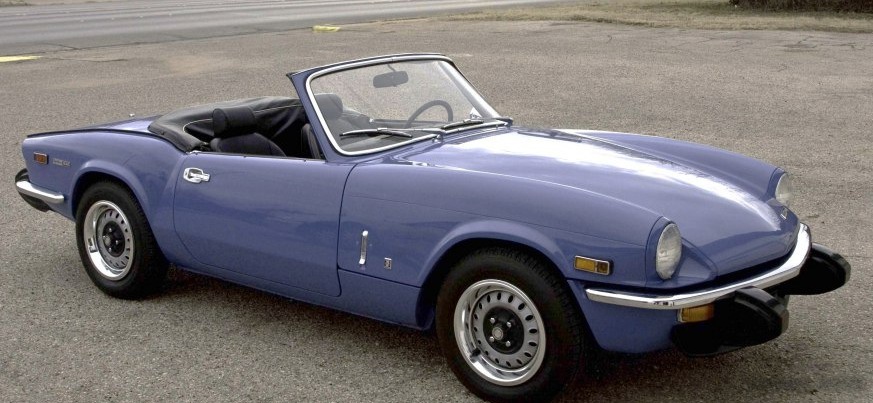
The Triumph Spitfire 1.2 MK I, produced between 1962 and 1965, represents the initial iteration of the iconic British sports car. Positioned as an affordable and accessible roadster, the 1.2 MK I aimed to capture the spirit of the classic British sports car in a smaller, more manageable package. It was the first of what would become a long-running and much-loved series, establishing the Spitfire’s place in the burgeoning sports car market of the early 1960s. The model was a direct response to the growing popularity of cars like the Austin-Healey Sprite and aimed to offer a similar driving experience at a competitive price point. It utilized a separate chassis construction, a relatively uncommon approach for the time, and was designed by Giovanni Michelotti.
Technical Specifications
| Brand | Triumph |
| Model | Spitfire |
| Type (Engine) | 1.2 MK I (63 Hp) |
| Start of production | 1962 |
| End of production | 1965 |
| Powertrain Architecture | Internal Combustion engine |
| Body type | Cabriolet |
| Seats | 2 |
| Doors | 2 |
| Fuel Type | Petrol (Gasoline) |
| Acceleration 0 – 60 mph | 16.5 sec |
| Maximum speed | 148 km/h (91.96 mph) |
| Weight-to-power ratio | 11.3 kg/Hp, 88.7 Hp/tonne |
| Weight-to-torque ratio | 7.8 kg/Nm, 128.2 Nm/tonne |
| Power | 63 Hp @ 5750 rpm |
| Power per litre | 54.9 Hp/l |
| Torque | 91 Nm @ 3500 rpm (67.12 lb.-ft. @ 3500 rpm) |
| Engine layout | Front, Longitudinal |
| Engine displacement | 1147 cm3 (69.99 cu. in.) |
| Number of cylinders | 4 |
| Engine configuration | Inline |
| Cylinder Bore | 69.3 mm (2.73 in.) |
| Piston Stroke | 76 mm (2.99 in.) |
| Compression ratio | 9:1 |
| Number of valves per cylinder | 2 |
| Fuel injection system | Carburettor |
| Engine aspiration | Naturally aspirated engine |
| Valvetrain | OHV |
| Engine oil capacity | 4 l (4.23 US qt | 3.52 UK qt) |
| Coolant | 5.4 l (5.71 US qt | 4.75 UK qt) |
| Kerb Weight | 710 kg (1565.28 lbs.) |
| Max. weight | 900 kg (1984.16 lbs.) |
| Max load | 190 kg (418.88 lbs.) |
| Trunk (boot) space – minimum | 190 l (6.71 cu. ft.) |
| Fuel tank capacity | 41 l (10.83 US gal | 9.02 UK gal) |
| Length | 3685 mm (145.08 in.) |
| Width | 1450 mm (57.09 in.) |
| Height | 1205 mm (47.44 in.) |
| Wheelbase | 2110 mm (83.07 in.) |
| Front track | 1245 mm (49.02 in.) |
| Rear (Back) track | 1220 mm (48.03 in.) |
| Ride height (ground clearance) | 125 mm (4.92 in.) |
| Minimum turning circle (turning diameter) | 7.3 m (23.95 ft.) |
| Drivetrain Architecture | The Internal combustion engine (ICE) drives the rear wheels of the vehicle. |
| Drive wheel | Rear wheel drive |
| Number of gears and type of gearbox | 4 gears, manual transmission |
| Front suspension | Wishbone, Transverse stabilizer |
| Rear suspension | Leaf spring |
| Front brakes | Disc, 228.6 mm |
| Rear brakes | Drum, 177.8×31.75 mm |
| Steering type | Steering rack and pinion |
Powertrain & Engine Architecture
The heart of the Spitfire 1.2 MK I is its 1,147 cc inline-four cylinder engine. This engine, designated as the unit for this variant, produced 63 horsepower at 5,750 rpm and 91 Nm (67.12 lb-ft) of torque at 3,500 rpm. It featured a single Zenith 36WE carburetor, a relatively simple fuel delivery system for the era. The engine employed an overhead valve (OHV) valvetrain with two valves per cylinder. The engine was mounted longitudinally in the front of the vehicle, driving the rear wheels. The four-speed manual transmission was a standard feature, providing a direct connection between the engine and the road. The transmission was not known for its particularly precise shift quality, but it was robust and reliable.
Driving Characteristics
The 1.2 MK I Spitfire offered a quintessential British roadster driving experience. With only 63 horsepower propelling a relatively lightweight chassis (approximately 710 kg or 1565 lbs), acceleration was modest, taking around 16.5 seconds to reach 60 mph. However, the car’s nimble handling and responsive steering made it enjoyable to drive on winding roads. The gear ratios were spaced to maximize the available torque, but required frequent shifting to maintain momentum. Compared to later Spitfire variants with larger engines, the 1.2 MK I felt underpowered, particularly when carrying a passenger or luggage. The manual transmission, while not sophisticated, provided a direct and engaging driving experience. The rear leaf spring suspension contributed to a somewhat firm ride, but also provided good stability in corners.
Equipment & Trim Levels
The Spitfire 1.2 MK I was relatively spartan in its standard equipment. It was designed to be an affordable sports car, and as such, luxuries were kept to a minimum. Standard features included a basic instrument panel with speedometer, fuel gauge, and ammeter. The interior was typically trimmed with vinyl upholstery. A folding soft top was standard, providing basic weather protection. Optional extras included wire wheels, a heater, and a radio. The dashboard layout was simple and functional, prioritizing driver information over aesthetic appeal. The seats were supportive but offered limited adjustability.
Chassis & Braking
The Spitfire 1.2 MK I utilized a separate chassis construction, with a box-section backbone frame providing the structural rigidity. The front suspension consisted of independent wishbones with a transverse stabilizer bar, while the rear suspension employed leaf springs. The braking system featured disc brakes on the front wheels and drum brakes on the rear. The front discs measured 228.6 mm, while the rear drums were 177.8×31.75 mm. The steering was a rack and pinion system, providing precise and responsive control. The relatively simple suspension setup contributed to the car’s nimble handling, but also resulted in a somewhat firm ride quality.
Market Reception & Comparison
The Spitfire 1.2 MK I was generally well-received by automotive critics. It was praised for its stylish design, nimble handling, and affordable price. However, some critics noted the engine’s lack of power and the somewhat crude interior. Compared to the later Spitfire variants, such as the MK III with its larger engine, the 1.2 MK I was significantly slower and less refined. However, it offered a more pure and engaging driving experience, appealing to enthusiasts who valued handling and responsiveness over outright speed. Fuel economy was reasonable for the time, and the car proved to be relatively reliable, although maintenance was required to keep the engine running smoothly.
Legacy
The Triumph Spitfire 1.2 MK I laid the foundation for a successful and enduring sports car lineage. While later models offered more power and refinement, the original 1.2 MK I remains a highly sought-after classic. The engine, while not particularly powerful, proved to be durable and relatively easy to maintain. Today, the Spitfire 1.2 MK I is a popular choice among classic car enthusiasts, offering a charming and affordable entry point into the world of vintage British sports cars. Well-maintained examples command a premium in the used car market, and the car continues to be celebrated for its timeless design and engaging driving experience. Parts availability is generally good, thanks to a dedicated network of classic Triumph parts suppliers.
