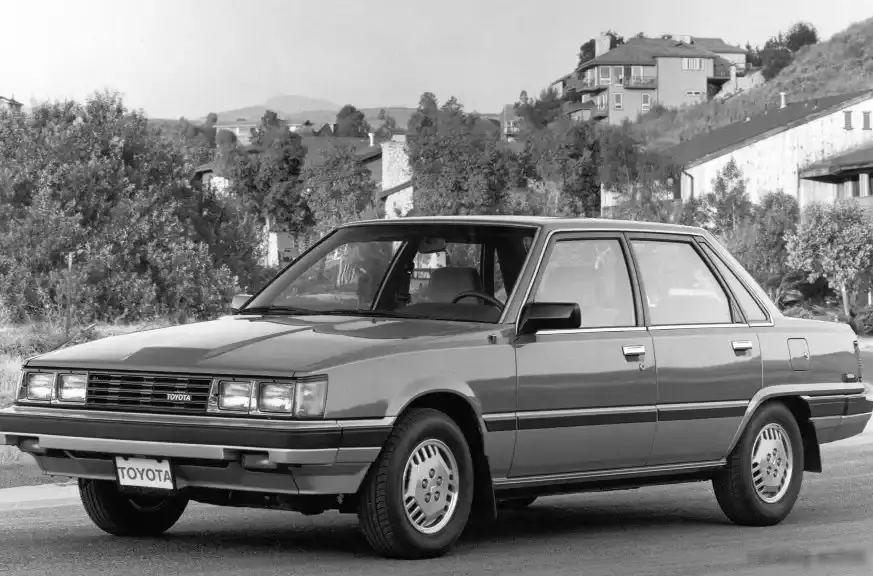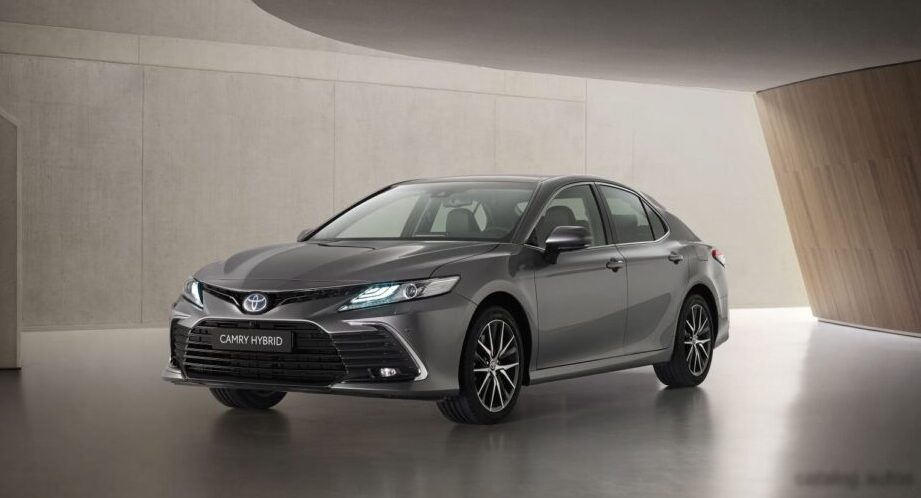
The Toyota Camry VIII (XV70), particularly the facelifted model produced from 2020 to 2024, represented a significant evolution of Toyota’s best-selling mid-size sedan. Within the XV70 generation, the 3.5 V6 variant equipped with the ECT-i 8-speed automatic transmission occupied the top performance tier, offering a substantial upgrade over the base 2.5-liter four-cylinder models. This configuration was positioned as the premium choice for buyers prioritizing power and a more refined driving experience, while still maintaining the Camry’s reputation for reliability and comfort. It served as a direct competitor to similarly equipped offerings from Honda, Nissan, and Ford.
Technical Specifications
| Brand | Toyota |
| Model | Camry |
| Generation | Camry VIII (XV70, facelift 2020) |
| Type (Engine) | 3.5 V6 (301 Hp) ECT-i |
| Start of production | 2020 |
| End of production | 2024 |
| Powertrain Architecture | Internal Combustion engine |
| Body type | Sedan |
| Seats | 5 |
| Doors | 4 |
| Fuel consumption (economy) – urban (EPA) | 10.7 l/100 km (22 US mpg, 26.4 UK mpg, 9.3 km/l) |
| Fuel consumption (economy) – extra urban (EPA) | 7.1-7.6 l/100 km (33.1 – 30.9 US mpg, 39.8 – 37.2 UK mpg, 14.1 – 13.2 km/l) |
| Fuel consumption (economy) – combined (EPA) | 9-9.4 l/100 km (26.1 – 25 US mpg, 31.4 – 30.1 UK mpg, 11.1 – 10.6 km/l) |
| Fuel Type | Petrol (Gasoline) |
| Emission standard | ULEV-II |
| Weight-to-power ratio | 5.4 kg/Hp, 185.6 Hp/tonne |
| Weight-to-torque ratio | 4.5 kg/Nm, 223.2 Nm/tonne |
| Power | 301 Hp @ 6600 rpm |
| Power per litre | 87.1 Hp/l |
| Torque | 362 Nm @ 4700 rpm (267 lb.-ft. @ 4700 rpm) |
| Engine layout | Front, Transverse |
| Engine Model/Code | 2GR-FKS |
| Engine displacement | 3456 cm3 (210.9 cu. in.) |
| Number of cylinders | 6 |
| Engine configuration | V-engine |
| Cylinder Bore | 94 mm (3.7 in.) |
| Piston Stroke | 83 mm (3.27 in.) |
| Compression ratio | 11.8:1 |
| Number of valves per cylinder | 4 |
| Fuel injection system | Direct injection and Multi-port manifold injection |
| Engine aspiration | Naturally aspirated engine |
| Valvetrain | DOHC, VVT-i, VVT-iW |
| Engine oil capacity | 5.4 l (5.71 US qt | 4.75 UK qt) |
| Coolant | 8.6 l (9.09 US qt | 7.57 UK qt) |
| Kerb Weight | 1622-1631 kg (3575.9 – 3595.74 lbs.) |
| Trunk (boot) space – minimum | 428 l (15.11 cu. ft.) |
| Fuel tank capacity | 60 l (15.85 US gal | 13.2 UK gal) |
| Length | 4880 mm (192.13 in.) |
| Width | 1840 mm (72.44 in.) |
| Height | 1430-1445 mm (56.3 – 56.89 in.) |
| Wheelbase | 2825 mm (111.22 in.) |
| Front track | 1580-1590 mm (62.2 – 62.6 in.) |
| Rear (Back) track | 1590-1600 mm (62.6 – 62.99 in.) |
| Ride height (ground clearance) | 145 mm (5.71 in.) |
| Drivetrain Architecture | The Internal combustion engine (ICE) drives the front wheels of the vehicle. |
| Drive wheel | Front wheel drive |
| Number of gears and type of gearbox | 8 gears, automatic transmission ECT-i |
| Front suspension | Independent, type McPherson with coil spring and anti-roll bar |
| Rear suspension | Independent multi-link spring suspension with stabilizer |
| Front brakes | Ventilated discs, 305 mm |
| Rear brakes | Disc, 281 mm |
| Assisting systems | ABS (Anti-lock braking system) |
| Steering type | Steering rack and pinion |
| Power steering | Electric Steering |
| Tires size | 235/45 R18; 235/40 R19 |
| Wheel rims size | 8J x 18; 8J x 19; 8.5J x 19 |
Powertrain & Engine Architecture
The heart of this Camry variant is the 2GR-FKS 3.5-liter V6 engine. This engine is a naturally aspirated, dual-injection (direct and port) powerplant, representing a refinement of Toyota’s well-established V6 family. The 2GR-FKS utilizes a DOHC (Dual Overhead Camshaft) valvetrain with both VVT-i (Variable Valve Timing – intake) and VVT-iW (Variable Valve Timing – intake and exhaust) technologies. VVT-iW allows for more precise control of valve timing, improving both performance and fuel efficiency. The engine produces 301 horsepower at 6600 rpm and 267 lb.-ft. of torque at 4700 rpm. The ECT-i (Electronically Controlled Transmission – intelligent) 8-speed automatic transmission was specifically paired with this engine to handle the increased power output. This transmission features a wider gear ratio spread compared to the 6-speed automatic found in earlier XV70 models, contributing to improved acceleration and highway cruising efficiency.
Driving Characteristics
The 3.5 V6 Camry delivers a noticeably more spirited driving experience than its four-cylinder counterparts. Acceleration is brisk, and the engine provides ample power for merging onto highways and overtaking maneuvers. The 8-speed automatic transmission shifts smoothly and responsively, although it isn’t as overtly sporty as some dual-clutch transmissions found in competing vehicles. The gear ratios are tuned for a balance between performance and fuel economy, with a relatively tall final drive to aid in highway efficiency. Compared to a manual transmission (which wasn’t offered with this engine), the automatic provides convenience and ease of use, but sacrifices some driver engagement. The added weight of the V6 engine, however, does slightly impact handling compared to the lighter four-cylinder models, resulting in a bit more body roll in corners.
Equipment & Trim Levels
The 3.5 V6 Camry typically came standard with a high level of equipment. Common features included leather upholstery, heated front seats, a premium audio system (often JBL), a larger touchscreen infotainment system with navigation, and a suite of advanced safety features like Toyota Safety Sense. Optional extras often included a panoramic sunroof, premium paint colors, and upgraded interior trim materials. The V6 model was generally offered in the XSE and XLE trim levels, with the XSE focusing on a sportier appearance and the XLE emphasizing luxury and comfort.
Chassis & Braking
The Camry’s chassis features an independent McPherson strut front suspension and an independent multi-link rear suspension. The V6 models often received slightly stiffer spring rates and larger stabilizer bars compared to the base models to manage the increased weight and power. Braking duties are handled by ventilated discs at the front and solid discs at the rear. ABS (Anti-lock Braking System) is standard, along with electronic brake-force distribution and brake assist. The braking system is generally considered adequate for the vehicle’s performance capabilities, providing confident stopping power in most driving situations.
Market Reception & Comparison
Critics generally praised the 3.5 V6 Camry for its smooth and powerful engine, comfortable ride, and spacious interior. However, some reviewers noted that the handling wasn’t as engaging as some of its competitors. Fuel economy, while respectable for a V6, was lower than that of the four-cylinder models. Compared to the 2.5-liter four-cylinder Camry, the V6 offered a significant performance upgrade but came at a higher price point and with slightly reduced fuel efficiency. Against competitors like the Honda Accord V6 and Nissan Maxima, the Camry V6 offered a compelling combination of power, reliability, and value.
Legacy
The 2GR-FKS engine has proven to be a durable and reliable powerplant, with many examples exceeding 150,000 miles with proper maintenance. The ECT-i 8-speed automatic transmission has also demonstrated good long-term reliability. On the used car market, the 2020-2024 Camry 3.5 V6 models hold their value relatively well, appealing to buyers seeking a comfortable, reliable, and reasonably powerful mid-size sedan. Regular maintenance, including oil changes and timely replacement of wear items, is crucial to maintaining the longevity of this powertrain.