
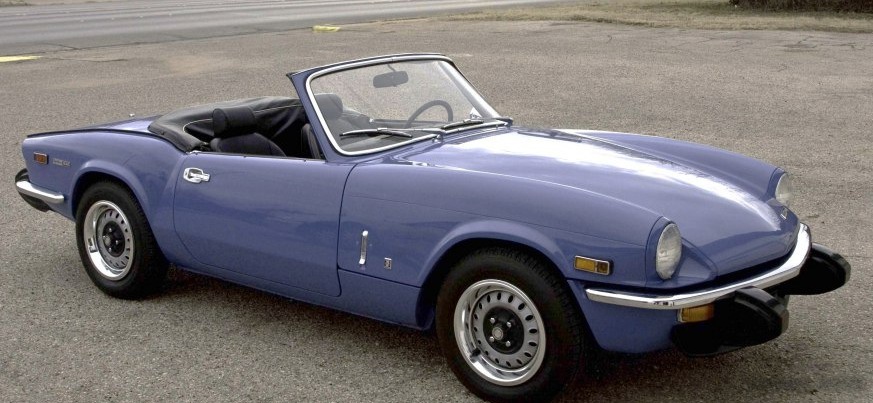
The Triumph Spitfire 1.2 MK II, produced between 1965 and 1967, represents an early iteration of Triumph’s popular sports car. Positioned as the entry-level Spitfire, it offered an accessible and affordable British roadster experience. This model, part of the initial Mark I and Mark II series (designated Commission Number 33833 onwards for the MK II improvements), played a crucial role in establishing the Spitfire’s reputation for nimble handling and open-air motoring. It was a direct competitor to other small British sports cars like the MG Midget and Austin-Healey Sprite, aiming for a similar demographic of enthusiastic drivers seeking a fun, sporty vehicle.
Technical Specifications
| Brand | Triumph |
| Model | Spitfire |
| Generation | Spitfire (Mark I/II) |
| Type (Engine) | 1.2 MK II (67 Hp) |
| Start of Production | 1965 |
| End of Production | 1967 |
| Body Type | Cabriolet |
| Fuel Type | Petrol (Gasoline) |
| Engine Displacement | 1147 cc (69.9 cu in) |
| Engine Aspiration | Naturally Aspirated |
| Power Output | 67 hp (50 kW) @ 5800 rpm |
| Torque Output | 72 lb-ft (98 Nm) @ 3500 rpm |
| Transmission | 4-speed Manual (Standard) |
| Drivetrain | Rear-Wheel Drive |
| Weight | 1,570 lbs (712 kg) approximately |
| Top Speed | 93 mph (150 km/h) approximately |
| 0-60 mph | 12.5 seconds approximately |
Powertrain & Engine Architecture
The heart of the Spitfire 1.2 MK II is its 1147 cc inline-four cylinder engine. This engine, derived from the Standard-Triumph 1200 saloon, featured a cast iron block and cylinder head. It employed a single Zenith 36WE carburetor for fuel delivery, a relatively simple system for the era. The engine utilized a pushrod-operated overhead valve (OHV) valvetrain, a common design in the 1960s. While not particularly powerful by modern standards, the engine was known for its willingness to rev and its relatively smooth operation. The standard transmission was a four-speed manual gearbox, providing direct engagement and a classic sports car feel. The engine’s relatively low compression ratio (typically around 8.5:1) allowed it to run reliably on the available grades of gasoline at the time. The exhaust system was a single outlet, exiting on the passenger side of the vehicle.
Driving Characteristics
The Spitfire 1.2 MK II offered a quintessential British roadster driving experience. Its lightweight construction (around 1,570 lbs) contributed to its nimble handling. The 67 horsepower engine, while not overwhelming, provided sufficient power for spirited driving on winding roads. Acceleration was modest, taking approximately 12.5 seconds to reach 60 mph, but the car felt quicker than the numbers suggest due to its low weight and responsive steering. The four-speed manual transmission required precise shifting, but it allowed the driver to keep the engine in its optimal power band. The suspension, consisting of independent front suspension with double wishbones and a live axle rear suspension with leaf springs, provided a comfortable ride, although it could be somewhat bouncy on uneven surfaces. Braking was accomplished via drum brakes on all four wheels, which were adequate for normal driving but lacked the stopping power of more modern systems.
Equipment & Trim Levels
The Spitfire 1.2 MK II was relatively spartan in terms of standard equipment, reflecting its position as an entry-level sports car. It featured a basic dashboard with a speedometer, fuel gauge, and ammeter. Seats were typically upholstered in vinyl, and a simple folding soft top provided weather protection. Chrome trim was used sparingly, adding a touch of elegance to the exterior. Optional extras included wire wheels, a heater, and a radio. Interior trim colors were limited, typically consisting of black, red, or beige. The MK II improvements over the original MK I included a revised cylinder head for improved performance, a stronger gearbox, and improved interior trim.
Chassis & Braking
The Spitfire’s chassis was a monocoque construction, providing a good balance of strength and lightness. The independent front suspension utilized double wishbones, coil springs, and telescopic shock absorbers, offering responsive handling. The rear suspension employed a live axle with leaf springs, which provided a more compliant ride but was less sophisticated than the front suspension. Braking was handled by drum brakes on all four wheels. The braking system was mechanically operated, lacking the power assistance found on more expensive cars. Steering was by rack and pinion, providing precise and responsive control. The car’s relatively short wheelbase (approximately 94 inches) contributed to its nimble handling characteristics.
Market Reception & Comparison
The Triumph Spitfire 1.2 MK II was generally well-received by automotive critics. It was praised for its stylish design, nimble handling, and affordable price. However, some critics noted its lack of power and its somewhat basic interior. Compared to the later Spitfire models with larger engines (such as the 1.3 and 1.5 liter versions), the 1.2 MK II offered less performance. The 1.3 liter Spitfire, for example, provided a noticeable increase in horsepower and torque, resulting in quicker acceleration and improved cruising ability. However, the 1.2 MK II was considered a more economical option, offering better fuel economy than its larger-engined siblings. Compared to its competitors, such as the MG Midget and Austin-Healey Sprite, the Spitfire offered a slightly more refined driving experience and a more modern design.
Legacy
The Triumph Spitfire 1.2 MK II, while not the most powerful or technologically advanced Spitfire variant, holds a significant place in the history of British sports cars. It established the Spitfire as a popular and affordable roadster, attracting a loyal following of enthusiasts. Today, the 1.2 MK II is a sought-after classic car, appreciated for its simplicity, charm, and classic British styling. The engine, while relatively robust, requires regular maintenance to ensure reliable operation. Common issues include carburetor problems, oil leaks, and wear in the suspension components. Parts availability is generally good, although some components can be difficult to find. Well-maintained examples of the 1.2 MK II can command respectable prices in the used car market, reflecting their growing popularity among collectors and enthusiasts. The early Spitfires, like the 1.2 MK II, are often seen as the purest expression of the Spitfire’s original design intent – a fun, affordable, and engaging sports car for the everyday driver.
