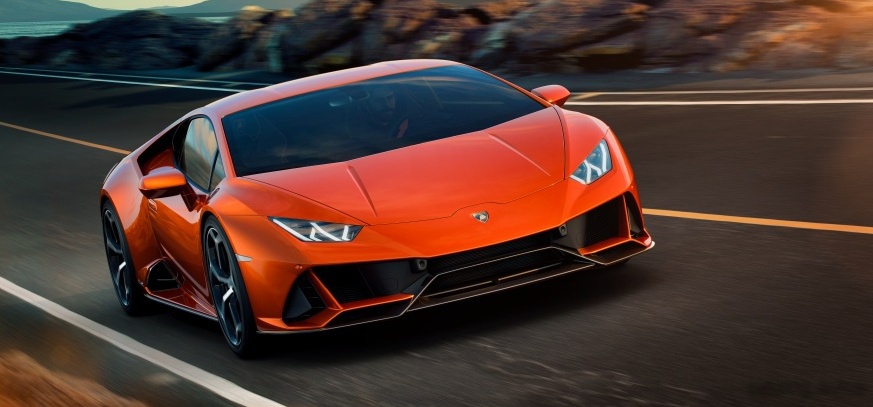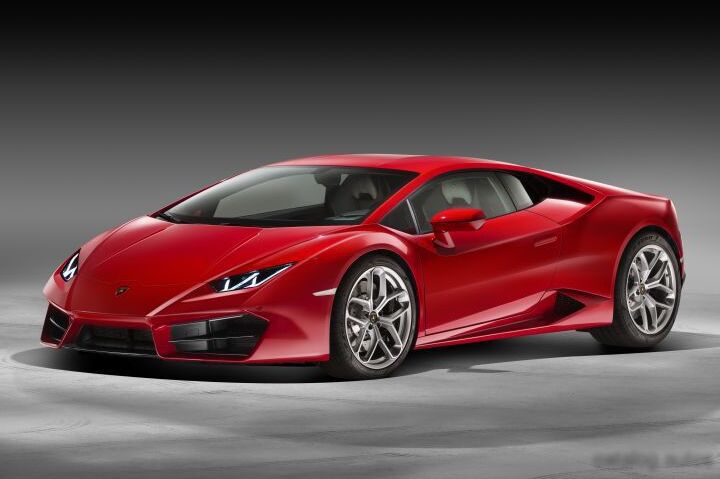
The Lamborghini Huracán EVO Spyder, introduced in 2019 as a facelift to the original Huracán, represents the open-top variant of Lamborghini’s entry-level supercar. Building upon the already successful Huracán platform (based on the Audi MSS architecture), the EVO Spyder aimed to deliver enhanced performance, handling, and driving dynamics compared to its predecessor. This specific iteration features a naturally aspirated 5.2-liter V10 engine producing 640 horsepower, paired with a seven-speed dual-clutch transmission (DCT) and an all-wheel-drive system. It occupies the top-tier position within the Huracán Spyder range, offering the most potent performance available in an open-air configuration.
Technical Specifications
| Brand | Lamborghini |
| Model | Huracán |
| Generation | Huracán EVO Spyder (facelift 2019) |
| Type (Engine) | 5.2 V10 (640 Hp) AWD DCT |
| Start of production | 2019 |
| Powertrain Architecture | Internal Combustion engine |
| Body type | Cabriolet |
| Seats | 2 |
| Doors | 2 |
| Combined fuel consumption (WLTP) | 15.6 l/100 km (15.1 US mpg, 18.1 UK mpg, 6.4 km/l) |
| Fuel consumption (economy) – combined | 14.1 l/100 km (16.7 US mpg, 20 UK mpg, 7.1 km/l) |
| CO2 emissions | 338 g/km |
| Fuel Type | Petrol (Gasoline) |
| Acceleration 0 – 100 km/h | 3.1 sec |
| Acceleration 0 – 62 mph | 3.1 sec |
| Acceleration 0 – 60 mph | 2.9 sec |
| Acceleration 0 – 200 km/h | 9.3 sec |
| Maximum speed | 325 km/h (201.95 mph) |
| Weight-to-power ratio | 2.4 kg/Hp, 415 Hp/tonne |
| Weight-to-torque ratio | 2.6 kg/Nm, 389.1 Nm/tonne |
| Power | 640 Hp @ 8000 rpm |
| Power per litre | 123 Hp/l |
| Torque | 600 Nm @ 6500 rpm (442.54 lb.-ft. @ 6500 rpm) |
| Engine Model/Code | CSJ |
| Engine displacement | 5204 cm3 (317.57 cu. in.) |
| Number of cylinders | 10 |
| Engine configuration | V-engine |
| Cylinder Bore | 84.5 mm (3.33 in.) |
| Piston Stroke | 92.8 mm (3.65 in.) |
| Compression ratio | 12.7:1 |
| Number of valves per cylinder | 4 |
| Fuel injection system | Direct injection and Multi-port manifold injection |
| Engine aspiration | Naturally aspirated engine |
| Engine oil capacity | 7.5 l (7.93 US qt | 6.6 UK qt) |
| Coolant | 22 l (23.25 US qt | 19.36 UK qt) |
| Kerb Weight | 1542 kg (3399.53 lbs.) |
| Fuel tank capacity | 83 l (21.93 US gal | 18.26 UK gal) |
| Length | 4520 mm (177.95 in.) |
| Width | 1933 mm (76.1 in.) |
| Width including mirrors | 2236 mm (88.03 in.) |
| Height | 1180 mm (46.46 in.) |
| Wheelbase | 2620 mm (103.15 in.) |
| Front track | 1668 mm (65.67 in.) |
| Rear track | 1620 mm (63.78 in.) |
| Minimum turning circle | 10.9 m (35.76 ft.) |
| Drive wheel | All wheel drive (4×4) |
| Number of gears | 7 |
| Gearbox type | Automatic transmission DCT |
| Front suspension | Double wishbone |
| Rear suspension | Double wishbone |
| Front brakes | Ventilated discs, 380 mm |
| Rear brakes | Ventilated discs, 356 mm |
| Assisting systems | ABS (Anti-lock braking system) |
| Steering type | Steering rack and pinion |
| Power steering | Electric Steering |
| Tires size | 245/30 R20; 305/30 R20 |
| Wheel rims size | 8.5J x 20; 11J x 20 |
Powertrain & Engine Architecture
At the heart of the Huracán EVO Spyder lies Lamborghini’s naturally aspirated 5.2-liter V10 engine, designated the CSJ code. This engine is a direct descendant of the powerplant found in the Gallardo and earlier Huracán models, but significantly upgraded with titanium intake valves and a revised crankshaft. It utilizes both direct and multi-point fuel injection, optimizing combustion efficiency and throttle response. The engine produces a peak output of 640 horsepower at 8,000 rpm and 600 Nm (442.54 lb-ft) of torque at 6,500 rpm. The seven-speed dual-clutch transmission (DCT) provides incredibly rapid gear changes, contributing to the car’s blistering acceleration. The DCT is calibrated for both spirited driving and comfortable cruising, offering a balance between performance and usability. All-wheel drive is standard, employing a sophisticated electronically controlled multi-plate clutch system to distribute torque between the front and rear axles, maximizing traction and stability.
Driving Characteristics
The Huracán EVO Spyder delivers a visceral and engaging driving experience. The 5.2-liter V10 provides immediate throttle response and a thrilling soundtrack. The DCT transmission shifts with remarkable speed and precision, allowing the driver to maintain optimal power delivery. While the all-wheel-drive system enhances traction, it’s tuned to allow for a degree of rear-wheel bias, providing a playful and dynamic feel. Compared to earlier Huracán models, the EVO Spyder benefits from improved aerodynamics and a more refined chassis, resulting in increased stability and cornering grip. The open-top configuration adds another dimension to the driving experience, allowing occupants to fully immerse themselves in the engine’s sound and the surrounding environment. The gear ratios are optimized for acceleration, with shorter gearing in the lower gears to maximize responsiveness.
Equipment & Trim Levels
The Huracán EVO Spyder comes generously equipped as standard. Interior features include leather upholstery, power-adjustable sports seats, a touchscreen infotainment system with navigation, and a premium sound system. The Spyder also features a fully automatic fabric soft top that can be raised or lowered in approximately 17 seconds, even while driving at speeds up to 50 km/h (31 mph). Optional extras include a wide range of customization options, including different interior color schemes, carbon fiber trim, and upgraded audio systems. Lamborghini’s “Ad Personam” program allows customers to personalize virtually every aspect of the car, creating a truly unique vehicle.
Chassis & Braking
The Huracán EVO Spyder utilizes a lightweight aluminum chassis, contributing to its impressive power-to-weight ratio. The suspension system consists of double wishbones at all four corners, with magnetorheological dampers that adjust damping rates in real-time based on road conditions and driving style. The braking system features ventilated discs on all four wheels, with six-piston calipers at the front and four-piston calipers at the rear. ABS (Anti-lock Braking System) is standard, providing enhanced stopping power and control. The car’s steering is a direct and responsive rack-and-pinion system with electric power assistance.
Market Reception & Comparison
The Lamborghini Huracán EVO Spyder was widely praised by automotive critics for its exceptional performance, handling, and overall driving experience. Reviewers lauded the engine’s power and responsiveness, the DCT transmission’s speed and smoothness, and the car’s balanced chassis. While fuel economy is not a primary concern for buyers in this segment, the EVO Spyder’s combined fuel consumption of 15.6 l/100 km (15.1 US mpg) is relatively competitive for a high-performance supercar. Compared to other variants of the Huracán, such as the rear-wheel-drive Spyder, the EVO Spyder offers superior traction and stability thanks to its all-wheel-drive system. It also represents a significant step up in performance compared to the standard Huracán Spyder.
Legacy
The Lamborghini Huracán EVO Spyder has established itself as a highly desirable and collectible supercar. The 5.2-liter V10 engine is known for its reliability and durability, provided it receives regular maintenance. The DCT transmission is also generally considered to be robust and dependable. As a modern supercar, the EVO Spyder benefits from advanced technology and engineering, making it a relatively easy vehicle to own and maintain compared to older exotic cars. On the used car market, prices for well-maintained examples remain strong, reflecting the car’s performance, exclusivity, and enduring appeal. The Huracán EVO Spyder represents a pinnacle of Lamborghini’s engineering prowess and a thrilling driving experience for enthusiasts.