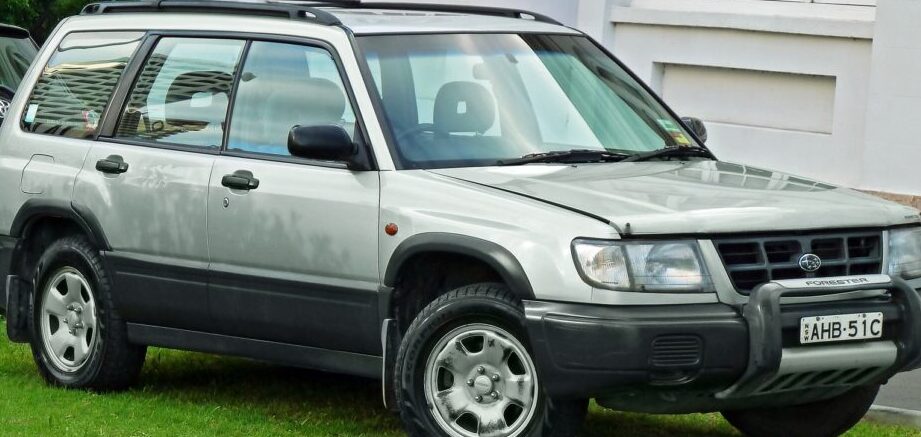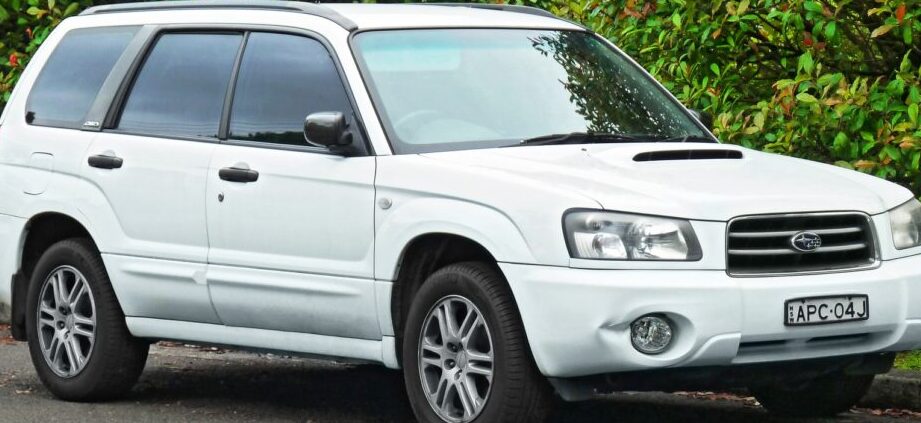
The Subaru Forester II 2.0 X Automatic, produced between 2002 and 2005, represented a key iteration of Subaru’s popular compact SUV. Falling within the second generation of the Forester (designated the SG platform), this variant offered a blend of practicality, all-wheel-drive capability, and relative affordability. Positioned as a mid-range offering within the Forester II lineup, the 2.0 X Automatic served as a stepping stone between the base model and the more powerful 2.5 X variants. It aimed to provide a comfortable and capable vehicle for families and individuals seeking a versatile crossover with Subaru’s renowned symmetrical all-wheel drive system.
Technical Specifications
| Brand | Subaru |
| Model | Forester |
| Generation | Forester II |
| Type (Engine) | 2.0 X (125 Hp) Automatic |
| Start of production | 2002 |
| End of production | 2005 |
| Powertrain Architecture | Internal Combustion engine |
| Body type | SUV, Crossover |
| Seats | 5 |
| Doors | 5 |
| Fuel consumption (urban) | 11.9 l/100 km (19.8 US mpg) |
| Fuel consumption (extra urban) | 6.7 l/100 km (35.1 US mpg) |
| Fuel consumption (combined) | 8.6 l/100 km (27.4 US mpg) |
| Fuel Type | Petrol (Gasoline) |
| Acceleration 0 – 100 km/h | 11.4 sec |
| Acceleration 0 – 62 mph | 11.4 sec |
| Acceleration 0 – 60 mph | 10.8 sec |
| Maximum speed | 168 km/h (104.39 mph) |
| Weight-to-power ratio | 10.9 kg/Hp |
| Weight-to-torque ratio | 7.4 kg/Nm |
| Power | 125 Hp @ 5600 rpm |
| Torque | 184 Nm @ 3600 rpm (135.71 lb.-ft. @ 3600 rpm) |
| Engine layout | Front, Longitudinal |
| Engine Model/Code | EJ20J |
| Engine displacement | 1994 cm3 (121.68 cu. in.) |
| Number of cylinders | 4 |
| Engine configuration | Boxer |
| Cylinder Bore | 92 mm (3.62 in.) |
| Piston Stroke | 75 mm (2.95 in.) |
| Compression ratio | 10:1 |
| Number of valves per cylinder | 4 |
| Fuel injection system | Multi-port manifold injection |
| Engine aspiration | Naturally aspirated engine |
| Valvetrain | OHC |
| Engine oil capacity | 4 l (4.23 US qt | 3.52 UK qt) |
| Kerb Weight | 1360 kg (2998.29 lbs.) |
| Trunk (boot) space – minimum | 406 l (14.34 cu. ft.) |
| Trunk (boot) space – maximum | 1525 l (53.85 cu. ft.) |
| Fuel tank capacity | 60 l (15.85 US gal | 13.2 UK gal) |
| Length | 4450 mm (175.2 in.) |
| Width | 1735 mm (68.31 in.) |
| Height | 1590 mm (62.6 in.) |
| Wheelbase | 2525 mm (99.41 in.) |
| Front track | 1495 mm (58.86 in.) |
| Rear (Back) track | 1485 mm (58.46 in.) |
| Drive wheel | All wheel drive (4×4) |
| Number of gears and type of gearbox | 4 gears, automatic transmission |
| Front suspension | Spring Strut |
| Rear suspension | Wishbone |
| Front brakes | Ventilated discs |
| Rear brakes | Drum |
| Assisting systems | ABS (Anti-lock braking system) |
| Steering type | Steering rack and pinion |
| Power steering | Hydraulic Steering |
| Tires size | 205/70R15 |
Powertrain & Engine Architecture
The heart of the 2.0 X Automatic was the EJ20J engine, a 2.0-liter (1994 cc) naturally aspirated, horizontally-opposed (boxer) four-cylinder gasoline engine. This engine was a staple of Subaru’s engineering philosophy, known for its smooth operation and inherent balance due to the opposing piston design. The EJ20J utilized a single overhead camshaft (SOHC) valvetrain with four valves per cylinder. Fuel delivery was managed by a multi-point fuel injection system. The engine produced 125 horsepower at 5600 rpm and 184 Nm (135.71 lb-ft) of torque at 3600 rpm. This power was then channeled through a four-speed automatic transmission to Subaru’s symmetrical all-wheel-drive system. The automatic transmission, while providing convenience, was a traditional hydraulic unit and not known for its particularly quick shifts or fuel efficiency compared to manual transmissions available in other Forester trims.
Driving Characteristics
The 2.0 X Automatic offered a comfortable, if not particularly sporty, driving experience. Acceleration from 0-60 mph took around 10.8 seconds, making it adequate for everyday driving but noticeably slower than the 2.5 X models. The four-speed automatic transmission, while smooth, lacked the responsiveness of a manual gearbox or more modern automatic transmissions with additional gears. The gear ratios were tuned for fuel economy and relaxed cruising rather than spirited performance. The all-wheel-drive system provided excellent traction in various weather conditions, a hallmark of Subaru vehicles. The boxer engine contributed to a low center of gravity, enhancing stability and handling, although the relatively soft suspension tuning prioritized ride comfort over sharp cornering.
Equipment & Trim Levels
The 2.0 X Automatic trim typically included features such as air conditioning, power windows and locks, a CD player, and basic cloth upholstery. Alloy wheels were often standard, differentiating it from the base model. Optional extras included a sunroof, upgraded audio systems, and side airbags. The interior design was functional and straightforward, prioritizing practicality over luxury. The dashboard layout was typical of early 2000s Japanese automotive design, with a focus on ease of use and clear instrumentation.
Chassis & Braking
The Forester II utilized a MacPherson strut front suspension and a double-wishbone rear suspension. The suspension was tuned for a comfortable ride, absorbing bumps and irregularities in the road effectively. The 2.0 X Automatic featured ventilated disc brakes on the front wheels and drum brakes on the rear. Anti-lock Braking System (ABS) was standard, enhancing braking performance and stability. The steering was rack-and-pinion with hydraulic power assistance, providing a reasonably direct and responsive feel.
Market Reception & Comparison
The 2.0 X Automatic was generally well-received as a practical and capable family vehicle. Critics praised its all-wheel-drive system and spacious interior. However, the engine’s performance was often considered adequate but not exciting, especially when compared to the more powerful 2.5 X models. Fuel economy was average for its class. Compared to the manual transmission versions of the 2.0 X, the automatic offered less engaging driving experience and slightly lower fuel efficiency. The 2.5 X models, with their larger engine and available manual transmission, appealed to drivers seeking more performance and a more connected driving experience.
Legacy
The Subaru Forester II 2.0 X Automatic has proven to be a relatively reliable vehicle, with the EJ20J engine generally considered durable. However, like all vehicles of this era, regular maintenance is crucial to prevent issues. Common concerns include oil leaks, timing belt replacement (a critical maintenance item), and potential issues with the automatic transmission over extended periods. Today, these vehicles are readily available on the used car market at affordable prices. They remain popular choices for those seeking a dependable and capable all-wheel-drive SUV, particularly in regions with inclement weather. While not a performance standout, the 2.0 X Automatic represents a solid and practical option within the Forester II lineup, offering a blend of functionality, reliability, and Subaru’s signature all-wheel-drive capability.