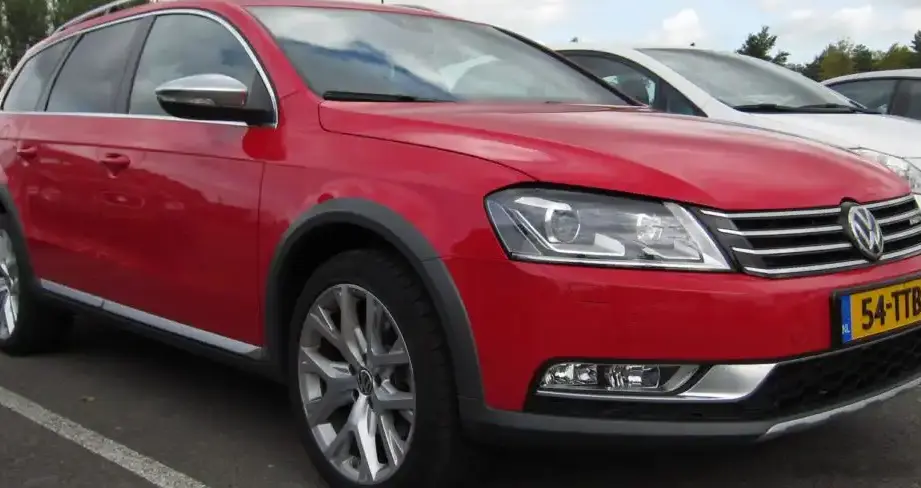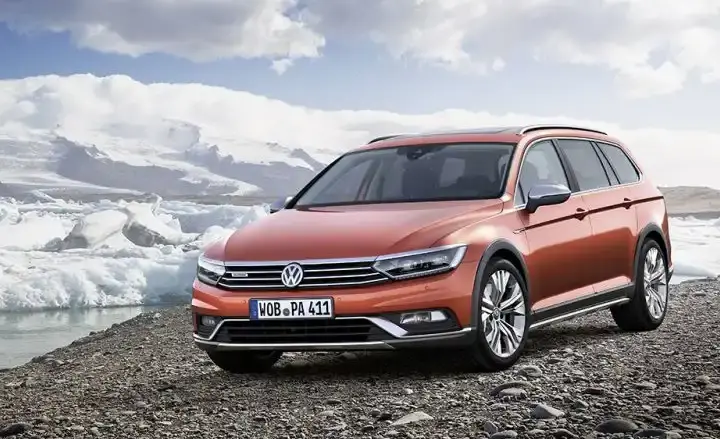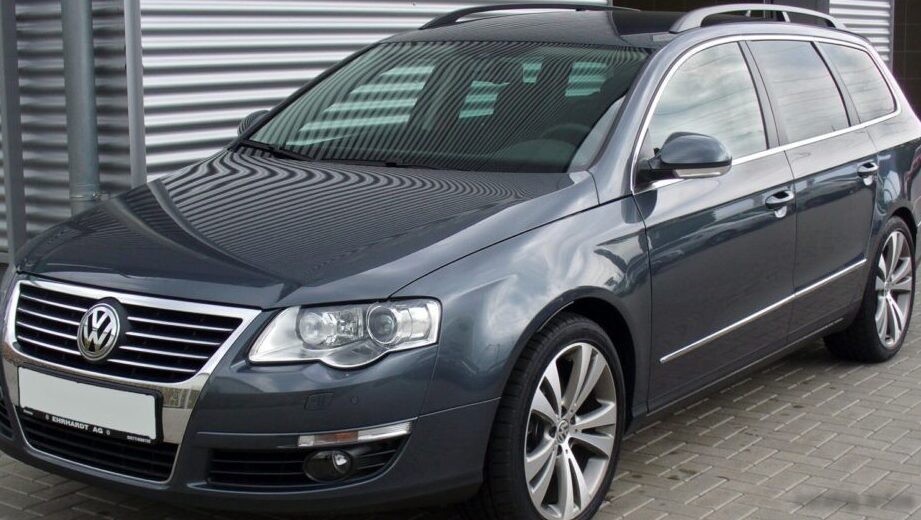
The Volkswagen Passat Variant (B6) 2.0 TDI, producing 140 horsepower, was a popular choice in the European market from March 2008 to July 2010. Positioned as a mid-range offering within the B6 Passat Variant lineup, it provided a balance between fuel efficiency, practicality, and reasonable performance for families and business users. This variant occupied a space between the lower-powered diesel options and the more potent, higher-trim models. It was a key component of Volkswagen’s strategy to offer a versatile and economical estate car to a broad customer base.
Technical Specifications
| Brand | Volkswagen |
| Model | Passat |
| Generation | Passat Variant (B6) |
| Type (Engine) | 2.0 TDI (140 Hp) |
| Start of production | March, 2008 |
| End of production | July, 2010 |
| Powertrain Architecture | Internal Combustion engine |
| Body type | Station wagon (estate) |
| Seats | 5 |
| Doors | 5 |
| Fuel consumption (economy) – urban | 7.9 l/100 km (29.8 US mpg, 35.8 UK mpg, 12.7 km/l) |
| Fuel consumption (economy) – extra urban | 5 l/100 km (47 US mpg, 56.5 UK mpg, 20 km/l) |
| Fuel consumption (economy) – combined | 6.1 l/100 km (38.6 US mpg, 46.3 UK mpg, 16.4 km/l) |
| Fuel Type | Diesel |
| Acceleration 0 – 100 km/h | 10.1 sec |
| Acceleration 0 – 62 mph | 10.1 sec |
| Acceleration 0 – 60 mph | 9.6 sec |
| Maximum speed | 206 km/h (128 mph) |
| Emission standard | Euro 5 |
| Weight-to-power ratio | 10.7 kg/Hp, 93.5 Hp/tonne |
| Weight-to-torque ratio | 4.7 kg/Nm, 213.8 Nm/tonne |
| Power | 140 Hp @ 4200 rpm |
| Power per litre | 71.1 Hp/l |
| Torque | 320 Nm @ 1750-2500 rpm (236.02 lb.-ft. @ 1750-2500 rpm) |
| Engine layout | Front, Transverse |
| Engine Model/Code | CBAB, CFFB |
| Engine displacement | 1968 cm3 (120.09 cu. in.) |
| Number of cylinders | 4 |
| Engine configuration | Inline |
| Cylinder Bore | 81 mm (3.19 in.) |
| Piston Stroke | 95.5 mm (3.76 in.) |
| Compression ratio | 18:1 |
| Number of valves per cylinder | 4 |
| Fuel injection system | Diesel Commonrail |
| Engine aspiration | Turbocharger, Intercooler |
| Valvetrain | DOHC |
| Engine oil capacity | 4 l (4.23 US qt | 3.52 UK qt) |
| Kerb Weight | 1497 kg (3300.32 lbs.) |
| Max. weight | 2170 kg (4784.03 lbs.) |
| Max load | 673 kg (1483.71 lbs.) |
| Trunk (boot) space – minimum | 603 l (21.29 cu. ft.) |
| Trunk (boot) space – maximum | 1731 l (61.13 cu. ft.) |
| Fuel tank capacity | 70 l (18.49 US gal | 15.4 UK gal) |
| Max. roof load | 100 kg (220.46 lbs.) |
| Permitted trailer load with brakes (8%) | 2000 kg (4409.25 lbs.) |
| Permitted trailer load with brakes (12%) | 1800 kg (3968.32 lbs.) |
| Permitted trailer load without brakes | 750 kg (1653.47 lbs.) |
| Permitted towbar download | 90 kg (198.42 lbs.) |
| Length | 4774 mm (187.95 in.) |
| Width | 1820 mm (71.65 in.) |
| Width including mirrors | 1991 mm (78.39 in.) |
| Height | 1517 mm (59.72 in.) |
| Wheelbase | 2709 mm (106.65 in.) |
| Front track | 1552 mm (61.1 in.) |
| Rear (Back) track | 1551 mm (61.06 in.) |
| Minimum turning circle (turning diameter) | 11.4 m (37.4 ft.) |
| Drivetrain Architecture | The Internal combustion engine (ICE) drives the front wheels of the vehicle. |
| Drive wheel | Front wheel drive |
| Number of gears and type of gearbox | 6 gears, manual transmission |
| Front suspension | Spring Strut |
| Rear suspension | Coil spring |
| Front brakes | Ventilated discs |
| Rear brakes | Disc |
| Assisting systems | ABS (Anti-lock braking system) |
| Steering type | Steering rack and pinion |
| Tires size | 215/55 R16 |
| Wheel rims size | 6.5J x 16 |
Powertrain & Engine Architecture
The heart of the Passat Variant (B6) 2.0 TDI (140 Hp) is the 1968cc, four-cylinder diesel engine, typically identified by engine codes CBAB or CFFB. This engine belongs to the common rail direct injection (CRDI) family, utilizing piezo injectors for precise fuel delivery. The CRDI system, operating at extremely high pressures, allowed for improved combustion efficiency and reduced emissions. The engine featured a turbocharger with an intercooler, boosting power output and enhancing torque across a wider rev range. The double overhead camshaft (DOHC) valvetrain, with four valves per cylinder, further optimized gas exchange. The engine’s robust construction and advanced fuel injection technology contributed to its reliability and longevity. The 6-speed manual transmission was the standard offering, providing a good balance between fuel economy and driver control.
Driving Characteristics
The 140 hp 2.0 TDI offered a respectable, if not exhilarating, driving experience. Acceleration from 0-60 mph took around 9.6 seconds, and top speed was approximately 128 mph. The engine’s 320 Nm (236 lb-ft) of torque, available from 1750-2500 rpm, provided ample pulling power for everyday driving and overtaking maneuvers. Compared to the more powerful TDI variants (like the 170 hp version), the 140 hp model felt less strained at higher speeds and during loaded conditions. The manual gearbox offered precise shifts, and the gear ratios were well-matched to the engine’s torque curve. While not a sports car, the Passat Variant 2.0 TDI provided a comfortable and capable driving experience, particularly on long journeys.
Equipment & Trim Levels
The 2.0 TDI 140 hp variant typically came equipped with a reasonable level of standard features. These included air conditioning, alloy wheels, a CD stereo system, electric windows, and central locking. Higher trim levels, such as Trendline or Comfortline, added features like automatic climate control, upgraded upholstery, parking sensors, and a multi-function steering wheel. Optional extras included a sunroof, leather seats, and a navigation system. The interior was generally well-built and functional, with a focus on practicality and comfort. The Passat Variant’s spacious cabin and large boot (603-1731 liters) made it an ideal family vehicle.
Chassis & Braking
The Passat Variant (B6) featured a MacPherson strut front suspension and a multi-link rear suspension, providing a comfortable ride and good handling characteristics. The suspension was tuned to prioritize comfort over outright sportiness. The braking system consisted of ventilated discs at the front and solid discs at the rear, providing adequate stopping power. Anti-lock braking system (ABS) was standard. The chassis was designed to provide a stable and predictable driving experience, even when fully loaded.
Market Reception & Comparison
The Passat Variant 2.0 TDI (140 hp) was well-received by critics and consumers alike. It was praised for its fuel efficiency, practicality, and comfortable ride. Compared to the higher-powered TDI variants, the 140 hp model offered a more affordable entry point into the Passat range. It also tended to be more reliable, as the lower power output placed less stress on the engine components. Fuel economy was a key selling point, with combined figures around 38.6 US mpg. Compared to petrol-powered Passats, the TDI offered significantly better fuel economy and lower running costs.
Legacy
The Volkswagen Passat Variant (B6) 2.0 TDI (140 hp) has proven to be a durable and reliable vehicle. Many examples are still on the road today, testament to the quality of its engineering. While older examples may require maintenance on components like the turbocharger and fuel injectors, the engine is generally considered robust. In the used car market, this variant represents a good value proposition, offering a practical and economical estate car at an affordable price. Its reputation for reliability and fuel efficiency continues to make it a popular choice for buyers seeking a dependable family vehicle.