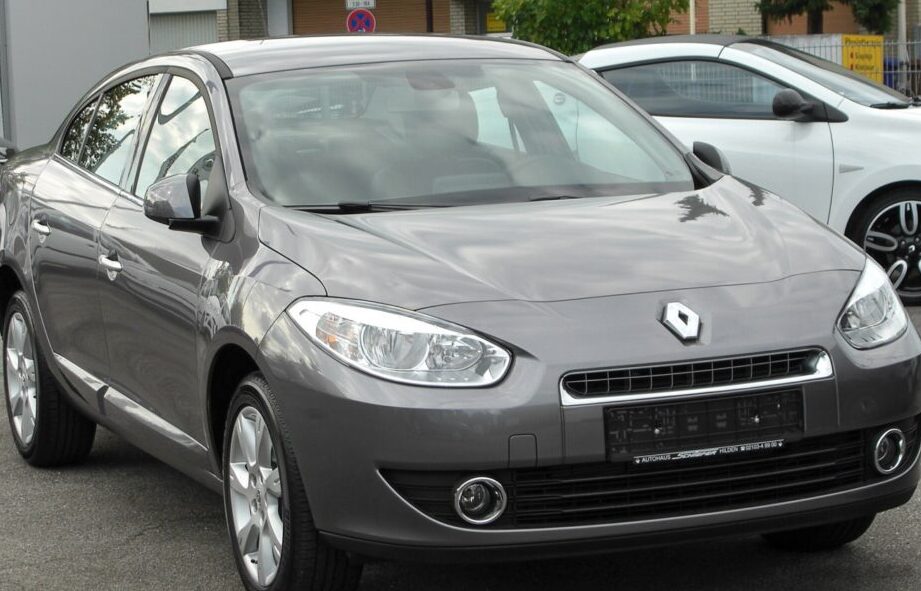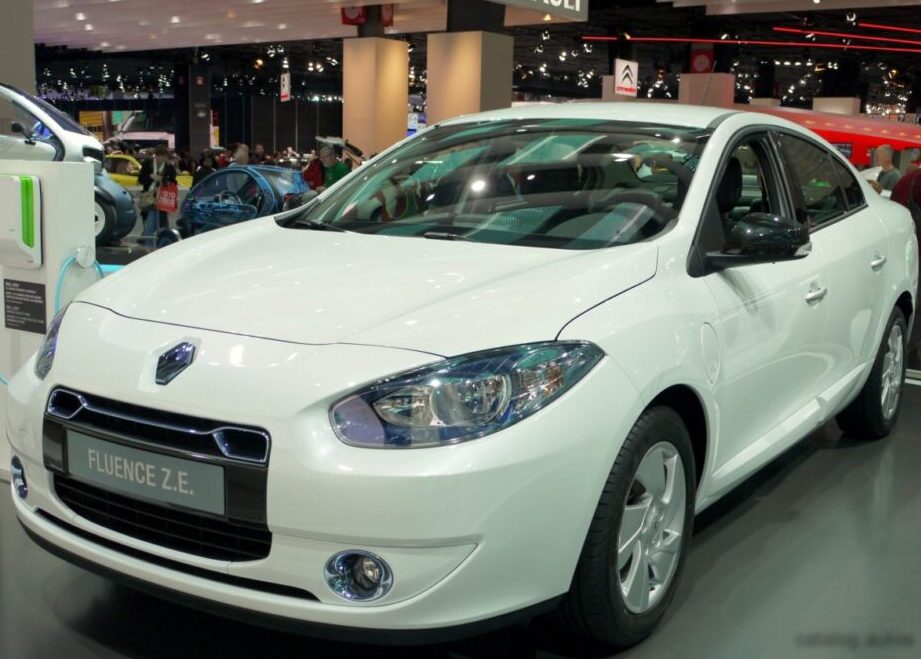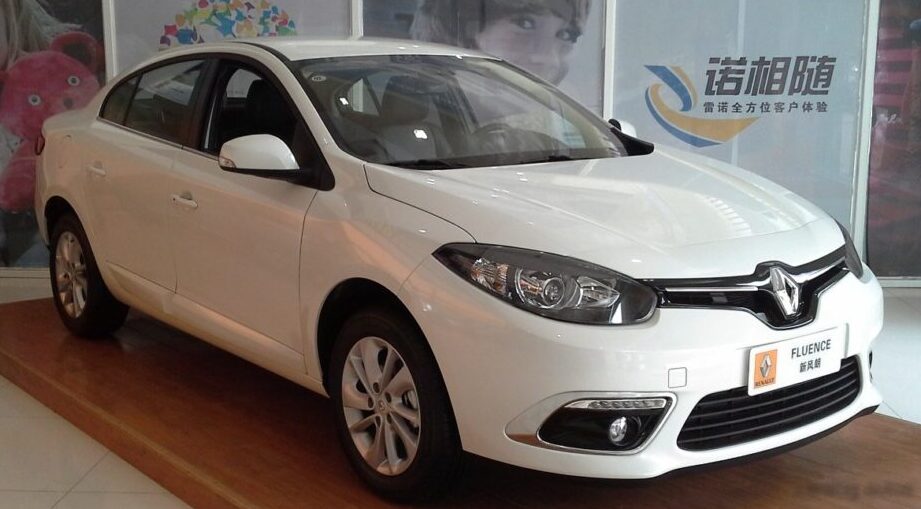
The Renault Fluence, particularly the facelifted version introduced in 2012, represented Renault’s entry into the competitive compact sedan segment, primarily aimed at markets outside of Europe where traditional sedans held greater appeal. The 1.6 Energy dCi variant, producing 130 horsepower, was a significant offering within the Fluence lineup, positioned as a balance between fuel efficiency and respectable performance. Introduced as part of Renault’s “Energy dCi” range, this engine aimed to deliver lower emissions and improved economy without sacrificing driveability. Production of this specific configuration ran from 2012 onwards, becoming a mainstay of the Fluence range in many international markets.
Technical Specifications
| Brand | Renault |
| Model | Fluence |
| Generation | Fluence (facelift 2012) |
| Type (Engine) | 1.6 Energy dCi (130 Hp) |
| Start of production | 2012 |
| Powertrain Architecture | Internal Combustion engine |
| Body type | Sedan |
| Seats | 5 |
| Doors | 4 |
| Fuel consumption (urban) | 5.7 l/100 km (41.3 US mpg, 49.6 UK mpg, 17.5 km/l) |
| Fuel consumption (extra urban) | 3.9 l/100 km (60.3 US mpg, 72.4 UK mpg, 25.6 km/l) |
| Fuel consumption (combined) | 4.6 l/100 km (51.1 US mpg, 61.4 UK mpg, 21.7 km/l) |
| Fuel Type | Diesel |
| Acceleration 0 – 100 km/h | 9.8 sec |
| Acceleration 0 – 62 mph | 9.8 sec |
| Acceleration 0 – 60 mph | 9.3 sec |
| Maximum speed | 200 km/h (124.27 mph) |
| Emission standard | Euro 5 |
| Weight-to-power ratio | 10.4 kg/Hp, 96.4 Hp/tonne |
| Weight-to-torque ratio | 4.2 kg/Nm, 237.2 Nm/tonne |
| Power | 130 Hp @ 4000 rpm |
| Power per litre | 81.4 Hp/l |
| Torque | 320 Nm @ 1750 rpm (236.02 lb.-ft. @ 1750 rpm) |
| Engine layout | Front, Transverse |
| Engine Model/Code | R9M |
| Engine displacement | 1598 cm3 (97.52 cu. in.) |
| Number of cylinders | 4 |
| Engine configuration | Inline |
| Cylinder Bore | 80 mm (3.15 in.) |
| Piston Stroke | 79.5 mm (3.13 in.) |
| Compression ratio | 15.5:1 |
| Number of valves per cylinder | 4 |
| Fuel injection system | Diesel Commonrail |
| Engine aspiration | Turbocharger, Intercooler |
| Engine oil capacity | 4.5 l (4.76 US qt | 3.96 UK qt) |
| Coolant capacity | 6.5 l (6.87 US qt | 5.72 UK qt) |
| Kerb Weight | 1349 kg (2974.04 lbs.) |
| Max. weight | 1850 kg (4078.55 lbs.) |
| Max load | 501 kg (1104.52 lbs.) |
| Trunk (boot) space – minimum | 530 l (18.72 cu. ft.) |
| Fuel tank capacity | 60 l (15.85 US gal | 13.2 UK gal) |
| Length | 4622 mm (181.97 in.) |
| Width | 1809 mm (71.22 in.) |
| Height | 1479 mm (58.23 in.) |
| Wheelbase | 2702 mm (106.38 in.) |
| Front track | 1541 mm (60.67 in.) |
| Rear track | 1563 mm (61.54 in.) |
| Drivetrain Architecture | Front wheel drive |
| Number of gears | 6 |
| Gearbox type | Manual transmission |
| Front suspension | Independent type McPherson |
| Rear suspension | Elastic beam |
| Front brakes | Ventilated discs |
| Rear brakes | Disc |
| Assisting systems | ABS (Anti-lock braking system) |
| Steering type | Steering rack and pinion |
| Tires size | 205/65 R15; 205/60 R16; 205/55 R17 |
| Wheel rims size | 6.5J x 15; 6.5J x 16; 7.0J x 17 |
Powertrain & Engine Architecture
The heart of the Fluence 1.6 Energy dCi is the Renault R9M engine, a 1.6-liter inline-four cylinder diesel. This engine is a member of Renault’s “Energy” family, designed with a focus on efficiency and reduced emissions. It utilizes a common rail direct injection system, delivering fuel at extremely high pressure for optimized combustion. The R9M engine also features a turbocharger with an intercooler, boosting power output and improving torque delivery. The engine’s 15.5:1 compression ratio is relatively high for a diesel, contributing to its efficiency. The 6-speed manual transmission was the standard offering for this variant, providing a good balance between fuel economy and driver control. The transmission’s gear ratios were tuned to maximize the engine’s torque, providing adequate acceleration in everyday driving situations.
Driving Characteristics
The 130 horsepower and 320 Nm (236 lb-ft) of torque offered by the 1.6 dCi engine provided the Fluence with adequate, though not exhilarating, performance. Acceleration from 0-60 mph took around 9.3 seconds, making it competitive within its class. The engine’s peak torque, available from just 1750 rpm, meant that the Fluence felt responsive in most driving situations, particularly during overtaking maneuvers. Compared to higher-output versions of the Fluence, or those equipped with automatic transmissions, the 1.6 dCi manual offered a more engaging driving experience and slightly better fuel economy. However, it lacked the effortless cruising ability of more powerful engines. The 6-speed manual gearbox was generally well-regarded for its smooth operation and precise shift quality.
Equipment & Trim Levels
The 1.6 Energy dCi variant of the Fluence typically came with a reasonable level of standard equipment. This generally included air conditioning, power windows, central locking, and an audio system with USB connectivity. Higher trim levels added features such as alloy wheels, fog lights, cruise control, and a more sophisticated infotainment system. Interior upholstery was typically cloth, with options for leather available on higher-spec models. Safety features included ABS brakes, front airbags, and often stability control depending on the market.
Chassis & Braking
The Fluence utilized a McPherson strut front suspension and an elastic beam rear suspension. This setup provided a comfortable ride quality, suitable for everyday driving. The front brakes were ventilated discs, offering good stopping power, while the rear brakes were typically solid discs. The steering was a rack and pinion system, providing reasonable precision and feedback. The Fluence’s suspension was tuned for comfort rather than outright handling prowess, prioritizing ride quality over sporty dynamics.
Market Reception & Comparison
The Renault Fluence 1.6 Energy dCi was generally well-received by critics as a practical and fuel-efficient sedan. Its diesel engine offered excellent economy, making it an attractive option for drivers covering long distances. Compared to the petrol-powered versions of the Fluence, the 1.6 dCi provided significantly better fuel economy and more torque. However, some critics noted that the engine could be somewhat noisy compared to some of its competitors. In terms of reliability, the R9M engine has proven to be generally robust, although regular maintenance is crucial to prevent issues with the diesel particulate filter (DPF) and fuel injection system.
Legacy
The Renault Fluence 1.6 Energy dCi has established a reputation as a reliable and economical used car. The R9M engine, when properly maintained, can provide many years of service. The availability of spare parts is generally good, and the Fluence’s relatively simple mechanical design makes it relatively easy to repair. Today, the Fluence 1.6 dCi represents a sensible choice for buyers seeking an affordable and fuel-efficient compact sedan, particularly in markets where diesel engines remain popular.